Story summary
A 28-year-old lab technician named Darya Shipilova died after breaking a test tube containing plague bacteria at the Irkutsk Anti-Plague Institute in Siberia on September 29, leading to her hospitalization and death two days later. As many as 200 people who had contact with Shipilova were put into quarantine due to fears of an outbreak. Three hospitals in the region have also been placed under secure measures, and a mask mandate has been implemented.
Russian authorities initially did not provide official statements about the incident but later confirmed it was pneumonic plague after Shipilova's death. The situation prompted concern over potential misinformation, with some experts drawing parallels to the early days of the COVID-19 pandemic in Wuhan, China. In response, the U.S. State Department is monitoring the situation closely and urging Russian authorities for prompt and accurate information sharing.
The White House and other federal agencies are assessing options regarding the outbreak, indicating a high level of alertness given the historical significance and potential dangers of plague outbreaks. Despite concerns, health officials assert that pneumonic plague can be effectively treated with common antibiotics if intervention begins early. The broader situation in the Irkutsk region is currently described as stable by Rospotrebnadzor, but strict quarantine measures remain in place to prevent any spread.
Written for “Plague Outbreak in Siberia” on 2026-10-06,
grounded in this article and the 56 other(s) covering the same event.
U.S. and world health officials are
to share more information after said a scientist at an infectious disease research facility in Siberia died after possibly contracting plague during a lab accident.
uncertain
scientist → share → accident
The reports have caused concern, even as the World Health Organization says "the public health risk to the general population appears to be low," based on the current information.
asserted
risk → cause → information
Dr. Céline Gounder, a CBS News medical contributor and editor-at-large for public health at KFF Health News, echoed that belief on "CBS Mornings" on Tuesday.
asserted
Gounder → echo → Tuesday
"The American public does not need to be worried," she said.
asserted
she → need → ?
Still, an official cause of death has not been made public and a lack of transparency from Russia has led some experts to question if the lab worker had the plague.
asserted
worker → make → plague
"The response doesn't fit plague.
asserted
response → fit → plague
It's not congruent with plague," Dr. Amesh Adalja, a senior scholar at the Johns Hopkins Center for Health Security, told CBS News.
asserted
Adalja → tell → News
Here's what to know.
asserted
Here → know → what
Concern about situation in Russia
Russian media has reported that a female researcher, identified as Darya Shipilova, 28, died after being exposed to the plague in a lab accident at the Irkutsk Anti-Plague Institute.
asserted
researcher → report → Institute
Initial reports said that Shipilova broke a test tube containing the plague bacteria Yersinia pestis in late September, came down with severe pneumonia and died of her illness.
asserted
Shipilova → say → illness
The World Health Organization said Shipilova died of severe pneumonia overnight into Oct. 2.
asserted
Shipilova → say → Oct.
Russian officials have since cast doubt on those reports.
asserted
officials → cast → reports
Russia's health watchdog, Rospotrebnadzor, said there was no accident and that Shipilova had died of "pneumonia of unknown origin."
asserted
Shipilova → say → origin
The WHO said it was told by Russia on Oct. 6 that no plague was detected.
asserted
plague → say → Oct.
The global health agency said it asked Russian authorities to provide information about which pathogen caused Shipilova's illness.
asserted
pathogen → say → illness
Secretary of State Marco Rubio on Tuesday
to be more transparent, and said the nation should "share more information with the world."
asserted
nation → say → world
The WHO said it is following the situation closely and requesting further information from Russian authorities.
asserted
it → say → authorities
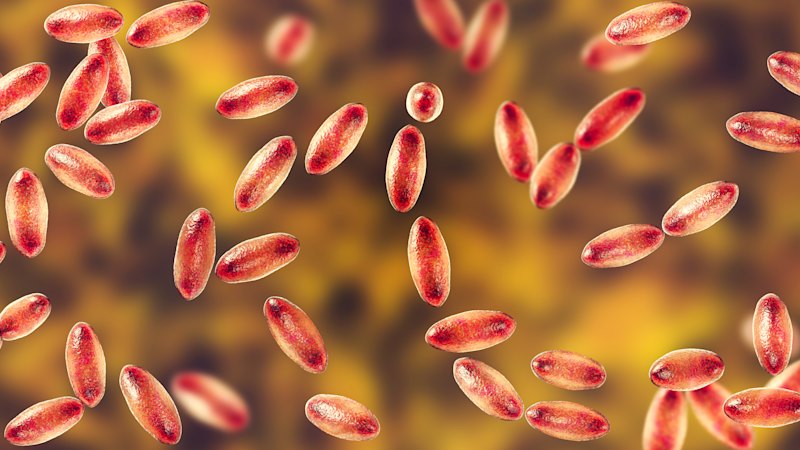
Plague is caused by the Yersinia pestis bacteria.
asserted
Plague → cause → bacteria
Infected people may have painfully swollen lymph nodes known as buboes, along with fever and chills, a severe headache, body aches and exhaustion.
uncertain
people → have → fever
Septicemic plague happens when the Yersinia pestis bacteria enters the bloodstream.
asserted
bacteria → happen → bloodstream
Patients may develop fever, chills, extreme weakness, abdominal pain, shock and possible internal bleeding.
uncertain
Patients → develop → fever
Some skin may turn black and die.
uncertain
skin → turn → ?
Pneumonic plague typically occurs when the other forms of plague are not treated and the Yersinia pestis bacteria infects the lungs.
asserted
bacteria → occur → lungs
Patients develop pneumonia and may show fever, headache, weakness, shortness of breath, chest pain, cough and bloody or watery mucus.
uncertain
Patients → develop → breath
The pneumonia could cause respiratory failure.
uncertain
pneumonia → cause → failure
This is considered the most serious version of plague, and is always fatal if left untreated.
asserted
This → consider → plague
Russian media reports indicated that Shipilova may have died of pneumonic plague.
uncertain
Shipilova → indicate → plague
How does plague spread?
asserted
plague → spread → ?
Plague is
through the bite of fleas carried by infected rodents.
asserted
Plague → carry → rodents
Animals, including cats and dogs, can also become infected from eating smaller animals that were carrying those fleas.
asserted
that → include → fleas
In cases of pneumonic plague, droplets emitted when a sick person coughs can lead to others becoming infected.
asserted
others → emit → plague
Russia's health watchdog said that nearly 200 people who had come into contact with Shipilova before her death were tested, and none had plague.
asserted
none → say → plague
How is plague treated?
asserted
plague → treat → ?
Plague can be successfully treated with antibiotics, health organizations and doctors say.
asserted
organizations → treat → antibiotics
Patients need to be treated as soon as possible.
asserted
Patients → need → ?
Researchers who regularly work with plague can also be vaccinated for it, Gounder noted.
asserted
Gounder → work → it
Plague outbreaks in the Middle Ages killed millions, due to widespread, common flea and rat infestations and less understanding of how to prevent disease from spreading.
asserted
outbreaks → kill → disease
About seven plague cases are reported each year in the United States, according to the Centers for Disease Control and Prevention.
uncertain
cases → report → Control
More than 80% of the cases in the U.S. are bubonic plague, the agency said.
asserted
agency → say → U.S.
Most U.S. cases occur in the West and Southwest.
asserted
cases → occur → West
…and 2 more, not listed.
 The Aporia