That is 0 articles you have read today.
The Aporia is free and carries no advertising, so readers are the only
thing paying for it. If you are getting this much out of it, a small
donation is what keeps it independent.
Daily limit reached
You have read 0 articles today.
That is more than the 15 a day The Aporia gives away,
and well past what it can carry on nothing. Your allowance resets at
midnight.
There is no advertising here and nothing about you is sold, so readers
are the only thing paying for it. If the site is worth this much of
your day, it is worth a few dollars.
Everything else stays open: the
maps, the
directory and
search do
not count against this, and neither does re-opening something you have
already read today.
A laboratory worker at the Irkutsk Anti-Plague Research Institute in Siberia died after falling ill from an illness of unknown origin, causing local authorities to quarantine several individuals and deploy health officials to investigate. The deceased, identified as 28-year-old Darya Shipilova, reportedly had pneumonia with an unconfirmed cause, leading to conflicting reports on social media about potential mishandling of pathogens at the institute. Authorities have maintained that there is no evidence linking her death directly to her work and that the situation is under control.
Written locally by qwen2.5:14b on 2026-10-05,
using this article's own text rather than the other coverage of the
same event (that is the story summary below).
Story summary
A 28-year-old lab technician named Darya Shipilova died of pneumonic plague in Siberia after breaking a test tube at the Irkutsk Anti-Plague Institute on September 29, leading to around 200 people being put under quarantine. The incident prompted Anna Popova, Russia's Chief State Sanitary Doctor, to travel from Moscow to take charge of the outbreak. Three hospitals in the Irkutsk region were also placed under secure measures and masks became mandatory as a preventive measure. The broader situation remains officially stable according to Rospotrebnadzor, although concerns about potential government cover-up are raised by some media reports drawing comparisons to the Wuhan virus incident. US authorities, including the State Department and CDC, are closely monitoring developments in Russia. Governor Igor Kobzev convened a special meeting but did not specify the infection in question. Cooler seasonal temperatures may help contain any potential spread of the disease. The White House is aware and assessing options regarding this outbreak. Former Rospotrebnadzor head Gennady Onishchenko suggested that widespread transmission remains unlikely despite initial fears over pneumonic plague. Overall, while details remain unconfirmed, international health agencies are closely watching Russia for further updates on Shipilova's case and its implications.
Written for “Plague Outbreak in Siberia” on 2026-10-05,
grounded in this article and the 15 other(s) covering the same event.
A laboratory worker at a plague research institute in Siberia has fallen ill and died in undisclosed circumstances, prompting authorities to quarantine dozens of people and the head of Russia’s health watchdog to fly to the Irkutsk region.
asserted
worker → fall → region
The death has sparked public health fears on social media, but the authorities said on Monday the situation was under control.
asserted
situation → spark → control
It is the location of the first known prehistoric human outbreak of the bacterium that causes it, known as Yersinia pestis, which is present among the small wild mammals in its vast wilderness and their fleas.
asserted
which → know → wilderness
It is rare for Russians to fall ill with plague, though cases in other parts of the world – notably Africa – occur every year.
asserted
cases → fall → world
Local media named the woman as Darya Shipilova, an employee at the Irkutsk Anti-Plague Research Institute of Siberia and the Far East.
asserted
media → name → Siberia
There were conflicting reports about how and where the laboratory worker, whose age was given as 28, had fallen ill, but the authorities said she had died of pneumonia of as-yet unestablished origin.
asserted
she → be → origin
Russia’s health watchdog, Rospotrebnadzor, told state media the institute had not found evidence of any accidents involving the handling of pathogens after rumours spread on social media that the woman had dropped a test tube containing live bacteria.
asserted
woman → tell → bacteria
Nevertheless, Anna Popova, the head of Rospotrebnadzor, flew to Siberia for an emergency meeting over the weekend.
asserted
Popova → fly → weekend
An unspecified number of people who had been in contact with the dead woman were quarantined, parts of the hospital in the town of Shelekhov where she died were cordoned off, and an aluminum plant told its workers to wear masks.
asserted
plant → quarantine → masks
Authorities urged people to remain calm and said there was no evidence that the woman’s death was linked to her work.
asserted
death → urge → work
Igor Kobzev, the governor of the Irkutsk region, said in a statement that she had died of “pneumonia of unknown etiology,” adding: “Importantly, over the past few days, no new cases of staff from the Anti-Plague Institute seeking medical attention have been identified.”
He said the situation was under control and that all known contacts of the dead woman had been identified, examined and placed under medical supervision.
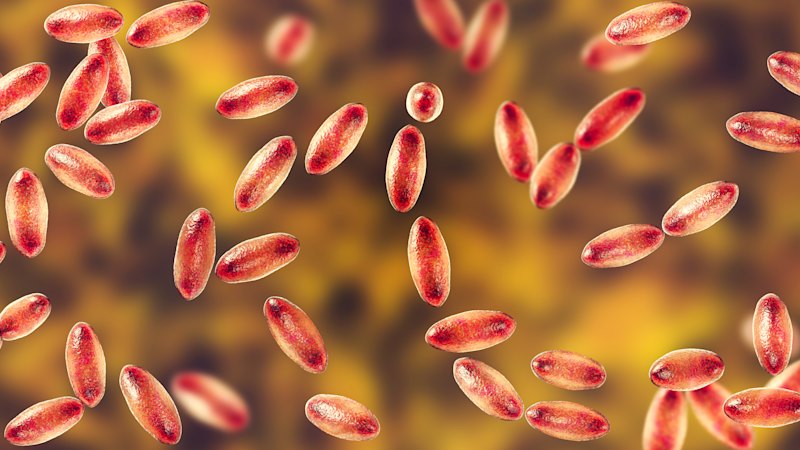
Plague comes in three forms affecting different parts of the body.
asserted
Plague → say → body
Pneumonic plague, an infection of the lungs, prompts the patient to cough out infectious airborne droplets.
asserted
plague → prompt → droplets
If identified quickly, it can be treated with antibiotics.
asserted
it → identify → antibiotics
But if left untreated, it can be fatal in one to six days.
asserted
it → leave → days
 The Aporia