Photo via The Sydney Morning Herald

Gold’s rollercoaster ride shows the messy state of the global economy

Read the original at The Sydney Morning Herald ↗
Cite

Bartholomeusz, S. (2026, September 29). Gold’s rollercoaster ride shows the messy state of the global economy. The Sydney Morning Herald. https://www.smh.com.au/business/markets/gold-s-rollercoaster-ride-shows-the-messy-state-of-the-global-economy-20260929-p6119k.html?ref=rss&utm_medium=rss&utm_source=rss_feed

Dated when The Aporia collected the article, usually within hours of publication. Check the original for its exact date and byline.

The Sydney Morning Herald · collected 2026-09-29 · by Stephen Bartholomeusz

Quick Summary

Gold prices in 2026 have seen extreme volatility, ranging from a record high of $5595 per ounce in January to a year-low below $4000 in July and currently around $4160. This fluctuation reflects broader economic uncertainties such as the war in the Middle East, inflation, fiscal stress in developed economies, particularly the US, and the impact of artificial intelligence investments. The article emphasizes gold’s role as a safe haven amid global economic turmoil and discusses factors like central bank purchases, especially by China, and shifting reserves from US Treasuries to gold.
Written by AI on 2026-09-29, from this article's own text only (the story summary below draws on all the coverage).

AI analysis

Story summary

In 2026, the gold market has experienced extreme volatility, reflecting broader economic uncertainties. The price of gold hit a record high of $5595 per ounce in January before dropping to a yearly low below $4000 in July. It partially recovered to nearly $4700 by late August but fell back to around $4160 recently.

This rollercoaster is influenced by multiple factors, including the war in the Middle East, fiscal stress in developed economies like the US, stubborn inflation rates, and disruptions in bond and currency markets. The Federal Reserve's shift from focusing on inflation to growth, with three rate cuts last year, contributed to the initial surge in gold prices. Additionally, the boom in artificial intelligence investments and geopolitical tensions, particularly with Iran, have affected oil market stability and thus impacted global financial dynamics.

Written for “Gold Prices Volatility” on 2026-11-18, grounded in this article and the 0 other(s) covering the same event.

Compared with similar articles

This article reads unscored and hedges 14% of its claims. Each row says how that neighbour differs.
ABC News (AU)
Leans left Hedges 5 of 48 claims Outlet record 67/100
“The articles discuss different topics within the broader context of economic factors; one focuses on interest rates and their expected increase, while the other discusses gold price volatility as an indicator of global economic conditions.”
The Sydney Morning Herald
Hedges 5 of 49 claims Outlet record 61/100
“Article A discusses historical trends and ratios in commodity markets, while Article B focuses on the volatility of gold prices over a specific period.”
Al Jazeera
Hedges 1 of 12 claims Outlet record 60/100
“Article A describes a single day's drop in gold prices due to specific factors, while Article B discusses the broader trend and volatility of gold prices over several months.”
The Guardian
Hedges 2 of 22 claims Outlet record 64/100
“The articles discuss different topics related to economic conditions, with Article A focusing on gold price volatility and Article B on inflation challenges faced by the RBA.”
CBS News
Hedges 17 of 41 claims Outlet record 67/100
“The articles discuss general trends in gold prices over a period but do not focus on the exact same price movements or time frames.”
Toronto Star
Hedges 3 of 43 claims Outlet record 64/100
“The articles discuss different aspects of the global and American economies over different time periods, without focusing on the same specific incident.”

Story

Gold Prices Volatility
Economy/Business · 1 article(s) covering the same event.
How this article was measured signals, leaning charts, publisher record, byline, topics and claims

Signals How these are calculated →

Claims extracted
35
sentences that state something as happening or true
Uncertain
14%
5 of 35 hedged ("reportedly", "may", "according to")
Leaning
not political
takes no side on a contested political question
Publisher signals
61/100
The Sydney Morning Herald's corrections and hedging, across everything collected from it. Not a measure of accuracy.
Outlets on this story
1
Economy/Business
Same framing elsewhere
1
articles that frame the event the way this one does
Analyzed 2026-09-29 · how these are computed

How this is being covered How these are calculated →

Article leaning vs. publisher reliability
Source leaning vs. consistency

Publisher

The Sydney Morning Herald · 7597 article(s) · 15 correction(s) detected
Running correction rate · 15 correction(s)

Who wrote this

Stephen Bartholomeusz
29 article(s) here · 1 carrying a prediction
Nvidia has delivered a third-quarter result that outperformed expectations, raised its forecasts for the current quarter and was very bullish about its prospects in its next financial year.
Donald Trump “wouldn’t mind” if he regained the role.
If you were looking for a single barometer of the state of the world – or of a particular copper-rich sector – it would be hard to go past the copper price.
It now appears inevitable that the Fed will deliver its second rate rise in this cycle – the first was in September – after the US inflation rate came in above expectations for the third successive month.
If he were to be removed – either by his board, which has said it will conduct an inquiry, or by external pressure – could Nvidia function as effectively?
The “blue tsunami” that destroyed Republican control of Congress last week may have a silver lining for some of the key companies caught up in the scramble for artificial intelligence supremacy and for investors exposed to what appeared to be a swelling bubble.
Musk quipped on his X social media platform that his “election-interfering space lasers didn’t work,” but it was another post that shows the real damage that the failure of his efforts to influence the outcome of the elections will do.
The midterm elections could knock out one, if not two, of the pillars supporting that dominance.
Those “concepts” could produce even more trade friction.
2026-11-03 · assertive framing · Trump has lost control of his war with Canada
Alphabet and Meta have, between them, raised almost $US90 billion of new equity since June and have programs that could raise a further $US100 billion.
2026-11-02 · assertive framing · Wall Street on edge after $1.4 trillion wipeout
Also by Stephen Bartholomeusz
Nothing else under this byline is closely related to this article, so these are simply their most recent.
All 29 articles by Stephen Bartholomeusz →

Topics

China Iran Russia the Trump administration the US Federal Reserve

Subjects

China GPE · 6× America GPE · 1× Donald Trump’s PERSON · 1× Fed ORG · 1× Iran GPE · 1× Russia GPE · 1× Ukraine GPE · 1× the Trump administration ORG · 1× the US Federal Reserve ORG · 1×

Narrative

Debt, inflation, the war in the Middle East, the Trump-led assault on the post-WW2 order and his “America First” approach to geopolitics and geoeconomics, rising interest rates and the diversion of global savings into the risky, but potentially transformative, AI sector are all reflected in the shifting movements in the price of the shiny metal.
framing: assertive · carried by 1 article(s) · first seen 2026-09-29
With the US flirting with stagflation last year – low growth but relatively high levels of inflation – and unsettling discussions about how the Trump administration might respond to public finances that are spiralling out of control, gold’s “safe haven” status was another factor in the price surge.
2026-09-29 · The Sydney Morning Herald
Gold’s rollercoaster ride shows the messy state of the global economy · assertive framing

Claims (35 extracted, 5 hedged)

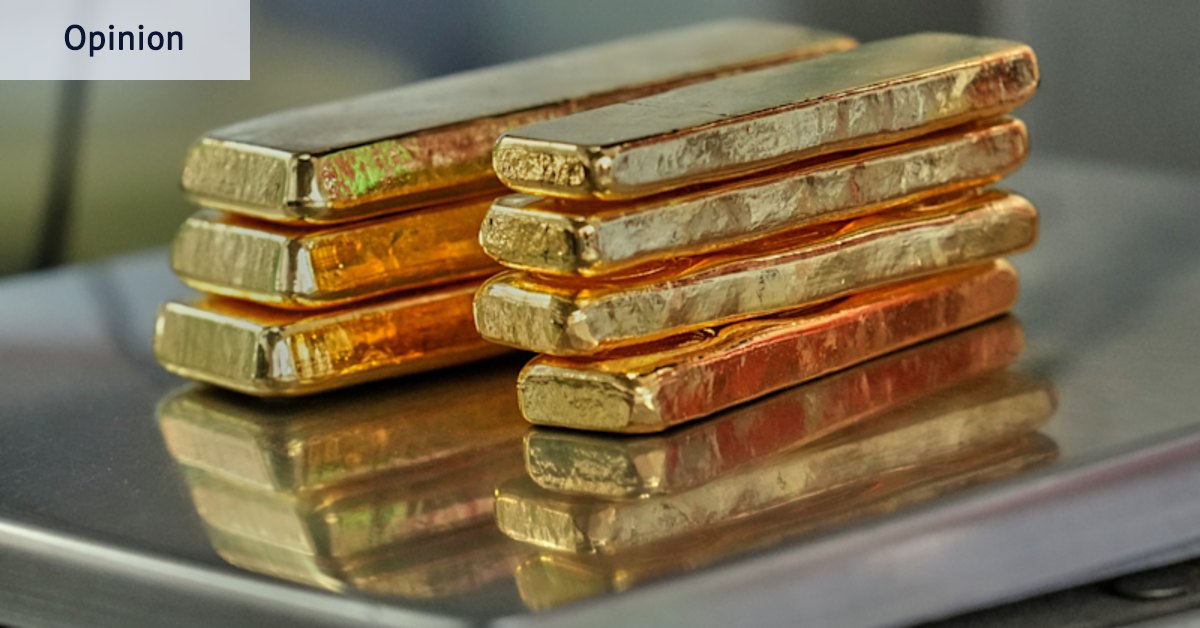
If you were looking for an illustrated view of what’s been happening in the global economy and markets over the course of this year, you’d have to look no further than a chart of the gold price. asserted
you → look → price
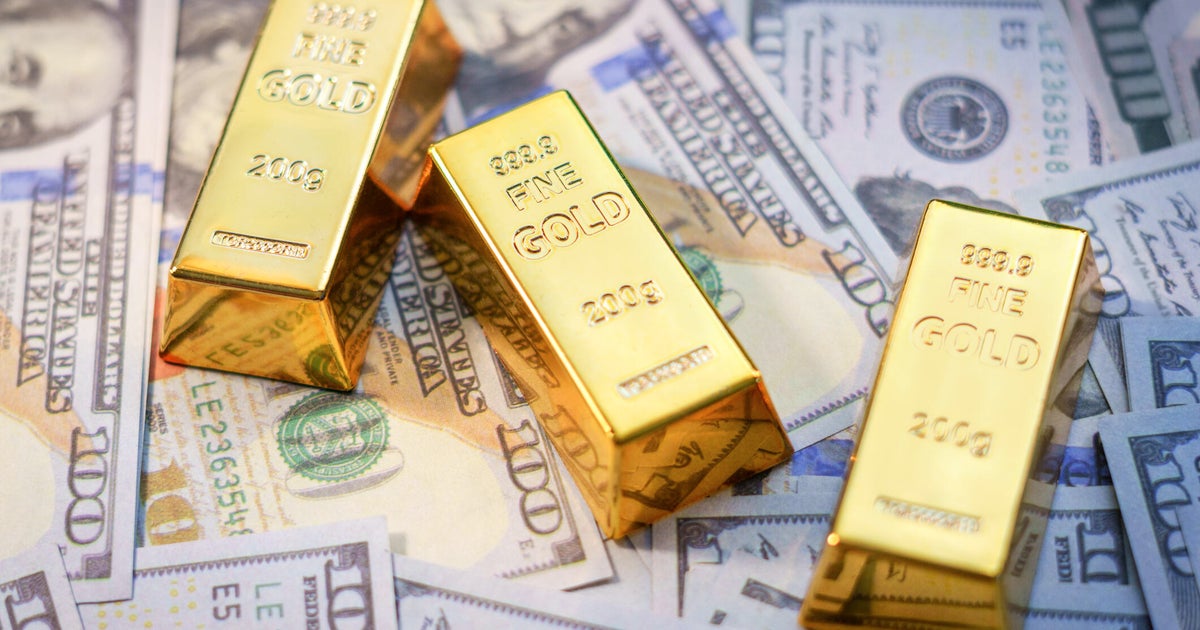
The precious metal has had a volatile 2026 so far, hitting a record $US5595 an ounce high in late January, falling to a year-low below $US4000 an ounce in July, recovering to just under $US4700 an ounce in late August before tumbling back to about $US4160 this week. asserted
metal → have → US4160
The price has been buffeted by the cross-currents being generated by the war in the Middle East, the fiscal stress in developed economies, particularly in the US, stubborn inflation rates, the turmoil in bond markets and turbulent currency markets. asserted
price → buffet → markets
Many of those influences are centred in the US and flow from the impact of the war with Iran on the markets for oil and its derivative products, although the boom in artificial intelligence-related investment is also playing a role. asserted
boom → centre → role
The gold rush that pushed the metal to record highs in January was sparked by the three rate cuts the US Federal Reserve made last year as it shifted its focus from inflation to growth. asserted
it → push → growth
Gold has historically been regarded as a hedge against inflation, but it also has an inverse correlation with interest rates. asserted
it → regard → rates
Gold generates no income from interest but has holding and opportunity costs, so a lower rate environment makes it more attractive. asserted
it → generate → costs
As an indicator of how troubled, messy and confusing the emerging new world order and the debt-laden global economy are, the gold price is providing some appropriately volatile signals. asserted
price → emerge → signals
With the US flirting with stagflation last year – low growth but relatively high levels of inflation – and unsettling discussions about how the Trump administration might respond to public finances that are spiralling out of control, gold’s “safe haven” status was another factor in the price surge. uncertain
status → flirt → surge
China’s record buying activity last year, when it purchased more than 1000 tonnes of gold – a 60 per cent-plus increase on its 2024 purchases – also helped. asserted
it → purchase → purchases
After the 2023 freezing of Russia’s dollar-denominated offshore reserves in the wake of its invasion of Ukraine, China’s central bank has, along with other central banks, increasingly shifted its reserves out of the US Treasuries market and into gold. asserted
bank → denominate → gold
Donald Trump’s trade wars with the rest of the world may have provided an extra incentive for China - and even America’s traditional allies - to reduce their exposures to the US. uncertain
China → provide → US
Aided at the margin by a stronger yuan, China has bought gold almost regardless of the price, so the sharp fall in the price over the past few weeks should create an appealing buying opportunity. asserted
fall → aid → opportunity
It’s not only the central bank that’s plunged into the precious metal. asserted
that → ’ → metal
Although with China’s domestic economy seemingly stressed, that source of buying seems to have shrunk somewhat in recent months. asserted
source → stress → months
What changed from the bull market in gold early in the year to its steady price decline as the year progressed, including the steep fall from just under $US4700 in late August to about $US4160 an ounce today, and around $US4135 an ounce on the spot market? asserted
year → change → market
The war and an oil price that has soared from around $US70 a barrel to more than $US100 a barrel, forcing petrol and diesel prices up by far greater amounts, is the obvious culprit. asserted
that → soar → amounts
It is feeding into higher inflation and interest rates and slower growth in most of the world. asserted
It → feed → world
The US, the key economy for global financial markets, doesn’t have that slower growth, thanks to the extraordinary levels of AI investment and the wealth effects of a sharemarket at near record levels. asserted
US → have → levels
It does, however, have the same challenge with high levels of inflation that have forced the Fed to reluctantly start raising US interest rates for the first time in more than three years. asserted
that → have → years
America, along with much of the developed world, also has deteriorating public finances, with a deficit of close to 6 per cent, gross government debt of more than $US40 trillion and an annual interest bill of around $US1 trillion that rises every time a longer-dated bond matures. asserted
bond → develop → trillion
The combination of continuing high inflation, the competition for capital between the government and AI companies and the fear that the Trump administration might try to inflate its way out of the fiscal trap that its profligacy has built has prompted bond investors to take matters into their own hands, forcing yields up to levels not seen for nearly two decades. uncertain
profligacy → continue → decades
America’s unsustainable public finances and the turbulence in the world’s most important financial market might make the concept of holding more gold appealing. uncertain
concept → make → gold
But the surge in yields has increased both the cost of holding gold and the opportunity cost associated with it. asserted
surge → increase → it
That inverse relationship between the price of gold and US interest rates is unlikely to disappear for some time. asserted
relationship → disappear → time
Having defied those who were sceptical that the Trump-appointed Fed chair Kevin Warsh would risk infuriating Trump with a rate rise, the markets are now pricing in a 70 per cent probability that this month’s 25 basis point increase in the federal funds rate will be followed up with a similar move next month. asserted
increase → defy → move
Indeed, 100 basis points of increases – a full percentage point – is expected over the next 12 months. asserted
points → expect → months
That probably adds more pessimism to the outlook for the gold price, but it may also accelerate the decline of the US bond market as the most important market in the world. uncertain
it → add → world
China, which has cut its holdings of US Treasuries from a peak of $US1.3 trillion in 2013 to $US618 billion even as it built its gold holdings, isn’t the only country that will see the cheaper gold price as an opportunity. asserted
that → cut → opportunity
That’s provided the US dollar’s relative strength (it has gained more than 2 per cent against its major trading partners’ currencies this month) doesn’t offset the price decline. asserted
it → provide → decline
At the end of last year, it accounted for about 27 per cent of all central bank reserve assets, up from 20 per cent a year earlier. asserted
it → account → cent
That proportion has almost certainly increased through this year, widening the lead over US Treasuries, where the holdings fell from 25 per cent of reserves to 22 per cent last year. asserted
holdings → increase → cent
The volatile path the gold price has traced this year reflects the messy and risky macro environment, with the US at the epicentre of most of the major issues and factors impacting the price. asserted
US → trace → price
Debt, inflation, the war in the Middle East, the Trump-led assault on the post-WW2 order and his “America First” approach to geopolitics and geoeconomics, rising interest rates and the diversion of global savings into the risky, but potentially transformative, AI sector are all reflected in the shifting movements in the price of the shiny metal. asserted
Debt → lead → metal
As an indicator of how troubled, messy and confusing the emerging new world order and the debt-laden global economy are, the gold price is providing some appropriately volatile and, at times, paradoxical signals. asserted
price → emerge → signals

Give feedback · no sign-in needed

No sign-in needed for now. Your note is sent without a name, so it cannot be answered.

History Support