Billion-dollar losses, but worth $2.9 trillion? The mind-boggling maths of AI

Read the original at The Sydney Morning Herald ↗
The Sydney Morning Herald · collected 2026-09-30 · by Stephen Bartholomeusz

Quick Summary

Anthropic, a leading artificial intelligence lab, reported revenues jumping from $4.6 billion last year to over $16 billion in the first half of this year, despite operating losses exceeding $8 billion in 2024. The company plans to raise up to $100 billion in its upcoming IPO with an estimated valuation of around $2 trillion, reflecting rapid growth but also significant spending on infrastructure and compute resources. This financial trajectory highlights the reliance of AI pioneers on continuous external funding to support their ambitious technological goals and escalating valuations.
Written locally by qwen2.5:14b on 2026-09-30, using this article's own text rather than the other coverage of the same event (that is the story summary below).

AI analysis runs on qwen2.5:14b, locally

Story summary

Frontier AI labs like Anthropic and OpenAI are experiencing massive financial losses despite soaring revenue. Reuters recently published leaked details from Anthropic's IPO prospectus revealing its revenues jumped from $4.6 billion in 2023 to over $16 billion in the first half of 2024. However, last year alone, Anthropic lost over $8 billion at an operating level and reported a net loss of $42 billion, up from $2.98 billion in 2023.

Anthropic's revenue is heavily concentrated; nearly one-quarter comes from just two customers, with 47% transiting through cloud partners like Amazon and Google who also serve as major investors and rivals. This complex web of relationships highlights the AI sector’s reliance on cooperative funding strategies amid massive spending requirements for compute infrastructure, totaling $518 billion in planned future expenditures.

These staggering figures underscore the critical need for external capital to sustain such high valuations and spending levels, indicating significant financial challenges despite promising growth prospects.

Written for “AI Economic Impact” on 2026-10-05, grounded in this article and the 0 other(s) covering the same event.

Signals How these are calculated →

Claims extracted
40
claim-shaped sentences
Uncertain
25%
10 of 40 hedged
Leaning
not political
takes no side on a contested political question
Correction & hedging signals
61.2
corrections and hedging in what we collected; not a measure of accuracy
Outlets on this story
1
Economy/Business
Narrative spread
1
articles carrying this framing
Analyzed 2026-09-30 · how these are computed

Story

📰 AI Economic Impact
Economy/Business · 1 article(s) covering the same event.

How this is being covered How these are calculated →

Article leaning vs. publisher reliability
Source leaning vs. consistency

Compared with similar articles

This article reads unscored and hedges 25% of its claims. Each row says how that neighbour differs.
The Sydney Morning Herald
⚖️ Leans left 🔴 6% hedged 3 of 51 📰 publisher trust 61
“The articles discuss different aspects of AI companies' financial situations and do not describe the same specific incident or occurrence.”
The Sydney Morning Herald
⚖️ leaning not scored 🔴 22% hedged 6 of 27 📰 publisher trust 61
“Article A focuses on Anthropic's warning about potential existential risks from its AI technology in their IPO prospectus, while Article B discusses financial aspects and revenue figures from leaked details of the same prospectus.”
Semafor
⚖️ Leans left 🔴 11% hedged 1 of 9 📰 publisher trust 95
“The articles discuss different aspects of AI costs and economics, with no clear overlap in specific events or time frames.”
The Sydney Morning Herald
⚖️ leaning not scored 🔴 16% hedged 7 of 44 📰 publisher trust 61
“The articles discuss different aspects of AI's impact on Wall Street and financial markets over distinct time periods.”
Oura delays IPO citing 'uncertainty' different event · 90%
Semafor
⚖️ Leans left 🔴 0% hedged 0 of 5 📰 publisher trust 95
“Article A reports on Oura's delay of their IPO citing market uncertainty and mentions Anthropic and OpenAI creating a capital vortex. Article B focuses on the financial details of Anthropic's upcoming IPO, which are different specific events.”
Los Angeles Times
⚖️ Leans left 🔴 23% hedged 7 of 30 📰 publisher trust 95
“The articles discuss different aspects of Anthropic's business and risks, not the same specific incident.”
Times of India
⚖️ leaning not scored 🔴 42% hedged 8 of 19 📰 publisher trust 59
“Article A discusses Anthropic's warnings about AI risks in their IPO filing, while Article B focuses on financial details and revenue figures from the same filing but does not describe the same specific incident or occurrence.”
New York Post
⚖️ Leans right 🔴 36% hedged 4 of 11 📰 publisher trust 64
“Article A discusses financial details and losses of AI companies while Article B focuses on Anthropic's plans for an IPO before Thanksgiving.”
The Guardian
⚖️ Leans left 🔴 12% hedged 6 of 52 📰 publisher trust 60
“Article A discusses Anthropic's warning about AI risks and a specific incident with Meta’s Muse AI, while Article B focuses on financial details of Anthropic's IPO prospectus. They cover related topics but describe different specific events.”
Washington Examiner
⚖️ Leans left 🔴 6% hedged 3 of 47 📰 publisher trust 72
“The articles discuss different aspects of AI companies' financial performance and public perception, without clearly describing the same specific incident.”

Publisher

The Sydney Morning Herald · 2351 article(s) · 4 correction(s) detected
Running correction rate · 4 correction(s)
2026-10-03
Tennessee’s prisons chief to resign after failed execution of Christa Pike
2026-09-28
Inside the prison left abandoned for years – now set to reopen as DV offenders weigh on system
2026-09-19
What will happen to your most cherished possessions when you die? You don’t want to know
2026-09-18
What will happen to your most cherished possessions when you die? You don’t want to know

Who wrote this

Stephen Bartholomeusz
7 article(s) here · 1 carrying a prediction
🔮 The “forced labour” tariffs are a transparent attempt to recreate the global tariff regime that the Court of International Trade ruled illegal last May; a judgment that the US Supreme Court confirmed in February.
🔮 While the leading frontier AI lab says it will have its second successive quarter of profitability, at an operating level, in the September quarter, last year it lost more than $US8 billion at an operating level – up from $US2.98 billion in 2024 – while reporting a net loss of $US42 billion.
🔮 With the US flirting with stagflation last year – low growth but relatively high levels of inflation – and unsettling discussions about how the Trump administration might respond to public finances that are spiralling out of control, gold’s “safe haven” status was another factor in the price surge.
🔮 The sudden spike in US bond yields over the past week to near 20-year highs raises a multi-trillion dollar question: Will those higher debt returns crash the sharemarket, and in the process derail the boom in artificial intelligence-related investment?
🔮 Last week, Berkshire Hathaway announced that Warren Buffett’s son, Howard, would replace him as chairman of the sprawling conglomerate.
🔮 That something would have dire consequences for much of the world, including the US - and Australia, the world’s biggest per-capita user of the fuel.
🔮 While Warsh might add growth and AI investment to the influences on US inflation, that begs the question of why other developed economies with less growth and less AI investment – from Australia and Japan to the European Union – are also wrestling with persistently high inflation and their central banks are also raising their policy rates.
2026-09-21 · assertive framing · Trump’s war is strangling the world
Also by Stephen Bartholomeusz
Donald Trump’s war on the world faces a lethal blow
2026-10-01 · The Sydney Morning Herald
Nothing else under this byline is closely related to this article, so these are simply their most recent.
All 7 articles by Stephen Bartholomeusz →

Topics

Amazon Anthropic OpenAI Reuters SpaceX

Subjects

Anthropic ORG · 6× SpaceX ORG · 2× Alphabet ORG · 1× Amazon ORG · 1× Elon Musk’s PERSON · 1× Meta ORG · 1× Microsoft ORG · 1× OpenAI ORG · 1× Oracle ORG · 1× Reuters ORG · 1×

Narrative

It says nearly a quarter of its revenues last year came from just two customers and that 47 per cent of its sales to customers last year transited through its cloud partners Amazon and Alphabet’s Google, who handle distribution and collect customer payments for it. Both those companies are also major investors in Anthropic, suppliers of compute – and rivals. Those layers of tangled relationships are a common feature of the AI sector, where the sheer scale of the funding challenges has forced competitors to co-operate, producing layers of interdependencies and mutual vulnerabilities.
framing: mixed · carried by 1 article(s) · first seen 2026-09-30
🔮 While the leading frontier AI lab says it will have its second successive quarter of profitability, at an operating level, in the September quarter, last year it lost more than $US8 billion at an operating level – up from $US2.98 billion in 2024 – while reporting a net loss of $US42 billion.
2026-09-30 · The Sydney Morning Herald
Billion-dollar losses, but worth $2.9 trillion? The mind-boggling maths of AI · mixed framing

Claims (40 extracted, 10 hedged)

Frontier labs like Anthropic and OpenAI are at the bleeding edge of artificial intelligence. asserted
labs → bleed → intelligence
They are literally haemorrhaging cash even as their spending, and revenues, soar. asserted
spending → haemorrhage → cash
Leaked details of Anthropic’s prospectus for its initial public offering, published by Reuters, show that its revenues are soaring indeed. asserted
revenues → publish → Reuters
From $US4.6 billion ($6.6 billion) last year, its sales jumped to more than $US16 billion in the first half of this year. asserted
sales → jump → year
While the leading frontier AI lab says it will have its second successive quarter of profitability, at an operating level, in the September quarter, last year it lost more than $US8 billion at an operating level – up from $US2.98 billion in 2024 – while reporting a net loss of $US42 billion. asserted
it → lead → billion
It spent $US7.33 billion on compute and infrastructure last year. asserted
It → spend → compute
Now, it says, it has plans and commitments to spend another $US518 billion on cloud services and data centres in future. asserted
it → say → future
The numbers are staggering and underscore how reliant the AI pioneers are on access to external capital to fill in the funding voids created by the gulfs between their spending and revenues on the one hand, and their ever-escalating valuations to maintain that access to capital on the other. asserted
pioneers → underscore → other
Anthropic plans to raise up to $US100 billion in its IPO, at a valuation of about $US2 trillion ($2.85 trillion). asserted
Anthropic → raise → trillion
In a $US13 billion funding round this time last year, it was valued at $US183 billion. asserted
it → value → billion
Earlier this year, its two latest fund raisings valued it at $US380 billion (February) and $US965 billion (May). uncertain
raisings → value → billion
The valuations of AI companies inflate faster than their revenues. asserted
valuations → inflate → revenues
If AI wipes out the human race, the question of how much AI companies should be worth would become academic, assuming there was anyone left who could be bothered to attempt the calculations. uncertain
who → wipe → calculations
Without the ability to regularly attract new capital, those AI companies without the vast legacy revenues of the hyperscalers – Amazon, Alphabet, Meta, Microsoft and Oracle – would implode under the weight of the ever-increasing investment required to remain at the leading edge of AI developments. asserted
companies → attract → developments
Even the hyperscalers are showing signs of the strain. asserted
hyperscalers → show → strain
Still, it is conceivable that Anthropic could be valuated at $US2 trillion in its IPO, which appears likely to occur in November. uncertain
which → valuate → November
Elon Musk’s SpaceX, which contains a number of revenue-generating businesses, including a highly profitable Starlink satellite business, raised about $US85 billion in June, valuing it at $US1.78 trillion. asserted
which → contain → trillion
SpaceX’s current market capitalisation is a touch over $US2 trillion, so Anthropic’s ambition of attracting a similar valuation while gaining access to a bigger and more permanent conduit to equity providers isn’t completely far-fetched. asserted
ambition → attract → providers
A concern for aspiring investors (and the rest of us) in the IPO was its reiteration of warnings its executives have previously given that AI models could pose “catastrophic or existential risks to humanity.” uncertain
models → aspire → humanity
If AI wipes out the human race, the question of how much AI companies should be worth would become academic, assuming there was anyone left who could be bothered to attempt the calculations. uncertain
who → wipe → calculations
Donald Trump, of course, continues to dismiss the dire warning from those actually developing the AI models, whose agents have a habit of routinely escaping their “sandboxes” to do things that their developers never intended and, indeed, have gone to great lengths to prevent - like hacking government and private sector databases. asserted
developers → continue → databases
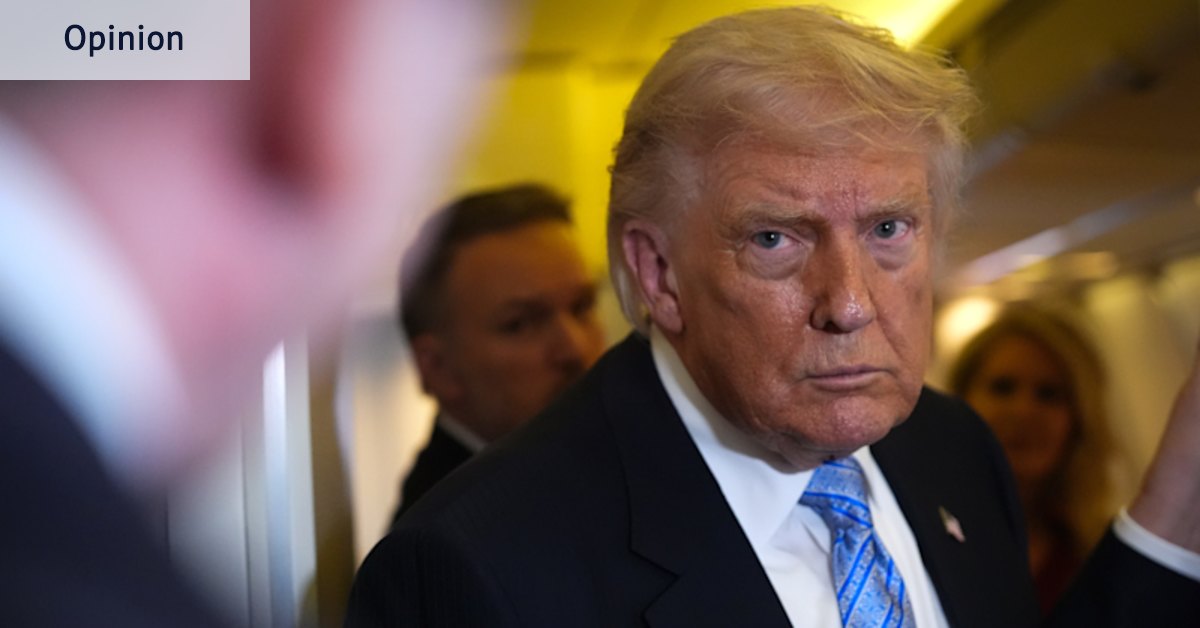
“I will never stifle the growth a technology that will be bigger than the industrial revolution,” he said on Tuesday after lunching with leading technology executives, including Anthropic’s CEO Dario Amodei, Nvidia’s Jensen Huang and Elon Musk. asserted
he → stifle → Amodei
‘I will never stifle the growth a technology that will be bigger than the industrial revolution.’Donald asserted
that → stifle → revolution
Trump believes self-regulation, the US Justice Department and the FBI will be sufficient to hold the sector and “bad actors” seeking to exploit AI’s capabilities to account – even though it is the leading AI companies like Anthropic and OpenAI who warn of a potential catastrophe and vehemently urge a slower and more cautious approach to development. asserted
who → believe → development
While the details of Anthropic’s business published by Reuters were limited – there’ll be more information once the prospectus is formally released – one insight that does emerge from is how narrow the foundations of Anthropic’s business are. asserted
foundations → publish → business
It says nearly a quarter of its revenues last year came from just two customers and that 47 per cent of its sales to customers last year transited through its cloud partners Amazon and Alphabet’s Google, who handle distribution and collect customer payments for it. Both those companies are also major investors in Anthropic, suppliers of compute – and rivals. Those layers of tangled relationships are a common feature of the AI sector, where the sheer scale of the funding challenges has forced competitors to co-operate, producing layers of interdependencies and mutual vulnerabilities. asserted
scale → say → interdependencies
Anthropic acknowledged that the concentrated nature of its partnerships “creates complex dynamics that could give rise to conflicts of interest and adversely affect our access to compute.” uncertain
that → acknowledge → compute
It could also, given that its competitors are collecting at least half of its customers’ payments, have a big impact on its cashflows. uncertain
competitors → give → cashflows
It’s a fragile and vulnerable structure when the lifeblood of the sector – that ability to raise new equity and debt to fund the hefty and ever-increasing capital expenditures – is the ability to continue to demonstrate high enough rates of growth in revenues and cash generation to convince capital providers that the yawning gaps between spending and revenues may eventually be closed. uncertain
gaps → ’ → spending
The hyperscalers alone will have capital expenditures of around $US800 billion this year, according to Goldman Sachs, with another $US1.1 trillion or so likely next year. uncertain
trillion → have → Sachs
If they are to make acceptable returns on their capital, they need to see ambitious and exponential revenue growth rates. asserted
they → make → rates
Trying to calculate the total addressable market for AI is an impossible task – the estimates range from about $US5 trillion to $US30 trillion – and the potential margins and profitability of individual AI companies like Anthropic even more so. asserted
estimates → try → Anthropic
What will businesses and consumers ultimately be prepared to pay for AI? asserted
businesses → prepare → AI
Will the “open weight” providers, offering “good enough” AI alternatives to the frontier labs and hyperscalers at fractions of their costs destroy the margins that Anthropic, OpenAI and the US mega techs need to validate their investments? asserted
Anthropic → offer → investments
Will the equity and debt markets remain open to the companies long enough for them to achieve something approaching financial self-sufficiency? asserted
them → remain → sufficiency
The ructions in the US bond market, where yields across the curve are now at or around 20-year highs and still edging up, are a threat to the sharemarket broadly and to AI companies in particular as the tech firms have become increasingly reliant on debt that is now, even for the hyperscalers, becoming increasingly expensive. asserted
that → edge → hyperscalers
The spreads over Treasuries of hyperscale debt have been blowing out, as have the costs of credit default swaps for AI data centres. asserted
costs → blow → centres
As its revenues scale up, the entire sector is vulnerable and will remain vulnerable for at least the next few years to any adverse event, either at the macro level or at an individual entity level, due to its incestuous financial relationships. asserted
sector → scale → relationships
Anthropic may well be worth $US2 trillion, or at least valued at that amount, or multiples of it. uncertain
Anthropic → value → it
For the moment though, and probably for at least the next few years, it is the possibility of AI and capital markets’ preparedness to capitalise that possibility -- rather than its current red-inked reality – that makes an IPO at that level feasible. asserted
IPO → capitalise → level

💬Give feedback
🕘History 🎫Support