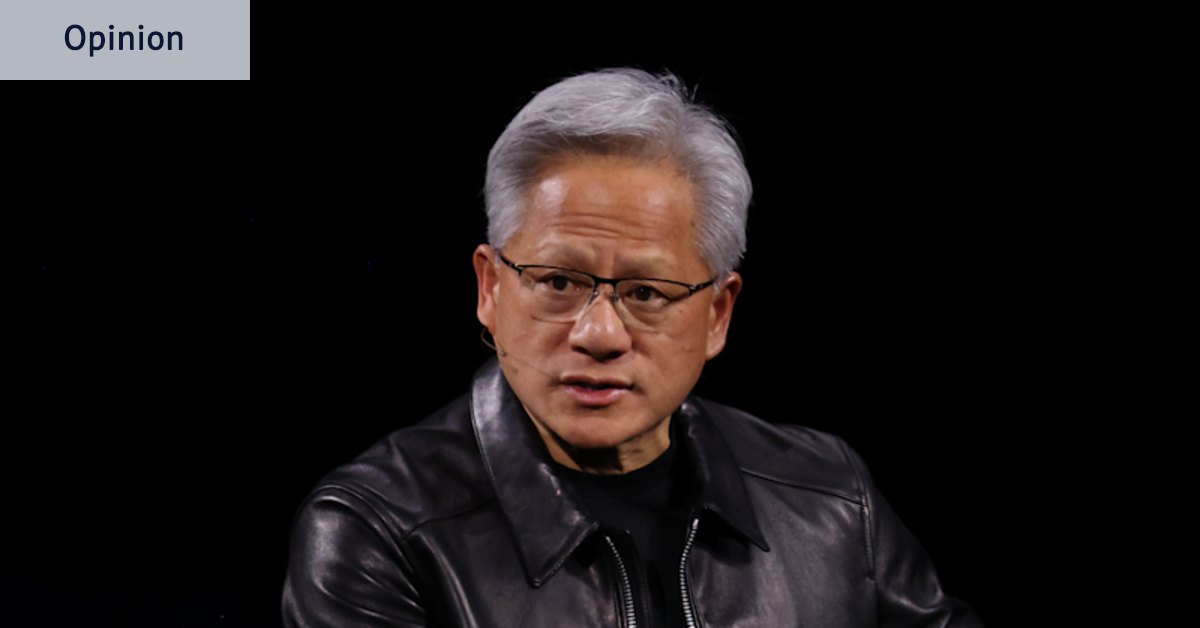
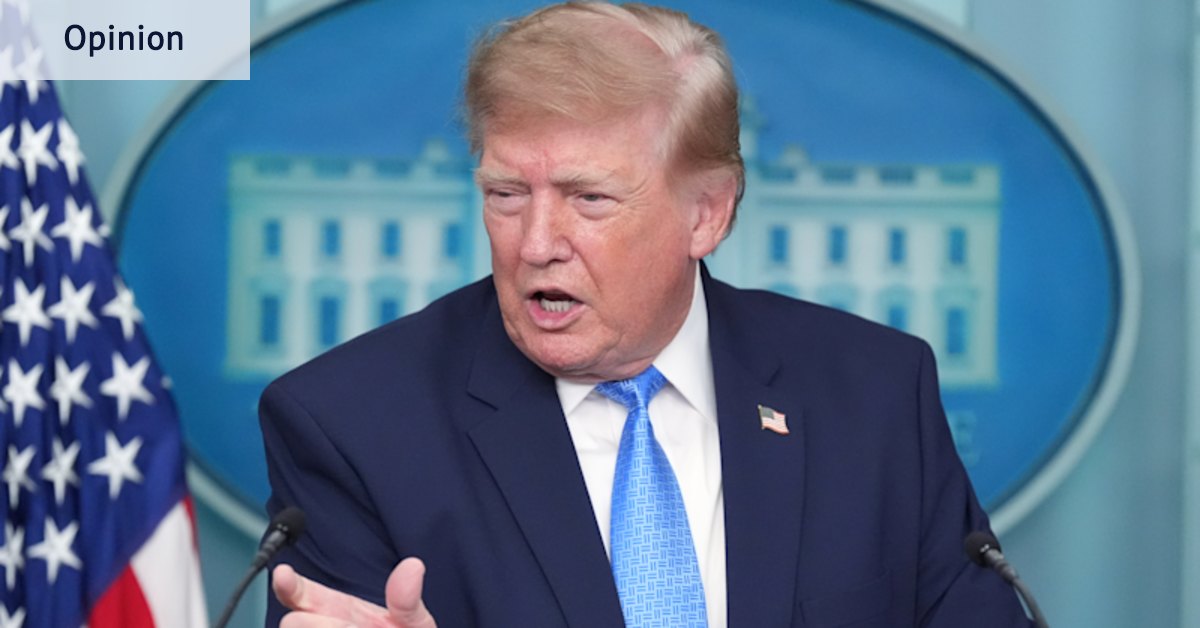
Photo via The Sydney Morning Herald

Donald Trump’s war on the world faces a lethal blow

Read the original at The Sydney Morning Herald ↗
Cite

Bartholomeusz, S. (2026, October 1). Donald Trump’s war on the world faces a lethal blow. The Sydney Morning Herald. https://www.smh.com.au/business/the-economy/trump-s-war-on-the-world-faces-a-lethal-blow-20261001-p611xx.html?ref=rss&utm_medium=rss&utm_source=rss_feed

Dated when The Aporia collected the article, usually within hours of publication. Check the original for its exact date and byline.

The Sydney Morning Herald · collected 2026-10-01 · by Stephen Bartholomeusz

Quick Summary

The U.S. Court of International Trade is currently reviewing a challenge to President Donald Trump’s recent imposition of 10 to 12.5 percent tariffs on approximately 60 economies and 86 countries, including the European Union as one entity, citing forced labor concerns. The plaintiffs include importers and 25 Democrat-led states who argue that these tariffs are illegal and a direct attempt to recreate a global tariff regime previously struck down by this court and confirmed by the Supreme Court in February. Trump’s administration is defending the tariffs under Section 301 of the Trade Act, but critics claim public statements from officials reveal it is merely a pretext for imposing broader trade restrictions.
Written by AI on 2026-10-01, from this article's own text only (the story summary below draws on all the coverage).
See how they differ ↓

AI analysis

Story summary

On Wednesday, the U.S. Court of International Trade in Manhattan heard arguments against President Donald Trump's global tariffs imposed on nearly all U.S. imports from 60 trading partners, including Canada, the EU, and China, over forced labor allegations. Four small businesses and 25 Democratic-led states are challenging the legality of these tariffs, arguing they exceed presidential authority. Attorneys for the plaintiffs contend that the Trump administration bypassed required country-specific legal processes in its rush to impose new duties, raising questions about the legitimacy of the tariffs. The court is expected to issue a ruling within weeks, which could determine the fate of these 10% to 12.5% tariffs affecting trade from multiple economies worldwide.

Written for “Trump Tariffs Under Scrutiny” on 2026-11-18, grounded in this article and the 1 other(s) covering the same event.

How they differ

2 outlets covered “Trump Tariffs Under Scrutiny”.

What each outlet says

One AI summary per outlet of its latest article on this story, written from that article alone and checked against it. Open the article for the outlet's own words.

Sydney Morning HeraldThis outlet1 Oct

The U.S. Court of International Trade is currently reviewing a challenge to President Donald Trump’s recent imposition of 10 to 12.5 percent tariffs on approximately 60 economies and 86 countries, including the European Union as one entity, citing forced labor concerns. The plaintiffs include importers and 25 Democrat-led states who argue that these tariffs are illegal and a direct attempt to recreate a global…

Donald Trump’s war on the world faces a lethal blow (this article)
Global News30 Sep

On Wednesday, the U.S. Court of International Trade in Manhattan reviewed President Donald Trump's forced labour tariffs imposed on imports from 60 countries including Canada and China. The court heard arguments from four small businesses and 25 Democratic-led states who claim these tariffs exceed presidential authority by not adhering to specific legal requirements for country-specific findings. Attorneys…

U.S. trade court scrutinizes Trump’s forced labour tariffs →

Compared with similar articles

This article reads leans left and hedges 24% of its claims. Each row says how that neighbour differs.
The Globe and Mail
Leans left Hedges 1 of 6 claims Outlet record 51/100
“The articles describe different actions by President Trump related to trade with Canada and a global tariff regime, not the same specific incident.”
Global News
Hedges 1 of 21 claims Outlet record 63/100
Reason
Hedges 2 of 12 claims Outlet record 67/100
“The articles discuss different legal challenges and attempts by President Trump regarding tariffs; Article A focuses on a specific court hearing about tariffs imposed in July, while Article B discusses an article arguing against the president's power to impose import bans.”
Toronto Star
Leans left Hedges 2 of 82 claims Outlet record 64/100
“The articles discuss different aspects of tariffs—one focusing on a Canadian company's struggle with U.S. tariffs and the other on legal challenges to Trump's tariff regime.”
CBS News
Leans right further right than this Hedges 1 of 39 claims Outlet record 67/100
“The articles describe different actions by President Trump: one is about a ban on Canadian imports worth almost $1 billion, while the other discusses tariffs imposed on numerous economies and countries being challenged in court.”
South China Morning Post
Leans right further right than this Hedges 0 of 5 claims Outlet record 62/100
“The articles discuss different aspects of trade issues involving the US and other countries: one focuses on a hearing about China's WTO compliance, while the other discusses court challenges to Donald Trump's tariffs.”
Toronto Star
Leans left Hedges 2 of 42 claims Outlet record 64/100
“While both articles reference Trump's trade tariffs and mention the Court of International Trade hearing on Wednesday, Article B focuses more on the impact of the tariffs rather than reporting on the specific court proceedings described in Article A.”

Story

Trump Tariffs Under Scrutiny
Politics · 2 article(s) covering the same event. See how they differ ↑
How this article was measured signals, leaning charts, publisher record, byline, topics and claims

Signals How these are calculated →

Claims extracted
34
sentences that state something as happening or true
Uncertain
24%
8 of 34 hedged ("reportedly", "may", "according to")
Leaning
Leans left
of the writing, not the subject · beta estimate
Publisher signals
61/100
The Sydney Morning Herald's corrections and hedging, across everything collected from it. Not a measure of accuracy.
Outlets on this story
2
Politics
Same framing elsewhere
1
articles that frame the event the way this one does
Analyzed 2026-10-01 · how these are computed

How this is being covered How these are calculated →

Article leaning vs. publisher reliability
Source leaning vs. consistency

Publisher

The Sydney Morning Herald · 7597 article(s) · 15 correction(s) detected
Running correction rate · 15 correction(s)

Who wrote this

Stephen Bartholomeusz
29 article(s) here · 1 carrying a prediction
Nvidia has delivered a third-quarter result that outperformed expectations, raised its forecasts for the current quarter and was very bullish about its prospects in its next financial year.
Donald Trump “wouldn’t mind” if he regained the role.
If you were looking for a single barometer of the state of the world – or of a particular copper-rich sector – it would be hard to go past the copper price.
It now appears inevitable that the Fed will deliver its second rate rise in this cycle – the first was in September – after the US inflation rate came in above expectations for the third successive month.
If he were to be removed – either by his board, which has said it will conduct an inquiry, or by external pressure – could Nvidia function as effectively?
The “blue tsunami” that destroyed Republican control of Congress last week may have a silver lining for some of the key companies caught up in the scramble for artificial intelligence supremacy and for investors exposed to what appeared to be a swelling bubble.
Musk quipped on his X social media platform that his “election-interfering space lasers didn’t work,” but it was another post that shows the real damage that the failure of his efforts to influence the outcome of the elections will do.
The midterm elections could knock out one, if not two, of the pillars supporting that dominance.
Those “concepts” could produce even more trade friction.
2026-11-03 · assertive framing · Trump has lost control of his war with Canada
Alphabet and Meta have, between them, raised almost $US90 billion of new equity since June and have programs that could raise a further $US100 billion.
2026-11-02 · assertive framing · Wall Street on edge after $1.4 trillion wipeout
Also by Stephen Bartholomeusz
Nothing else under this byline is closely related to this article, so these are simply their most recent.
All 29 articles by Stephen Bartholomeusz →

Topics

Australian Democrat European Union Supreme Court the US Court of International Trade

Subjects

Supreme Court ORG · 2× Trump PERSON · 2× Australian NORP · 1× Democrat NORP · 1× Donald Trump’s PERSON · 1× European Union ORG · 1× The Trump administration ORG · 1× the Court of International Trade ORG · 1× the US Court of International Trade ORG · 1× the US Supreme Court ORG · 1×

Narrative

They have also argued, more substantively, that the administration has failed to satisfy the legal requirements for implementing the tariffs, saying that in its haste to replace the interim tariffs (the investigations, consultations, public hearings and analysis of harm to US companies done by 86 countries took about two and a half months) it had not adequately followed the country-specific processes and made the country-specific analysis and findings required by the law. “If you’re going to do it at breakneck speed and try to cover the entire globe, you still have to satisfy the statutory requirements,” a lawyer for the challengers argued.
framing: mixed · carried by 1 article(s) · first seen 2026-10-01
The “forced labour” tariffs are a transparent attempt to recreate the global tariff regime that the Court of International Trade ruled illegal last May; a judgment that the US Supreme Court confirmed in February.
2026-10-01 · The Sydney Morning Herald
Donald Trump’s war on the world faces a lethal blow · mixed framing

Claims (34 extracted, 8 hedged)

Donald Trump’s third attempt to impose a global tariffs regime is being tested by the same panel of judges that deemed his previous attempts illegal. asserted
attempts → impose → judges
On Wednesday, the US Court of International Trade, which struck down those earlier tariffs, heard arguments in a challenge brought by importers and 25 Democrat-led states to the 10 to 12.5 per cent tariffs imposed on about 60 economies and 86 countries (the 27-member European Union was treated as a single economy) in late July. asserted
Union → strike → July
The tariffs (including a 12.5 per cent tariff on Australian exports to the US) were introduced, ostensibly, because of those countries’ failure to adequately prevent imports of goods made with forced labour. asserted
tariffs → include → labour
The Trump administration argues (as it has to under the legislation being used to implement the tariffs) that those failures gave them an unfair advantage over US producers and “burdens or restricts” US commerce. asserted
failures → argue → commerce
The “forced labour” tariffs are a transparent attempt to recreate the global tariff regime that the Court of International Trade ruled illegal last May; a judgment that the US Supreme Court confirmed in February. uncertain
Court → recreate → February
The administration responded to the Supreme Court setback with a temporary replacement for the illegal tariffs, using a different section of the US Trade Act, which allows a president to impose tariffs of up to 15 per cent for a maximum of 150 days in a balance of payments crisis. asserted
president → respond → crisis
The US doesn’t have – with a floating exchange rate it can’t have – a balance of payments crisis, and so those tariffs, too, were ruled unlawful by the trade court. asserted
tariffs → have → court
The administration has appealed that decision but, in any event, those tariffs have expired and been replaced by those now being scrutinised by the court. asserted
tariffs → appeal → court
Section 301 of the Trade Act, which the administration is relying on for the forced labour tariffs (and another set that it plans to impose on 16 countries for “excess manufacturing capacity and production” that is still in the pipeline), has been tested in the courts previously and held up. asserted
that → rely → courts
It’s not previously been used, however, to create a blanket global tariff regime. asserted
It → use → regime
Its provisions require detailed country-specific investigations, consultations with the targeted country or countries, hearings and evidence of the country’s failings and the harm it has caused to US businesses. asserted
it → require → businesses
The administration’s cause hasn’t been helped by public comments by Trump and other officials that have made it clear the use of the forced labour provisions is a device to resurrect the tariff regime the Supreme Court decision had demolished. asserted
decision → help → regime
Treasury Secretary Scott Bessent declared after that decision that the rates would go back to exactly where they had been before the tariffs were removed. asserted
tariffs → declare → decision
Trump himself told Fox News that the new tariffs were “doing the same thing” as the ones ruled out by the Supreme Court. asserted
tariffs → tell → Court
These comments have been cited by those challenging the tariffs, who have argued that the expressed concerns about forced labour are just a pretext for recreating what the courts have already deemed illegal. asserted
courts → cite → labour
They have also argued, more substantively, that the administration has failed to satisfy the legal requirements for implementing the tariffs, saying that in its haste to replace the interim tariffs (the investigations, consultations, public hearings and analysis of harm to US companies done by 86 countries took about two and a half months) it had not adequately followed the country-specific processes and made the country-specific analysis and findings required by the law. “If you’re going to do it at breakneck speed and try to cover the entire globe, you still have to satisfy the statutory requirements,” a lawyer for the challengers argued. asserted
lawyer → argue → challengers
The administration’s lawyer said the US Trade Representative had thoroughly evaluated the prevalence of goods made with forced labour in international commerce and didn’t need to show “with metaphysical certainty” that forced labour was a burden on US commerce before imposing the tariffs. asserted
labour → say → tariffs
He was questioned by the judges on how forced labour had created unfair competition for US companies, and whether the administration’s report had demonstrated that harm had been done. asserted
harm → question → companies
He claimed it had produced ample evidence. asserted
it → claim → evidence
The government, he also said, had wide discretion to decide the sorts of foreign practices that would allow Section 301 tariffs to be imposed. asserted
tariffs → say → practices
The judges could, as they did with Trump’s earlier attempts, simply deem the latest tariffs illegal. uncertain
tariffs → do → attempts
They also raised the possibility that they could hand the whole matter back to the US Trade Representative’s office, with directions to redo the entire process properly. uncertain
they → raise → process
He’s already had to disgorge most of the $US166 billion ($239 billion) of revenue (plus interest) raised by his initial “Liberation Day” tariffs. asserted
He → have → tariffs
Depending on the outcome of the administration’s appeal, it might have to refund tens of billions of dollars raised by the interim tariffs. uncertain
it → depend → tariffs
It would also undermine the leverage he has had in using tariffs and the threat of tariffs to coerce and punish other countries. asserted
he → undermine → countries
While there are other mechanisms for imposing tariffs, which he has used, there is no apparent fourth option to create a global tariff regime. asserted
he → be → regime
Mind you, if Trump’s tariffs were knocked out it would be a good thing for US companies and consumers, who effectively pay them, and for the US inflation rate. asserted
who → mind → rate
It might also, counterintuitively, be good for the US manufacturing sector Trump used as justification for his tariffs. uncertain
Trump → use → tariffs
There might be a boom in data centre construction, but manufacturing has been faltering despite – or perhaps because of – Trump’s tariffs. uncertain
manufacturing → falter → tariffs
Manufacturing investment and jobs have shrunk ever since Trump regain office, after peaking in 2024, when Joe Biden was president. asserted
Biden → shrink → 2024
That may be because of the volatile economic environment Trump’s policies have created, but it might also be because the range of tariffs he has had in place have raised the costs of the imported intermediate productions feeding into the manufacturing sector. uncertain
he → create → sector
Trump’s tariffs have also failed to have any material impact on the US goods trade deficit and, even at their peak, raised only a fraction of the revenue he claimed would enable him to eradicate America’s $US2 trillion a year budget deficit, or abolish income taxes, or fund $US5000 cheques to Americans that would cost more than $US1 trillion. asserted
that → fail → trillion
Tariffs, as it has been demonstrated, aren’t (and never could be) the magic pudding Trump thought – and still thinks – they are. uncertain
they → demonstrate → ?
The Business Briefing newsletter delivers major stories, exclusive coverage and expert opinion. asserted
newsletter → deliver → stories
Give feedback · no sign-in needed

No sign-in needed for now. Your note is sent without a name, so it cannot be answered.

History Support