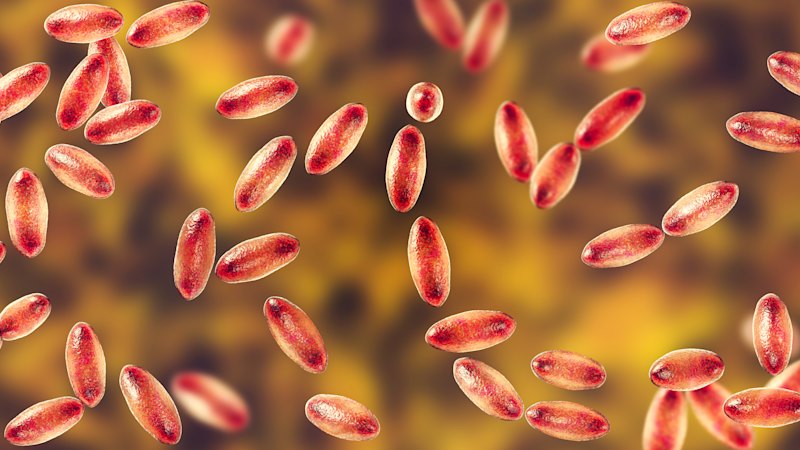
A possible plague outbreak at a Russian lab in Irkutsk has sparked concerns about the nature of its activities, given Russia's history with biological weapons. The Anti-Plague Research Institute, located near Mongolia’s border and one of many Soviet-era labs, was previously linked to offensive bioweapons research despite official claims of defensive purposes. With nearly 200 contacts of a lab technician under quarantine, the incident has reignited debates over Russia's adherence to international biological weapons treaties, especially amid ongoing geopolitical tensions surrounding alleged bio-lab activities.
Written locally by qwen2.5:14b on 2026-10-05,
using this article's own text rather than the other coverage of the
same event (that is the story summary below).
Story summary
A 28-year-old lab technician named Darya Shipilova died of pneumonic plague in Siberia after breaking a test tube at the Irkutsk Anti-Plague Institute on September 29, two days before her death. As many as 200 people who may have been exposed to the pathogen were placed under quarantine. The incident prompted Russian health officials, including Chief State Sanitary Doctor Anna Popova, to implement strict measures and travel to the region to oversee containment efforts. Despite these actions, there are concerns that the Russian government is not fully disclosing details about the outbreak, with some comparisons being made to the initial handling of the COVID-19 situation in Wuhan, China. The U.S. State Department is closely monitoring the situation, urging Russia for transparent information sharing and engaging its diplomatic counterparts in Moscow due to potential risks for Americans in Russia. Reports suggest that pneumonic plague can be treated effectively with antibiotics if diagnosed early. Governor Igor Kobzev assured residents that all identified close contacts are asymptomatic and have tested negative so far. The broader public health situation in the Irkutsk region remains under strict quarantine measures but is reported to be stable by local authorities. However, former Rospotrebnadzor head Gennady Onishchenko downplayed the threat, suggesting that widespread transmission is unlikely due to cooler seasonal temperatures aiding containment efforts. Despite these reassurances, public health experts and officials worldwide are closely monitoring developments in Siberia for any potential spread of the disease beyond local quarantine zones.
Written for “Plague Outbreak in Siberia” on 2026-10-06,
grounded in this article and the 33 other(s) covering the same event.
A possible plague outbreak at a Russian lab is raising questions about what was actually happening inside the lab in remote Siberia — especially in light of Russia’s known bioweapons program.
asserted
what → raise → program
The Anti-Plague Research Institute in Irkutsk, 2,500 miles east of Moscow near the Mongolian border, is one of 80-some infectious disease labs built by the Soviet Union to study pathogens.
asserted
Institute → build → pathogens
On paper, the labs were purely for defense and public health, but the plague labs were closely linked to the USSR’s offensive biological weapons program, according to research by Raymond A. Zilinskas.
uncertain
labs → link → Zilinskas
The Irkutsk lab under the Soviets functioned as a critical repository for wild, highly virulent strains of plague, anthrax, and other pathogens isolated from animals across East Asia and Siberia.
asserted
lab → function → Asia
Many of the labs also provided samples to the Soviet army to use in their bioweapons research program, Zilinskas found.
asserted
Zilinskas → provide → program
The Irkutsk lab has, according to the Kremlin, been used for defensive research and vaccine development.
uncertain
lab → accord → research
However, an April 2025 US State Department report found that “Russia maintains an offensive biological warfare program and is in violation of its obligations” under the Biological Weapons Convention, Radio Free Europe reported.
asserted
Europe → find → Convention
It comes years after Moscow peddled a conspiracy theory that Ukraine was running bioweapons laboratories, often with tacit or direct US support.
asserted
Ukraine → come → support
Rep. Don Bacon (Neb.-2), a senior member of the House Armed Services Committee, addressed the longstanding allegations in an X post on Sunday.
“I remember hearing from anti-Ukraine voices about their so-called bio labs.
asserted
I → address → labs
It was Russian disinformation ops at their best,” the Republican congressman wrote.
asserted
congressman → write → best
“But in reality, it is Russia with the biolabs,” he added.
asserted
he → add → biolabs
Former CIA Director Mike Pompeo similarly sounded the alarm on Monday — and drew a straight line to the COVID-19 outbreak seven years ago, which occurred 1,500 miles south in Wuhan, China.
asserted
which → sound → Wuhan
“The news of a suspected ‘plague’ outbreak from Russia should be treated with the utmost seriousness, especially considering the source,” he wrote in X.
“COVID showed us how the lies and obstruction of authoritarian governments seeking to cover their tracks can turn a containable outbreak into a global pandemic.
asserted
lies → suspect → pandemic
Russia has consistently denied that it is producing biological weapons at its disease labs, saying that such facilities are aimed at developing defenses against deadly pathogens and plagues.
asserted
facilities → deny → pathogens
So far, almost 200 people who came into contact with lab technician Shipilova are under quarantine, and up to five local hospitals are feared to have been placed on lockdown.
asserted
hospitals → come → lockdown
No further positive cases of pneumonic plague have been reported as of Monday.
asserted
cases → report → Monday
During the Soviet Union, research stations like Irkutsk collected thousands of wild pathogen strains from various ecological regions, and experts trained at the anti-plague institutes were frequently recruited into bioweapons programs, according to Zilinskas’ research.
uncertain
experts → collect → research
When the USSR collapsed in 1991, many of the anti-plague labs scattered across the former empire fell into dangerous disrepair due to funding shortages, and for the next two decades, American-backed initiatives worked with the ex-Soviet states to secure their pathogen collections and upgrade lab biosafety.
asserted
initiatives → collapse → biosafety
The plague is commonly spread by fleas — but contact with infected wild animals is the most common way the disease is transmitted to humans in the 21st century.
asserted
disease → spread → century
Pneumonic plague, which is reportedly the variant in Siberia, can also spread person-to-person by particles in coughs from infected people or contact with bodily fluids.
uncertain
which → spread → fluids
The plague was the source of the Black Death in the 14th century, which killed up to 60% of the entire population of Europe.
asserted
which → kill → Europe
 The Aporia