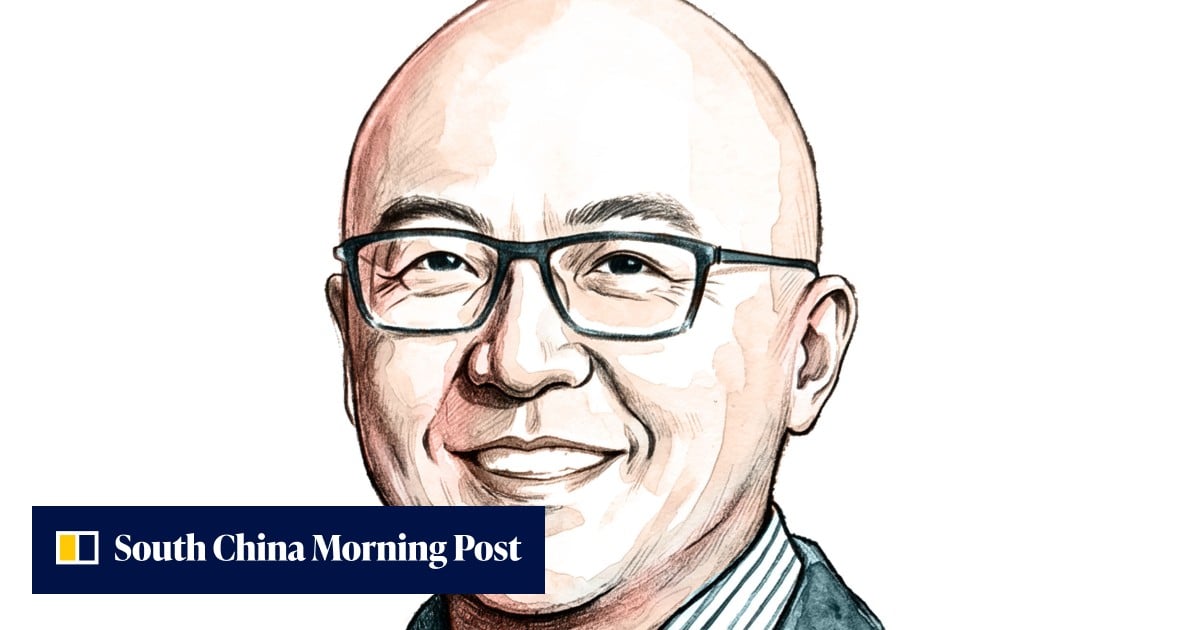
Economist Lan Xiaohuan on the balancing act needed to boost China’s consumption

News - South China Morning Post · collected 2026-09-06 · by Xinyi Wu
Read the original at News - South China Morning Post ↗

Summary

Economist Lan Xiaohuan discusses the economic realities behind China's record trade surplus and the need for a stronger social safety net. According to Xiaohuan, the most significant shifts affecting China are external, including the pandemic, the Russia-Ukraine war, and shifting US politics. He notes that domestic factors such as the decline of the real estate market and rise of manufacturing and technology are also significant, but less consequential than global events. In response to these changes, Xiaohuan suggests writing an entirely new book rather than adding a new chapter to his previous work.
Written by the local model on 2026-09-07, using this article's own text rather than the other coverage of the same event (that is the story summary below).

Signals How these are calculated →

Claims extracted
10
claim-shaped sentences
Uncertain
0%
0 of 10 hedged
Leaning
withheld
no quote in the article backed the model's score
Publisher trust
94.0
red-flag proxy, not a credibility rating
Outlets on this story
1
Economy/Business
Narrative spread
1
articles carrying this framing
Analyzed 2026-09-07 · source text last changed 2026-09-07 · how these are computed

AI analysis (generated at analysis time, not now)

Story summary

Economist Lan Xiaohuan, a professor at China Europe International Business School, has written about the challenges facing China's economy. China has a record trade surplus, which is a result of its economic realities, according to Xiaohuan. He believes that a stronger social safety net is necessary to balance out the country's economic growth. This is because the decline of the real estate market and the rapid rise of manufacturing have created new issues for the economy. Additionally, Xiaohuan notes that China's public data infrastructure plays a significant role in its artificial intelligence development, particularly in the competition with the United States.
Written for “China Consumption Growth Strategy” on 2026-09-07, grounded in this article and the 0 other(s) covering the same event.
Why this leaning score
The model judged this article politically coded and scored it +0.35, but every quote it verified points left, so the score is not published.
Written under an earlier scoring contract, which gave a paragraph rather than checkable quotes. Re-analysing this article replaces it.
Leaning score withheld for article 6162: score contradicts its own evidence · logged 2026-09-07

Story

📰 China Consumption Growth Strategy
Economy/Business · 1 article(s) covering the same event. This is the one the site leads with.

How this is being covered How these are calculated →

Article leaning vs. publisher reliability
Source leaning vs. consistency

Compared with similar articles

This article reads unscored and hedges 0% of its claims. Each row says how that neighbour differs.
News - South China Morning Post
⚖️ Leans right 🔴 0% hedged 0 of 18 📰 publisher trust 94
“Article A is discussing US-China relations and technology leadership, while Article B is about China's economic consumption and trade surplus, with no mention of a shared specific incident”
Semafor
⚖️ Leans left 🔴 0% hedged 0 of 5 📰 publisher trust 96
“Article A reports on G20 finance meetings discussing trade tensions with China, while Article B is an interview with economist Lan Xiaohuan discussing China's consumption and trade surplus in general terms.”
News - South China Morning Post
⚖️ Leans strongly right 🔴 0% hedged 0 of 6 📰 publisher trust 94
“The two articles report on separate events at different times and locations: Article A discusses a statement by Victor Gao about China's stance on AI dominance, while Article B is an interview with economist Lan Xiaohuan on boosting China's consumption.”
News - South China Morning Post
⚖️ Leans right 🔴 31% hedged 4 of 13 📰 publisher trust 94
“The articles cover different topics and do not describe the same specific happening”
Semafor
⚖️ Leans left 🔴 25% hedged 1 of 4 📰 publisher trust 96
“Article B is an interview with economist Lan Xiaohuan and does not mention the $1 trillion push to become a 'sports powerhouse', while Article A discusses this initiative”
News - South China Morning Post
⚖️ Centre 🔴 25% hedged 1 of 4 📰 publisher trust 94
“The articles cover different topics, with Article A discussing AI spending in China and Article B interviewing an economist about China's consumption.”

Publisher

News - South China Morning Post · 156 article(s) · 0 correction(s) detected
SignalValueWeight
Correction rate 0.000 0.4
Uncertainty density 0.120 0.25
Assertive mismatch rate 0.000 0.35
No corrections detected for this publisher. That may mean careful reporting, or simply that nothing has been checked.

Who wrote this

Xinyi Wu
1 article(s) here · 1 carrying a prediction
🔮 If you were to add a new chapter to the book to reflect these changes, what would be its central theme?
The only article under this byline in the corpus.

Topics

China China Europe International Business School Iran Russia the United States

Subjects

China GPE · 7× Lan Xiaohuan PERSON · 2× the United States GPE · 2× China Europe International Business School ORG · 1× Iran GPE · 1× Russia GPE · 1×

Narrative

Here, he discusses the economic realities behind China’s record trade surplus, the case for a stronger social safety net, and how public data infrastructure shapes the artificial intelligence race with the United States.
framing: assertive · carried by 1 article(s) · first seen 2026-09-07
🔮 If you were to add a new chapter to the book to reflect these changes, what would be its central theme?
2026-09-07 · News - South China Morning Post
Economist Lan Xiaohuan on the balancing act needed to boost China’s consumption · assertive framing

Claims (10 extracted, 0 hedged)

The bestselling author also discusses how recent geopolitical events are shaping China and makes the case for a social safety net Lan Xiaohuan is a professor of economics at China Europe International Business School. asserted
Xiaohuan → bestselle → School
His book, How China Works: An Introduction to China’s State-led Economic Development, has sold millions of copies in China and has been translated into multiple languages. asserted
China → work → languages
Here, he discusses the economic realities behind China’s record trade surplus, the case for a stronger social safety net, and how public data infrastructure shapes the artificial intelligence race with the United States. asserted
infrastructure → discuss → States
Since you wrote How China Works, the global and domestic environments have both evolved. asserted
environments → write → ?
If you were to add a new chapter to the book to reflect these changes, what would be its central theme? asserted
what → add → changes
I would not add a new chapter; I would write an entirely new book. asserted
I → add → book
It’s not that there aren’t new issues, but rather addressing them requires a new framework. asserted
addressing → ’ → framework
My new book would likely focus on China’s industry and technology. asserted
book → focus → industry
But actually, I think the most consequential changes are external: the impact of the pandemic, the Russia-Ukraine war, the energy shocks regarding Iran, and shifting political dynamics in the United States. asserted
changes → think → States
In comparison, China’s domestic baseline has remained relatively stable. asserted
baseline → remain → comparison
💬 Give feedback
🕘 History 🎫 Support