That is 0 articles you have read today.
The Aporia is free and carries no advertising, so readers are the only
thing paying for it. If you are getting this much out of it, a small
donation is what keeps it independent.
Daily limit reached
You have read 0 articles today.
That is more than the 15 a day The Aporia gives away,
and well past what it can carry on nothing. Your allowance resets at
midnight.
There is no advertising here and nothing about you is sold, so readers
are the only thing paying for it. If the site is worth this much of
your day, it is worth a few dollars.
Everything else stays open: the
maps, the
directory and
search do
not count against this, and neither does re-opening something you have
already read today.
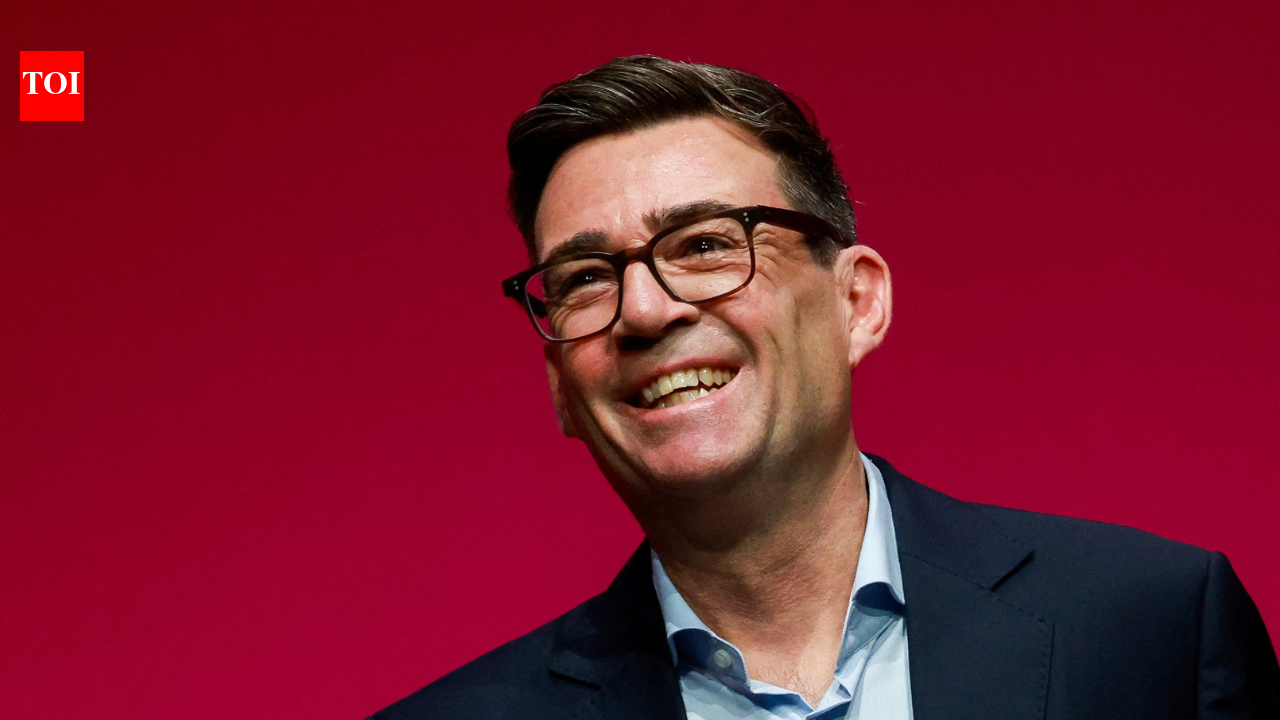
Labour leader Andy Burnham delivered an emotional speech at the Labour conference, vowing to fight for the unity of the United Kingdom after Scottish First Minister John Swinney claimed Burnham would be the last Prime Minister of the UK. This statement came on the same day that Burnham's father died. In his address, Burnham emphasized the importance of solidarity over separation and promised to work towards a reformed Britain. He also defended his previous suggestion about another Scottish independence referendum, stating it was not meant to advocate for one but rather to reflect public opinion.
Written locally by qwen2.5:14b on 2026-10-02,
using this article's own text rather than the other coverage of the
same event (that is the story summary below).
Story summary
Andy Burnham, newly elected leader of the Labour Party, delivered his first speech as leader at the party's conference in Liverpool on Wednesday. The speech was emotional and covered bold policies such as reforming social care and electoral systems, drawing mixed reactions from attendees and media outlets.
Burnham choked up while discussing his father who recently passed away, a moment that resonated deeply with the audience. He admitted to wanting to move faster on cost-of-living measures but stressed fiscal honesty about what Britain can afford. The speech was seen by some as one of the most memorable in recent years, with former BBC political editor Andrew Marr comparing it favorably to Tony Blair's speeches.
Critics like Mail Online’s Quentin Letts were less impressed, describing the emotional tone and policy promises as overly sentimental and sugar-coated. Meanwhile, supporters praised Burnham for his relatability and commitment to addressing working-class concerns, potentially appealing to voters who had drifted away from Labour under Keir Starmer.
The speech also touched on plans for electoral reform, aiming to introduce proportional representation in Westminster elections, a significant change since 1918. This move is seen as part of Burnham's strategy to transform the UK’s political system fundamentally, though some within the party are wary about such dramatic changes given current fiscal constraints and public opinion.
Written for “Andy Burnham Labour Speeches” on 2026-10-05,
grounded in this article and the 24 other(s) covering the same event.
- See more Daily Mail on Google - save us as a Preferred Source
Andy Burnham has insisted he is ‘utterly determined’ to prove John Swinney was wrong to claim he would be the last Prime Minister of the United Kingdom.
uncertain
he → see → Kingdom
The Labour leader gave an emotional tribute to his late father Roy Burnham as he vowed to stand up for the Union and support ‘solidarity not separation’.
asserted
he → give → solidarity
He also pledged to fight with everything he has got to ‘rewire’ the UK.
asserted
he → pledge → UK
It comes just weeks after he came under fire for suggesting at Prime Minister’s Questions that there could be another independence referendum if a majority supported it.
uncertain
majority → come → it
In his first leader’s speech to Labour conference, he said: ‘On the day my dad died, the Scottish First Minister said I would be the last Prime Minister of the United Kingdom.’
asserted
I → say → Kingdom
He said he was not seeking sympathy or to criticise Mr Swinney because ‘I don’t think he knew the news at the time’.
asserted
he → say → time
Andy Burnham said John Swinney's remarks have made him more determined to fight for the union
But he said: ‘I relay it because I want you to know how it made me feel – utterly determined to prove him wrong.
asserted
him → say → it
He said that ‘whatever its flaws, this country gave my dad a good life’ and said it has given his sons opportunities he didn’t get himself.
asserted
he → say → opportunities
Mr Burnham said: ‘The United Kingdom my dad represented is the one I believe in – a Union of nations.
asserted
I → say → nations
‘It gave trade unions and the cooperative movement to the world, the National Health Service, a country that stood up to fascism, a country of solidarity not celebration.
asserted
that → give → solidarity
That’s the country that my dad represented.’
asserted
dad → ’ → that
After a standing ovation from delegates, he said that Britain is not perfect and can be better but added: ‘But it still stands for something worth saving, worth fighting for.
asserted
it → say → something
‘And we will always be stronger facing a changing world together, rather than separating.
asserted
we → face → world
‘So I am going to use this job to build the kind of Britain my job wanted to see and fight with everything I’ve got to keep it together.
asserted
I → go → it
‘Not the last Prime Minister of the United Kingdom, the first to rewire it, to make it work for all people and places, driving power out of Whitehall and into every postcode of Wales, Scotland, Northern Ireland and England and closing divides between people and places.’
asserted
it → rewire → people
Mr Burnham suggested in the House of Commons earlier this month that ‘majority public support’ could trigger another Scottish independence referendum – before attempting to backtrack by insisting in a letter to Mr Swinney that he still believes another referendum is ‘off limits’.
uncertain
referendum → suggest → limits
Following the speech, Mr Swinney said he was quick to contact the Labour leader hearing the news of his loss.
asserted
he → follow → loss
He added: ‘The first thing I did when I heard that the Prime Minister’s father had died was express my condolences to him.
asserted
father → add → him
‘And the second point is that if the Prime Minister is so determined to prove that he’s not going to be the last Prime Minister of the United Kingdom – maybe he should let us have a referendum and we’ll see who’s right.’
asserted
who → prove → referendum
 The Aporia