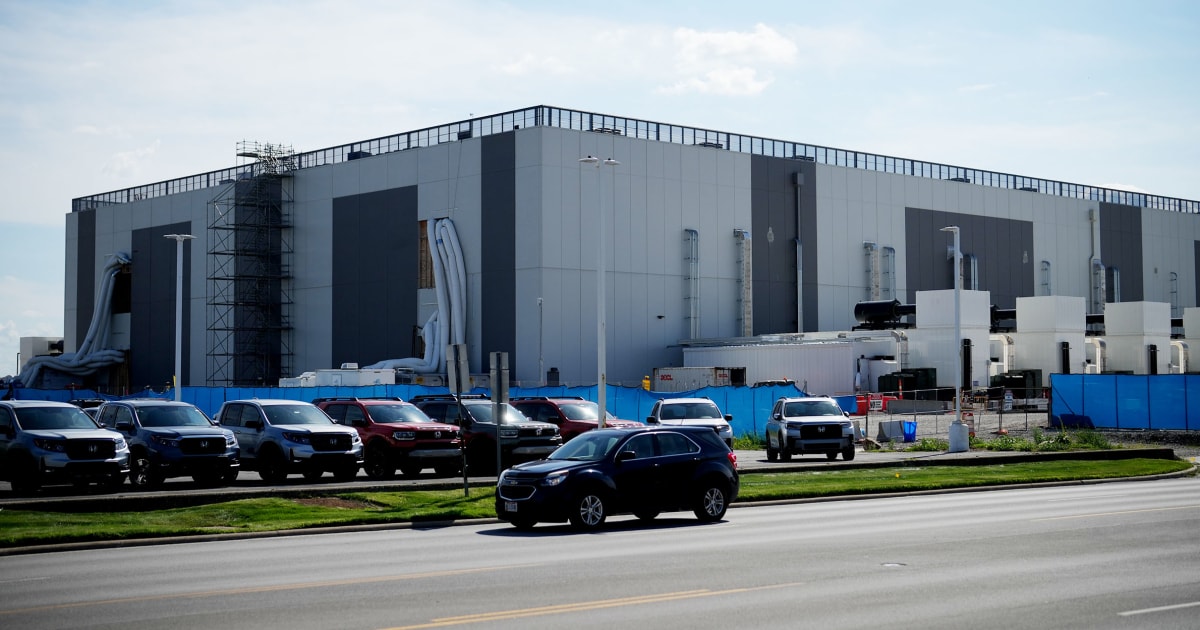
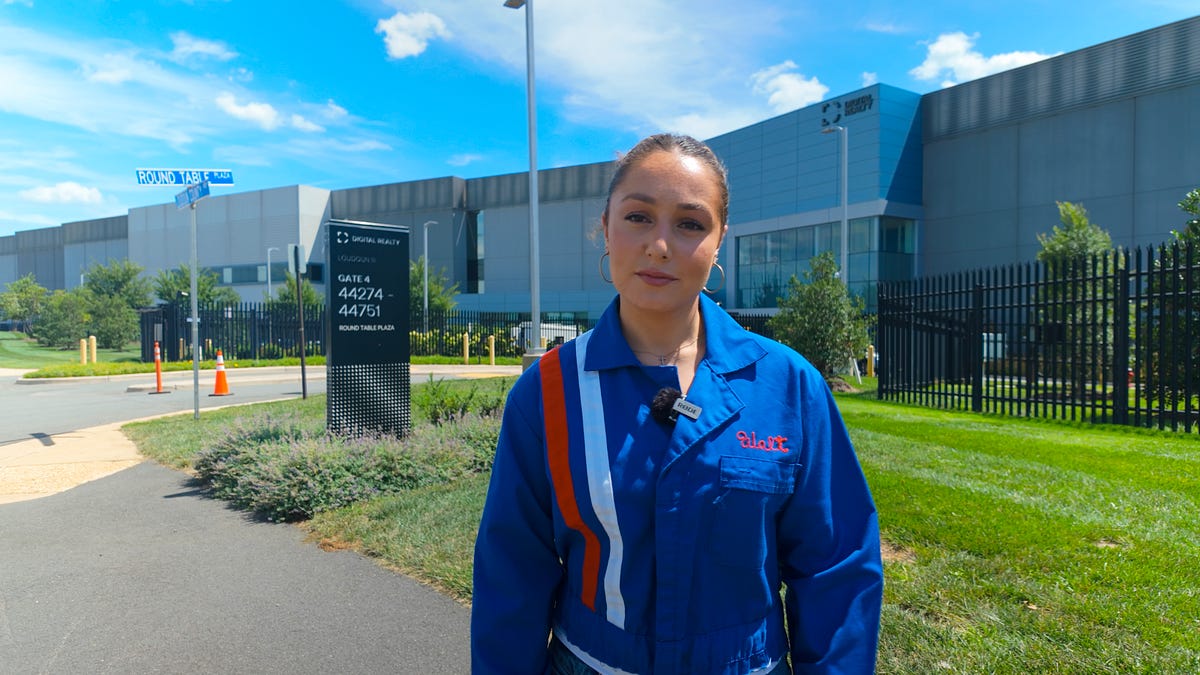
Dawn Vogel, a Republican county supervisor in rural Buchanan County, Iowa, doesn’t have a lot in common with the leading democratic socialists in Congress.
asserted
Vogel → have → Congress
But on this bit of policy they agree: Data centers are proliferating across the American landscape too fast.
asserted
centers → agree → landscape
Vogel voted earlier this year for a moratorium that temporarily bans data centers from setting up shop in her heavily Republican county, which favored President Donald Trump 63% to 35% in 2024.
asserted
which → vote → 2024
In Washington, Rep. Alexandria Ocasio-Cortez, D-N.Y., and Sen. Bernie Sanders, I-Vt. — the nation’s two most prominent democratic socialists — have proposed a similar moratorium that would cover the entire country.
asserted
that → propose → country
“I don’t think this is a Republican or Democratic issue,” Vogel said on the sidelines of the Iowa State Association of Counties’ annual conference here in late August, adding that she hasn’t talked to a single voter at home who wants data centers.
asserted
who → think → centers
“It’s an issue of what’s the best use for the land, what’s the best use for our natural resources,” she said.
asserted
she → ’ → resources
“You can have all the data you want to in the world, but if you don’t have water to drink, you don’t have humans to use the data.
asserted
you → have → data
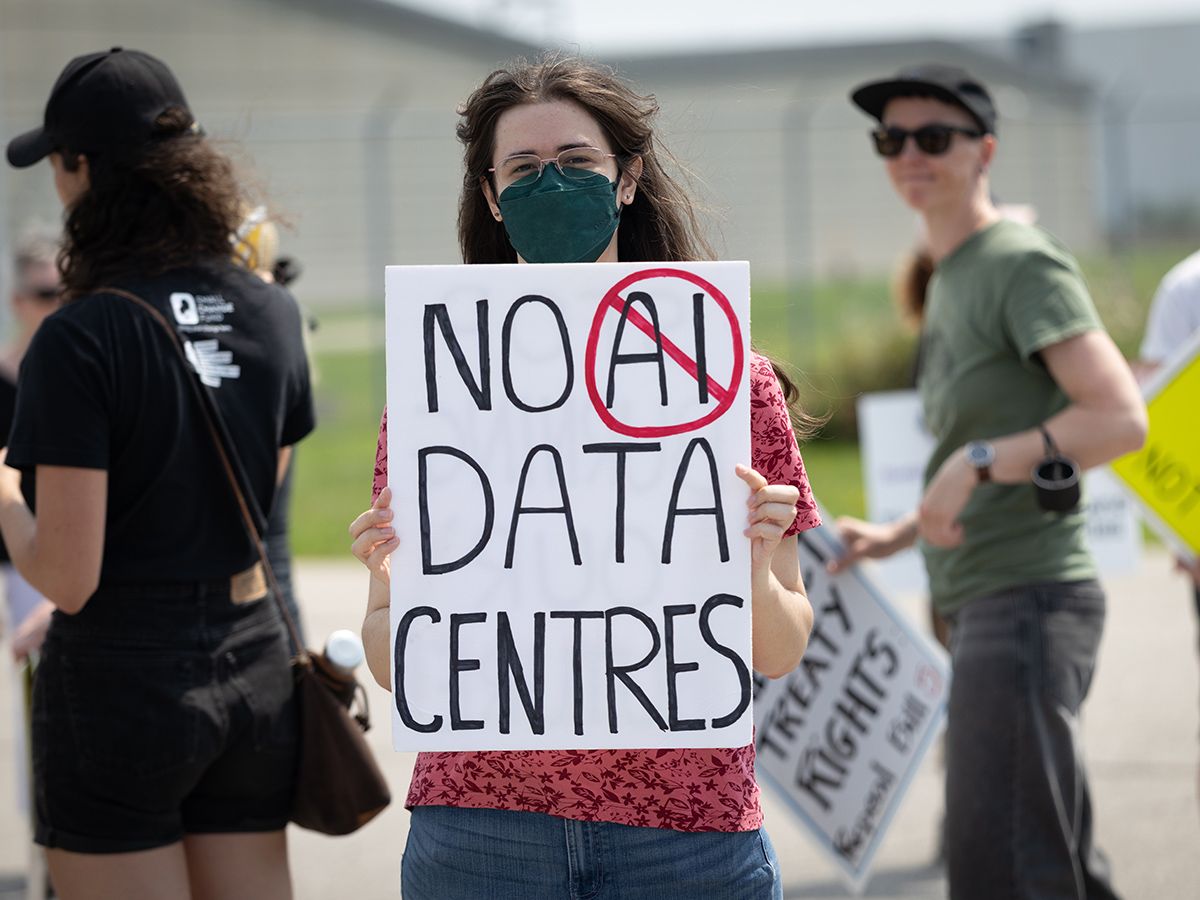
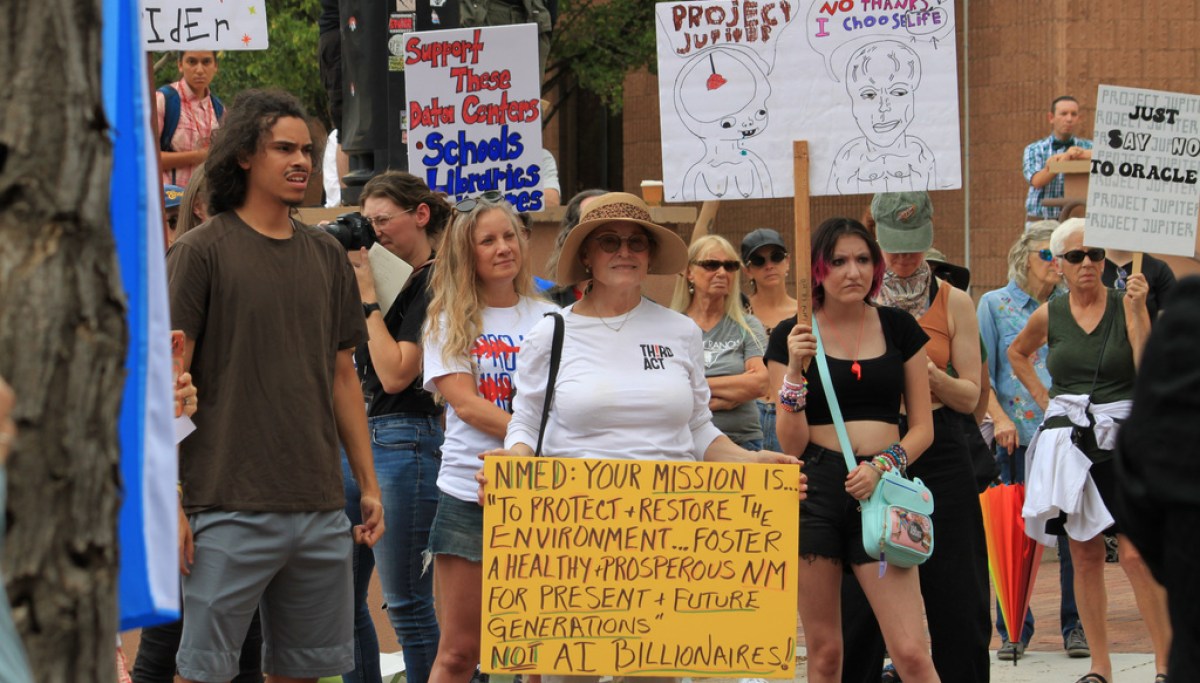
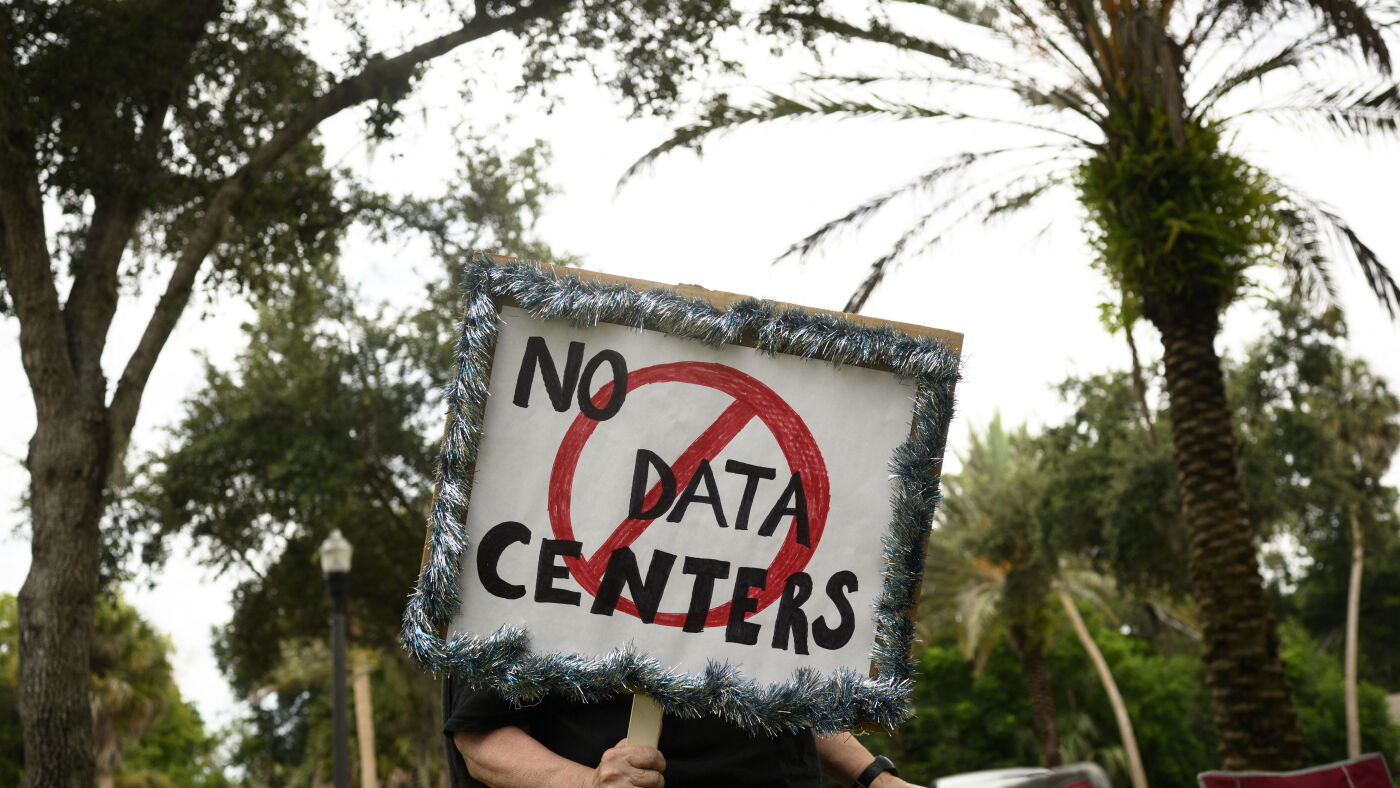
That point of view places Vogel in a loose, but very large, populist coalition that is fighting the rise of data centers at the ballot box, with yard signs, in courts and at all levels of government as November’s midterm elections approach.
asserted
elections → place → government
An NBC News Decision Desk Poll powered by SurveyMonkey, conducted from Aug. 20 through Sept. 1, found that 69% of respondents oppose the construction of AI data centers in their local area, with 45% saying they “strongly oppose” the idea.
asserted
they → power → idea
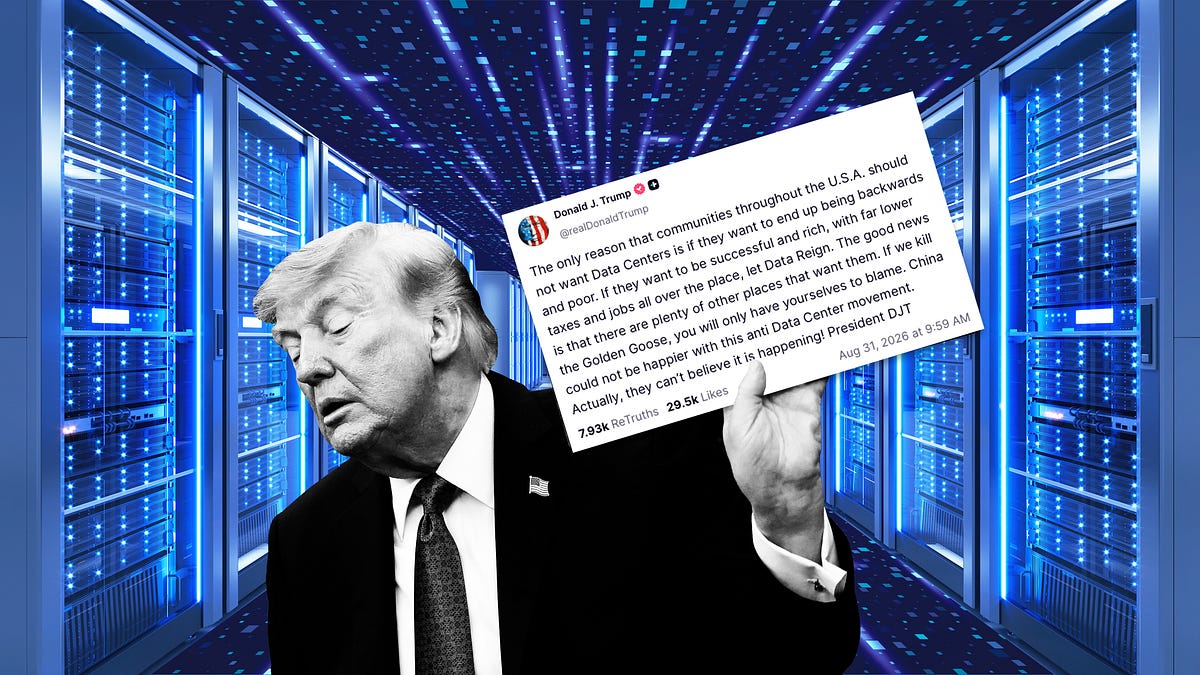
“The only reason that communities throughout the U.S.A. should not want Data Centers is if they want to end up being backwards and poor,” Trump wrote in a Truth Social post at the end of August.
asserted
Trump → want → August
“If they want to be successful and rich, with far lower taxes and jobs all over the place, let Data Reign.
asserted
Data → want → place
But it’s more about backyards than being seen as backward, according to voters who spoke to NBC News on a recent road trip along Interstate 80 from Nebraska to New Jersey — a swath that includes eight swing districts key to determining which party will control the House next year and two marquee Senate races.
uncertain
party → ’ → House
These voters, who span the political spectrum, said they don’t want data centers anywhere near their communities.
asserted
they → span → communities
More coverage of NBC News' 'Drive to Decision Day' road trip along I-80
For some, the issue has become a touchstone for the feeling that the powerful are taking advantage of the powerless.
“All of the data centers that are starting to pop up in areas, I find that troublesome because it drives utility costs for citizens in the area,” said Tamara Clark, 49, a Democratic voter who works in the healthcare industry.
asserted
who → drive → industry
“I don’t feel like the rich should continuously get rich while we have to grovel for what we need in our everyday necessities.”
asserted
we → feel → necessities
In Clark’s congressional district, Rep. Marcy Kaptur, D-Ohio, a 22-term incumbent, is using the issue against her rival, Republican Derek Merrin, who cast a 2017 vote in the state Legislature that helped extend tax breaks to companies that build data centers in the state.
asserted
that → use → state
Sen. Jon Husted, R-Ohio, who is seeking to hold his seat against Democratic former Sen. Sherrod Brown, was a full-throated advocate for data centers when he was the state’s lieutenant governor.
asserted
he → seek → centers
But in July, he introduced legislation in the Senate that would require utility companies to charge large-scale data center operators enough money to cover the costs of increased electricity and water use.
asserted
companies → introduce → use
His change of tune reflects a broader shift among elected officials who embraced data centers as a way to bring jobs and tax revenue to their cities, counties and states.
asserted
who → reflect → cities
Pennsylvania Gov. Josh Shapiro, D-Pa., who is on the ballot in November, signed a new batch of data center regulations in August after having encouraged companies to locate them in his state.
asserted
who → sign → state
While Republican voters are more supportive of data centers than Democrats and independents, the majority of them remain opposed — 57% to 43% — according to the NBC News Decision Desk poll.
uncertain
majority → remain → poll
The survey found that 81% of Democrats and 71% of independents are against data centers being built in their communities.
asserted
centers → find → communities
While supporters have been less demonstrative, their ranks extend beyond the AI companies building data centers and the politicians who have looked to them as economic development engines.
asserted
who → extend → engines
National and local labor unions involved in the construction and maintenance of data centers tout them as a boon for workers, both as a source of jobs and for high rates of pay.
asserted
unions → involve → pay
Several data center workers in Ohio spoke to NBC News about those benefits on the condition of anonymity because, according to one of them, they have agreed not to discuss their jobs with the media.
uncertain
they → speak → media
That worker said he can make as much as $5,000 in a week, including overtime, at a relatively low-level union job.
asserted
he → say → job
“It’s helping a lot of people — a lot of work going on, a lot of people benefiting from it,” the data center worker said, adding that he was warned by friends about problems, from overuse of water resources to weird ringing sounds, that he has not witnessed at his workplace.
“
asserted
he → help → workplace
It’s scary,” he said.
asserted
he → ’ → ?
“You got a lot of people that say all these horrific things.
asserted
that → get → things
I was told all these negative things about data centers, and then I started working at one, and I didn’t see any of the things I was told about.”
asserted
I → tell → things
He said he would like to see proponents and critics work together to fix any problems with data centers so that they can continue to be built and operate without disruption to the surrounding communities.
asserted
they → say → communities
But Jordan Cloe, 47, an electrician from Bondurant, in Iowa’s hotly contested 3rd Congressional District, said he’s worried about the resources used by a data center in neighboring Altoona.
asserted
he → say → Altoona
“Did we have any data on what the implications were about water consumption or anything?
asserted
implications → have → consumption
Like, we just built a power grid where that thing sits,” he said.
asserted
he → build → grid
“Did we get to use that?
asserted
we → get → that
No, they gobbled that up.”
asserted
they → gobble → that
Cloe, who said he aligns more with Democrats, said he doesn’t know anything about Sarah Trone Garriott, the Democratic challenger to Republican Rep. Zach Nunn, but that he plans to vote for her in November.
asserted
he → say → November
For Vogel, the county supervisor, the unresolved questions are enough reason to keep data centers out of her county — at least for now.
asserted
questions → keep → county
“We need to do what’s best for Buchanan County and then, you know, if the companies want to come knock on the door,” she said, “then we’ll talk.”
asserted
we → need → door
 The Aporia