President Donald Trump denied offering Iran sanctions relief or releasing frozen funds to end the war, contradicting reports from Axios and CNN. Meanwhile, Iranian President Masoud Pezeshkian stated that Tehran is prepared for talks but will not tolerate bullying. Both countries communicated separately with mediators regarding a potential agreement on reopening the Strait of Hormuz and easing regional tensions, though Trump rejected Iran's proposal for an immediate opening due to the ongoing conflict launched in February as "Operation Epic Fury."
Written locally by qwen2.5:14b on 2026-09-29,
using this article's own text rather than the other coverage of the
same event (that is the story summary below).
Story summary
US President Donald Trump met with Chinese President Xi Jinping, where Xi pressed Trump to adopt Beijing's stance against Taiwan independence, which Taiwan rejected outright. Meanwhile, Taiwan is crucial for global tech and economy due to its leading semiconductor production; TSMC alone produces the majority of advanced chips that power smartphones, AI systems, and more. As Stanford Hoover fellow Eyck Freymann noted, economic disruption from a conflict over Taiwan would be severe.
In unrelated developments, Iranian President Masoud Pezeshkian met with US media at the UN General Assembly, where he denied Iran's nuclear ambitions while offering to dilute its enriched uranium and allow inspections under international law. He also blamed Washington for ongoing conflicts in the Middle East. The International Atomic Energy Agency (IAEA) estimates that Iran has over 440 kilograms of uranium enriched up to 60%, raising concerns despite Pezeshkian's denials.
Taiwan's representative, Ambassador Alexander Yui, clarified during an interview on CBS’s "Face the Nation" that while Taiwan was discussed between Trump and Xi, it wasn't a major focus. He emphasized there has been no change in US policy towards Taiwan amid recent tensions with China.
Written for “Taiwan Iran Us Relations Midterms” on 2026-10-05,
grounded in this article and the 386 other(s) covering the same event.
Trump denies offering Iran sanctions relief, Tehran says ready for talks
Sept 29 -
asserted
Tehran → deny → talks
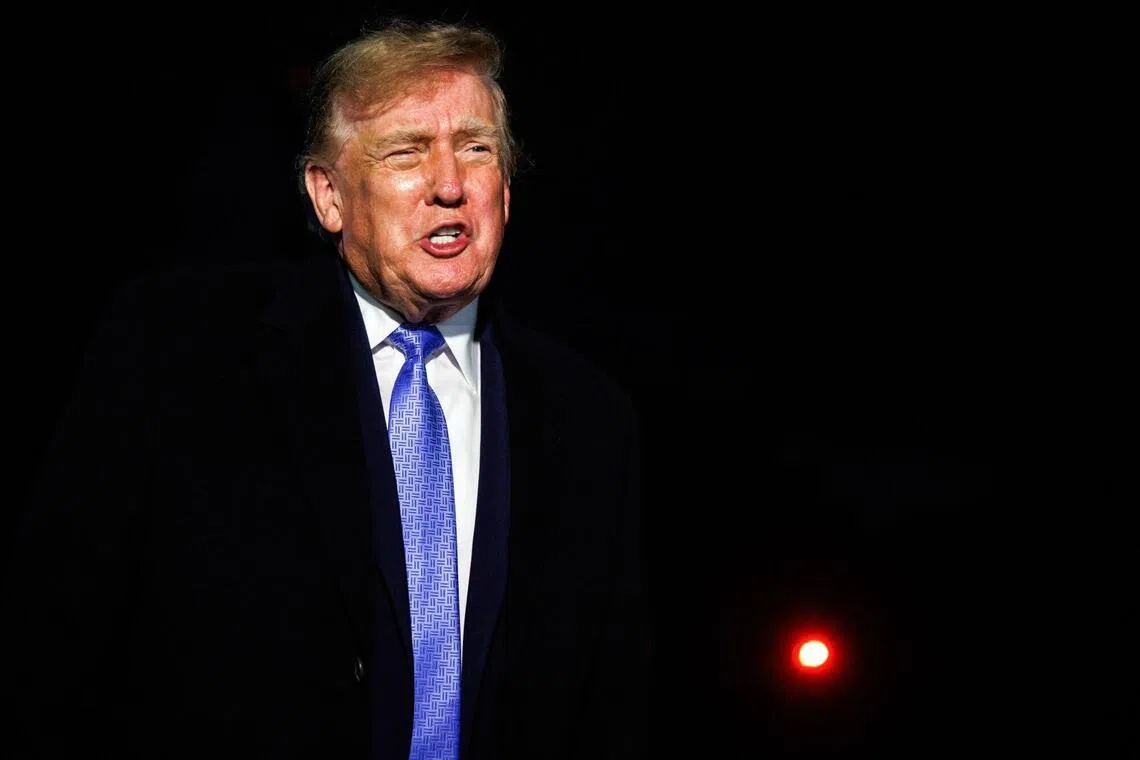
US President Donald Trump said he has offered Iran nothing to end the war, rejecting media reports that cited US officials saying he was willing to ease sanctions and release frozen funds for "concrete" steps regarding Iran's nuclear programme.
asserted
he → say → programme
I offered them NOTHING," Trump wrote on Truth Social on Monday.
asserted
Trump → offer → Monday
Axios and CNN both reported, citing unidentified US officials, that Trump was willing to give Iran sanctions relief and free Iranian funds as part of a final deal on the condition that Iran showed "concrete progress" on the nuclear issue.
asserted
Iran → report → issue
Trump has cited preventing Tehran from acquiring a nuclear bomb as a key goal of the war, along with ending its ability to attack its neighbours and creating conditions for Iranians to topple their leadership.
asserted
Iranians → cite → leadership
Iran does not have nuclear weapons and denies it wants to develop them, but argues it has the right to a domestic nuclear energy capacity.
asserted
it → have → capacity
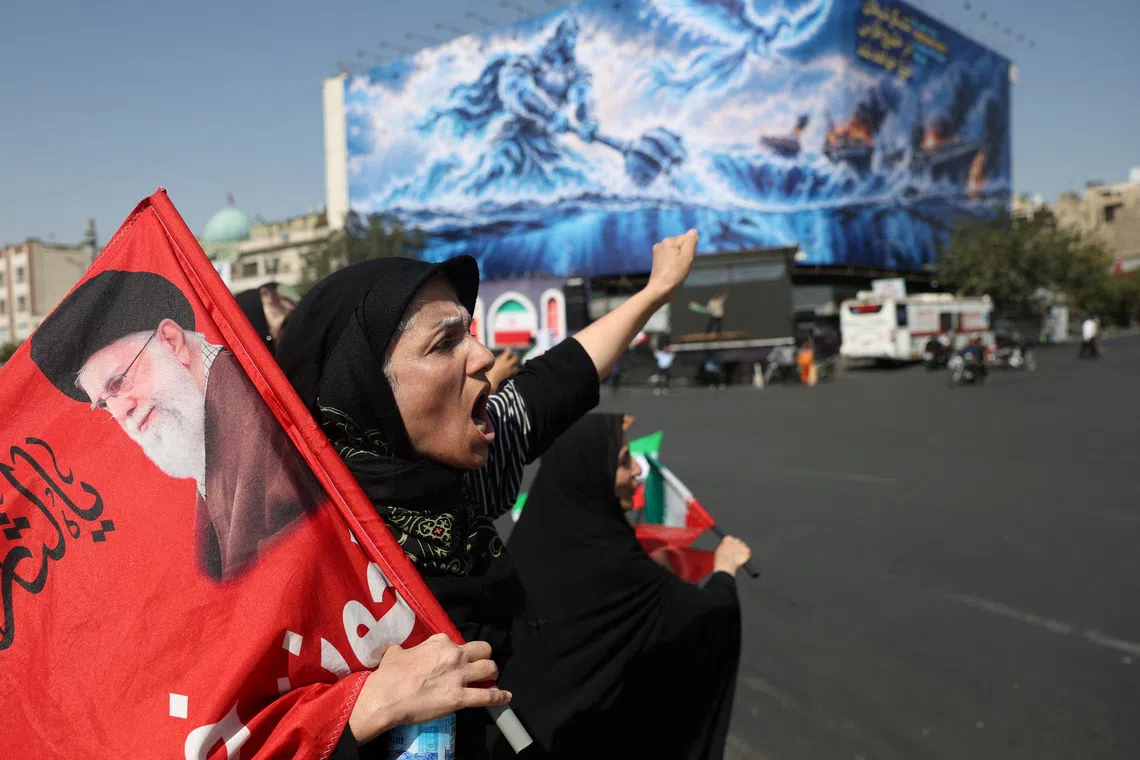
Iranian President Masoud Pezeshkian, in an interview with the CBS show "Face the Nation", said Tehran was ready for talks on its nuclear programme and other issues, but would not accept "bullying or coercion".
asserted
Tehran → say → bullying
"Iran is not seeking war, but will defend itself against pressure, threats and attacks,” Pezeshkian said, adding that it had already agreed that "we're not supposed to develop nuclear weapons".
asserted
we → seek → weapons
US and Iranian officials spoke separately with mediators on Monday as part of a renewed effort to end the seven-month war, according to officials of both countries.
uncertain
officials → speak → countries
Iran insisted on Sunday that only diplomacy can solve its conflict with the United States and Israel.
asserted
diplomacy → insist → States
"Our conditions are clear, and any move toward reopening the Strait of Hormuz is contingent on these conditions being met," Iranian Foreign Minister Abbas Araqchi posted on social media.
asserted
Araqchi → reopen → media
"Only a negotiated solution can get them out of this deadlock."
asserted
solution → negotiate → deadlock
Araqchi told reporters at the UN on Friday the proposed deal would trigger a seven-day countdown to reopening the strait and a pause in regional fighting.
asserted
deal → tell → fighting
Trump on Saturday rejected the plan and argued that desperation was driving the Iranians’ push for an agreement on the key waterway.
"
asserted
desperation → reject → waterway
They want to make a deal to open the Hormuz Strait immediately because they're losing so badly," Trump told reporters at the White House.
asserted
Trump → want → House
Araqchi said mediators facilitating Tehran's talks with Washington had not officially relayed a US rejection.
asserted
mediators → say → rejection
"We are waiting for the mediators to convey the definitive views to us, and we will make a decision based on them," Araqchi posted.
asserted
Araqchi → wait → them
OIL PRICES RISE
The war, which Trump launched alongside Israel in February as "Operation Epic Fury", has killed thousands of people, severely disrupted global energy supplies, pushing up oil prices and fuelling global inflation.
asserted
Trump → rise → inflation
Iran and its allies have responded by extending the conflict throughout the region.
asserted
Iran → respond → region
Iran has struck US allies in the Gulf with drones and missiles, while its Houthi allies in Yemen have hit Saudi interests.
asserted
allies → strike → interests
Saudi Arabia, the largest of the Gulf states, has been drawn deeper into the war this month as Houthi fighters have advanced in Yemen, routing forces of the Saudi-backed government and threatening Saudi oil exports through the Red Sea.
asserted
fighters → draw → Sea
Oil prices rose for a second successive session on Tuesday as lingering concern over Middle East supply outweighed signs of recovering crude exports from the region.
asserted
concern → rise → region
Brent crude futures had risen $1.49, or 1.4%, to $106.77 a barrel by 0326 GMT while US West Texas Intermediate crude was at $93.94, up $1.34, or 1.5%.
asserted
crude → rise → 93.94
Both benchmarks closed the previous session at nearly $1 a barrel higher.
asserted
benchmarks → close → session
 The Aporia