Story summary
US President Donald Trump met with Chinese President Xi Jinping, where Xi pressed Trump to adopt Beijing's stance against Taiwan independence, which Taiwan rejected outright. Meanwhile, Taiwan is crucial for global tech and economy due to its leading semiconductor production; TSMC alone produces the majority of advanced chips that power smartphones, AI systems, and more. As Stanford Hoover fellow Eyck Freymann noted, economic disruption from a conflict over Taiwan would be severe.
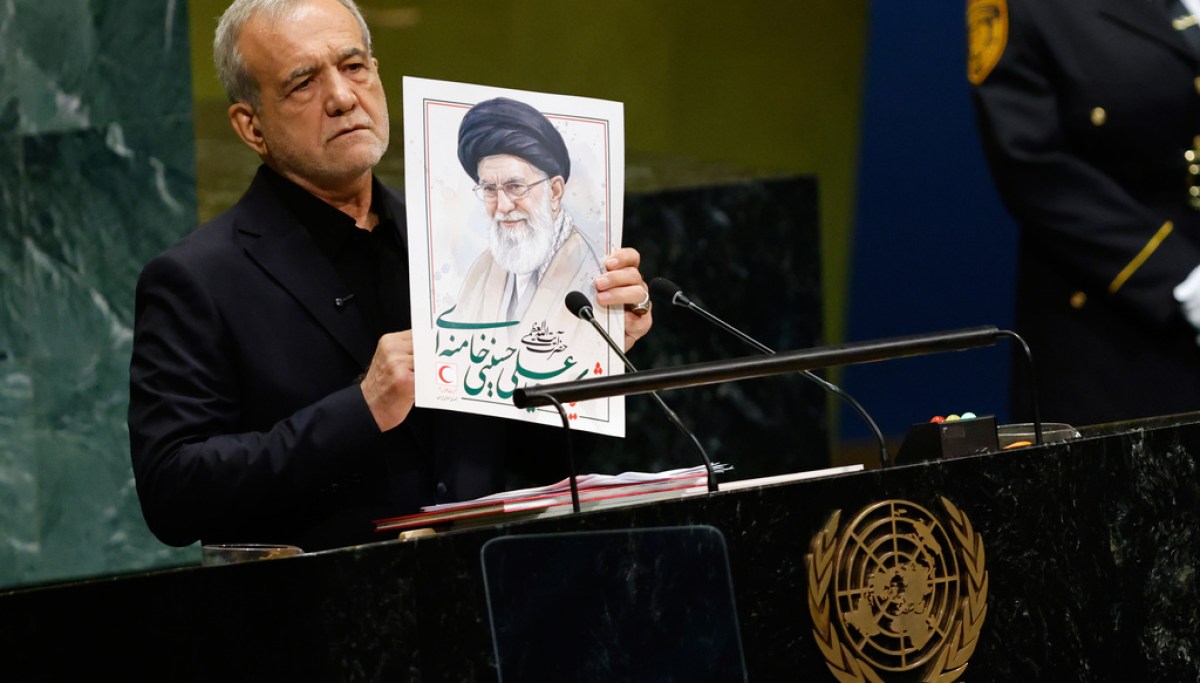
In unrelated developments, Iranian President Masoud Pezeshkian met with US media at the UN General Assembly, where he denied Iran's nuclear ambitions while offering to dilute its enriched uranium and allow inspections under international law. He also blamed Washington for ongoing conflicts in the Middle East. The International Atomic Energy Agency (IAEA) estimates that Iran has over 440 kilograms of uranium enriched up to 60%, raising concerns despite Pezeshkian's denials.
Taiwan's representative, Ambassador Alexander Yui, clarified during an interview on CBS’s "Face the Nation" that while Taiwan was discussed between Trump and Xi, it wasn't a major focus. He emphasized there has been no change in US policy towards Taiwan amid recent tensions with China.
Written for “Taiwan Iran Us Relations Midterms” on 2026-10-05,
grounded in this article and the 386 other(s) covering the same event.
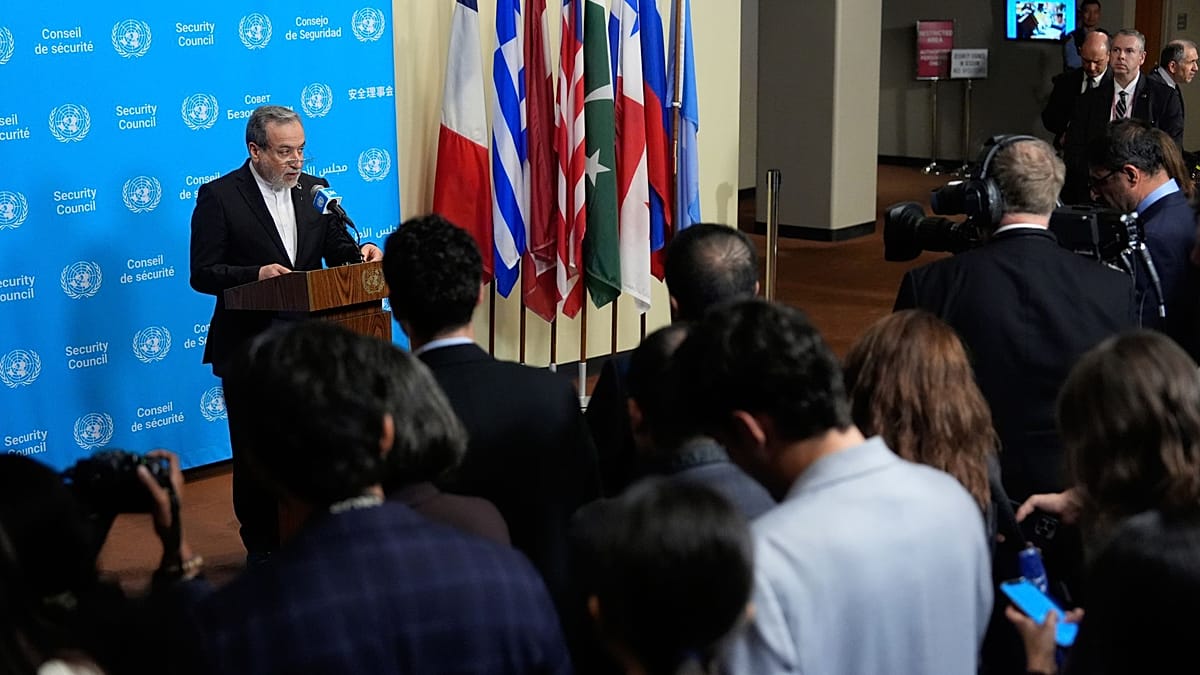
Iran’s Foreign Minister Abbas Araghchi has met with Qatari mediators in New York to discuss a proposal to reopen the Strait of Hormuz, while a United States official said there would be no agreement to end the war unless Tehran’s nuclear programme is addressed.
asserted
programme → meet → war
Araghchi told Iranian state media on Monday that the Qatari mediators would carry the ideas discussed at the meeting to the US and that he hoped to receive Washington’s final response by Tuesday.
asserted
he → tell → Tuesday
Recommended Stories
list of 4 items- list 1 of 4Pezeshkian says Iran ‘no longer trusts talks with Washington’
- list 2 of 4Iran shifts trade north to Caspian Sea as war impairs Strait of Hormuz
- list 3 of 4‘Better deal’: What’s behind Trump’s rejection of Iran’s truce offer?
- list 4 of 4Strait of Hormuz tensions linger as Iran and US move further from a deal
“We talked about ideas and how to find solutions to fulfil Iran’s conditions and how to implement those conditions,” he said.
asserted
he → say → conditions
“They had some ideas, and we had a discussion that they will also present to the American side.”
asserted
they → have → side
Asked whether he would stay in New York to await the reply, Araghchi said he would fly to Tehran within hours.
asserted
he → ask → hours
“Whenever the Qataris have a response, they know how to get it to us,” he said.
asserted
he → have → us
He described the meetings as part of an existing exchange of messages through Qatari and Pakistani mediators, which he said had taken on “a more serious form” since Iran submitted its proposal.
asserted
Iran → describe → proposal
The Iranian plan, announced on Friday at the United Nations General Assembly in New York City, calls on the US to release frozen Iranian funds, lift sanctions and end its naval blockade of Iranian ports.
asserted
plan → announce → ports
Araghchi said those steps could be completed within four or five days, allowing the strait to reopen and negotiations on a final agreement, including on Iran’s nuclear programme, to begin by the seventh day.
uncertain
negotiations → say → day
US President Donald Trump, however, rejected the proposal on Saturday, calling it “unacceptable”.
asserted
Trump → reject → it
‘Positive, constructive’ talks
The US official, who spoke to Al Jazeera, said indirect discussions were continuing.
asserted
discussions → speak → Jazeera
The talks were “positive and constructive”, the official said, but stressed there would be no agreement unless Iran’s nuclear programme is addressed.
asserted
programme → say → ?
The official said Trump is willing to relieve sanctions and release Iran’s frozen funds in exchange for progress on nuclear issues.
asserted
Trump → say → issues
“Iran has indicated they are flexible on the nuclear issues, but the sides still remain apart on the timing of the commitments and who takes which steps first,” the official said.
asserted
official → indicate → steps
The official also expressed scepticism of Iran, saying it had broken the memorandum of understanding signed in June by firing on commercial vessels.
asserted
it → express → vessels
Tehran denies the accusation and says it was Washington that broke its commitments by failing to halt Israel’s attacks on Lebanon and by seeking to establish alternate shipping routes through the Strait of Hormuz.
asserted
that → deny → Hormuz
Iran had closed the strait, which handled roughly 20 percent of the world’s oil and gas supplies before the war, shortly after the US and Israel launched their offensive on February 28.
asserted
US → close → February
Iranian attacks on vessels since have sharply curtailed shipping, and oil prices have risen above $100 a barrel.
asserted
prices → curtail → 100
Even so, crude exports from major Middle East producers rebounded in September to 12.8 million barrels per day, their highest level since the war began, the Reuters news agency reported, citing data from the maritime intelligence firm Kpler.
asserted
agency → rebound → firm
That is still well below the 18.8 million bpd exported in February.
asserted
That → export → February
Some ships have used the US military-supervised route hugging the coast of Oman, travelling at night with tracking systems off and offloading oil to tankers outside the strait.
asserted
ships → use → strait
Admiral Brad Cooper, the head of US Central Command, said on Saturday that American forces had assisted 2,000 transits and more than 1 billion barrels of oil in recent months.
asserted
forces → say → months
The US has also imposed a blockade on Iranian ports and threatened secondary sanctions against airports and companies that do business with Iranian airlines.
asserted
that → impose → airlines
The United Arab Emirates, Iraq and Oman have already cancelled related flights.
asserted
Emirates → cancel → flights
Trump says US will win
asserted
US → say → ?
Speaking to reporters on Monday, Trump said US officials had also spoken with mediators but insisted that Washington would prevail.
asserted
Washington → speak → mediators
“We’re going to win,” he said.
asserted
he → go → ?
“It’s going to go pretty quickly.”
asserted
It → go → ?
He added that gas prices would fall once the US won the war.
asserted
US → add → war
In Tehran, officials struck a defiant tone.
asserted
officials → strike → tone
Supreme Leader Mojtaba Khamenei, in a message marking the Iran-Iraq War and Israel’s killing of Hezbollah leader Hassan Nasrallah in 2024, said that the days of foreign domination were over.
“Having suffered painful blows from our valiant combatants and the guardians of the Strait of Hormuz, they [the enemy] dare not venture beyond the Arabian Sea,” Khamenei said in the message carried by Iranian media.
asserted
Khamenei → mark → media
“Whenever they have risked doing so, they have only inflicted harm upon themselves, and the time is fast approaching when the Arabian Sea, too, will be cleared of their presence.”
asserted
Sea → risk → presence
Major-General Ali Abdollahi, the armed forces chief of staff, meanwhile, warned that Iran and allied forces would deliver a “decisive and devastating response” to any threat against the country.
asserted
Iran → warn → country
Rear Admiral Habibollah Sayyari insisted that the Strait of Hormuz remains closed and said Iranian forces were ready to prevent enemy forces from entering the country.
asserted
forces → insist → country
 The Aporia