Arming an adversary: Why Trump’s offer to sell China weapons belies US policy

Read the original at Al Jazeera ↗
Al Jazeera · collected 2026-09-28 · by Urooba Jamal

Quick Summary

President Donald Trump suggested to Chinese leader Xi Jinping during discussions that Beijing consider purchasing US weapons, an unusual and unorthodox proposal that contrasts sharply with official US policy. This suggestion was reportedly made in talks about arms sales to Taiwan but the specific timing of this offer is unclear. Experts dismiss the idea as lacking strategic logic due to existing US sanctions against China and the tense relationship between the two countries. They view Trump's comments as a negotiating tactic rather than a serious proposal, highlighting how he approaches international relations through a transactional lens rather than traditional diplomatic frameworks.
Written locally by qwen2.5:14b on 2026-09-28, using this article's own text rather than the other coverage of the same event (that is the story summary below).

AI analysis runs on qwen2.5:14b, locally

Story summary

On September 27, US Ambassador to China David Perdue revealed that President Donald Trump had asked Chinese President Xi Jinping if he wanted to buy American weapons during Xi's state visit to the United States. This surprising admission came as part of discussions about a pending $14 billion arms sale package to Taiwan, which Beijing views as its territory but considers self-governing. The State Department quickly clarified that US law prohibits arms sales to China and there are no plans for such deals.

The statement by Perdue sparked debates over the nature of Trump’s inquiry—whether it was a joke or a serious offer—and raised questions about potential shifts in U.S. policy towards Taiwan, which seeks stronger defense against perceived threats from China. The White House confirmed that the United States has no plans to sell weapons to China despite President Trump's comment, highlighting the complex dynamics between Washington and Beijing regarding regional security and arms sales.

Written for “Trump Offered Weapons To China” on 2026-10-05, grounded in this article and the 16 other(s) covering the same event.

Signals How these are calculated →

Claims extracted
49
claim-shaped sentences
Uncertain
6%
3 of 49 hedged
Leaning
Leans left
of the writing, not the subject · beta estimate
Correction & hedging signals
60.3
corrections and hedging in what we collected; not a measure of accuracy
Outlets on this story
17
Politics
Narrative spread
1
articles carrying this framing
Analyzed 2026-09-28 · how these are computed

Story

📰 Trump Offered Weapons To China
Politics · 17 article(s) covering the same event. See how they differ ↓

How this is being covered How these are calculated →

Article leaning vs. publisher reliability
Source leaning vs. consistency

Compared with similar articles

This article reads leans left and hedges 6% of its claims. Each row says how that neighbour differs.
South China Morning Post · 0.92 cosine similarity
⚖️ Leans left 🔴 17% hedged 1 of 6 📰 publisher trust 67
“Both articles describe President Trump's offer to sell weapons to China during President Xi's visit, leading to a State Department clarification.”
The Sydney Morning Herald · 0.86 cosine similarity
⚖️ Leans left 🔴 16% hedged 7 of 45 📰 publisher trust 61
“Both articles describe President Trump offering to sell arms to Chinese President Xi Jinping during a state visit, as reported by the US ambassador.”
The Straits Times · 0.86 cosine similarity
⚖️ Leans left 🔴 14% hedged 5 of 36 📰 publisher trust 59
“Both articles report on President Trump's offer to sell arms to Chinese President Xi during a state visit.”
South China Morning Post · 0.85 cosine similarity
⚖️ leaning not scored 🔴 20% hedged 1 of 5 📰 publisher trust 67
“Both articles report on President Trump asking President Xi if Beijing wanted to buy American weapons during his state visit to the White House.”
Times of India · 0.85 cosine similarity
⚖️ Leans right further right than this 🔴 17% hedged 6 of 35 📰 publisher trust 59
“Both articles report on President Trump offering to sell weapons to China's President Xi during a state visit, as described by U.S. Ambassador to China David Perdue.”
The Hindu
⚖️ Leans right further right than this 🔴 12% hedged 2 of 16 📰 publisher trust 60
“Both articles describe President Trump's unexpected offer to sell arms to Chinese President Xi Jinping during a meeting or conversation.”
Euronews
⚖️ leaning not scored 🔴 18% hedged 2 of 11 📰 publisher trust 60
“Both articles describe US President Trump offering to sell arms to China during a visit by Xi Jinping, as reported on the same day.”
The Independent
⚖️ leaning not scored 🔴 17% hedged 3 of 18 📰 publisher trust 59
“Both articles report on President Trump's offer to sell weapons to Chinese president Xi Jinping during his state visit, referring to the same specific incident and time.”
Daily Mail · 0.90 cosine similarity
⚖️ Leans left 🔴 13% hedged 3 of 23 📰 publisher trust 65
“Both articles describe President Trump making an offer to Chinese leader Xi Jinping for Beijing to purchase US weapons, with subsequent clarification from the State Department.”
The Sydney Morning Herald · 0.86 cosine similarity
⚖️ Leans strongly left further left than this 🔴 9% hedged 9 of 95 📰 publisher trust 61
“Both articles report on US President Donald Trump offering to sell weapons to China, an event that occurred on or around September 28-29, 2026.”

Publisher

Al Jazeera · 2109 article(s) · 2 correction(s) detected
Running correction rate · 2 correction(s)
2026-10-03
Tennessee prisons official resigns after Christa Pike’s failed US execution
2026-09-30
Indonesia suspends five officials over luxury apartments for inmates

Who wrote this

Urooba Jamal
8 article(s) here · 1 carrying a prediction
🔮 William Yang, a senior analyst on North East Asia at Crisis Group, agreed that Trump views Beijing through a transactional lens – and that his offer held no realistic, strategic thinking.
🔮 Vucic is vying for the prime minister’s post, a role he has held before, appearing to yield to protesters’ demands not out of goodwill but in the hopes of ushering in a result that keeps him in office, analysts say.
🔮 The leader of the far-right Religious Zionism party also called for annexing southern Lebanon. “I would very much like to annex at least up to the “Yellow Line” in Gaza and up to the Litani [River] in Lebanon,” said Smotrich.
🔮 Recommended Stories list of 4 items- list 1 of 4China’s Xi visits US as Trump bets on stabilising global relations - list 2 of 4Trump and Xi summit will focus on ‘stabilising’ ties, experts say - list 3 of 4Trump-Xi summit: Here’s what’s on the agenda, and why it matters - list 4 of 4China vs US: Who is winning the AI race, in four charts The meeting was the first state visit by a Chinese leader to the US in 11 years.
🔮 Recommended Stories list of 4 items- list 1 of 4Iranians rally in biggest show of defiance against US since war began - list 2 of 4Iran says conditions to re-engage in talks, end war sent to US via Qatar - list 3 of 4Iran stages show of force during mobilisation campaign in Tehran - list 4 of 4Turkiye backs Saudi Arabia’s security amid escalating Houthi attacks: FM “We will confront America with greater force, and with more numerous and more painful strikes,” said Rezaei.
🔮 The United States war on Iran has cost the country $38bn so far, the Congressional Budget Office (CBO) said this week, adding that an estimated $3bn will be added every month if the conflict continues, placing strain on the country’s finances and economy.
🔮 This coming weekend, those countries will all be in the same room, making a third attempt to find consensus on a war that has dominated global attention – and battered economies – this year.
Also by Urooba Jamal
Nothing else under this byline is closely related to this article, so these are simply their most recent.
All 8 articles by Urooba Jamal →

Topics

Al Jazeera Beijing China United States Washington

Subjects

China GPE · 12× Trump PERSON · 12× Beijing GPE · 9× Washington GPE · 4× 4Trump PERSON · 2× Al Jazeera ORG · 2× Iran GPE · 2× Tangen PERSON · 2× Xi Jinping PERSON · 2× United States GPE · 1×

Narrative

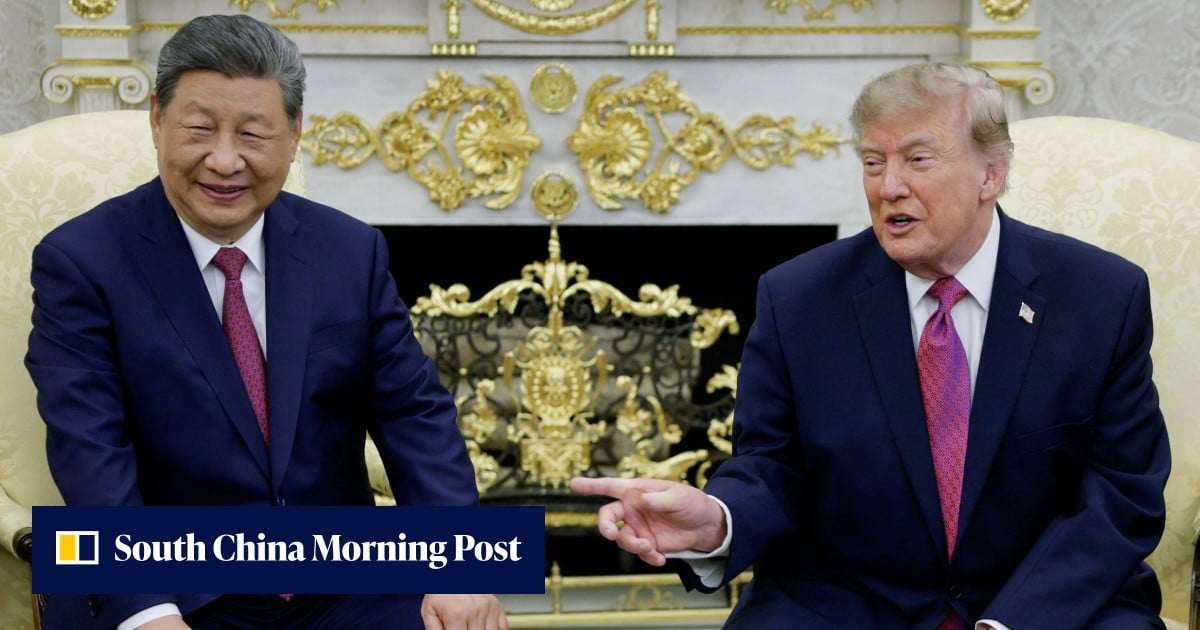
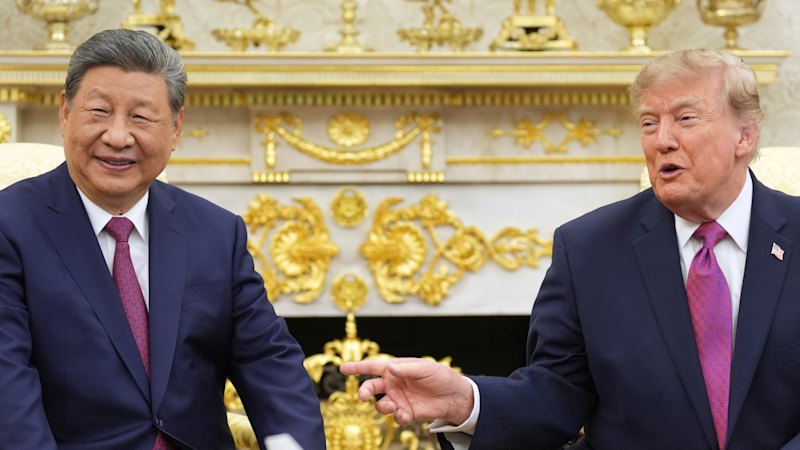
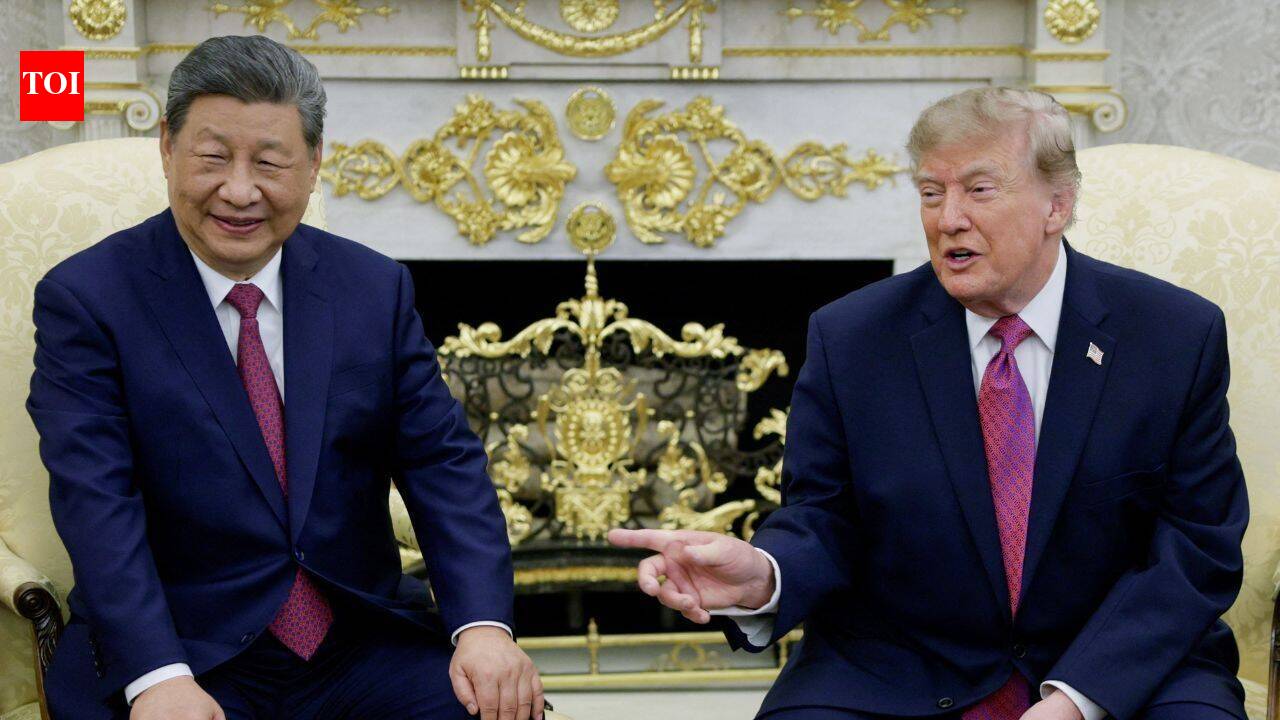
Trump’s suggestion that Beijing buy US weapons was another off-script remark that appeared to stray from official policy, prompting the State Department to clarify that Washington has no such plans. Recommended Stories list of 4 items- list 1 of 4‘Hostile, but hooked’: What’s behind the US-China trade truce extension? - list 2 of 4Trump hails ‘very productive’ talks with China’s Xi Jinping - list 3 of 4China, US to open AI ‘communication channel’ after summit - list 4 of 4Trump rejects combining US-China AI efforts Trump asked Xi “at one point” whether China was interested in procuring US arms, the US envoy to Beijing, David Perdue, said in an interview with Fox News on Sunday.
framing: assertive · carried by 1 article(s) · first seen 2026-09-28
🔮 William Yang, a senior analyst on North East Asia at Crisis Group, agreed that Trump views Beijing through a transactional lens – and that his offer held no realistic, strategic thinking.

Claims (49 extracted, 3 hedged)

In an offer that baffled most observers, United States President Donald Trump has made a pitch to his Chinese counterpart Xi Jinping that has seldom been made in modern history. asserted
that → baffle → history
Trump’s suggestion that Beijing buy US weapons was another off-script remark that appeared to stray from official policy, prompting the State Department to clarify that Washington has no such plans. Recommended Stories list of 4 items- list 1 of 4‘Hostile, but hooked’: What’s behind the US-China trade truce extension? - list 2 of 4Trump hails ‘very productive’ talks with China’s Xi Jinping - list 3 of 4China, US to open AI ‘communication channel’ after summit - list 4 of 4Trump rejects combining US-China AI efforts Trump asked Xi “at one point” whether China was interested in procuring US arms, the US envoy to Beijing, David Perdue, said in an interview with Fox News on Sunday. asserted
envoy → buy → Sunday
The president reportedly made the suggestion in discussions with Xi about US arms sales to Taiwan, but it was unclear whether that happened during their joint summit last week or at another time. uncertain
that → make → time
The comments are all the more striking given Washington’s concerns about Beijing’s support for Iran, as Trump’s ongoing war with Tehran continues. asserted
war → give → Tehran
Analysts were quick to dismiss Trump’s proposal as lacking any strategic logic – not least of all due to the arms embargo the US has imposed on China since 1989. asserted
US → dismiss → 1989
“Such ‘gambits’ by Donald Trump [are] spontaneous flights of fancy that are not part of any strategy,” Alejandro Reyes, an Asia Pacific policy specialist and professor at the University of Hong Kong, told Al Jazeera. asserted
Reyes → tell → Jazeera
“It is certainly unusual to suggest to your main strategic rival and adversary [that it] should buy your weapons.” asserted
it → suggest → weapons
But experts also said it revealed how Trump views Beijing: through a strictly mercenary framework. asserted
Trump → say → framework
US law strictly prohibits arms sales to China and Washington officially identifies Beijing as its primary strategic and economic competitor – so there is no practical policy framework for such a transaction, said Beijing-based analyst Einar Tangen, a senior fellow at the Center for International Governance Innovation. asserted
Tangen → prohibit → Innovation
“It is an off-the-cuff negotiating probe designed to disrupt standard diplomatic scripts, test reactions and create transactional leverage,” Tangen told Al Jazeera. asserted
Tangen → design → Jazeera
The US has always viewed China and its military capabilities with concern, citing its Communist Party’s fusion with the People’s Liberation Army (PLA) as a threat. asserted
US → view → threat
It has accused Beijing of acquiring and diverting the world’s cutting-edge technologies – including through theft – in order to achieve “military dominance”, a US State Department memo states. asserted
memo → accuse → dominance
“The US officially regards China as a leading national security threat,” said Reyes. asserted
Reyes → regard → threat
“The Pentagon’s long-term military planning treats China as the ‘sole pacing threat’, meaning that the US military reckons its technological edge, naval capacity and now its AI progress primarily against China’s capabilities and performance.” asserted
military → treat → capabilities
“The remark highlights the friction between Trump’s transactional political style and a national security establishment that views China as a systemic rival to be contained,” said Tangen. asserted
Tangen → highlight → rival
Trump’s motivation, he explained, is based on his need to acquire rare earth metals to replenish America’s depleted weapons stockpiles – which have taken a major hit following his ongoing war with Iran. asserted
which → explain → Iran
China dominates the world’s rare earth supply chains. asserted
China → dominate → chains
William Yang, a senior analyst on North East Asia at Crisis Group, agreed that Trump views Beijing through a transactional lens – and that his offer held no realistic, strategic thinking. asserted
offer → agree → thinking
“This incident reflects Trump’s almost pure transactional view of Washington’s relationship with Beijing,” Yang told Al Jazeera. asserted
Yang → reflect → Jazeera
It’s also in line with the president’s conduct throughout his second term – making remarks that contradict existing US policies, which sow confusion and require clarification later, he added. asserted
he → ’ → clarification
A brief history of arming rivals History offers few examples of geopolitical rivals striking arms deals, making Trump’s proposal particularly unusual. asserted
proposal → arm → deals
During World War II, the US’ Lend-Lease Act to Allied countries also included the Soviet Union – as they were driven by a common enemy, Nazi Germany, explained Tangen. asserted
Tangen → include → enemy
Years later, technological cooperation between the US and China in the late Cold War “was motivated by a shared objective of countering Soviet power and it never involved frontline technology”, he said. asserted
he → motivate → technology
Dov H. Levin, a professor of international relations at the University of Hong Kong, also pointed to the Iran-Contra affair, when in the eighties, the US sent secret weapons transactions to Iran and Nicaragua – which violated the US Congress and the stated public policy of the government at the time. asserted
which → point → time
“I see no US weapon system that the US would plausibly offer China to purchase in the current state of their bilateral relationship,” Levin told Al Jazeera. asserted
Levin → see → Jazeera
Britain sold jet engines to the Soviet Union in 1947 during the early Cold War, said Reyes. asserted
Reyes → sell → War
Nazi Germany, in turn, sold the Soviet Union an unfinished heavy cruiser in 1940, during their temporary rapprochement, before invading the country the following year, he added. asserted
he → sell → country
“These cases show how commercial or strategic interests have sometimes permitted military transactions between countries that were rivals or subsequently became adversaries,” said Reyes. asserted
Reyes → show → countries
But Tangen argued that such transactions reflected “temporary alignments born of immediate geopolitical necessity”. asserted
transactions → argue → necessity
The analysts agreed that the historical examples do not translate to the relationship between China and the US today. asserted
examples → agree → China
“What distinguishes today’s China-US relationship is that the two countries are directly competing over the strategic balance of power in the Asia Pacific and beyond – and are even said to be heading for inevitable kinetic conflict,” said Reyes. asserted
Reyes → distinguish → conflict
If Trump genuinely wanted to use US weapons as a bargaining chip with Beijing, there are multiple barriers in his way, not least of all national security constraints, said the analysts. asserted
analysts → want → all
Selling weapons to Beijing “would potentially compromise US national security, allow China to gain access to advanced US defence technology and further bolster China’s military modernisation efforts,” said Yang. asserted
Yang → sell → efforts
Additionally, US systems do not align with Beijing’s security architecture, said Tangen. asserted
Tangen → align → architecture
“The US model is built for global power projection. asserted
model → build → projection
Platforms like the F-35 combine extreme technological sophistication – such as stealth, sensor fusion and electronic warfare – but depend on an expensive, vulnerable ecosystem of tankers, AWACS, satellites, forward bases and global logistics,” Tangen said. asserted
Tangen → combine → tankers
The Chinese model, meanwhile, is built for regional defence and sovereignty protection, he added. asserted
he → build → defence
“Systems like the J-20 [Chinese fighter jet] are integrated into a robust regional framework combining long-range missiles, drones, domestic sensors, satellites and land-based command-and-control, all backed by a massive industrial base capable of high-volume mass production,” said Tangen. asserted
Tangen → integrate → production
Reyes was blunt in his analysis of Beijing’s need for US arms: “China now produces most of its own weapons. asserted
China → produce → weapons
Why would it need to buy American?” asserted
it → need → American
…and 9 more, not listed.

💬Give feedback
🕘History 🎫Support