The Missouri Supreme Court has blocked the use of a newly redrawn congressional map in the state's November elections, which would have likely flipped several Democratic districts to Republican ones. As a result, Democrats are expected to net one additional House seat, with their chances of retaking the House increasing from 81% to 83%. The court's decision will allow candidates who won Missouri's August primaries under the new map to proceed in their same-numbered districts, but using the old map. This shift gives Democratic incumbent Emanuel Cleaver a nearly certain chance of retaining his seat and improves Democrats' chances in other districts as well.
Written by the local model on 2026-09-04,
using this article's own text rather than the other coverage of the
same event (that is the story summary below).
Story summary
The Missouri Supreme Court has blocked the use of a new congressional map in the state's November election, ordering instead that a statewide vote be held on whether to adopt or reject the new map. The decision comes after over 300,000 signatures were gathered by advocacy group People Not Politicians Missouri to force a veto referendum on the map, which was drawn up by Republicans in an effort to gain an additional seat and maintain their slim majority in the House of Representatives. The court ruled that the new districts cannot be used until voters approve them at the ballot box. This decision is seen as a significant blow to Republican efforts to shape the state's congressional representation, and may potentially give Democrats a seat closer to retaking control of the House. Missouri's Attorney General has vowed to appeal the decision to the US Supreme Court, but for now, the old map will be used in the November election.
Written for “Missouri US House Map Controversy” on 2026-09-05,
grounded in this article and the 2 other(s) covering the same event.
Why this leaning score
The model judged this article politically coded and scored it +0.35, but every quote it verified points left, so the score is not published.
Written under an earlier scoring contract, which gave a paragraph
rather than checkable quotes. Re-analysing this article replaces it.
Leaning score withheld for article 3928: score contradicts its own evidence · logged 2026-09-04
Commentary. The three signals behind a trust
score all measure a newsroom's record with its own reporting, so they
are not computed for this source.
How trust is scored.
No corrections detected for this publisher. That may mean careful
reporting, or simply that nothing has been checked.
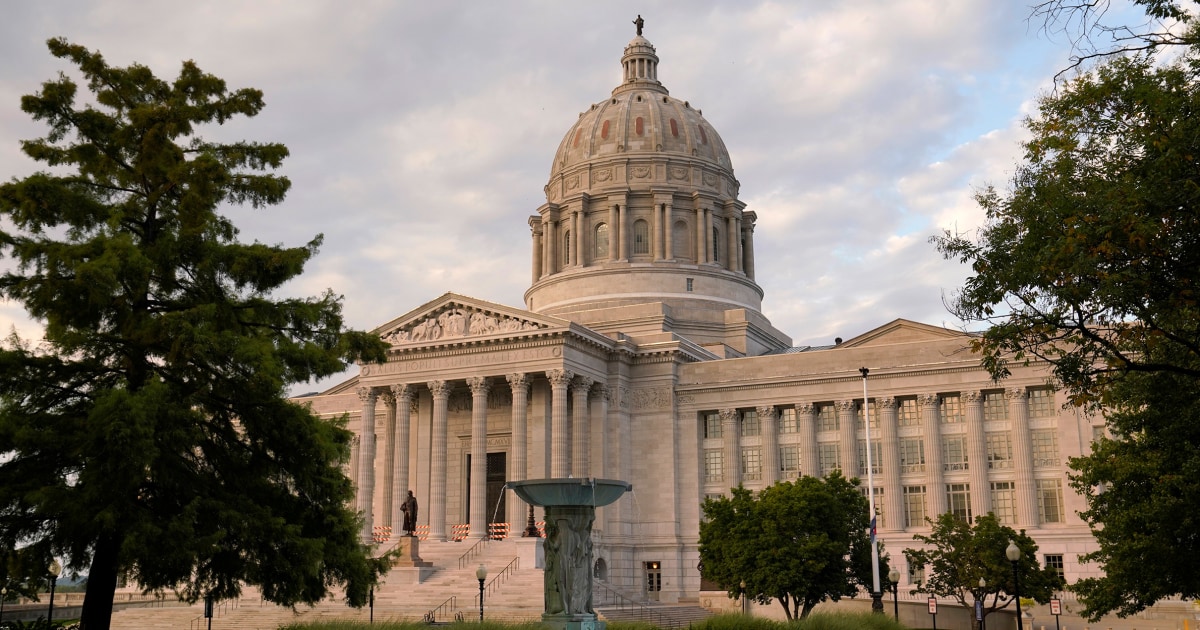
Yesterday, the Missouri Supreme Court ruled that the state’s new congressional map — which likely would have flipped Kansas City’s Democratic 5th District red — could not be used in November.
uncertain
which → rule → November
Instead, voters will now get to decide on whether to implement the new map in a November referendum, while House elections will proceed under the old map that was used in 2024.
asserted
that → get → 2024
That is, unless the U.S. Supreme Court steps in.
asserted
Court → step → ?
Missouri’s Attorney General has already vowed to seek relief from the U.S. Supreme Court, although the state court rejected her request for a stay.
asserted
court → vow → stay
But for now, legal experts and prediction markets think it’s more likely than not that the ruling is upheld.
asserted
ruling → think → ?
The likeliest path forward is that candidates who won Missouri’s August House primaries (under the new map) will proceed to the general in their same-numbered districts, under the old map.
asserted
who → win → map
Although party nominating committees and even new primaries have also been discussed, our goal is to give you the best predictions possible based on current information.
asserted
goal → nominate → information
So here’s how we’re handling the swap:
asserted
we → ’ → swap
We’re reverting data on the demographics and partisanship of Missouri congressional districts back to the old map, but retaining the nominees in each district from the state’s August primary.
asserted
We → revert → primary
Missouri U.S. House polls fielded before the September 3 decision will no longer feed into the model.
asserted
polls → field → model
Until the experts — Cook Political Report, Inside Elections, and Sabato’s Crystal Ball — update their race ratings in light of the new map, the Classic forecast will also serve as the Deluxe forecast in MO-1 through MO-6. MO-7 and MO-8 are exempt from this change because their boundaries were not changed in the first place.
asserted
boundaries → update → place
As a result of these changes, Democrats are expected to net one additional House seat, with their average number of seats in FLIPR Deluxe moving from 230 to 231.
asserted
number → expect → 231
Under the blocked map, the Democratic incumbent in Missouri’s 5th District, Emanuel Cleaver, had just a 25 percent chance of retaining his seat.
asserted
incumbent → block → seat
Now, he’s up to 98 percent, and the race has moved from Likely R to Solid D.
Following the map reversion, Democrats’ chances of flipping Missouri’s 2nd District in suburban St. Louis are up from 8 percent to 29 percent.
asserted
chances → ’ → percent
But how meaningful is netting just one additional House seat in a year that should already be good for Democrats?
asserted
that → net → Democrats
FLIPR thinks there’s a 2.2 percent chance that Democrats win the House by exactly one seat — 218 to 217.
asserted
Democrats → think → seat
That’s not a particularly likely outcome, but elections are often decided on the margins.
asserted
elections → ’ → margins
If polling error cuts against Democrats this November, making the race for the House closer than expected, they’ll be glad that Republicans’ redistricting war gains have been blunted.
asserted
gains → cut → House
We’ll be keeping a close eye on how this situation develops.
asserted
situation → keep → eye
But for now, Democrats’ chances of retaking the House have risen from roughly 81 percent to 83 percent, largely thanks to Missouri’s new old map.
asserted
chances → retake → map