Here at Silver Bulletin, we’ve been predicting that AI would become one of the most salient political issues for quite some time.
asserted
AI → predict → time
That hasn’t happened with the general public quite yet — just 1 percent of respondents in the latest wave of Gallup’s most important problem poll named “advancement of computers/technology” as the nation’s most important issue.
asserted
percent → happen → issue
But over the past month, political elites have latched onto the issue in a big way, and there are growing signs that voters are following them.
asserted
voters → latch → them
Sure, some politicians, such as Bernie Sanders, had already been focused on AI — and data centers are increasingly making news and widely disliked.
asserted
centers → focus → news
But some combination of the Hugging Face incident1, Anthropic whistleblower Jacob Coxon’s comments on existential AI risk, and Dario Amodei’s subsequent essay on “pacing the frontier” have pushed the issue into mainstream political discourse.
asserted
combination → pace → discourse
“Dozens of lawmakers are now touting new proposals to regulate artificial-intelligence models that have stepped up their capabilities,” according to the Wall Street Journal, and House Democrats are now considering creating a select committee focused on AI.
uncertain
Democrats → tout → AI
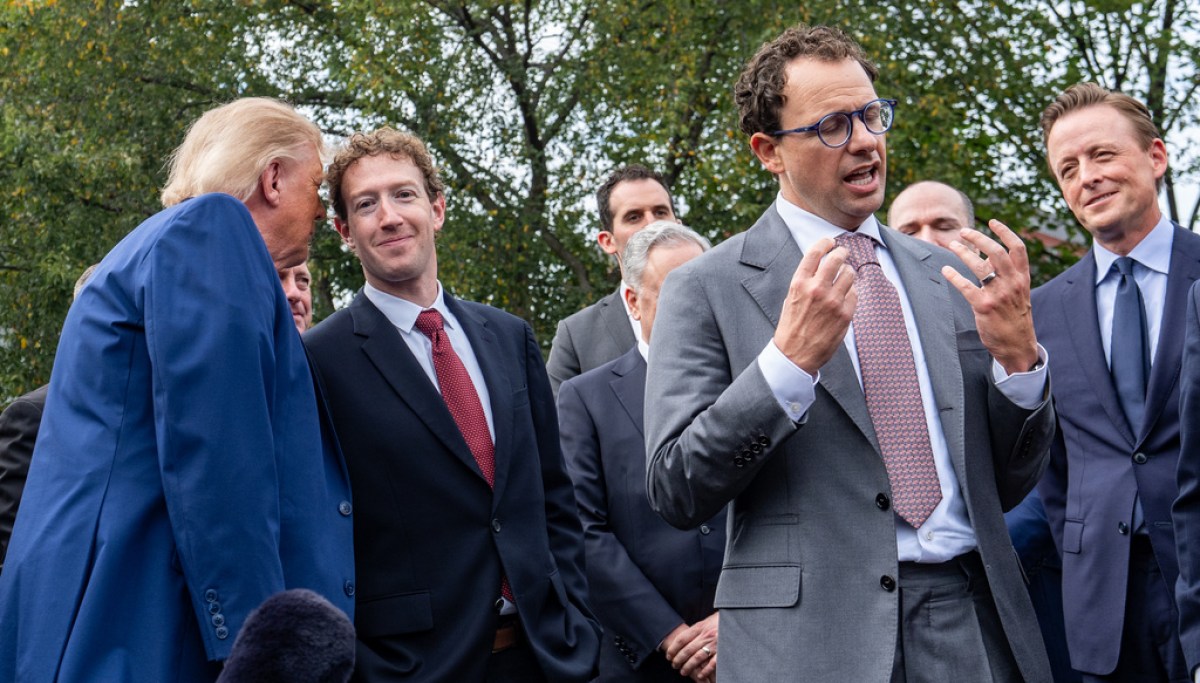
For his part, Donald Trump is something of an “accelerationist” who has called AI safety concerns a hoax.
asserted
who → call → concerns
Some of his most memorable recent statements on the subject include “Whoever wins AI, wins!” and “The only control or ‘guardrails’ that AI needs is a STRONG AND SMART (High IQ!) PRESIDENT.”
asserted
AI → include → that
He’s also staunchly pro-data center.
asserted
He → ’ → ?
But not everyone is so bullish on AI, and with the arguably alarming rate at which the models are improving, this issue is likely to become more relevant before 2028.
asserted
issue → improve → 2028
Whoever wants to be the next president will need to stake out a clear position before primary season kicks off.
asserted
season → want → position
Those primaries might feel a long way off, but remember, candidates will almost certainly start to announce their bids in early 2027.2
uncertain
candidates → feel → 2027.2
We were originally going to cover what all of the presidential hopefuls were saying about AI in a single article, but with big prospective fields on each side, we’re going to split things by party.
asserted
we → go → party
On the Democratic side, there’s broad consensus that data centers should pay for their own energy, and that federal regulation and government oversight of frontier labs are needed.
asserted
regulation → ’ → labs
The debates are more about how heavily to restrict data center construction and how aggressively to pursue a slowdown.
asserted
debates → restrict → slowdown
We’re going to focus on the top eight presidential contenders, as approximately defined by the betting markets and polls.3
asserted
We → go → markets
To put some numbers on their positions, we’ve scored all eight candidates from 0-10 on two axes.4
asserted
we → put → 10
The first ranges from pro-acceleration (10) to pro-regulation (0), the second from “Likes to talk about AI” (10) vs. “not much to say on the issue” (0).
asserted
first → range → issue
We’ll show each candidate's scores in their section, and include a chart for all eight candidates at the end of the post.
asserted
We → show → post
Acceleration: 4.5
Salience: 7.5
We’ve written about Newsom’s declining primary fortunes: he’s dropped from 37 percent in the markets last November to around 15 percent today.
asserted
he → write → percent
But he’s uber-ambitious, so there’s a good chance he’ll still run — unless, he claims, Kamala Harris jumps into the race.
uncertain
he → ’ → race
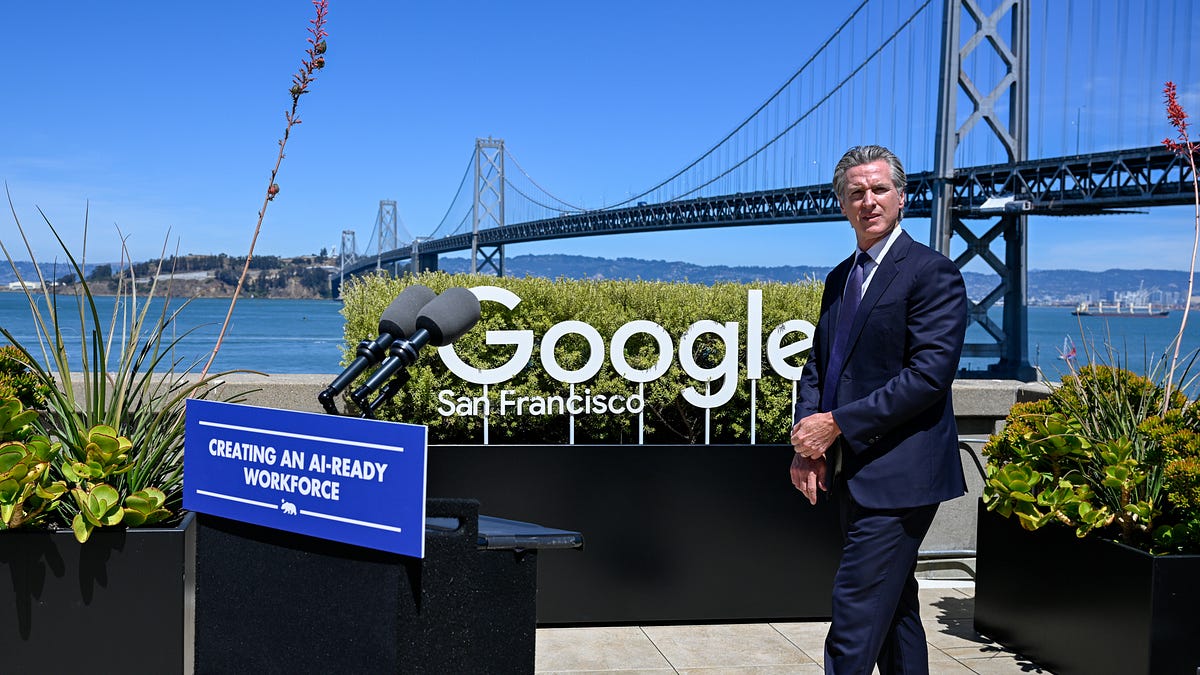
If he does enter the primary, Newsom will likely position himself as a leader on the AI issue due to his experience governing the state that houses the major American labs.
asserted
that → enter → labs
But in his continuous quest to optimize his political profile, Newsom has somewhat flip-flopped as the public has polarized against data centers and AI more generally.
asserted
public → optimize → centers
In 2024 alone, Newsom signed 17 AI-related bills into law.
asserted
Newsom → sign → law
But he also vetoed SB 1047, an ambitious bill supported by many people in the AI safety space, which would have created whistleblower protections and required risk assessments from developers of the most powerful AI models.
asserted
which → veto → models
And in 2025, Newsom vetoed legislation that would have required data centers to track their water usage, a move that Trump might approve.
uncertain
Trump → veto → that
But fast forward one year, and he’s criticizing Trump and the federal government for doing too little to regulate AI and positioning California as a regulatory trendsetter.
asserted
he → fast → trendsetter
“The federal government’s abject failure to create any form of meaningful AI oversight or accountability should alarm every American, especially when AI CEOs themselves are begging for regulation,” he said in a recent press release.
asserted
he → create → release
Last year, Newsom also signed a new bill, SB 53, which had many similarities to SB 1047.
asserted
which → sign → SB
It required frontier labs to publish transparency reports, disclose critical safety incidents, and maintain anonymous channels for whistleblowers.
asserted
It → require → whistleblowers
More recently, he signed a slew of bills that gave local officials more authority to monitor data centers, established a framework for independent safety evaluators, and created a state registry of AI auditors.
asserted
that → sign → auditors
On X, he said: “We’re making sure these companies pay the costs they create instead of sticking working families with the bill.”
asserted
they → say → bill
He also issued an executive order last month to explore, among other things, creating a “kill switch” for the most advanced models.5
Still, few other Democrats on this list have Newsom’s track record of opposing major AI regulations in the past.
asserted
Democrats → issue → past
Alexandria Ocasio-Cortez
Acceleration: 1
Salience: 6
The markets are getting more bullish on an AOC primary win, although in a recent New York Times interview, she said she’ll make a decision on running after the midterms.
asserted
she → get → midterms
She signed on to Sanders’ recently proposed bill that would ban artificial superintelligence and co-led the introduction of a bill that would halt new data center construction until more federal safeguards were put in place.
asserted
safeguards → sign → place
Her press release when that bill was announced read, in part, “Congress has a moral obligation to stand with the American people and stop the expansion of these data centers until we have a framework to adequately address the existential harm AI poses to our society.”
asserted
AI → announce → society
In addition to highlighting ICE’s use of AI, AOC has focused in on the privacy angle:
“We must sound the alarm now — because this surveillance of the American people is not going to stop.
asserted
surveillance → highlight → people
We must stop it.
asserted
We → stop → it
All of this harm has occurred, not in spite of, but because of the absence of federal legislation to regulate AI.
asserted
All → occur → AI
On the same front, she authored the DEFIANCE Act, a bipartisan bill that would allow people depicted in explicit deepfakes to take civil action against the creators or distributors of those images.
asserted
people → author → images
…and 88 more, not listed.
 The Aporia