Flock Is Canceled—And Its Competitors Are Profiting

Mother Jones · collected 2026-09-04 · by Sophie Hurwitz
Read the original at Mother Jones ↗

Summary

Florida Gov. Ron DeSantis announced at a news conference that Florida will revoke permits for law enforcement license-plate-recognition camera permits on state highways by September. This move is part of a growing trend, as Texas has also ordered state agencies to stop funding Flock cameras and 90 cities cancelled their Flock contracts in August, up from the previous record of 214 cities since 2021. Flock's ALPRs have been criticized for enabling police to track "patterns of life" through data sharing between departments, with some officers facing consequences for abusing this surveillance ability. DeSantis and advocacy groups like Secure Justice are pushing for stricter regulations on data retention to curb the potential for abuse.
Written by the local model on 2026-09-04, using this article's own text rather than the other coverage of the same event (that is the story summary below).

Signals How these are calculated →

Claims extracted
30
claim-shaped sentences
Uncertain
10%
3 of 30 hedged
Leaning
Leans left
of the writing, not the subject
Publisher trust
95.3
red-flag proxy, not a credibility rating
Outlets on this story
1
Politics
Narrative spread
1
articles carrying this framing
Analyzed 2026-09-04 · source text last changed 2026-09-04 · how these are computed

AI analysis (generated at analysis time, not now)

Story summary

In August 2026, more cities than ever before canceled their contracts with Flock, an automated license plate reader company, according to the advocacy group Secure Justice. 214 cities have dropped Flock since 2021, and 90 of them did so in August 2026. This trend is likely linked to growing concerns about government surveillance. In Florida, Governor Ron DeSantis announced that the state will revoke all law enforcement license-plate-recognition camera permits on state highways by the end of September, citing a desire to prevent a "digital AI surveillance state". This decision is part of a broader shift away from ALPRs, which have raised concerns about their potential for abuse and invasion of privacy.

Written for “Music Festival Controversy” on 2026-09-05, grounded in this article and the 0 other(s) covering the same event.
Why this leaning score
The article's own words the score was based on. Each is quoted verbatim and was checked against the article text before being stored, so you can find it in the original.
Score -0.35 Confidence high
Leaning score -0.35 for article 3785 (high confidence, 1 verified quote) · logged 2026-09-04

Story

📰 Music Festival Controversy
Politics · 1 article(s) covering the same event. This is the one the site leads with.

How this is being covered How these are calculated →

Article leaning vs. publisher reliability
Source leaning vs. consistency

Compared with similar articles

This article reads leans left and hedges 10% of its claims. Each row says how that neighbour differs.
Reason.com
⚖️ Leans left 🔴 16% hedged 32 of 203 📰 publisher trust 94
“Article A discusses warnings about Flock cameras and their potential to reveal sensitive information, while Article B reports on a state (Florida) revoking licenses for these cameras and removing them”
404 Media
⚖️ Leans right further right than this 🔴 4% hedged 1 of 23 📰 publisher trust 95
“Article A mentions law enforcement switching from Flock to Axon cameras due to backlash, while Article B reports on Florida revoking permits for all license-plate-recognition cameras, including those of Flock and its competitors.”
NPR Topics: News
⚖️ Leans left 🔴 4% hedged 1 of 26 📰 publisher trust 58
“Article A reports on Florida Gov. Ron DeSantis' announcement to revoke permits for license-plate-recognition cameras, while Article B discusses opposition from politicians across the political spectrum, including a mention of Pennsylvania's Gov. Josh Shapiro but not DeSantis”

Publisher

Mother Jones · 50 article(s) · 0 correction(s) detected
SignalValueWeight
Correction rate 0.000 0.4
Uncertainty density 0.095 0.25
Assertive mismatch rate 0.000 0.35
No corrections detected for this publisher. That may mean careful reporting, or simply that nothing has been checked.

Who wrote this

Sophie Hurwitz
9 article(s) here · 1 carrying a prediction
🔮 In late July, Immigrations and Customs Enforcement fitted Bel with an electronic ankle monitor, one of the ways the agency tracks people who it may soon deport.
🔮 That may be true in Mississippi—but on the state level in at least nine US states, and in more than a dozen other countries, clean drinking water is in fact a protected right.
🔮 Members of the Army’s brass floated the idea of shipping computers to Afghanistan so enlisted men could play America’s Army while serving in the real American Army.
🔮 He announced that Florida will revoke all law enforcement license-plate-recognition camera permits on state highways, with all such cameras to be removed by the end of September.
2026-09-04 · assertive framing · Flock Is Canceled—And Its Competitors Are Profiting
🔮 The UN Human Rights Office released a statement on Wednesday condemning the strikes and stating trafficking drugs, even with evidence, would not justify extrajudicial murder.
2026-09-03 · assertive framing · Pete Hegseth’s Year of Blowing Up Boats
🔮 Local and state officials, Gordon said, were not made aware that the election monitors would be present, and fellow Republican Debra Lee, the chief election officer for Wyoming’s most populous county, said the federal employees “did not offer their credentials until I requested they do so.”
🔮 It remains to be seen whether independent news, weather, and mapping firms will fall into line.
🔮 This January, Secretary of State Marco Rubio directed consular officers to refuse to process immigration visas for people from 75 countries because, he said, those immigrants would be more likely than others to “extract wealth” or “take welfare and public benefits” from the US.
🔮 Lonsdale, a longtime critic of “housing first” policy—which proposes that homelessness be solved by supplying those in need of housing with somewhere to live—argues that fining and arresting people for sleeping in public will push them into mental health treatment.
Also by Sophie Hurwitz
Pete Hegseth’s Year of Blowing Up Boats
2026-09-03 · Mother Jones
Nothing else under this byline is closely related to this article, so these are simply their most recent.
All 9 articles by Sophie Hurwitz →

Topics

Flock Florida Oakland St. Augustine Texas

Subjects

Flock ORG · 11× Florida GPE · 4× Rekor ORG · 3× Worthington PERSON · 3× DeSantis PERSON · 1× Oakland GPE · 1× Ron DeSantis PERSON · 1× Secure Justice ORG · 1× St. Augustine GPE · 1× Texas GPE · 1×

Narrative

The Oakland-based advocacy group Secure Justice, which tracks automated license plate reader use on the municipal level, says that in the month of August more towns and cities cancelled their Flock contracts than ever before: of the 214 cities that have dropped Flock since 2021, 90 did so in August 2026.
framing: assertive · carried by 1 article(s) · first seen 2026-09-04
🔮 He announced that Florida will revoke all law enforcement license-plate-recognition camera permits on state highways, with all such cameras to be removed by the end of September.
2026-09-04 · Mother Jones
Flock Is Canceled—And Its Competitors Are Profiting · assertive framing

Claims (30 extracted, 3 hedged)

“If you want to get in your car and you want to go down to Buc-ee’s in St. Augustine, it’s really none of the government’s damn business if you’re doing that, right?” Florida Gov. Ron DeSantis said Monday at a news conference. asserted
DeSantis → want → conference
He announced that Florida will revoke all law enforcement license-plate-recognition camera permits on state highways, with all such cameras to be removed by the end of September. asserted
cameras → announce → September
“What we don’t want in the state of Florida is to have a digital AI surveillance state where everything we’re doing is being tracked at all times,” DeSantis added, referring to the recent expansion of ALPRs—automated license plate reader cameras—across the country. asserted
DeSantis → want → country
The cameras are supposed to catch people committing crimes, and sometimes they do. asserted
they → suppose → crimes
But they’re also ripe for abuse. asserted
they → ’re → abuse
Each camera forms part of a nationwide network, and by sharing vehicle information between and within police departments, ALPRs can enable officers to track what are called “patterns of life”: where a person is likely to be, who they spend time with, and what they’re doing in a given moment. asserted
they → form → moment
Police officers nationwide are taking advantage of that surveillance ability. asserted
officers → take → ability
In dozens of cases, officers have lost their jobs or faced criminal charges for doing things like searching an ex-girlfriend’s license plate information 2,000 times, searching an estranged wife’s license plates 700 times, or tracking an abortion-seeker across state lines. asserted
officers → lose → lines
Florida is not alone in cancelling Flock contracts. asserted
Florida → cancel → contracts
Texas, last week, ordered state agencies to stop funding Flock cameras. asserted
Texas → order → cameras
The Oakland-based advocacy group Secure Justice, which tracks automated license plate reader use on the municipal level, says that in the month of August more towns and cities cancelled their Flock contracts than ever before: of the 214 cities that have dropped Flock since 2021, 90 did so in August 2026. asserted
90 → base → August
(At least three towns have reported that Flock reinstalled or reactivated their cameras after local officials ended their contracts.) asserted
officials → report → contracts
Strictly regulating data retention might be one solution. uncertain
regulating → regulate → retention
A police department can’t do as much to share data with ICE, for example, if state laws mandate that the data be deleted quickly. asserted
data → do → example
In New Hampshire, ALPRs must delete all data after three minutes; Flock’s current default retention period is seven days. asserted
period → delete → minutes
Corinne Worthington works as the advocacy manager with the Surveillance Technology Oversight Project, a nonprofit focused on litigation and research on discriminatory surveillance technology. asserted
Worthington → work → technology
To Worthington, Flock is “putting a name to people’s fears.” asserted
Flock → put → fears
“I think that because of how public Flock has been, people have woken up to the harms of ALPRs in a way that maybe, previously, they weren’t aware of,” Worthington said. asserted
Worthington → think → that
While Flock has over 120,000 license plate readers across the country, it is far from the only ALPR company. asserted
it → have → company
Motorola, the AI roadway safety firm Rekor, and Axon, the police tech firm behind Tasers, all sell similar cameras to police. asserted
Motorola → sell → police
“That’s the problem with targeting specifically the vendor, not the technology as a whole,” Worthington said. asserted
Worthington → ’ → whole
When states and cities cancel their contracts with Flock, they’re likely to end up replacing those cameras with ones made by one of the other ALPR companies. asserted
they → cancel → companies
Rekor, another company that sells ALPRs, is calling for national regulations on the cameras to “preserve ALPR’s public safety value.” asserted
that → sell → value
Those regulations would include “anonymizing non-hotlist plate data” which could then be re-identified with a valid warrant or court order. uncertain
which → include → warrant
“The fight over whether ALPR should exist has stopped being useful to anyone,” Rekor vice president Charlie Degliomini told me. asserted
Degliomini → exist → me
As far as he is aware, Degliomini added, his company is the only ALPR vendor calling for a warrant requirement on at least some plate searches. asserted
company → add → searches
But Rekor’s cameras can be abused, too: activists in New York are suing the Westchester County Police Department for allegedly using Rekor’s tools to log their locations thousands of times. uncertain
activists → abuse → times
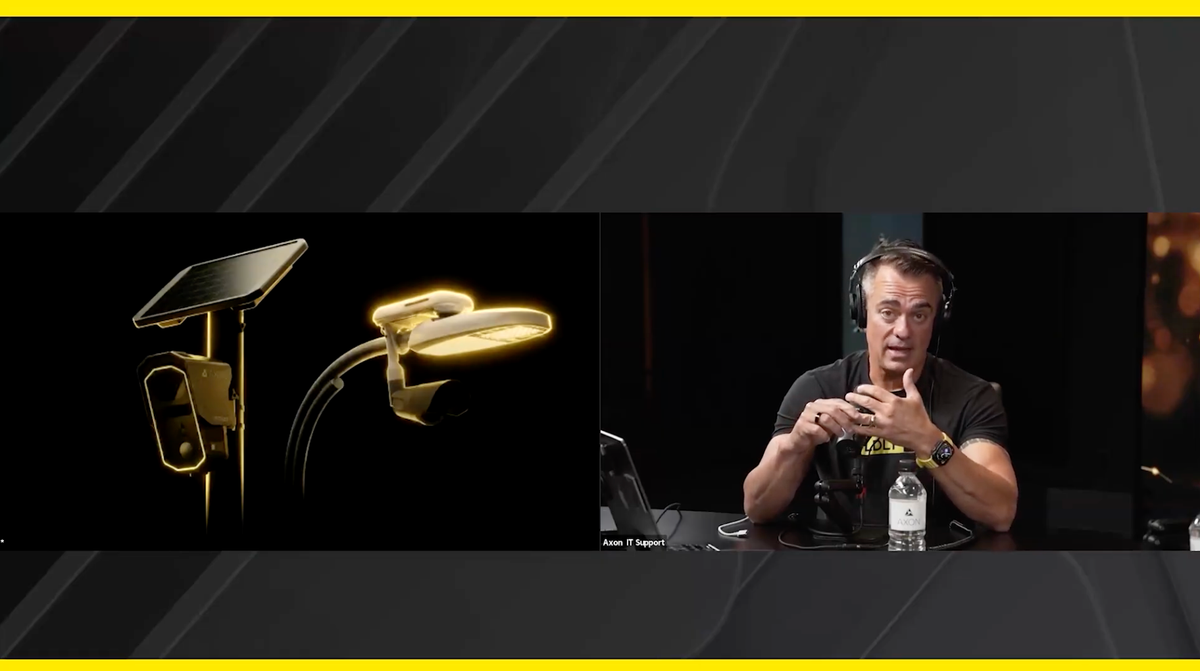
And the CEO of Axon, another camera manufacturer, floated the possibility of changing the shape of Axon cameras so they look less similar to the Flock cameras Americans are lately so fond of destroying. asserted
Americans → float → cameras
“We’ve had some people say they’d like to see us make just a different camera, because our ALPR camera looks like an ALPR camera,” Axon CEO Rick Smith said in a now-deleted webinar, as 404 Media first reported. asserted
Media → have → webinar
Whether cameras that look different, but perform the same surveillance function, will eventually inspire the same pushback remains to be seen. asserted
inspire → look → pushback

💬 Give feedback
🕘 History 🎫 Support