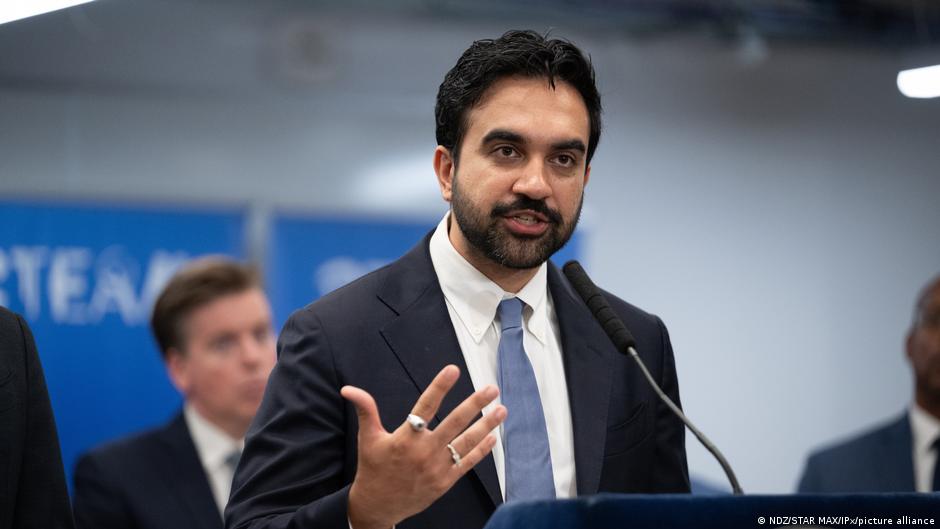
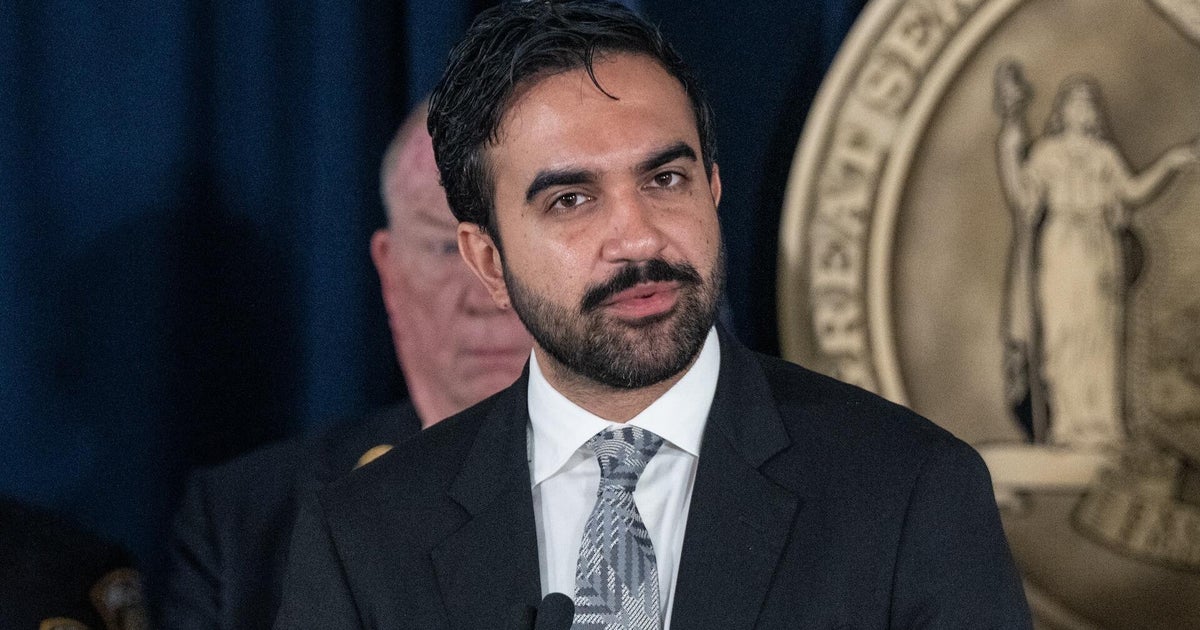
New York City public schools will temporarily bar elementary and middle school students from using generative artificial intelligence tools during the upcoming school year, Mayor Zohran Mamdani said on Wednesday.
asserted
Mamdani → bar → Wednesday
Officials have described this as the most expansive such prohibition in the United States.
asserted
Officials → describe → States
What do we know about the AI ban?
asserted
we → know → ban
The one-year moratorium bars student-facing generative AI software for students through eighth grade, affecting roughly 600,000 public school students, while officials study how children use the technology.
asserted
children → bar → technology
The city said the policy will halt use of about 40 educational AI tools currently used in classrooms..
asserted
policy → say → classrooms
Companion chatbots will be banned across all grade levels.
asserted
chatbots → ban → levels
The city will roll out twice-yearly AI literacy classes for all public high school students and launch pilot programs letting some use select AI platforms under teacher supervision.
asserted
some → roll → supervision
Teachers, meanwhile, will still be permitted to use AI for lesson planning and administrative tasks such as scheduling.
asserted
Teachers → permit → scheduling
What did Mayor Mamdani say about the restrictions?
asserted
Mamdani → say → restrictions
Mamdani framed the decision around the value of human connection in education: "Children need teachers and human connection in order to learn and grow.
asserted
Children → frame → teachers
They need to develop skills alongside their peers, build relationships with educators and wrestle with tough problems on their own."
asserted
They → need → own
He also tied the policy to the district's broader teaching ideals, saying, "Each day when our children come to school, we teach them to ask questions, to challenge assumptions, to interrogate the premise, to ask why.
asserted
we → tie → premise
When it comes to AI in our schools, we hold an obligation to do the same."
asserted
we → come → same
New York's move comes as school districts across the country weigh the benefits and risks of generative AI in classrooms.
asserted
districts → come → classrooms
Is New York alone in banning AI?
asserted
York → ban → AI
New York's move comes as school districts across the country weigh the benefits and risks of generative AI in classrooms.
asserted
districts → come → classrooms
One of the largest examples is Los Angeles Unified, the US's second-largest school district, which is also temporarily blocking generative AI tools on student devices across all grades as it develops a formal policy this school year.
asserted
it → block → policy
LAUSD had already banned devices before second grade and set screen-time limits as part of a broader policy adopted in June.
asserted
LAUSD → ban → June
Like Los Angeles, New York is pairing AI restrictions with broader limits on technology use.
asserted
York → pair → use
New York's new plan also includes recommended screen time limits – a cap of 30 minutes daily for grades three to five and 45 minutes for grades six to eight.
asserted
plan → include → eight
The plan also calls for a citywide review of education technology tools to eliminate those deemed nonessential to learning.
asserted
plan → call → learning
At least 37 states already have some form of official AI guidance for schools, according to the Associated Press, but no consistent national standard exists for AI literacy instruction.
uncertain
standard → have → instruction
Michael Mulgrew, president of the United Federation of Teachers, welcomed the screen time limits but said the AI policy "leaves many questions unanswered," including how the Education Department will ensure the tools it purchases include adequate safeguards, AP reported.
asserted
AP → welcome → safeguards
Josh Golin, executive director of the children's advocacy group Fairplay, told AP he wanted a longer moratorium and more lead time before the school year began, adding that AI platforms should have to "demonstrate that their products are effective at teaching kids, that they're safe, that they're not displacing face-to-face interaction and that they're not leading to rampant cheating."
"A year to evaluate is not nearly enough time," he said.
asserted
he → tell → cheating
New York City's roughly 1 million public school students return to classrooms next week.
asserted
students → return → classrooms
Edited by: Louis Oelofse
If you rely on our team for trusted reporting, please take a moment to select us as your Preferred Source on Google, so you'll always see our verified news first.
asserted
you → edit → news
 The Aporia