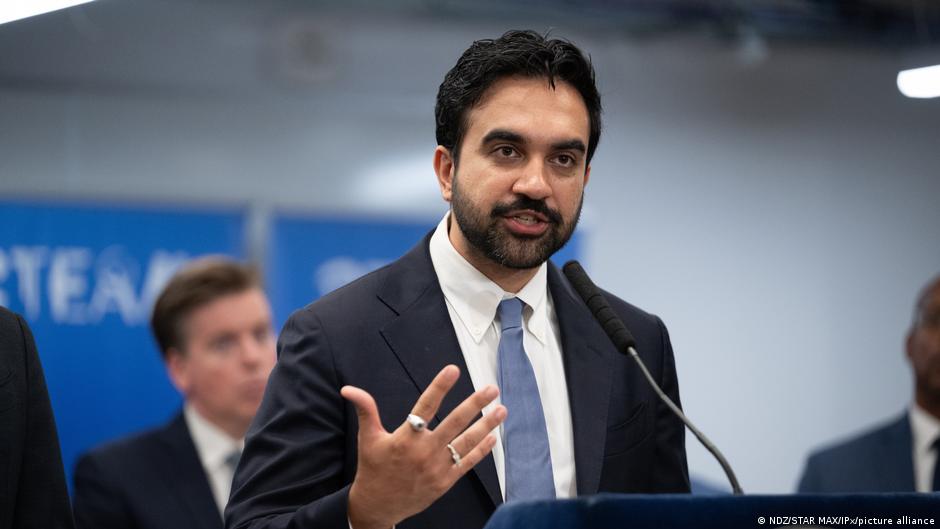
“A six-year-old child is too young to slice an onion, to fry an egg or to use a stove safely.
asserted
child → slice → stove
But once that child becomes 16, that knowledge becomes something they are mature enough to learn,” stressed New York’s Mayor Zohran Mamdani, while announcing a one-year moratorium on AI tools for students.
asserted
Mayor → become → students
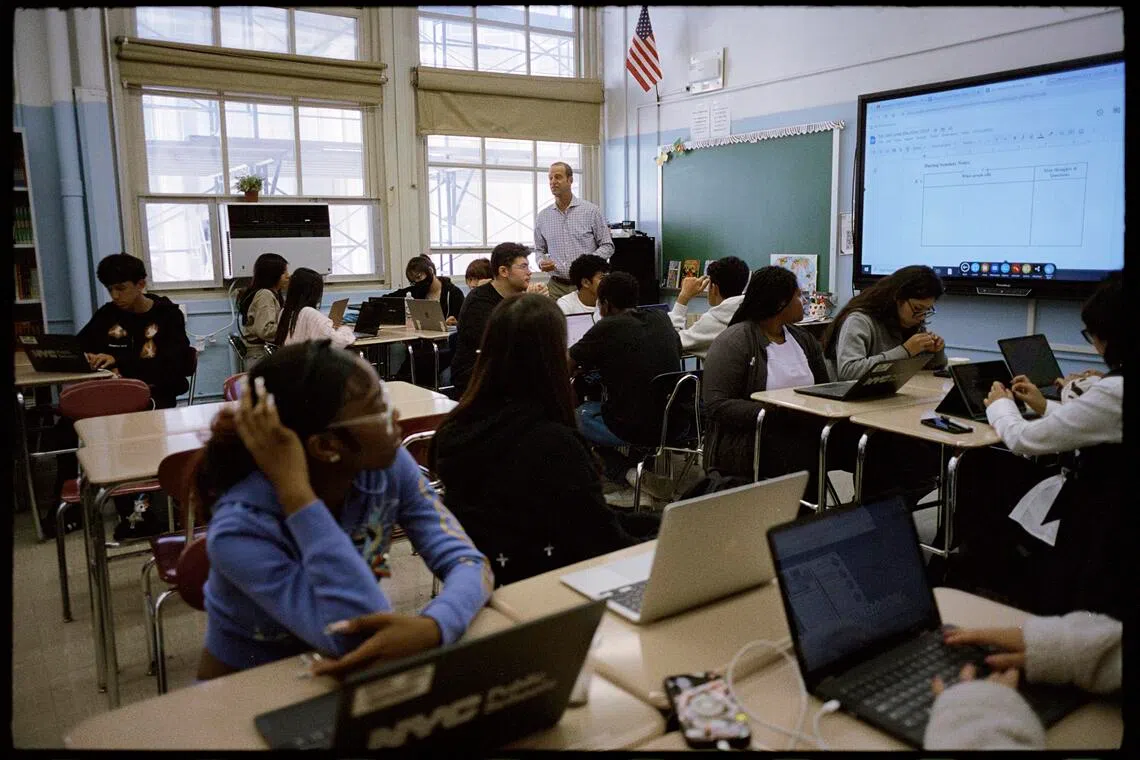
In what has been described as one of “the most expansive student-facing AI policies in the country”, the Mayor and Schools Chancellor Kamar H. Samuels on September 2 imposed a one-year moratorium on student-facing generative AI for pupils up to eighth grade for the 2026–27 academic year.
asserted
Samuels → describe → year
Here’s what you need to know about the moratorium, why NYC introduced it, and why the move could set a global precedent.
uncertain
move → ’ → precedent
This move will affect nearly 6,00,000 public school students across the United States’ largest school district.
asserted
move → affect → district
Companion chatbots will be prohibited across all grades, while the AI components of more than 38 previously approved programmes that fail to meet the new standards will be disabled or discontinued.
asserted
that → prohibit → standards
However, not all AI has been banned.
asserted
AI → ban → ?
Teachers can continue to use approved tools for planning and administrative work.
asserted
Teachers → continue → work
Assistive technologies required by students with disabilities, as well as certain AI tools used in career-readiness programmes, remain permitted where necessary and under the policy’s safeguards.
asserted
technologies → require → safeguards
Five limited AI pilots will also operate throughout the year for high school classrooms.
asserted
pilots → operate → classrooms
These select tools are Quill (15 minutes per week) for English language arts; Edia (20 minutes per week) for mathematics; Brisk Teaching (10 to 20 minutes once or twice weekly) for teacher-created activities; Playlab (two assignments per marking period; 45 minutes per week) for assignment-specific applications; and Intel AI-Ready Schools (one period per week) to assist students in identifying community issues and developing solutions through term-long projects.
asserted
tools → create → projects
Every high school student will complete two 45-minute modules per year aimed at developing critical thinking around AI use, including its risks, limitations, and scope.
asserted
student → complete → risks
Alongside AI restrictions, tighter individual screen-time limits have also been introduced.
asserted
limits → introduce → restrictions
Children from 2-K through to second grade will have no routine screen time.
asserted
Children → have → time
For those in grades three to five, NYC Public Schools recommends no more than 30 minutes a day of individual screen use; for grades six to eight, the recommendation is 45 minutes.
asserted
recommendation → recommend → eight
These restrictions do not prohibit teacher-led use of computers, tablets, or interactive whiteboards during lessons.
asserted
restrictions → prohibit → lessons
Throughout the academic year, a panel comprising students, educators, parents, elected officials, union partners, and field experts will assess the impact of the moratorium and pilots, delivering a report with policy recommendations in April 2027.
asserted
panel → comprise → April
“Children need teachers and human connection in order to learn and grow,” Mr. Mamdani said.
asserted
Mamdani → need → teachers
“They need to develop skills alongside their peers, build relationships with educators, and wrestle with tough problems on their own.”
asserted
They → need → own
Mr. Samuels also made a similar argument.
asserted
Samuels → make → argument
Learning, he said, involves getting something wrong, trying again and eventually getting it right.
asserted
it → say → ?
That struggle is not an inconvenience that technology should eliminate; it is part of the learning process.
asserted
it → eliminate → process
This move arrives amidst growing concern over screen time harming youth mental health.
asserted
time → arrive → health
Studies have linked excessive scrolling, social media exposure and reliance on AI in children to lower critical thinking abilities, shorter attention spans, anxiety, and depression.
asserted
Studies → link → abilities
While evidence connecting AI chatbots to suicide risk remains limited, several cases have prompted lawsuits alleging that interactions with chatbots contributed to young people’s deaths.
asserted
interactions → connect → deaths
Mr. Mamdani’s decision follows OpenAI’s launch of a teenage version of ChatGPT on August 18 featuring parental controls and content restrictions regarding self-harm and suicide.
asserted
decision → follow → harm
On August 26, Meta similarly announced stricter time limits, night-time blocking, and muted notifications during school hours for teenage accounts on Instagram and Facebook.
asserted
Meta → announce → Instagram
“The tech industry wants us to believe that AI-powered early education is not only inevitable but necessary.
asserted
education → want → ?
We do not see it that way,” Mr. Mamdani added.
asserted
Mamdani → see → ?
Research supports a cautious stance.
asserted
Research → support → stance
A 2026 CEPR discussion paper by researchers at Stockholm University and the University of Hong Kong examined more than 26,000 students in China over 30 months.
asserted
paper → examine → months
They found that access to generative AI increased homework scores by 18% and reduced completion time by 30%.
asserted
access → find → %
However, after roughly six months, the same students’ closed-book examination scores had fallen by 20%.
asserted
scores → close → %
A broader review by the Brookings Institution’s Centre for Universal Education, analysing over 400 studies and interviews with 500 educators and pupils across 50 countries, concluded that the potential harms of generative AI in primary and secondary education currently outweigh the benefits—though tailored applications with proper safeguards can enrich learning.
asserted
applications → analyse → learning
How are other parts of the world dealing with a similar dilemma?
asserted
parts → deal → dilemma
The United Arab Emirates is moving towards more structured AI education, rather than a moratorium.
asserted
Emirates → move → education
It has announced an AI curriculum across public and private schools covering areas such as data, algorithms, applications, risks and ethical use.
asserted
It → announce → data
It also plans to train about 22,000 educators in using AI for teaching, assessment, curriculum analysis and lesson planning.
asserted
It → plan → teaching
Norway has adopted a more cautious approach.
asserted
Norway → adopt → approach
Its education authorities have recommended that pupils in grades one to seven should not be given access to generative AI, while students in eight to 10 should be introduced to it gradually.
asserted
students → recommend → it
…and 11 more, not listed.
 The Aporia