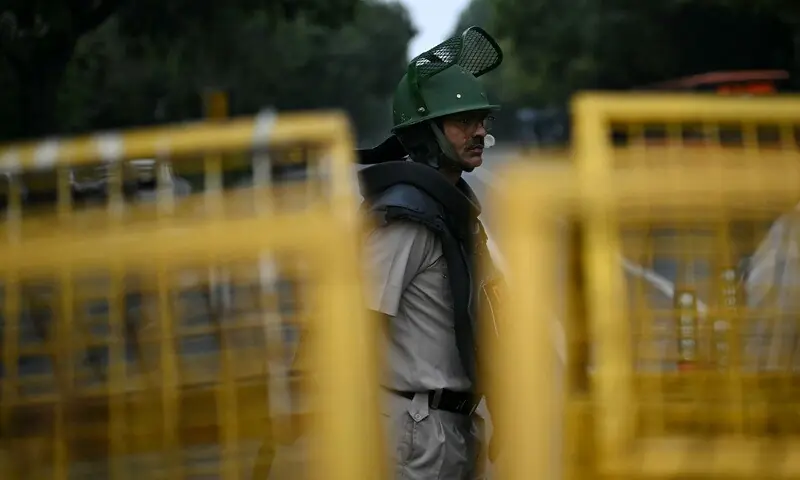
India's Cockroach Janata Party (CJP) may have anticipated pushback from the government after its first round of protests in July, but the scale of barricading and detentions that greeted its leaders in a fortress-like New Delhi on October 10 was unlike anything they had anticipated.
uncertain
they → anticipate → anything
The CJP began as a satirical online movement after the chief justice of India, Surya Kant, referred to unemployed young people as "cockroaches" in an offhand remark.
asserted
justice → begin → remark
The name is an ironic riff on the name of Indian Prime Minister Narendra Modi's ruling Bharatiya Janata Party (BJP).
asserted
name → rule → Party
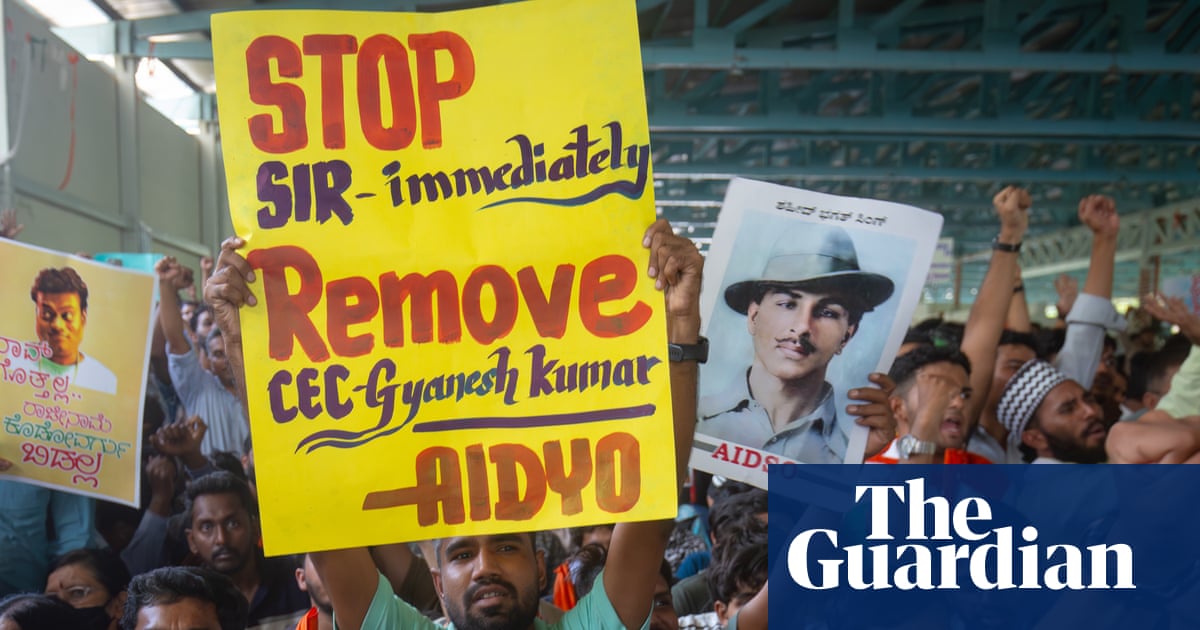
In its latest round of agitation, they are demanding the resignation of the country's controversy-hit Chief Election Commissioner Gyanesh Kumar, after more than 130 million names were reportedly removed from electoral rolls nationwide.
uncertain
names → demand → rolls
You can read more about the controversy here.
asserted
You → read → controversy
What happened over the weekend?
asserted
What → happen → weekend
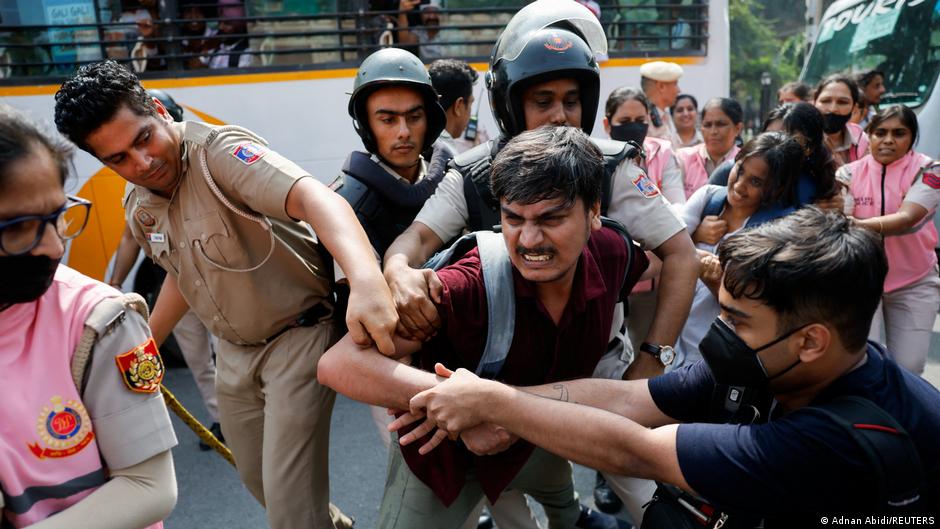
CJP founder Abhijeet Dipke, accompanied by co-conveners Ashutosh Ranka and Saurav Das, was detained from the plane in which he landed in the national capital on Saturday.
asserted
he → accompany → Saturday
Meanwhile, police were stationed outside the homes of several other faces associated with the movement, including social media personality Dhruv Rathee, who has nearly 20 million followers on Instagram.
asserted
who → station → Instagram
In central Delhi, buses were loaded with protesters, many of whom were taken to far-flung centers, where they were kept for hours.
asserted
they → load → hours
According to local media, at least 3,000 people were detained across the city.
uncertain
people → accord → city
How the government is handling the protests
The protests come as Modi marks 25 uninterrupted years leading elected governments, first in Gujarat state as chief minister and then as prime minister of India.
asserted
Modi → handle → India
Ironically, "this celebration has happened at the time when he's politically at his weakest," Delhi-based writer Nilanjan Mukhopadhyay told DW.
asserted
Mukhopadhyay → happen → DW
He contrasted the government's current response with its approach in July, when thousands of young protesters took to the streets to demand the resignation of Modi's education minister over repeated exam paper leaks.
asserted
thousands → contrast → leaks
At the time, authorities had used batons, detentions and pellets to disperse the crowds gathered in central Delhi, after they had been on the streets for days.
asserted
they → use → days
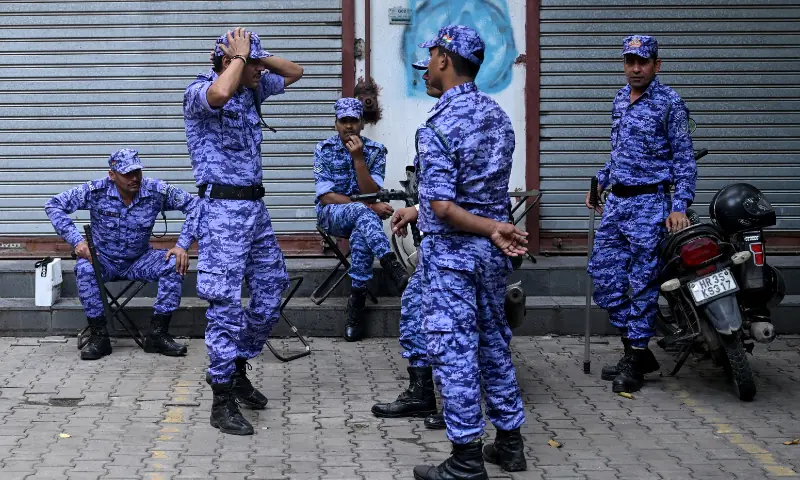
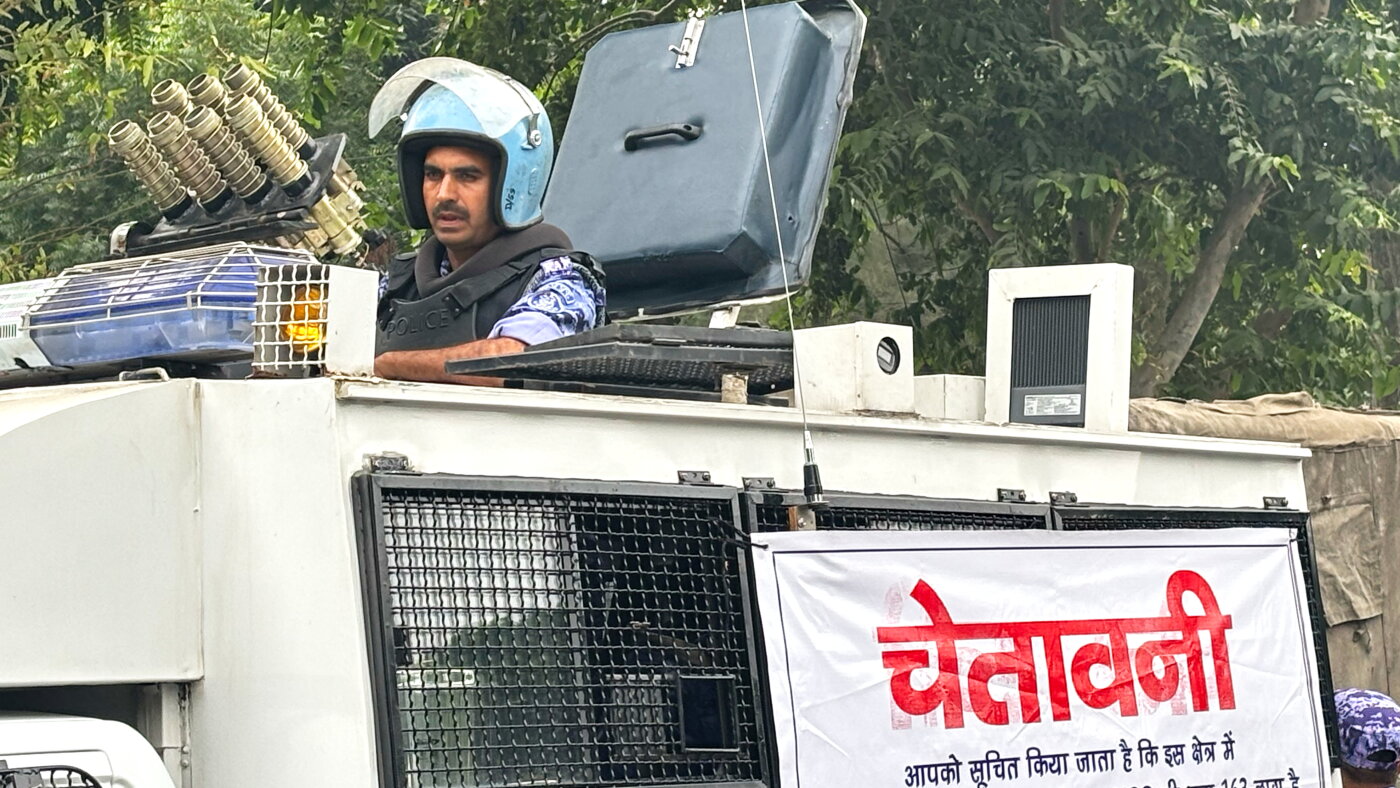
However, this time, authorities shifted to mass security deployments and preemptive action on a large scale.
asserted
authorities → shift → scale
This included notices to those associated with earlier protests, transport cuts, the internet cutoff and airport arrests.
asserted
This → include → protests
"The government has learned from its previous experience.
asserted
government → learn → experience
They didn't allow people to sit at Jantar Mantar for any length of time, so it couldn't balloon," Pearl Pandya, senior analyst for Asia at global monitor ACLED, told DW.
asserted
Pandya → allow → DW
"What's worrying is whether this becomes a playbook for the future — that you are not allowed to protest in the first place," she added, referring to the government's decision to remove the 18th-century observatory Jantar Mantar in central Delhi from the list of designated protest sites.
asserted
she → worry → sites
Authorities, however, have announced three new designated protest sites in the national capital.
asserted
Authorities → announce → capital
Mukhopadhyay had a different reading of the situation.
asserted
Mukhopadhyay → have → situation
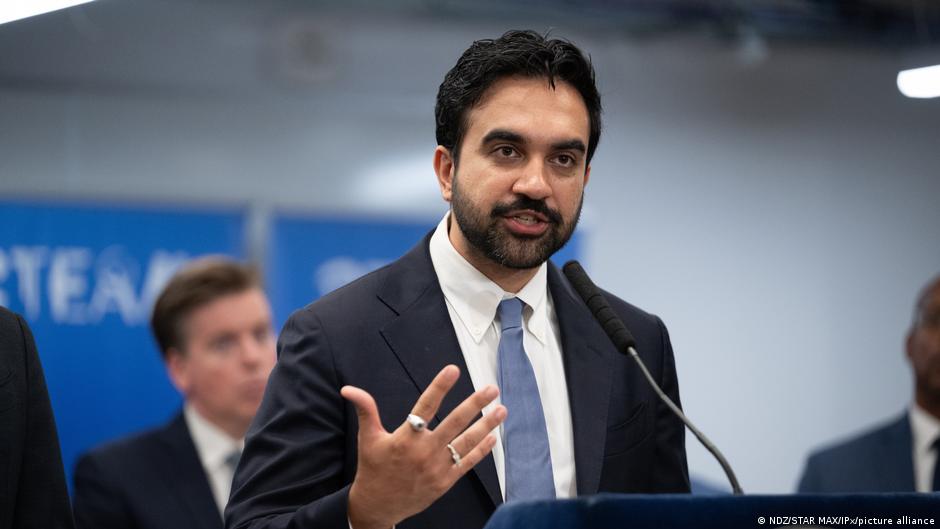
"The scale of this deployment is actually a defeat for Mr. Modi," he said.
asserted
he → say → Modi
Mukhopadhyay argued that it was already a setback for the government if it was forced to deploy security forces on such a scale in response to protests from a completely new socio-political movement.
asserted
it → argue → movement
Why October hasn't matched July
asserted
October → match → July
Despite the momentum, the CJP has not been able to replicate its success from July, with the protests against Kumar being led primarily by opposition leaders and student organizations.
asserted
protests → replicate → leaders
the right to vote is still seen as an intrinsically political one, where it's the opposition versus the BJP," Pandya said.
asserted
Pandya → vote → BJP
The CJP, however, has long maintained that it is non-political.
asserted
it → maintain → ?
This is often cited as the reason for them amassing such a large following of young followers.
asserted
them → cite → followers
Mukhopadhyay criticized that stance, saying: "You cannot raise issues about electoral neutrality... without saying that these are political issues."
asserted
these → criticize → neutrality
Despite the differences between the previous round of CJP protests in July and the current wave of demonstrations, sociologist Surinder Singh Jodhka emphasized continuity.
asserted
Jodhka → emphasize → continuity
"I don't think they're qualitatively different.
asserted
they → think → ?
Once again, young people are the ones who are mobilized, and they are much more encouraged because the earlier round of protests was successful," he told DW.
asserted
he → mobilize → DW
"And it's also asking similar questions about institutions, about democracy, about transparency and accountability.
asserted
it → ask → transparency
"There is a new hope for those who had earlier given up on India, and felt like the right wing was in complete control," Jodhka added.
asserted
Jodhka → be → control
Dismissing comparisons with volatile protests in neighboring Nepal and Bangladesh, which brought down their governments, the analysts pointed to India's strong institutions as a safeguard against a dramatic change of government.
asserted
analysts → dismiss → government
"India has had a very strong state system and state institutions," Jodhka explained, highlighting that even the opposition parties were asking for "the revival of institutions, rather than an overthrow of the state."
asserted
parties → have → state
Pandya also stated that faith in the judiciary "would prevent these protests from tipping over into a popular revolution which unseats the government.
asserted
which → state → government
Nevertheless, she said, sustained discontent "might come to bite the government in 2029... or before that in the state elections.
uncertain
discontent → say → elections
"
It could also erode Modi's popularity, which has been a defining feature of Indian politics over the past decade, the expert indicated.
uncertain
expert → erode → decade
Recalling the pride he felt when he registered to vote at 21, he drew comparisons with young Indian voters today.
asserted
he → recall → voters
…and 1 more, not listed.
 The Aporia