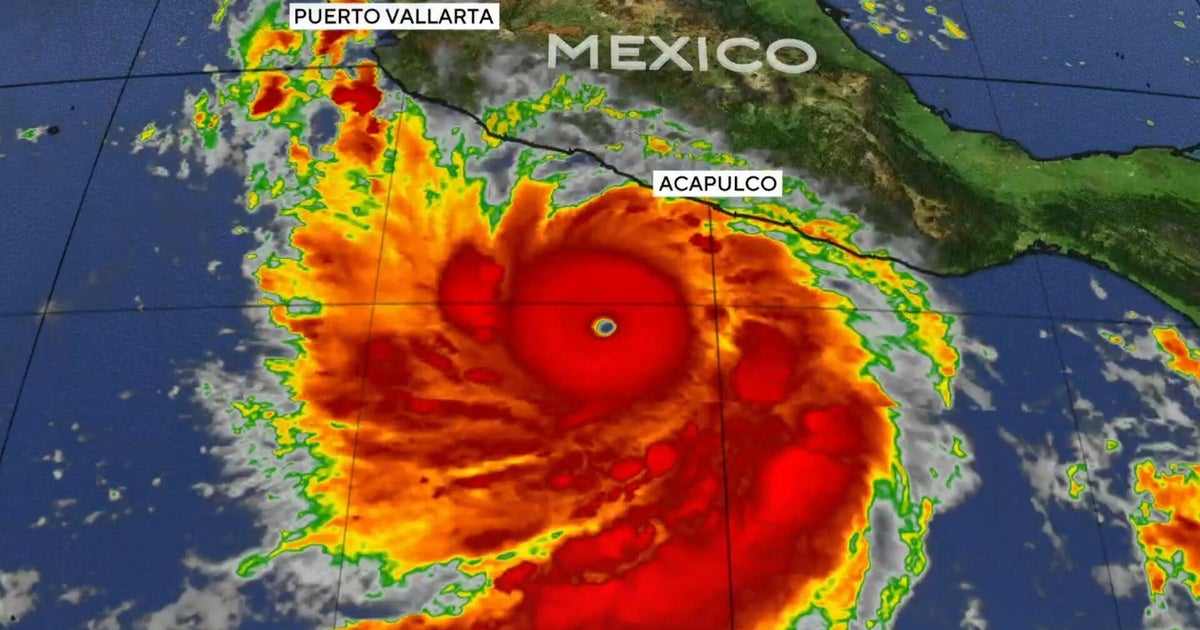
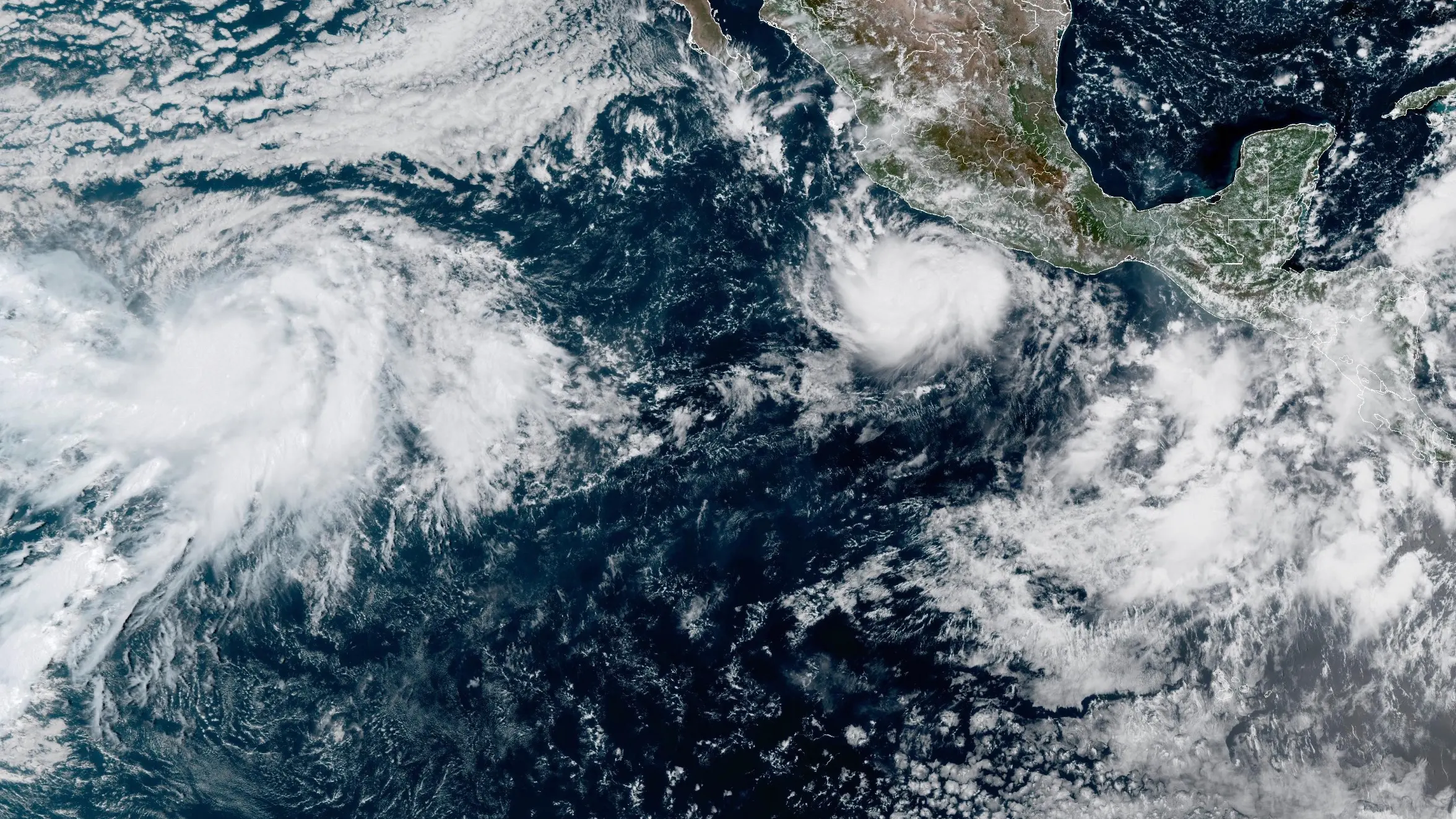
Hurricane Polo, a powerful Category 4 storm with maximum sustained winds of 150 mph, is currently off Mexico’s coast and could potentially affect parts of Southern California, Arizona, New Mexico, and Texas over the next week. While direct landfall in California seems unlikely for now, elevated surf, dangerous rip currents, and coastal flooding are possible starting this weekend. Meteorologists warn that high tides combined with large swells could increase flood risks along beaches like Long Beach, which recently experienced severe flooding during Labor Day weekend.
Written locally by qwen2.5:14b on 2026-09-24,
using this article's own text rather than the other coverage of the
same event (that is the story summary below).
Story summary
Hurricane Polo, rapidly intensifying to a Category 5 storm with maximum sustained winds of 165 mph (265 km/h), became one of the most powerful Pacific cyclones in decades. Centered approximately 346 kilometers south of Zihuatanejo, Mexico, it was expected to skirt the southwestern coast without making landfall but could cause significant flooding and mudslides inland due to heavy rainfall forecasts. The National Hurricane Center warned that coastal states like Guerrero and Michoacán might receive up to 12 inches (30 cm) of rain by Thursday, raising flood risks. Researchers linked Polo's unusual strength to the strong El Niño weather pattern, which has fueled extreme conditions globally this year.
Written for “Hurricane Polo Threats Mexico USA” on 2026-10-05,
grounded in this article and the 28 other(s) covering the same event.
Hurricane Polo may be hundreds of miles off Mexico’s coast, but the monster Pacific storm could soon make waves in Southern California.
uncertain
storm → make → California
The powerhouse hurricane briefly exploded into a Category 5 storm Tuesday before weakening to Category 4 strength Wednesday morning, packing maximum sustained winds of 150 mph as forecasters scrambled to pin down where the unpredictable system will go next.
asserted
system → explode → mph
And while a direct California strike currently appears unlikely, so-called “spaghetti models” show a handful of potential tracks carrying Polo or its remnants toward the Golden State, Arizona, New Mexico and Texas over the next seven to 10 days.
asserted
models → appear → days
Southern California could be the first part of the US to feel Polo’s wrath, even if the hurricane itself stays safely out at sea.
uncertain
hurricane → feel → sea
Large swells, potentially dangerous rip currents and a surge of muggy tropical air could begin arriving this weekend, with coastal conditions potentially becoming more troublesome early next week.
uncertain
conditions → arrive → air
Bryan Lewis, a meteorologist with the National Weather Service in Oxnard, told the Los Angeles Times that elevated surf could collide with high tides Monday and Tuesday, a potentially messy combination that could increase the threat of coastal flooding.
uncertain
that → tell → flooding
The National Weather Service is also forecasting elevated surf and powerful rip currents along Southern California beaches beginning this weekend and stretching into next week as several southerly swells roll toward the coast.
asserted
swells → forecast → coast
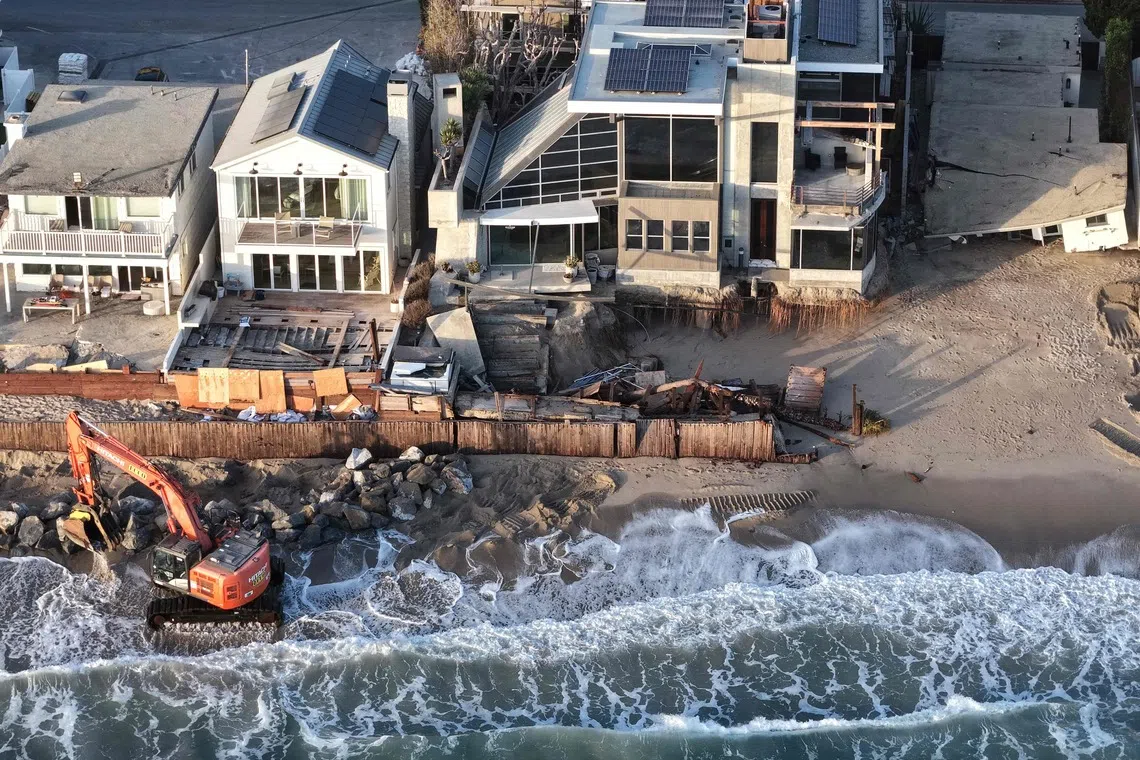
That could be particularly unnerving in Long Beach, where waterfront residents are still cleaning up from a brutal pounding over Labor Day weekend.
uncertain
residents → clean → weekend
Monster waves slammed into the Alamitos Peninsula, damaged the waterfront boardwalk, stripped away large stretches of sand and sent seawater surging into nearby streets.
asserted
seawater → slam → streets
“The conditions were very normal,” 77-year-old resident Evelina Mardirossian told the California Post.
asserted
Mardirossian → tell → Post
“And within five minutes, the entire street became a lake.”
asserted
street → become → minutes
The flooding became so severe that roughly 20 homes along the seawall between 63rd Place and 67th Place were placed under mandatory evacuation orders.
asserted
homes → become → orders
Now another round of elevated surf could put Southern California beach communities back on alert.
uncertain
round → put → alert
Polo was located roughly 165 miles south of Zihuatanejo, Mexico, Wednesday morning and moving slowly north, according to the Associated Press.
“This is one of the strongest storms ever in the (Pacific) Basin,” Kristen L. Corbosiero, a professor of atmospheric and environmental sciences at the University at Albany, told the AP.
uncertain
Corbosiero → locate → AP
The National Hurricane Center expects Polo to remain offshore and eventually curve northwest and west-northwest, which would steer its core away from the US.
asserted
which → expect → US
Most computer models currently support that scenario.
asserted
models → support → scenario
But several outliers paint dramatically different pictures, including tracks taking the storm or its remnants toward the Gulf of California and eventually into the American Southwest.
asserted
outliers → paint → Southwest
“While a few models have this storm turning into the Gulf of California, and possibly into the Southwestern part of the US, most weather maps push this storm northwest away from land,” meteorologist Ross Ellet of 13ABC wrote on Facebook.
uncertain
Ellet → have → Facebook
“This will need to be watched in the days ahead.”
asserted
This → need → days
Arizona appears to have the clearest potential path for Polo’s remnants if the system does turn toward the US, while some projections push tropical moisture into New Mexico and eventually western Texas.
asserted
projections → appear → Mexico
For California, however, the more immediate concern isn’t a Category 4 hurricane roaring ashore.
asserted
concern → roar → California
It’s what the beast could throw at Southern California from hundreds of miles away — pounding surf, treacherous currents, sticky tropical air and the possibility of coastal flooding just weeks after the region’s beaches were battered by another round of monster waves.
uncertain
beaches → ’ → waves
 The Aporia