David Clement: Counter-tariffs will hurt Canadians more than they’ll hurt Trump

National Post · collected 2026-08-28 · by Special to National Post analysis
Read the original at National Post ↗

Summary

Economist David Clement argues that Canada's counter-tariffs will ultimately hurt Canadian consumers rather than President Trump. He points out that tariffs on foreign products are essentially a tax paid by domestic consumers and quotes previous statements from Canadian politicians, including Ontario Premier Doug Ford and Prime Minister Justin Trudeau, who have made similar claims about the impact of tariffs on American consumers. The Bank of Canada found that prices on tariffed goods rose six percent last year, adding 0.3 percentage points to inflation, and Clement suggests that a new round of counter-tariffs will likely pass costs on to Canadian consumers again. He also criticizes the idea that Canada's goal should be to cause pain for Americans in order to impact the midterm elections, calling this viewpoint "incredibly naive".
Written by the local model on 2026-08-28, using this article's own text rather than the other coverage of the same event (that is the story summary below).

Signals How these are calculated →

Claims extracted
36
claim-shaped sentences
Uncertain
19%
7 of 36 hedged
Leaning
Leans strongly right
of the writing, not the subject
Publisher trust
95.9
red-flag proxy, not a credibility rating
Outlets on this story
193
Politics
Narrative spread
1
articles carrying this framing
Analyzed 2026-08-28 · how these are computed

AI analysis (generated at analysis time, not now)

Story summary

Here are the articles grouped by topic:

Iran War

Trade Tariffs

Other

Note that some of the article summaries are quite similar, and it may be worth combining or rephrasing them to reduce duplication.

Written for “US-Iran Trade Dispute Escalation” on 2026-08-31, grounded in this article and the 192 other(s) covering the same event.
Why this leaning score
The article's own words the score was based on. Each is quoted verbatim and was checked against the article text before being stored, so you can find it in the original.
Score +0.85 Confidence high
Leaning score +0.85 for article 2955 (high confidence, 3 verified quotes) · logged 2026-08-28

Story

📰 US-Iran Trade Dispute Escalation
Politics · 193 article(s) covering the same event.

How this is being covered How these are calculated →

Article leaning vs. publisher reliability
Source leaning vs. consistency

Compared with similar articles

This article reads leans strongly right and hedges 19% of its claims. Each row says how that neighbour differs.
Reason.com
⚖️ Leans strongly left further left than this 🔴 0% hedged 0 of 19 📰 publisher trust 94
“Article A describes Trump imposing Section 338 tariffs on Canadian imports in August 2026, while Article B mentions a removal of seafood from Canada's list of retaliatory tariffs, which implies a different event or development related to trade tensions between the US and Canada.”
The Bulwark
⚖️ Leans left further left than this 🔴 17% hedged 1 of 6
“Article A discusses Trump's trade war with Canada collapsing, while Article B mentions a specific adjustment made by the Canadian government to its retaliatory tariffs list, which is a separate development”
The Globe and Mail
⚖️ Leans strongly right 🔴 0% hedged 0 of 23 📰 publisher trust 21
“Article A discusses Pierre Poilievre's letter to Prime Minister Mark Carney calling for Parliament to reconvene, while Article B reports on the federal government removing seafood from Canada's list of retaliatory tariffs, which is a separate action”
Top News - UPI.com
⚖️ leaning not scored 🔴 0% hedged 0 of 8 📰 publisher trust 54
“Article A reports on Trump's tweet about Canada wanting 'benefits of being a State' without being one, while Article B discusses a change in Canada's list of retaliatory tariffs and how they will affect consumers”
World news | The Guardian
⚖️ Leans strongly right 🔴 11% hedged 3 of 28 📰 publisher trust 95
“Article A describes a breakdown in negotiations between US and Canada leading to trade war, while Article B discusses adjustments made by Canadian government to their list of retaliatory tariffs”
August 24, 2026 different event · 100%
Letters from an American
⚖️ Leans left further left than this 🔴 5% hedged 4 of 73
“Article A describes Canadian negotiators walking away from talks with US officials due to unfair tariffs, while Article B discusses Canada removing seafood from its list of retaliatory tariffs, indicating a separate development in the ongoing trade negotiation”
CBC | Top Stories News
⚖️ Leans left further left than this 🔴 8% hedged 2 of 25 📰 publisher trust 95
“Article A discusses Trump's tariffs and their potential impact on AI, video games, and cellphones, while Article B mentions a separate announcement by the Canadian government removing seafood from its list of retaliatory tariffs.”
Semafor
⚖️ Leans right further left than this 🔴 0% hedged 0 of 5 📰 publisher trust 96
“Article A reports on Trump's stance on Canada tariffs and beef imports, while Article B reports on a change in Canada's list of retaliatory tariffs, specifically removing seafood”
National Post
⚖️ Leans strongly right 🔴 14% hedged 5 of 37 📰 publisher trust 96
“Article A discusses the trade talks between Ford and Trump in general terms, while Article B refers to a specific government announcement made on Wednesday about removing seafood from the list of retaliatory tariffs”
Morning Update: Ottawa bites back different event · 100%
The Globe and Mail
⚖️ leaning not scored 🔴 7% hedged 3 of 43 📰 publisher trust 21
“Article B describes a change to Ottawa's list of retaliatory tariffs, while Article A reports on the initial announcement of those tariffs”

Publisher

National Post · 80 article(s) · 0 correction(s) detected
SignalValueWeight
Correction rate 0.000 0.4
Uncertainty density 0.082 0.25
Assertive mismatch rate 0.000 0.35
No corrections detected for this publisher. That may mean careful reporting, or simply that nothing has been checked.

Who wrote this

Special to National Post
14 article(s) here · 1 carrying a prediction
🔮 There was a sense that history would be made.
🔮 U.S. special envoy Jared Kushner recently said that Gaza will not be rebuilt until it’s demilitarized.
🔮 Wine is not unique, it is simply a useful example because settlement-produced wine has already been tested in Canadian courts Canada has dealt with precisely such wines before, the resulting Canadian litigation concerned how they could be labelled, not whether Canadians were prohibited from buying them.
🔮 So when this new round of crop of counter-tariffs takes effect on Sept. 8, we can expect that at least some of the costs will be passed on to Canadian consumers.
🔮 Yet, they did not care to explain how professors teaching courses unrelated to the Middle East might think it was a good idea to assign a podcast arguing that Zionism was similar to Nazism, or spend weeks discussing Gaza and the creation of the State of Israel, repeatedly referring to it as a “Zionist political project.”
🔮 At his Davos 2026 address, Carney drew a false equivalence between the U.S. and China, suggesting Canada could somehow float above the fray as a neutral middle-power broker.
🔮 One of the most pressing questions facing the Canadian public right now is one that most people will have never been asked before, which is: are we techno-optimists?
🔮 It includes non-legally binding illustrative examples of what might constitute antisemitism, including, “Denying the Jewish people their right to self-determination.”
2026-08-26 · assertive framing · Robert Brym: Yes, anti-Zionism is antisemitic
🔮 It is normal to get angry and respond negatively to a perceived injustice, especially when that injustice is perpetrated by someone you would have regarded as a friend.
🔮 Tehran believed it could attack Israel through proxies and would therefore be immune from attack while simultaneously advancing its atomic program as a nuclear threshold state and threatening Western interests, all while serving to insulate Iran from the consequences of its nefarious actions.
More on this subject from Special to National Post
Michel Maisonneuve: Canada must defend the North to keep it
2026-08-21 · National Post · 51% similar
All 14 articles by Special to National Post →

Topics

Americans Canada Canadians Democrats U.S.

Subjects

Canada GPE · 6× Democrats NORP · 5× Senate ORG · 4× Trump PERSON · 3× Americans NORP · 2× Canadians NORP · 2× Democratic NORP · 2× House ORG · 2× U.S. GPE · 2× Donald Trump PERSON · 1×

Narrative

The invocation of economic harm here is a tell, because it should be obvious to everyone, our politicians included, that tariffs on foreign products are a tax paid for by domestic consumers. Recommended Videos In fact, our politicians, both federal and provincial, have accurately pointed out that economic truth several times when talking about President Donald Trump’s tariffs.
framing: assertive · carried by 1 article(s) · first seen 2026-08-28
🔮 So when this new round of crop of counter-tariffs takes effect on Sept. 8, we can expect that at least some of the costs will be passed on to Canadian consumers.

Claims (36 extracted, 7 hedged)

Late Wednesday the federal government announced that it was removing seafood from Canada’s list of retaliatory tariffs. asserted
it → announce → tariffs
The finance ministry justified the move stating, “Based on feedback, we have made select adjustments to protect against broader economic harms, including removing seafood and fish products from our list of counter tariffs.” asserted
we → justify → tariffs
The invocation of economic harm here is a tell, because it should be obvious to everyone, our politicians included, that tariffs on foreign products are a tax paid for by domestic consumers. Recommended Videos In fact, our politicians, both federal and provincial, have accurately pointed out that economic truth several times when talking about President Donald Trump’s tariffs. asserted
politicians → include → tariffs
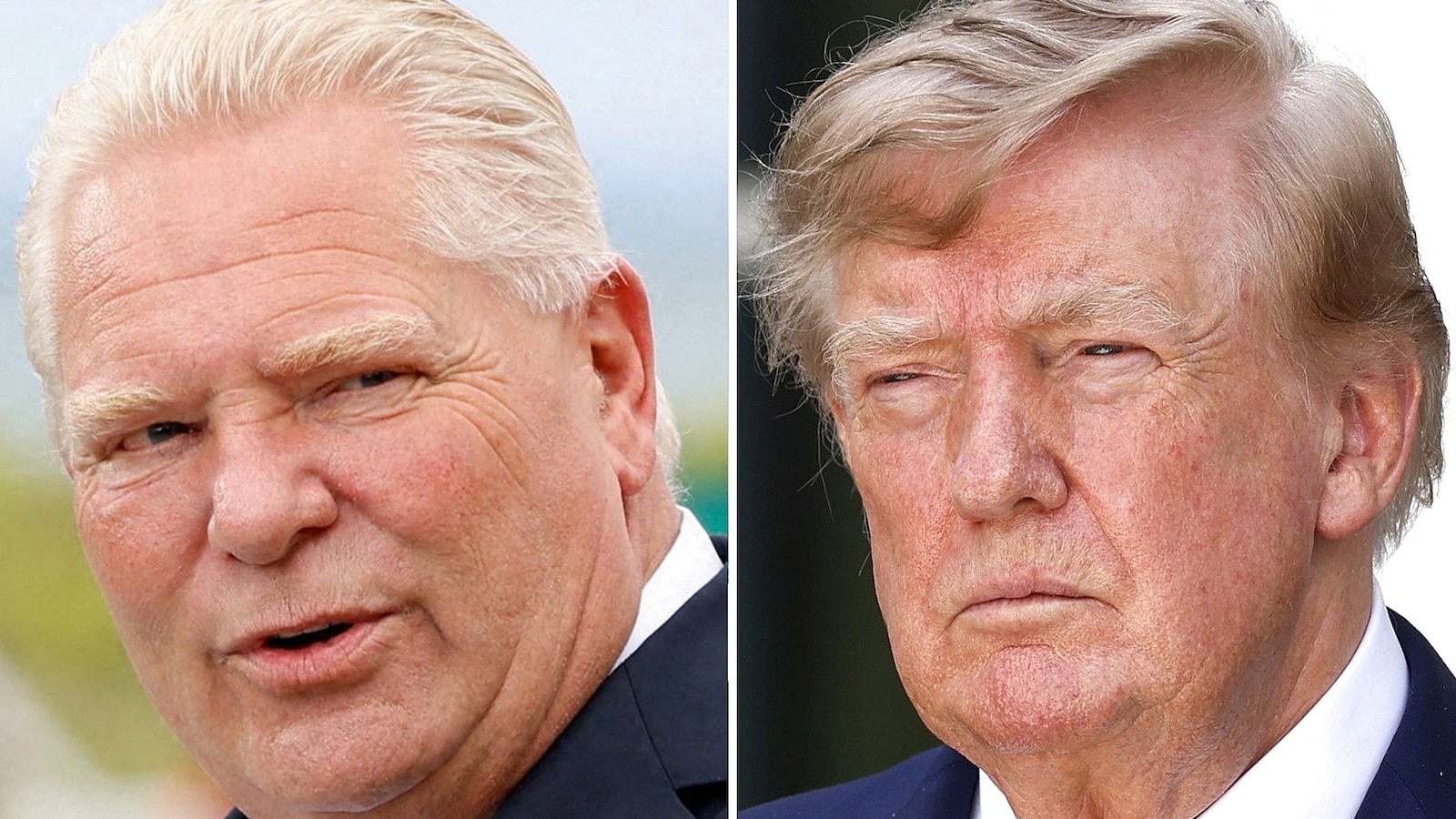
Ontario Premier Doug Ford told CBS News last year that “A tariff on Canada is a tax on Americans.” asserted
tariff → tell → Americans
When the latest potential deal fell through last weekend, Prime Minister Mark Carney echoed that same sentiment: “tariffs are taxes, taxes which are ultimately paid by U.S. consumers,” he said in a statement. asserted
he → fall → statement
Saying this to the press should have immediately undermined the case for Canada to enact counter-tariffs, and our politicians should not have given in to the emotional response that “well, we have to do something.” asserted
we → say → something
If Trump is going to make life more expensive for American consumers with tariffs, our response should not be to engage in his economic delusions. asserted
response → go → delusions
Doing so makes life more expensive for Canadians. asserted
life → do → Canadians
When Canada first imposed retaliatory tariffs last year, the Bank of Canada found that prices on tariffed goods rose six per cent and added 0.3 percentage points to headline inflation. asserted
prices → impose → inflation
So when this new round of crop of counter-tariffs takes effect on Sept. 8, we can expect that at least some of the costs will be passed on to Canadian consumers. asserted
some → take → consumers
But it gets worse, because Ottawa has committed $7.5 billion in support for workers and businesses affected by the tariffs, which means that Canadians are paying twice: first as consumers, and then again as taxpayers. asserted
Canadians → get → taxpayers
Many have justified a counter-response for the purpose of getting the U.S. to change course. asserted
U.S. → justify → course
Commentators and former federal staffers have argued that our counter-tariffs are worth the domestic cost because Canada has the opportunity to cause pain for Americans, so much so that it could impact the upcoming midterm elections. uncertain
it → argue → elections
The thought process here is that if Canada can strategically impact those swing states, voters will vote for Democrats, who could remove tariff power from the president and get us back to something resembling normalcy. uncertain
who → impact → normalcy
This viewpoint seems rather straightforward, but it is incredibly naive. asserted
it → seem → ?
To pass a bill revoking Trump’s tariff powers, both the House and the Senate would need a two-thirds majority to be able to override a presidential veto. asserted
House → pass → veto
However, there is no fathomable scenario where the Democrats sweep enough of the midterms to have two-thirds of either house. asserted
Democrats → be → house
There are 20 toss-up congressional districts, which is simply not enough to get the Democrats anywhere close to where they would need to be. asserted
they → be → ?
There are only six potential Senate seats the Democrats could reasonably flip if we are being generous, again nowhere near what would be needed. uncertain
what → be → ?
This reality needs to be acknowledged because enacting a tax on ourselves to try and generate a political outcome that appears impossible is nonsensical. asserted
that → need → outcome
Now, some may argue that a simple repeal of some of Trump’s tariffs would just require a majority in the House and 60 votes in the Senate to avoid a filibuster. uncertain
repeal → argue → filibuster
While a congressional majority might be possible, getting to 60 in the Senate is not. uncertain
getting → get → Senate
But, let’s say that by some miracle the unexpected happened and the Democrats did garner the votes needed to repeal the tariffs. asserted
Democrats → let → tariffs
Would they do so? asserted
they → do → ?
Democratic Governor of California Gavin Newsom, who is a potential Democratic nominee for president, was pressed by CTV’s Vassey Kapelos on that very question earlier this week. asserted
who → press → question
He not only justified what he called “targeted tariffs policies” but also flat-out said that he could not guarantee that the U.S. under Democratic leadership would repeal the tariffs. uncertain
U.S. → justify → tariffs
He even admitted that President Joe Biden kept many of Trump’s tariffs from his first term. asserted
Biden → admit → term
All he could guarantee is that the disrespectful talk of Canada being a 51st state would end. uncertain
Canada → guarantee → ?
These hard realities should call into question why we would retaliate with our own tariffs, because the reasoning for it has to stretch beyond keeping our pride. asserted
reasoning → call → pride
We can not, and should not, enact a tax on ourselves for the pipe dream of influencing advantageous political outcomes south of the border. asserted
We → enact → border
Strip away the bravado and the case for counter-tariffs falls apart into a chain of assumptions, each weaker than the last. asserted
each → strip → last
Can counter-tariffs meaningfully move votes to the Democrats in American swing states enough for them to repeal the tariffs? asserted
them → move → tariffs
And if they got that power, would they actually do it? asserted
they → get → it
The answers to those questions don’t pan out in Canada’s favour. asserted
answers → pan → favour
So the question remains for those cheerleading the tax increase: Should Canada copy Trump’s economic mistakes for a political payoff that only exists in theory? asserted
that → remain → theory
I don’t think so. asserted
I → think → ?

💬 Give feedback
🕘 History 🎫 Support