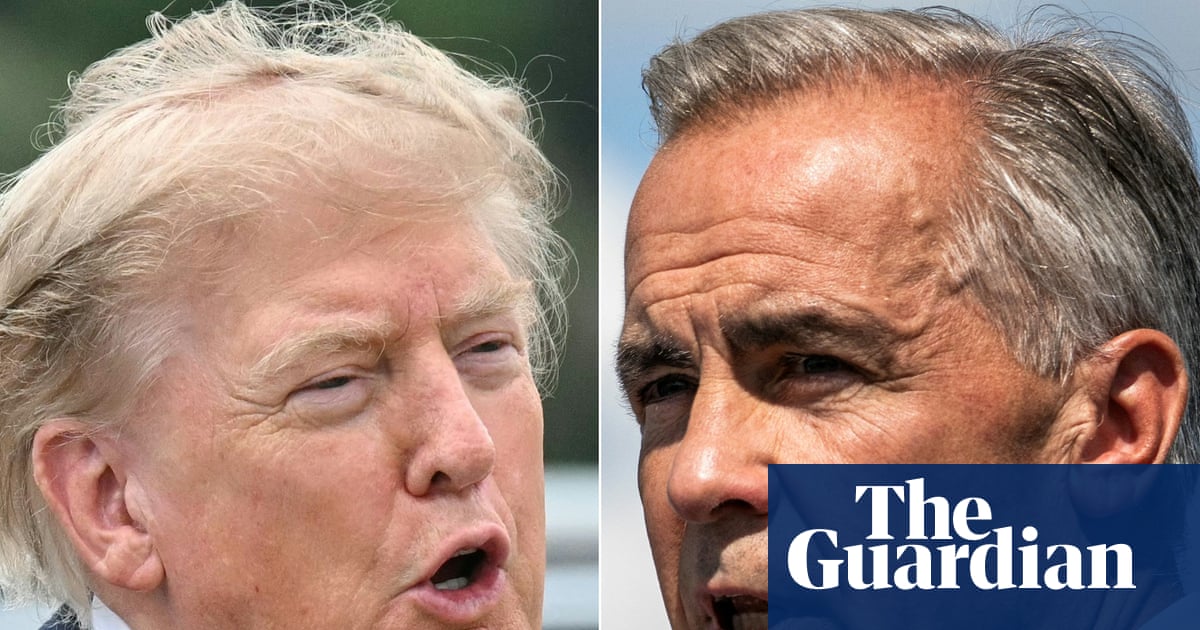
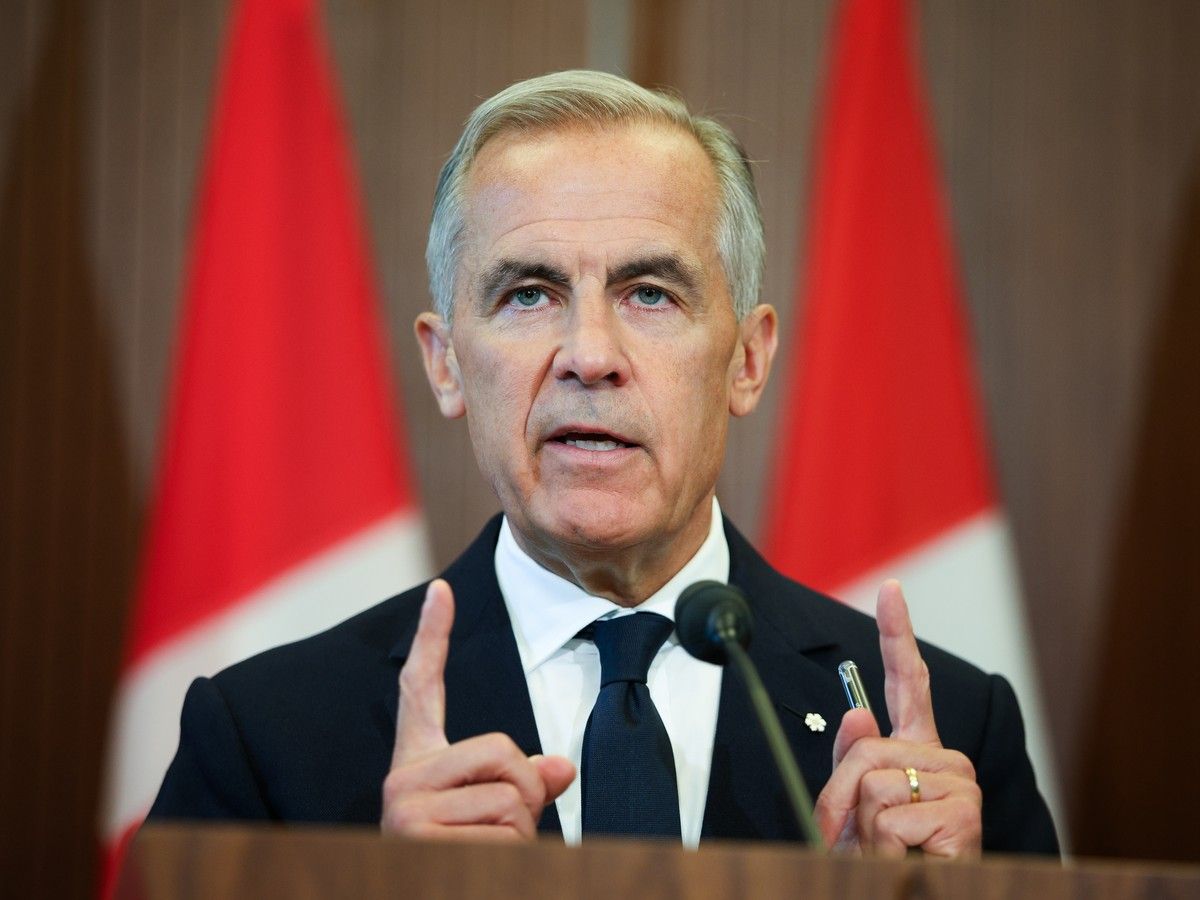
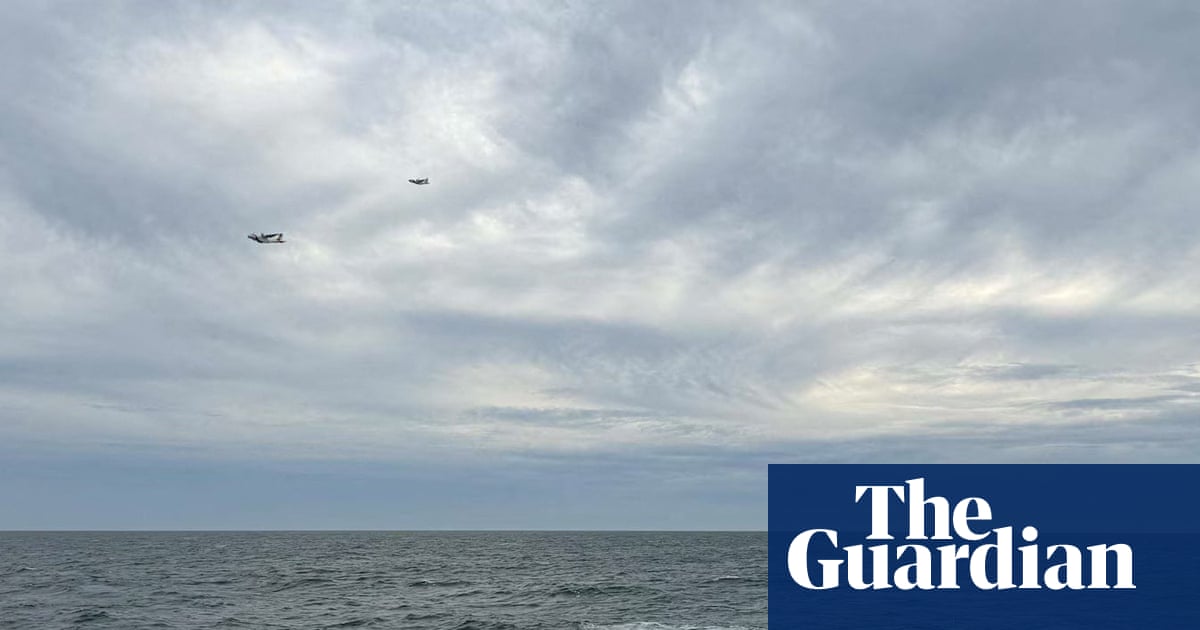
How to lose Trump’s trade war: test Canada’s resolve with threats to hockey sticks

Read the original at The Guardian ↗
Cite

Gabbatt, A. (2026, August 27). How to lose Trump’s trade war: test Canada’s resolve with threats to hockey sticks. The Guardian. https://www.theguardian.com/us-news/2026/aug/26/trump-canada-trade-war

Dated when The Aporia collected the article, usually within hours of publication. Check the original for its exact date and byline.

The Guardian · collected 2026-08-27 · by Adam Gabbatt

Quick Summary

US President Donald Trump has threatened to impose tariffs on Canadian goods, including hockey sticks and tongue depressors, due to stalled trade talks. The US has already implemented tariffs on $20bn worth of Canadian exports, prompting Canada's prime minister, Mark Carney, to announce retaliatory tariffs on $20bn worth of US goods. Trump responded by calling Canadian negotiators "clowns" and threatening to rename Lake Ontario to Lake America. American consumers are facing rising prices due to the trade tensions, including a surge in toilet paper costs.
Written locally by qwen2.5:14b on 2026-08-27, using this article's own text rather than the other coverage of the same event (that is the story summary below).

AI analysis runs on qwen2.5:14b, locally

Story summary

Here's a summary of the news story:

Naheed Nenshi, the leader of the Alberta NDP, has urged Premier Danielle Smith to cancel or postpone the upcoming referendum on separating from Canada due to the ongoing trade war with the US. The referendum is scheduled for October 19 and will ask voters whether they want to start the process of holding a future binding vote on separation.

Nenshi's demand was met with skepticism by some, who noted that he had previously opposed the idea of a separation referendum. Premier Smith rejected Nenshi's request, saying that the trade war was an opportunity for Alberta and Canada to stand together against the US.

Meanwhile, other provinces are also considering their stance on the trade war. Alberta and Saskatchewan have rejected suggestions that they impose export levies on natural resources such as oil and potash in retaliation for US tariffs, with Premier Smith saying that such a move would be "disastrous" and would harm not just Albertans but also other provinces.

The federal government has announced its plan to impose countertariffs on hundreds of US exports, including clothing and apparel, appliances, and dairy products. However, it has removed seafood and fish products from the list of counter-tariffs due to concerns about broader economic harms. The US has warned that further Canadian retaliation will not be tolerated.

The trade war is also being used as a rallying cry by some who are opposed to separation. A pro-unity group called Forever Canadian has seen an increase in support and interest in its patriotic lawn signs, with over 11,000 viewers attending an online town hall meeting last weekend.

Written for “Canada US Trade Dispute Escalation” on 2026-10-16, grounded in this article and the 53 other(s) covering the same event.

Story

📰 Canada US Trade Dispute Escalation
Politics · 54 article(s) covering the same event. Compare every outlet's account →

Compared with similar articles

This article reads unscored and hedges 4% of its claims. Each row says how that neighbour differs.
UPI
⚖️ leaning not scored 🔴 0% hedged 0 of 8 📰 publisher trust 56
“Both articles report on Trump's remarks about Canada, including his accusation that Canada wants the benefits of being a US state without being one.”
National Post
⚖️ Leans strongly right 🔴 3% hedged 1 of 39 📰 publisher trust 60
“Both articles mention the trade talks between Canada and the US falling apart, with Prime Minister Mark Carney and President Donald Trump exchanging insults over the weekend.”
Toronto Star
⚖️ Leans strongly left 🔴 4% hedged 1 of 23 📰 publisher trust 63
“Both articles mention Doug Ford's insult towards Donald Trump, and their publication dates are only one day apart.”
National Post
⚖️ Leans strongly right 🔴 10% hedged 3 of 31 📰 publisher trust 60
“Both articles refer to the same incident where Donald Trump makes negative comments about Canada, specifically calling it 'difficult and unreasonable', which is also mentioned in Article A as him not believing that Canada is a serious country.”
The Bulwark
⚖️ Leans left 🔴 17% hedged 1 of 6
“Both articles report on Trump's trade dispute with Canada, mentioning negotiations falling apart and Trump's criticism of Canada”
CBC News
⚖️ Leans strongly right 🔴 7% hedged 3 of 42 📰 publisher trust 77
“Article A is about Canada's refusal to drop requirements for American streaming companies to promote Canadian content, while Article B mentions Trump calling Canada 'difficult and unreasonable', but does not mention the specific issue of streaming companies”
National Post
⚖️ Leans right 🔴 8% hedged 2 of 24 📰 publisher trust 60
“Article A discusses a press conference where Prime Minister Carney announces a contract for building icebreakers, while Article B mentions President Trump's comment about Canada but does not mention the press conference”
The Globe and Mail
⚖️ Leans left 🔴 8% hedged 4 of 49 📰 publisher trust 52
“Article A reports on a current event where Trump tells Canada to 'fall in line' on August 25, while Article B refers to this incident from the perspective of an after-effect and includes no specific details about the date or timing”
CBC News
⚖️ Leans left 🔴 8% hedged 2 of 25 📰 publisher trust 77
“Article B discusses Trump's personal comments on Canada, while Article A talks about tariffs imposed by Trump affecting Canadian exports”
The Globe and Mail
⚖️ leaning not scored 🔴 7% hedged 3 of 43 📰 publisher trust 52
“Both articles report on Canada's retaliatory tariffs against the US, with Article A providing more details about the specifics of the tariffs and Article B mentioning it in the context of Trump's reaction to Canada.”
How this article was measured signals, leaning charts, publisher record, byline, topics and claims

Signals How these are calculated →

Claims extracted
24
sentences that state something as happening or true
Uncertain
4%
1 of 24 hedged ("reportedly", "may", "according to")
Leaning
withheld
no quote in the article backed the model's score
Publisher signals
67/100
The Guardian's corrections and hedging, across everything collected from it. Not a measure of accuracy.
Outlets on this story
54
Politics
Same framing elsewhere
1
articles that frame the event the way this one does
Analyzed 2026-08-27 · how these are computed

How this is being covered How these are calculated →

Article leaning vs. publisher reliability
Source leaning vs. consistency

Publisher

The Guardian · 1939 article(s) · 5 correction(s) detected
Running correction rate · 5 correction(s)

Who wrote this

Adam Gabbatt
8 article(s) here · 1 carrying a prediction
🔮 DeSantis, who has aggressively used the death penalty during his time as governor, signed a letter on Thursday withdrawing the death warrant for William Lee Thompson.
🔮 The hurricane, the first in the Atlantic in what has turned into a very late 2026 season, is expected to cause a “life-threatening storm surge”, officials said.
🔮 She had been on a ventilator, with an unknown prognosis, before she woke and spoke on Tuesday. “There’s still a lot of cognitive confusion, and so I will say that she has wanted to know what’s happened, and she’s asked about several people.
🔮 Latitude said it will “cooperate fully” with US National Transportation Safety Board (NTSB), the Transportation Safety Board of Canada and other authorities on recovery efforts and an investigation into why the plane crashed.
🔮 Democrats have made it clear in recent days that highlighting Trump’s longtime friendship with Epstein, a convicted sex offender, will be part of their strategy ahead of the midterms, and Talarico sought to loop Paxton into the attack.
🔮 Republicans will gather in Texas on Wednesday for a rare “midterm convention”, as they attempt to convince Americans to vote for a party led by a deeply unpopular president who has overseen price increases, inflation, and led the US into an increasingly unpopular war.
🔮 Many people would find it difficult to dislike Canadians.
Also by Adam Gabbatt
Nothing else under this byline is closely related to this article, so these are simply their most recent.
All 8 articles by Adam Gabbatt →

Topics

Canada Canadian Canadians Ontario Switzerland

Subjects

Canada GPE · 12× Trump PERSON · 8× Canadian NORP · 3× Canadians NORP · 3× Donald Trump PERSON · 2× Ontario GPE · 2× Vance PERSON · 2× Lauren Aratani PERSON · 1× Mark Carney PERSON · 1× Switzerland GPE · 1×

Narrative

It meant that the US tariffs duly came in on Saturday, applied to various Canadian exports including hockey sticks and tongue depressors, but if Trump expected Canada to bow to his demands – the president was seeking more favorable terms on things like steel and aluminum – he was disappointed.
framing: assertive · carried by 1 article(s) · first seen 2026-08-27
🔮 Many people would find it difficult to dislike Canadians.

Claims (24 extracted, 1 hedged)

Earlier this year, a survey found that Canada, along with Switzerland, was the best-liked country in the world. asserted
Canada → find → world
We all know this kind of polling is about as scientific as a high school popularity contest, but at least anecdotally, Canadians have a reputation for being friendly and welcoming, respectful and polite. asserted
Canadians → know → reputation
Many people would find it difficult to dislike Canadians. asserted
it → find → Canadians
But not Donald Trump, who in a “hold my beer” moment this week demonstrated that he, at least, finds it easy to resent Canadians. asserted
it → hold → Canadians
The US president called the country “difficult and unreasonable”, and in a particularly hysterical moment, threatened to rename a lake, after trade talks collapsed. asserted
talks → call → lake
Days earlier, Trump had claimed a deal with Canada was imminent, which would avoid the new taxes. asserted
which → claim → taxes
But, in a development that surely galled the Art of the Deal author, there was no agreement. asserted
that → gall → author
Instead, Trump and his team demonstrated the art of collapsing the deal, as trade talks fell apart due to what Canada said were unreasonable, last-minute demands from the US side. asserted
Canada → demonstrate → side
It meant that the US tariffs duly came in on Saturday, applied to various Canadian exports including hockey sticks and tongue depressors, but if Trump expected Canada to bow to his demands – the president was seeking more favorable terms on things like steel and aluminum – he was disappointed. asserted
he → mean → steel
Instead, Mark Carney, the Canadian prime minister who has emerged as a rare world leader willing to stand up to Trump, said Canada had been “attacked”, and announced retaliatory tariffs on about $20bn worth of US goods, including steel, dairy products, appliances and farm equipment. asserted
Canada → emerge → steel
All this means US consumers are seeing surging prices on all kinds of products – including toilet paper. asserted
consumers → mean → paper
My colleague Lauren Aratani reports that “the US accounts for more than 20% of global tissue consumption despite having only 4% of the world’s population”. asserted
US → report → population
And this outsize usage has grown more expensive. asserted
usage → grow → ?
“Though American toilet paper and tissues are often made domestically, they heavily rely on lumber-rich Canada for raw materials,” she writes. asserted
she → make → materials
It’s fair to say that Canada’s retaliation upset Trump, who famously loves to win. asserted
who → ’ → Trump
On Tuesday, he claimed the US “is giving serious consideration to changing the name of Lake Ontario to Lake America in that we don’t expect to be doing much business with Ontario any longer” – we’ll see how that goes – and has dubbed Canadian negotiators “clowns”. asserted
that → claim → negotiators
Earlier this week, Trump compared Doug Ford, the premier of Ontario, unfavorably to his deceased brother Rob, the scandal-plagued former mayor of Toronto, whose time in office saw him admit to smoking crack cocaine and being “hammered” in public. asserted
him → compare → public
And while Trump was flailing about, JD Vance was doing his best Scrappy-Doo, “lemme at ’em” impression, lobbing insults at Canada from the safety of a Republican rally in Maine. asserted
Vance → flail → Maine
Vance claimed that Canada and China are “the two worst countries when it comes to trade policy anywhere in the world”. asserted
it → claim → world
He added: “We have to remember, Canada is a state. asserted
Canada → add → ?
The satisfied look on his face didn’t make it seem like one. asserted
it → make → one
Vance went on to add that Canada “quite literally would get invaded by a foreign country were it not for the umbrella of protection provided by the United States of America”. asserted
it → go → America
It was an interesting take, given the only country that has mused about invading Canada is the US – as recently as last year Trump was threatening to annex the nation. asserted
Trump → give → nation
So in a nutshell: Donald Trump has led the US into an unsavory spat against the world’s most popular country, a scrap that could result in Americans – less than three months out from crucial midterm elections in which Republicans face an uphill battle – struggle to pay for a roll of toilet paper. uncertain
Republicans → lead → paper
💬Give feedback
🕘History 🎫Support