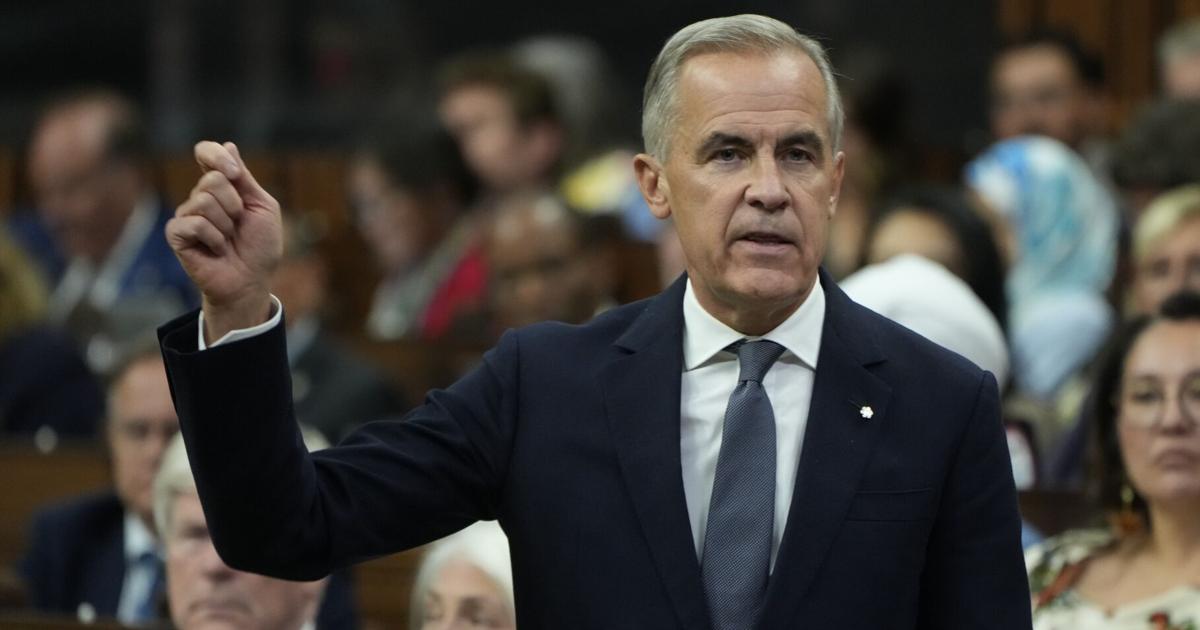
One day after the federal Liberals proposed new legislation with the power to end strikes impacting the “national interest,” concerns are being raised that the bill is “anti-democratic” and would let the government decide who can exercise the right to strike.
asserted
who → propose → right
Bill C-39, officially titled as the Building Canada Strong Act, is being framed by Prime Minister Mark Carney’s government as simplifying the country’s regulatory regime and making it easier for businesses to get projects greenlit, as well as changing the Canada Labour Code.
asserted
projects → title → Code
It’s a central pillar of Carney’s political agenda against the backdrop of the ongoing trade war with U.S. President Donald Trump’s administration, and comes after multiple high-profile strikes and lockouts over recent years including the Air Canada flight attendants strike and lockout in 2025, the Canada Post labour dispute over the course of 2024 and 2025, and the federal public servants’ strike in 2023.
asserted
It → ’ → 2023
But union leaders warn that the legislation would also allow the government the power to end a legal strike if the federal labour minister decides it goes against the “national interest,” a criteria critics say is broadly defined.
asserted
critics → warn → interest
At issue is a section of the Canada Labour Code known as Section 107, a vaguely-written provision that allows the minister of labour to take measures to “promote conditions favourable to the settlement of industrial disputes.
asserted
minister → know → disputes
Section 107, as its currently written, allows the federal labour minister to “do such things” that “seem likely to maintain or secure industrial peace and to promote conditions favourable to the settlement of industrial disputes.”
asserted
that → write → disputes
The Liberal government has controversially used Section 107 to end legal strikes in recent years – an issue the Canada Labour Congress noted is currently being litigated before the courts.
asserted
Congress → use → courts
Labour leaders wanted the section repealed or its use restricted, while employers favour stronger government intervention – at least when it comes to ending strikes.
asserted
it → want → strikes
Get breaking National news
Bill C-39 would amend the current law to give the minister the power to end a strike and order a binding resolution if the minister believes it “adversely affect the national interest.”
asserted
it → get → interest
Labour Minister Patty Hajdu told reporters Monday afternoon that Section 107 is a “tool of last resort.”
asserted
Section → tell → resort
“Ultimately, the government does not want to resolve the dispute for parties,” Hajdu said.
asserted
Hajdu → want → parties
“So we’re putting into place new tools that will raise the bar around accountability for both of the parties to get that deal.”
asserted
both → put → deal
The minister also would have to consider a report from a new special mediator role being introduced under the legislation.
asserted
minister → have → legislation
That mediator would be tasked with setting out the parties’ positions and could offer recommendations on a new collective agreement.
uncertain
mediator → task → agreement
But Mark Rowlinson, a lawyer with Goldblatt Partners LLP, told reporters Tuesday that the government’s claim that the legislation creates “guardrails” around the use of Section 107 is “nonsense.”
uncertain
legislation → tell → Section
“It provides the complete and unlimited discretion to the federal minister to decide who gets to go on strike and who does not,” Rowlinson said.
asserted
Rowlinson → provide → strike
Bill C-39 lays out broad “relevant considerations” for the labour minister to take before deciding whether a strike is against the national interest.
asserted
strike → lay → interest
That includes whether a strike or lockout is having, or could have, a “significant” impact on the country’s economy – such as in the case of a rail or port strike – or whether it is creating a significant “social disruption.”
What constitutes a “social disruption” is not defined in the legislation.
uncertain
constitutes → include → legislation
The minister must also consider whether referring the matter to the Canada Industrial Relations Board for binding arbitration “has any impact on the freedom of association.”
asserted
referring → consider → association
“Of course we’re concerned about economic harm.
asserted
we → ’re → harm
Employers and unions should be concerned about economic harm as well, by the way,” Hajdu said Monday.
asserted
Hajdu → concern → way
“But the national interest, the consideration of the national interest will also include people’s Charter rights to strike, and the minister will have to balance all of that.”
asserted
minister → include → that
What critics are saying
Bea Bruske, the president of the Canadian Labour Congress (CLC), said in Ottawa on Tuesday that “strong collective bargaining, including the ability to withdraw your labour and to go on strike, is in Canada’s national interest.”
asserted
bargaining → say → interest
“It gives workers the power to bargain for better wages, safer workplaces and greater job security,” Bruske said.
asserted
Bruske → give → wages
“I want to be clear that workers are on Team Canada.
asserted
workers → want → Canada
We are ready to defend Canadian jobs, to build Canada’s needs, to build our infrastructure, to attract investment and to make this country much more resilient in the face of the Trump trade war.
asserted
country → defend → war
But we cannot have our elbows up against Trump with our hands tied behind our backs at the bargaining table.”
asserted
hands → have → table
Rowlinson said he’s never seen the term “national interest” used in labour law in Canada.
asserted
term → say → Canada
“The purpose of strike action, the reason why workers go out on strike is to have economic impact.
asserted
workers → go → impact
To say to workers that you cannot go on strike if you’re going to have an economic impact is to say to the workers you cannot go out on strike,” Rowlinson said.
asserted
Rowlinson → say → strike
NDP Leader Avi Lewis accused Carney of using the ongoing trade war with the U.S. to push through changes to the labour code.
asserted
Lewis → accuse → code
“We’re under economic attack from the United States and we need a crisis response.
asserted
we → ’re → response
But Prime Minister Carney is using our fear and disorientation around the trade war to push through a series of unpopular measures that he did not run on, has no mandate for and would never get away with under normal circumstances,” Lewis said.
asserted
Lewis → use → circumstances
Conservative Leader Pierre Poilievre issued a statement on X after the bill was tabled, but did not address the labour code changes proposed in the legislation.
asserted
bill → issue → legislation
Poilievre questioned whether Bill C-39 will actually result in getting projects built.
asserted
projects → question → C-39
The Canadian Chamber of Commerce, meanwhile, was supportive of the legislation.
“The business community has repeatedly backed proposals for additional dispute-resolution tools, including special mediation, alongside a continued ability for government to act when bargaining has failed and the wider economy is at risk,” said Pascal Chan, a vice president with the business group.
asserted
Chan → back → group
 The Aporia