Carney government's energy and labour bill puts Conservative leader in a 'pickle'

Read the original at Toronto Star ↗
Toronto Star · collected 2026-09-27 · by Ryan Tumilty

Quick Summary

Prime Minister Mark Carney’s government has introduced Bill C-39, which includes changes to Section 107 of Canada’s labour code, allowing the minister to end strikes or lockouts without parliamentary approval. This move faces significant opposition from unions and legal challenges, putting Conservative leader Pierre Poilievre in a difficult position as he tries to balance his party's pro-labour stance with its anti-regulation agenda aimed at promoting resource development. The bill aims to facilitate major infrastructure projects amid tensions with the U.S., but it complicates the Conservatives' efforts to build support among unions, who are calling for clear positions from Poilievre’s party on Section 107 reforms.
Written locally by qwen2.5:14b on 2026-09-27, using this article's own text rather than the other coverage of the same event (that is the story summary below).

AI analysis runs on qwen2.5:14b, locally

Story summary

Patty Hajdu, Canada’s Jobs Minister, stated that the federal government will not interfere with workers’ right to strike despite considering legal changes to improve labour relations. The minister emphasized that upcoming legislation aims to reduce the number of times the government has to intervene in strikes under Section 107 of the Canada Labour Code. This section allows Ottawa to refer disputes to the Canada Industrial Relations Board, a measure employers and unions have differing views on. While most employers advocate for greater federal power to intervene during labour disruptions that could harm national interests, unions argue against any measures that might compromise their right to strike. Hajdu added that government intervention is a last resort and encouraged parties to resolve issues themselves at the negotiating table. The proposed amendments include introducing a special mediator role who will document arguments in acrimonious negotiations and publish reports identifying sticking points.

Written for “Canada Labour Law Changes” on 2026-10-05, grounded in this article and the 23 other(s) covering the same event.

Signals How these are calculated →

Claims extracted
35
claim-shaped sentences
Uncertain
3%
1 of 35 hedged
Leaning
Leans left
of the writing, not the subject · beta estimate
Correction & hedging signals
63.3
corrections and hedging in what we collected; not a measure of accuracy
Outlets on this story
24
Politics
Narrative spread
1
articles carrying this framing
Analyzed 2026-09-27 · how these are computed

Story

📰 Canada Labour Law Changes
Politics · 24 article(s) covering the same event. See how they differ ↓

How this is being covered How these are calculated →

Article leaning vs. publisher reliability
Source leaning vs. consistency

Compared with similar articles

This article reads leans left and hedges 3% of its claims. Each row says how that neighbour differs.
Toronto Star
⚖️ leaning not scored 🔴 11% hedged 5 of 44 📰 publisher trust 63
“Both articles discuss the introduction and implications of Bill C-39, which includes changes to Section 107 of Canada’s labour code.”
The Globe and Mail
⚖️ leaning not scored 🔴 0% hedged 0 of 2 📰 publisher trust 51
“Article A focuses on Minister Patty Hajdu discussing transparency measures in proposed labour legislation, while Article B discusses the political implications and stance of the Conservative party regarding the same bill but does not describe the same specific incident or event.”
CBC News
⚖️ leaning not scored 🔴 11% hedged 3 of 28 📰 publisher trust 77
“While both articles discuss changes to Section 107 of Canada's Labour Code proposed by the Liberals, Article A focuses on Carney's statement and expert opinions about legal trouble, while Article B discusses the political impact on the Conservatives. They describe different aspects of the same broader issue but do not refer to a single specific occurrence.”
Toronto Star
⚖️ Leans right further right than this 🔴 15% hedged 6 of 40 📰 publisher trust 63
“While both articles discuss Bill C-39 and its implications on labour laws, they report on different aspects of the bill at different times.”
CBC News
⚖️ Leans left 🔴 9% hedged 3 of 32 📰 publisher trust 77
“The articles discuss different aspects and perspectives on Bill C-39 but do not appear to be reporting on the exact same incident or moment in time.”
Global News
⚖️ leaning not scored 🔴 0% hedged 0 of 12 📰 publisher trust 64
“The articles discuss different aspects and perspectives on proposed labour law changes but do not describe the same specific incident.”
The Globe and Mail
⚖️ leaning not scored 🔴 12% hedged 2 of 17 📰 publisher trust 51
“The articles discuss different aspects of labour legislation changes but do not describe the same specific incident or timing.”
National Post
⚖️ Leans left 🔴 2% hedged 1 of 43 📰 publisher trust 60
“The articles discuss different aspects and timelines related to Bill C-39 but do not describe the exact same incident.”
The Globe and Mail
⚖️ leaning not scored 🔴 0% hedged 0 of 2 📰 publisher trust 51
“While both articles discuss Bill C-39 and its implications for labour rights, they focus on different aspects: Article A highlights the debate between unions and the government, while Article B discusses political party reactions to the bill.”
Toronto Star
⚖️ Leans right further right than this 🔴 0% hedged 0 of 5 📰 publisher trust 63
“The articles discuss related topics around labour code changes but describe different aspects and perspectives on the issue.”

Publisher

Toronto Star · 5200 article(s) · 17 correction(s) detected
Running correction rate · 17 correction(s)
2026-10-03
Tennessee's prisons chief is resigning after failed execution of Christa Pike
2026-09-28
Organizations call for Action to End the Deaths of Indigenous People in Custody
2026-09-27
Police memorial recognizes six officers killed in the line of duty in 2026
2026-09-27
UPDATE: WSP to host Power & Energy-focused investor event virtually only
2026-09-26
News Clarification for Sept. 27
2026-09-26
Former federal public servant seeks better pensions for injured workers
2026-09-25
News Corrections for Sept. 25
2026-09-25
She has not been charged. But the Project South allegations have branded her with a 'scarlet letter'
2026-09-24
Correction
2026-09-23
MULTIMEDIA UPDATE: Smith+Nephew launches the new EVOS™ PELVIC Plating System at the 2026 Orthopedic Trauma Association (OTA) Annual Meeting, expanding the EVOS Plating Platform for pelvic and acetabular fracture management
2026-09-22
Costa Rican man complained of lack of care for diabetes before his death in ICE custody, family says
2026-09-22
Judges' grilling of accused men leads to sex assault and dangerous driving cases being overturned
2026-09-20
Jura Energy Corporation Provides Clarification Regarding Media Reports Concerning Its Petroleum Rights in Pakistan
2026-09-19
New details emerge about Toronto's guns-for-hire and the 'crash-out mission" that sparked the Project South investigation
2026-09-17
UPDATE: Osisko Critical Minerals Corporation Announces C$100 Million Private Placement of Special Warrants
2026-09-17
Alabama set to execute man for pawn shop killings months after his nitrogen gas execution blocked
2026-09-04
Orca Corrects Q3 Quarterly Dividend Announcement

Who wrote this

Ryan Tumilty
4 article(s) here · 1 carrying a prediction
🔮 OTTAWA — With the Liberal government’s backing of a fast-tracked pipeline, the only box left to check in the grand Alberta bargain is the Pathways carbon capture project, which has still not been agreed to and which won’t cancel out the new carbon emissions from all the new oil set to be heading down the pipeline.
🔮 The Conservatives’ inroads with unions could hit a dead end if they don’t come out against the Liberals’ changes to Canada’s labour code, but so far the party hasn’t picked a lane on the controversial reforms.
🔮 The government first suggested Indigenous communities would have an equity stake in the pipeline when Ottawa purchased it in 2018, and the finance minister said the payment is making up for lost time.
🔮 Last month, the Star emailed Alberta MPs to ask how they plan to vote in the Oct. 19 referendum, which will ask whether the provincial government should “commence the legal process required under the Canadian Constitution to hold a binding provincial referendum on whether or not Alberta should separate from Canada.”
Also by Ryan Tumilty
Nothing else under this byline is closely related to this article, so these are simply their most recent.

Topics

Canada Conservative Conservatives Liberals Section 107

Subjects

Liberals NORP · 6× Conservatives NORP · 4× Conservative NORP · 3× Canada GPE · 2× Poilievre PERSON · 2× Kevin Piper PERSON · 1× OTTAWA GPE · 1× Star ORG · 1× the Conservative party ORG · 1× the Halifax Longshoremen’s Association ORG · 1×

Narrative

Prime Minister Mark Carney’s marquee bill of the fall session, which his Liberal government champions as key to getting more major infrastructure projects built in the face of an escalating trade war with U.S. President Donald Trump, pits two of Conservative Leader Pierre Poilievre’s main priorities against one another: Rolling back Trudeau-era regulations seen to be stymying resource development and deepening his party’s connections to labour.
framing: assertive · carried by 1 article(s) · first seen 2026-09-27
🔮 The Conservatives’ inroads with unions could hit a dead end if they don’t come out against the Liberals’ changes to Canada’s labour code, but so far the party hasn’t picked a lane on the controversial reforms.

Claims (35 extracted, 1 hedged)

The Conservatives’ inroads with unions could hit a dead end if they don’t come out against the Liberals’ changes to Canada’s labour code, but so far the party hasn’t picked a lane on the controversial reforms. uncertain
party → hit → reforms
In addition to an overhaul of major project approvals and environmental regulations, the Liberals’ new omnibus Bill C-39 contains changes to Section 107, a controversial part of the labour code the government has used multiple times to end strikes or lockouts with the stroke of a pen. asserted
government → contain → pen
Kevin Piper, president of the Halifax Longshoremen’s Association, one of a handful of unions to endorse the Conservatives in the last election, said he wants the party to push for an end to Section 107, but at a minimum to make its positions clear. asserted
positions → endorse → minimum
“We’d ask for the Conservative party to tell our members clearly where they stand on Section 107,” he told the Star. asserted
he → ask → Star
“For us to endorse them again, we’d be looking for specific messaging from them and what they would do if they got into power.” asserted
they → endorse → power
As of this week, that has not happened. asserted
that → happen → week
“I’m talking with my friends in the labour movement to understand what they think of the changes and lots of people are deeply concerned,” Kyle Seeback, the Conservative MP for Dufferin-Caledon who serves as the party’s critic for labour, told reporters. asserted
who → talk → reporters
Prime Minister Mark Carney’s marquee bill of the fall session, which his Liberal government champions as key to getting more major infrastructure projects built in the face of an escalating trade war with U.S. President Donald Trump, pits two of Conservative Leader Pierre Poilievre’s main priorities against one another: Rolling back Trudeau-era regulations seen to be stymying resource development and deepening his party’s connections to labour. asserted
projects → champion → labour
Section 107 has been in Canada’s labour code for decades, but it was rarely used until 2024, when the Liberals first triggered it ahead of a threatened WestJet mechanics strike. asserted
Liberals → use → strike
The section gives the minister broad powers to end a strike without going to the House of Commons to pass back-to-work legislation. asserted
section → give → legislation
The Liberals have since used it multiple times to end work stoppages by railway workers, port workers and flight attendants. asserted
Liberals → use → workers
But unions vehemently oppose the use of the legislation and the government is facing four court challenges over its use. asserted
government → oppose → use
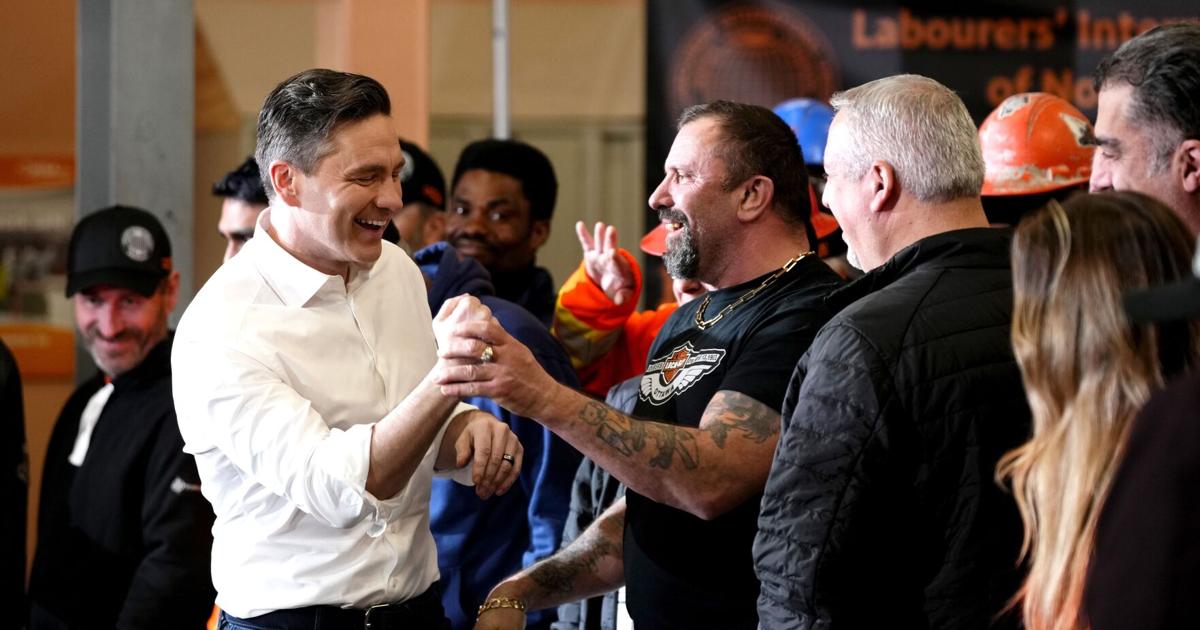
Poilievre has joined in that opposition in recent years, particularly as he courts votes among private sector unions and building trades. asserted
he → join → unions
His efforts to make the Conservatives more union-friendly stand in stark contrast to the often acrimonious relationship the former Conservative government of Stephen Harper had with labour groups, using back-to-work legislation several times and introducing bills requiring more financial transparency from unions and legislation that would have made starting a union more difficult. asserted
starting → make → union
Poilievre pledged not to reintroduce those bills and has sought to turn a page from that Harper era of labour relations. asserted
Poilievre → pledge → relations
Earlier this year, he quietly changed what had been party policy to support so-called right-to-work legislation, which allows for employees to opt out of a union. asserted
employees → change → union
The Liberals’ bill keeps Section 107 in the labour code, but adds what Jobs Minister Patty Hajdu has called “guardrails,” creating a process before it can be used and only allowing use when the strike or lockout creates significant impact on the Canadian economy or serious social disruptions. asserted
strike → keep → economy
The Liberals have used Section 107 in past job actions at ports in Montreal, Vancouver and Quebec. asserted
Liberals → use → Montreal
Piper said his union has been negotiating for 10 months for a new contract and while no strike vote has been called, he fears the government is sending a signal that it won’t let port workers go to the picket lines. asserted
workers → say → lines
Christopher Monette, director of public affairs at Teamsters Canada, which represents thousands of railway workers as well as those in the building trades, said the Conservatives have been courting “a good subsection” of its members, as the organization itself takes a non-partisan stance. asserted
organization → represent → stance
He said the Teamsters have a good working relationship with Seeback, with the union’s president also having met with Poilievre. asserted
president → say → Poilievre
Push to repeal Section 107 Monette said the union wants to see the federal Conservatives push to repeal Section 107, which is the message the organization plans to deliver in an upcoming meeting with Seeback. asserted
organization → repeal → Seeback
“The reality is that the Conservatives have been fairly consistent in their criticism of Section 107 and in their criticism of how the government has acted to force striking and locked-out workers back to work,” Monette said. asserted
Monette → act → work
“It’s logical, therefore, that they would continue this opposition.” asserted
they → ’ → opposition
Monette said he believes Teamsters members will judge both the Conservatives and New Democrats by how outspoken each party is against Section 107. asserted
party → say → Section
Even before it was tabled, NDP MP Don Davies said the Liberals’ new legislation was an “appalling attack on labour.” asserted
legislation → table → labour
The New Democrats have stood with labour leaders this week complaining about the section and last year they put forward a private member’s bill to have it completely removed from the labour code. asserted
it → stand → code
Seeback, who has come out against the use of Section 107 before and accused the Liberals of derailing labour relations across the country, had said the Conservative party is still a friend to the movement. asserted
party → come → movement
“We made incredible strides with unionized members in the last election, a lot in the construction building trade unions and others, because we’ve been a strong voice for them on things like affordability, on getting things built,” Seeback said. asserted
Seeback → make → affordability
“We’re going to continue to advocate for all of those things, and we’re going to make sure that their voices are actually heard in this legislation.” asserted
voices → go → legislation
Nathan Bergstrand, business manager of a Hamilton plumbing and pipefitting union that endorsed the Conservatives in the last election, told the Star in a statement the government’s labour changes ought to be studied separately and said it welcomed the concerns expressed by the federal Conservatives. asserted
it → endorse → Conservatives
Mark Hancock, national president of the Canadian Union of Public Employees (CUPE), told the Star he heard from Seeback this week in a text asking whether they would want to see the labour proposals removed from the bill. asserted
proposals → tell → bill
“I said yes, absolutely.” asserted
I → say → ?
Hancock said he views that move as a “positive step,” saying while the union has historically had a relationship with the NDP — he spoke alongside federal leader Avi Lewis at press conference regarding the bill — he says they are open to working with any party. asserted
they → say → party
Given the fact the labour proposals are coupled with sweeping changes to how major infrastructure projects are reviewed, Hancock said the Conservatives are “in a bit of a pickle.” asserted
Conservatives → give → pickle

💬Give feedback
🕘History 🎫Support