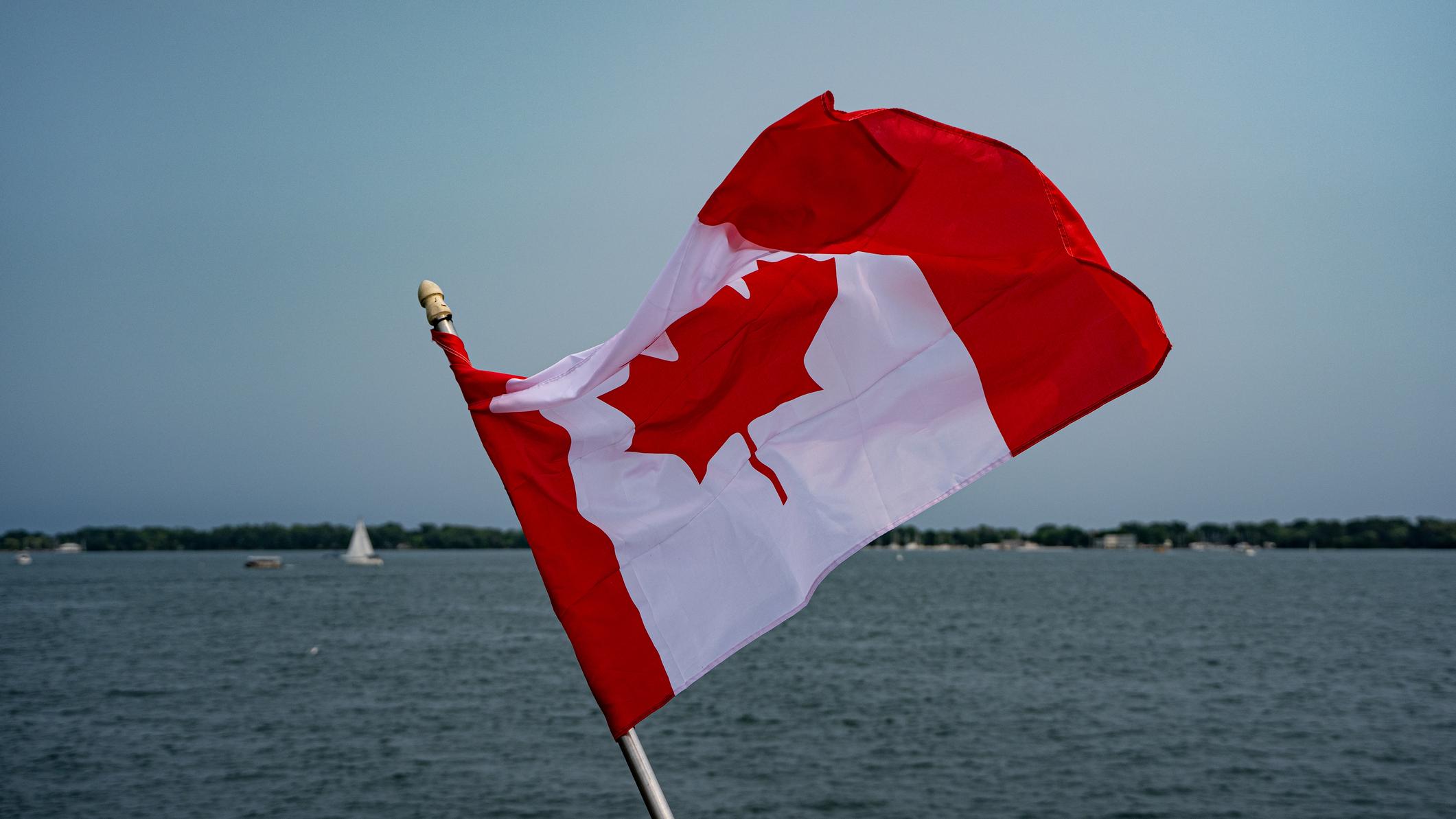
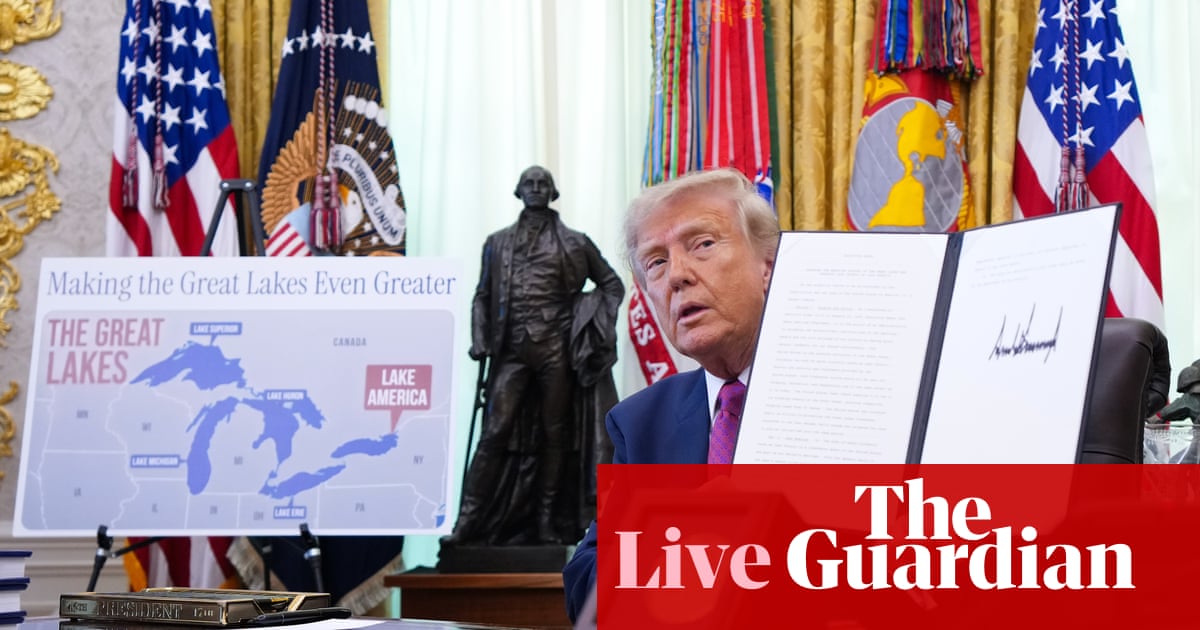
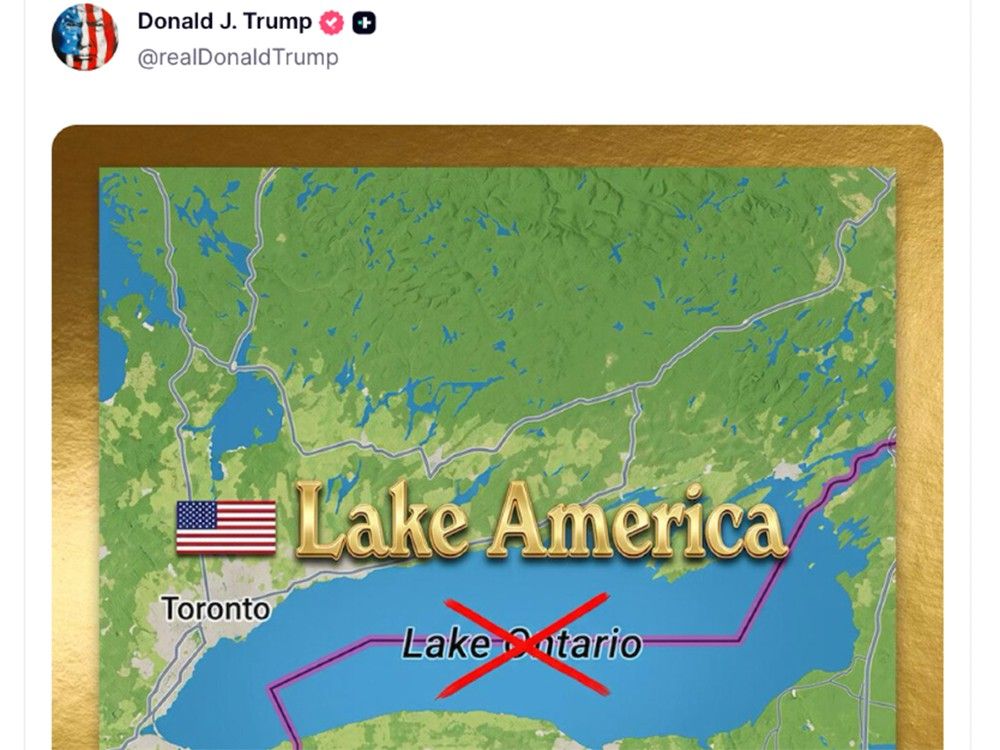
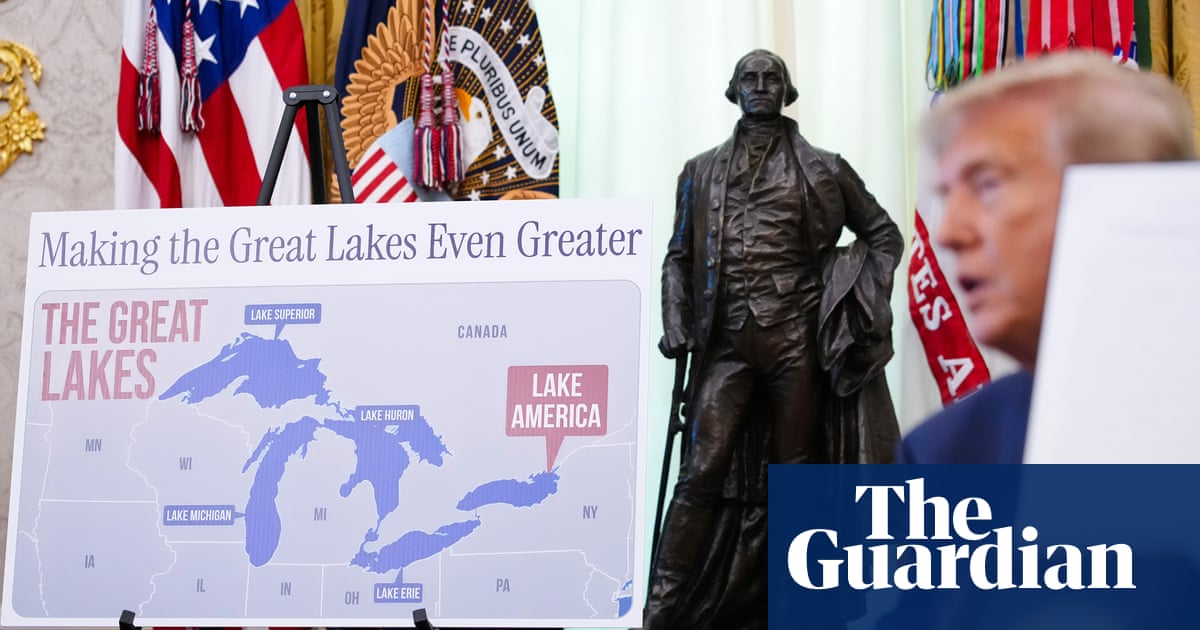
President Donald Trump on Tuesday floated the idea of renaming Lake Ontario to “Lake America,” amid escalating tensions between the U.S. and Canada.
asserted
Trump → float → U.S.
“The United States is giving serious consideration to changing the name of Lake Ontario to Lake America in that we don’t expect to be doing much business with Ontario any longer,” Trump said in a Truth Social post.
asserted
Trump → give → post
Lake Ontario is one of the five Great Lakes in North America, which together compose the largest freshwater system in the world.
asserted
which → compose → world
It borders the Canadian province of Ontario, which was named after the lake, as well as the U.S. state of New York.
asserted
which → border → York
Trump’s threat to rename the lake is reminiscent of his previous push to call the Gulf of Mexico the “Gulf of America.”
asserted
threat → rename → America
It is possible that Trump could order the U.S. federal government to refer to Lake Ontario as “Lake America,” but he cannot require other nations to adhere to the change.
uncertain
he → order → change
When he signed an Executive Order last year to call the Gulf of Mexico the “Gulf of America,” the directive only applied to the U.S. federal government, and other nations continue to refer to the body of water as the Gulf of Mexico.
asserted
nations → sign → Mexico
Many other entities—such as The Associated Press, which sets style guidelines that many news outlets follow—have also stuck to the original name for the gulf.
asserted
outlets → set → gulf
The U.S. and Canada also have a 1989 agreement regarding the coordination of names for geographical features shared between the two nations, which emphasizes the importance of both sides using the same name for the same feature “where culturally acceptable,” and says that “it is highly desirable to retain established official names.”
asserted
it → have → names
According to the document, a name change could be considered “for purpose of conformance to strong local usage or citizen preference, or on special request with strong specific reasons.”
uncertain
change → accord → reasons
The origin of the lake’s name, which derives from Indigenous words referring to the lake, predates the founding of both countries.
asserted
which → derive → countries
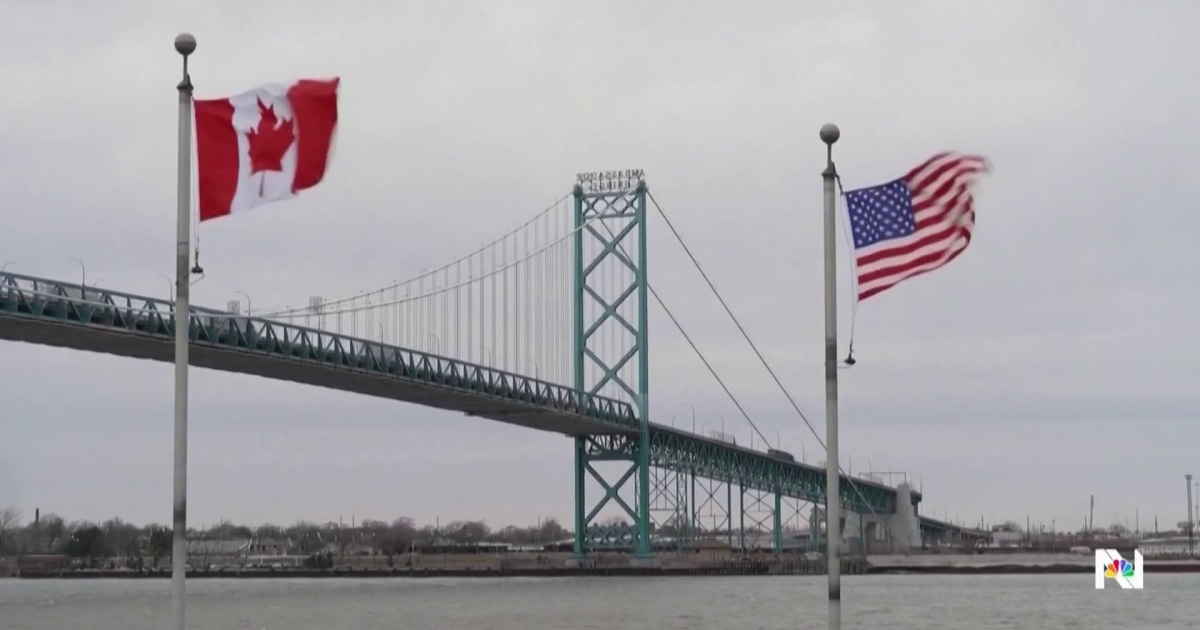
Trump’s threat to rename Lake Ontario comes after trade talks between the U.S. and Canada broke down on Friday.
asserted
talks → rename → Friday
The following day, the Trump Administration’s 50% tariffs on about $20 billion worth of imported Canadian goods went into effect.
asserted
tariffs → import → effect
On Tuesday, Canada announced that it would impose retaliatory levies—reaching as high as 50% on some items—starting on Sept. 8.
asserted
it → announce → Sept.
Both countries have blamed the other for trade negotiations collapsing.
asserted
negotiations → blame → other
In a statement on Friday, Canadian Prime Minister Mark Carney accused the U.S. of wanting “last-minute changes” to the trade deal that he said were “unfair, uneconomic, and called into question the reliability of any deal.”
asserted
he → accuse → deal
“In short, they asked too much and they offered too little,” Carney said at a press conference on Saturday.
asserted
Carney → ask → Saturday
Trump, meanwhile, has accused Canada of “‘Ripping Off’ the U.S.A. for decades,” calling the northern neighbor “difficult and unreasonable.”
asserted
Trump → accuse → neighbor
In the days since, tensions have continued to rise between the two allied nations.
asserted
tensions → continue → nations
Trump on Monday threatened to raise automobile tariffs on Canada to 50% beginning in 2027.
asserted
Trump → threaten → 2027
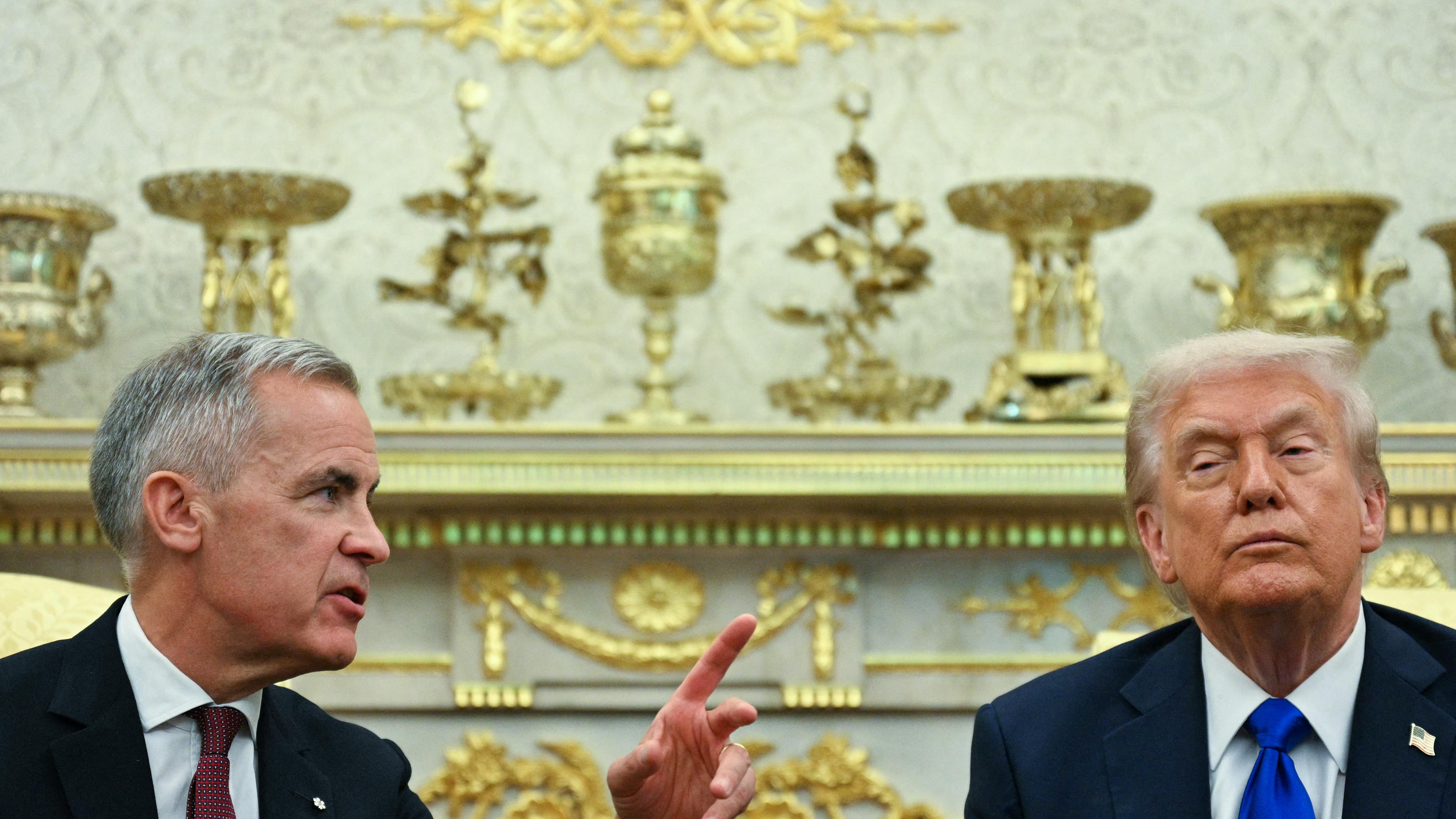
He’s continued to hurl barbs at Canada, referring to its Prime Minister as “Governor Carney”—a remark that Trump has made before, and one that hints at comments he has made in the past suggesting that he wants to annex the country.
asserted
he → continue → country
At a political event on Monday, U.S. Vice President J.D. Vance called Canada a “state,” before claiming it was a “Freudian slip.”
asserted
it → call → Canada
When asked about Trump’s threat to rename Lake Ontario, the province’s Premier Doug Ford said on CNN on Tuesday that he thought it was “a lot of rhetoric” and emphasized the strong trading ties between Ontario and many U.S. states.
asserted
it → ask → Ontario
“We’re strong believers in being a sovereign country, and when President Trump wants to attack our sovereignty and attack our businesses and people in Ontario, I can’t roll over,” he continued.
asserted
he → want → Ontario
“My job is to protect Ontario and Canada, and ironically, protecting the American people.”
asserted
job → protect → people
Canadian Minister Dominic LeBlanc, who oversees trade with the U.S., was also asked about Trump’s Truth Social posts on CNBC, and replied: “We’ve decided as a federal government months ago not to respond to sort of the daily social media posts of either the President or his Cabinet secretaries and so on.
asserted
We → oversee → President
We’re focused on doing what we can in Canada to build our economy and to having a constructive relationship with the government of the United States, our most important trading partner.”
asserted
we → ’re → States
 The Aporia




.jpg?branch=production&width=1024&quality=75&auto=webp&crop=16:9)