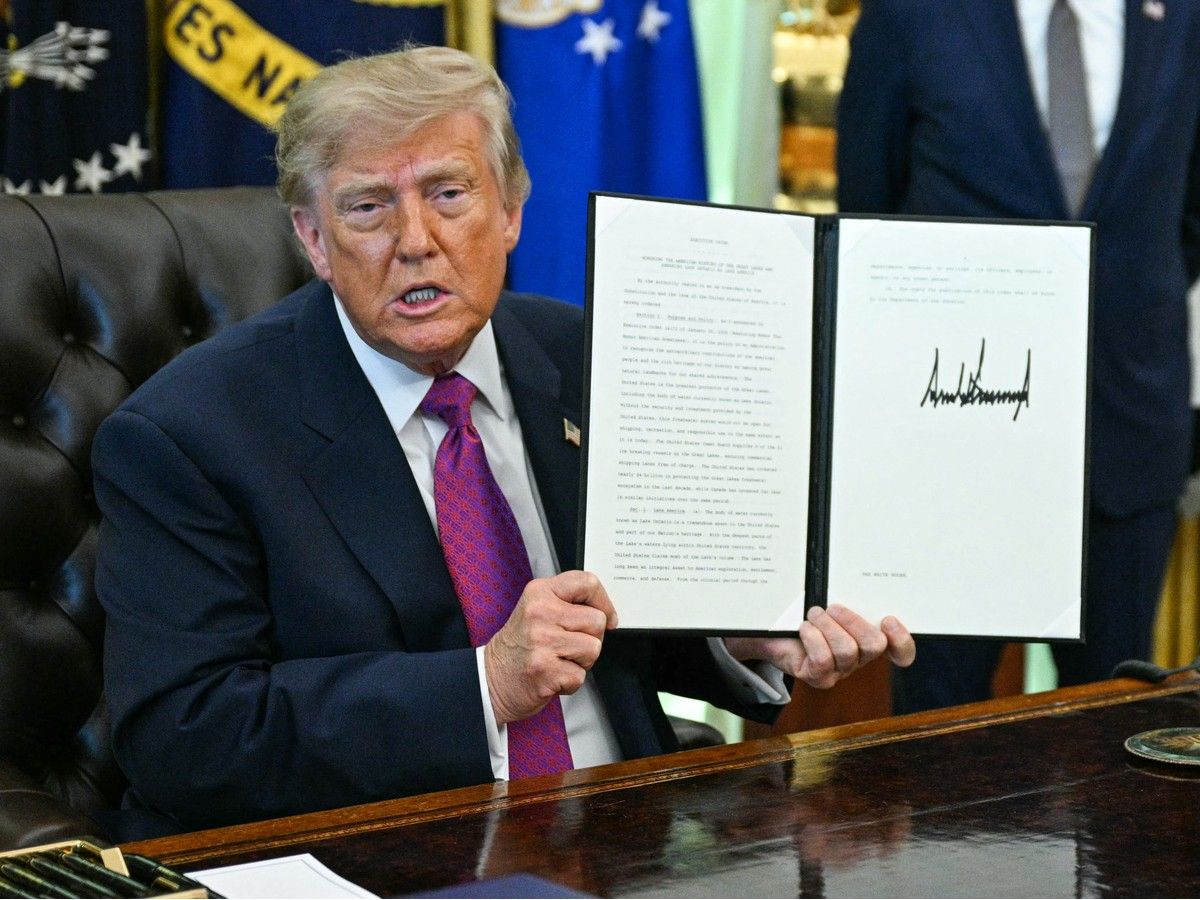
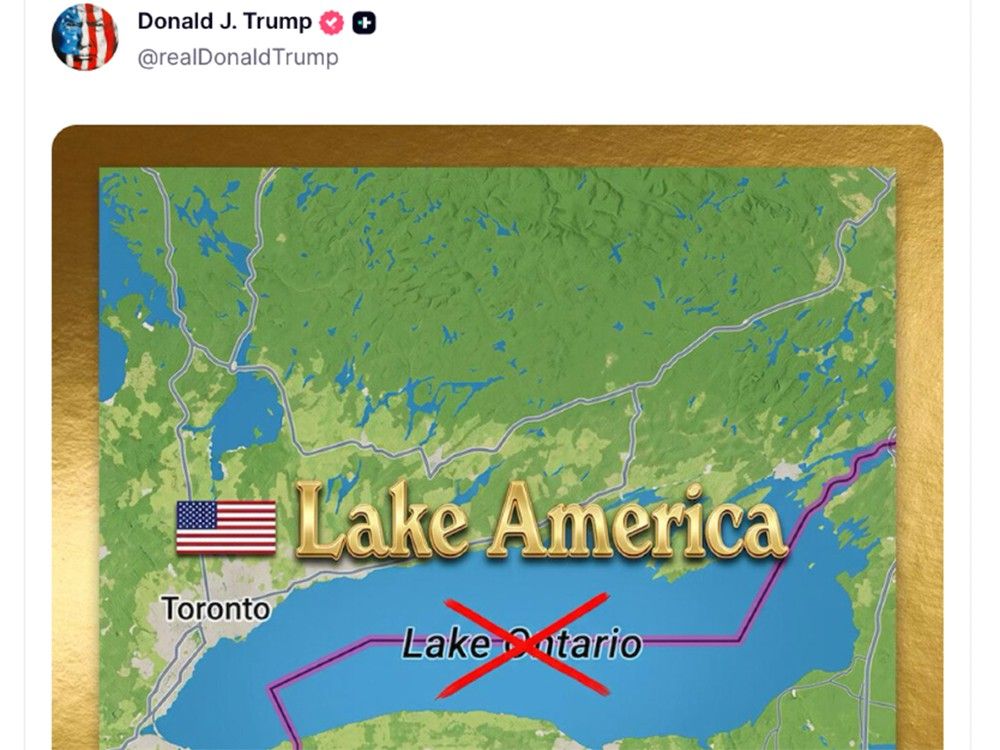
Donald Trump signed an executive order on Thursday directing the federal government to rename Lake Ontario, making it Lake America, amid his escalating trade war with Canada.
asserted
it → sign → Canada
The order directs federal agencies to adopt the name-change on US maps, documents and databases.
asserted
order → direct → maps
But Trump has no authority to rename Canada’s portion of the lake, nor to compel Canada, international legal bodies, international mapmakers, or the rest of the world to adopt a new name.
asserted
Trump → have → name
The move follows a similar action the president took on the first day of his second term in office, when he signed an order renaming the Gulf of Mexico as the “Gulf of America”.
asserted
he → follow → America
“We have a gulf and we have a lake – now all we need is an ocean.
asserted
we → have → lake
Maybe we’ll have to change the name of the Atlantic and/or the Pacific,” he told reporters, sitting at the Resolute Desk in the Oval Office.
asserted
he → have → Office
“Maybe we’ll change them both.”
asserted
we → change → them
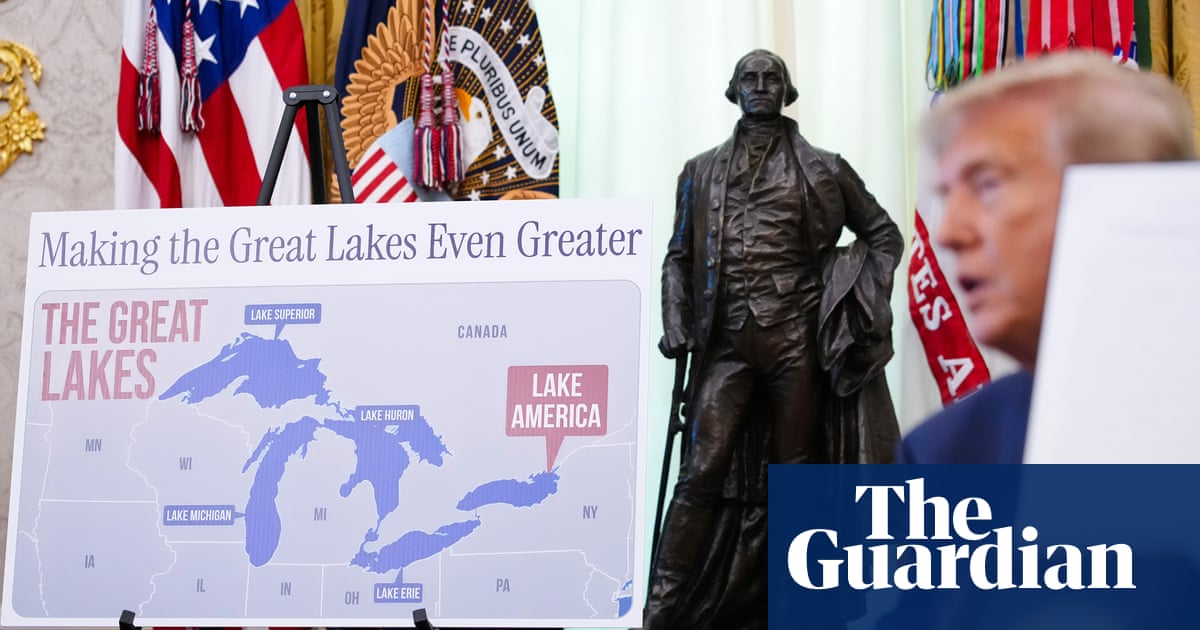
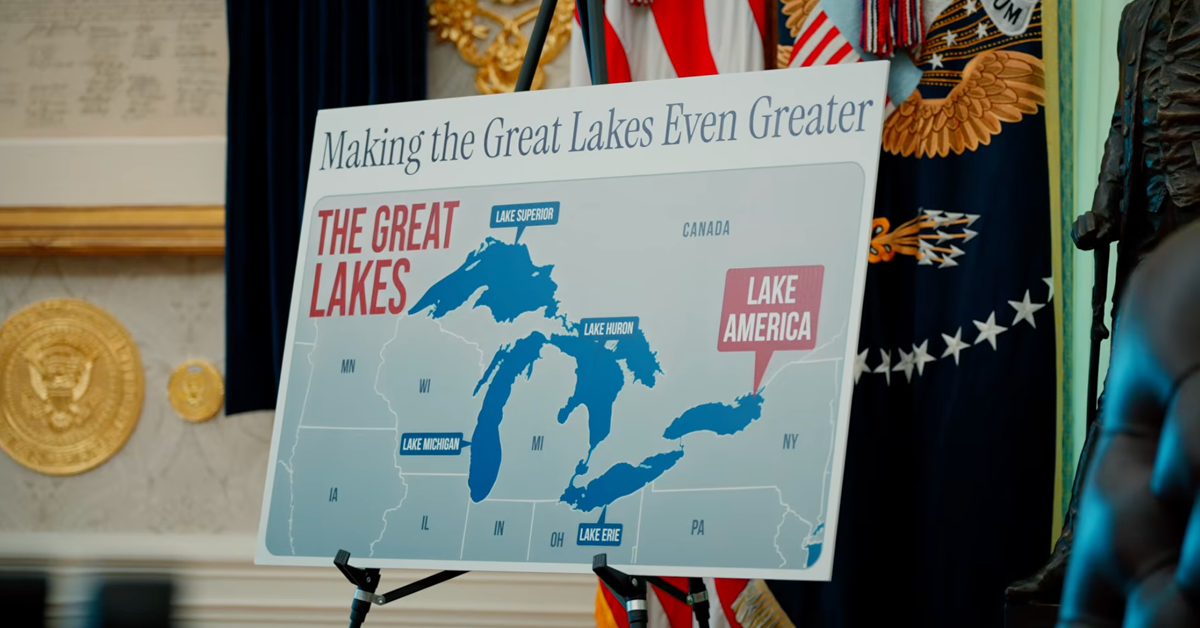
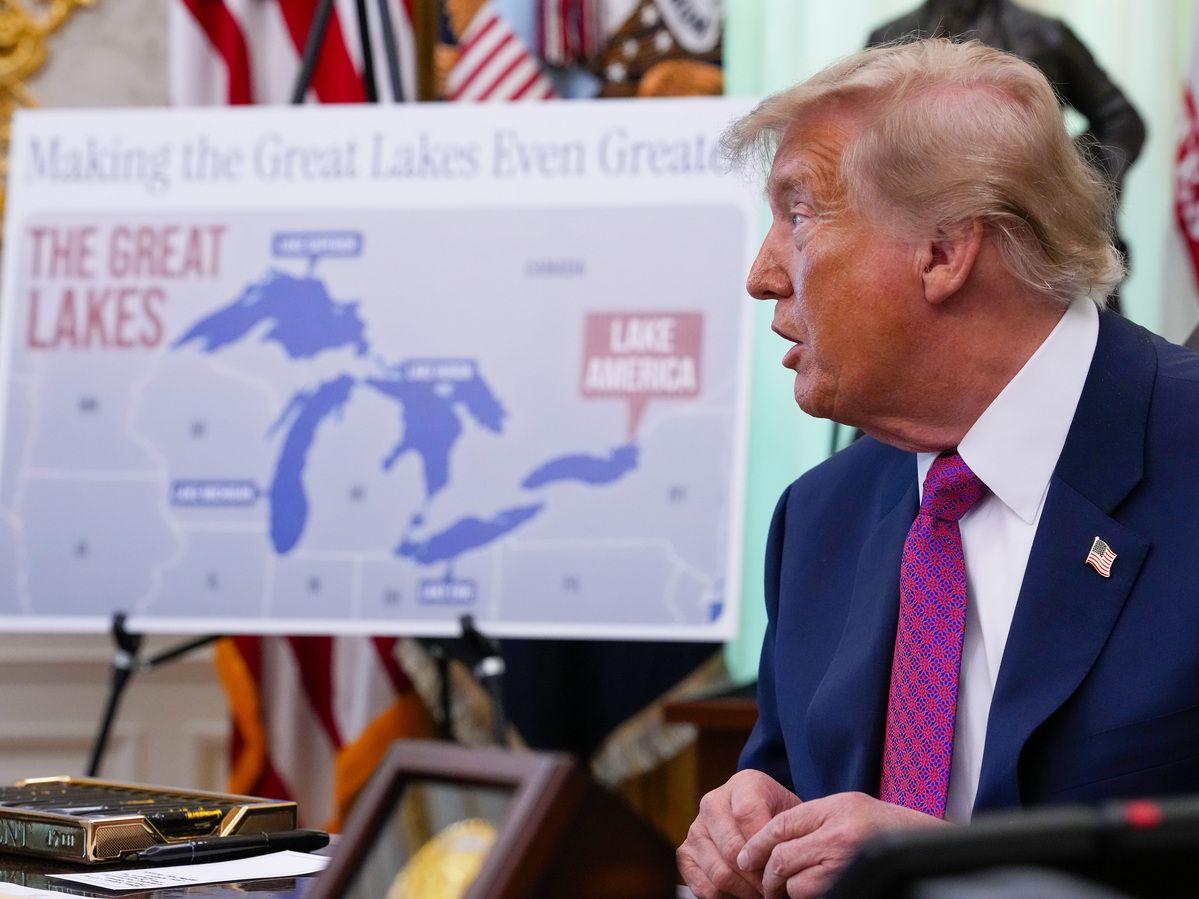
Propped behind the US president was a large map of the Great Lakes region, with “Lake America” printed in red lettering above Lake Ontario.
asserted
map → prop → Ontario
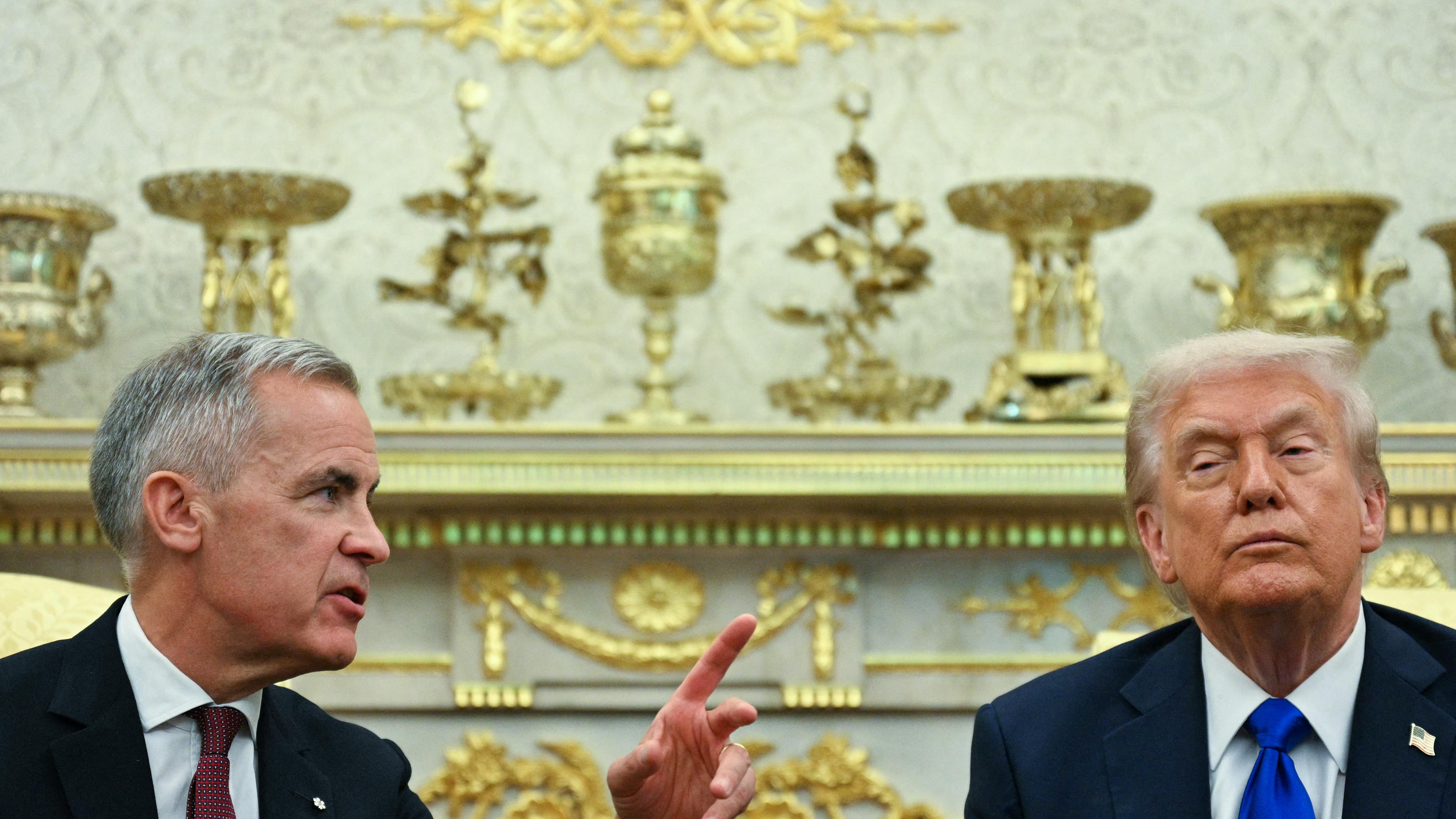
Mark Carney, Canada’s prime minister, rejected the US’s attempt to rename the body of water, explaining in a post on social media that its name comes from the language of the Indigenous Wendat people and predates both the Canadian Confederation and the US Declaration of Independence.
asserted
name → reject → Independence
“We know that America is changing.
asserted
America → know → ?
Their trading relationships, their foreign policies, their national monuments, their hydronyms,” he wrote on X.
asserted
he → write → X.
“Canadians also know that naming reality means calling it Lake Ontario – then, now and always.”
asserted
naming → know → it
Tim Houston, the premier of Nova Scotia, responded: “We’re into some real foolishness now.
asserted
We → respond → foolishness
It’s Lake Ontario, buddy.”
asserted
It → ’ → ?
Several US governors in the Great Lakes region also dismissed the name change.
asserted
governors → dismiss → change
“New York won’t be calling it that,” the state’s governor, Democrat Kathy Hochul replied.
asserted
governor → call → it
New York shares a border with the lake.
asserted
York → share → lake
Michigan governor Gretchen Whitmer, a Democrat, recalled that school children learn the acronym H-O-M-E-S for the names of the five great lakes: Huron, Ontario, Michigan, Erie, Superior.
asserted
children → recall → lakes
And the Wisconsin governor, Democrat Tony Evers, mocked the move by sharing a video of himself changing the name of Lake Michigan to Lake Wisconsin, signed on a restaurant napkin.
asserted
himself → mock → napkin
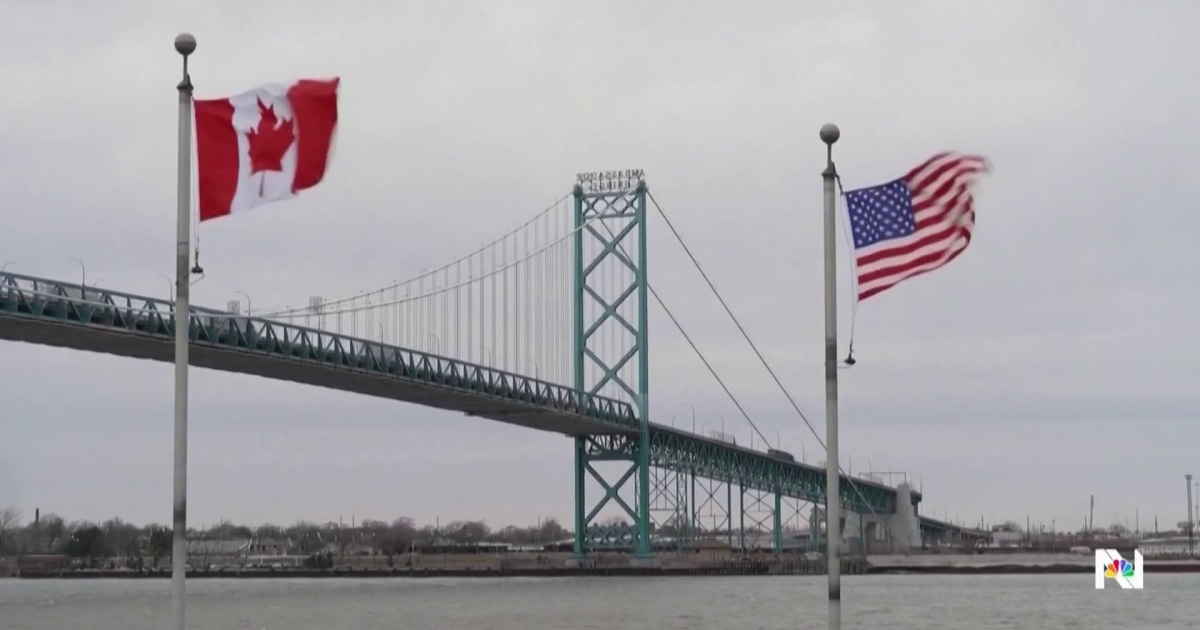
The latest tweak of Canada’s nose by the US president comes as tensions fray between the US and its northern neighbor.
asserted
tensions → come → US
Over the weekend, trade talks between Washington and Ottawa collapsed and the US imposed a 50% tariff on several Canadian imports, with Trump threatening another round of 50% duties on Canadian steel, trucks, cars and auto parts to take effect in the new year.
asserted
Trump → collapse → year
Carney hit back with 25-50% tariffs on hundreds of US goods.
asserted
Carney → hit → goods
“They want to be treated like a state, but they’re not a state,” Trump said, a nod to his previous suggestions that Canada should become the “51st state” in the union, a prospect that has enraged Canadians.
asserted
that → want → Canadians
“But they want to be treated like they’re a state, and so we just can’t do that any more.”
asserted
we → want → that
Trump complained about a $60bn US trade deficit with Canada, which economists note is attributable almost entirely to US imports of oil; without that exchange, the US runs a sizable trade surplus.
asserted
US → complain → surplus
Trump claimed that American farmers were being charged a 400% tariff; about 97% of US agricultural exports to Canada enter duty-free under the US-Mexico-Canada Agreement, though over-quota eggs, milk and dairy have Canadian tariffs of up to 300%.
asserted
eggs → claim → %
“As you know, Canada has been ripping us off for a long time on trade.
asserted
Canada → know → trade
Sad,” Trump said after signing the executive order updating the Department of Interior’s naming conventions.
asserted
Trump → say → conventions
“Even the military: we defend Canada for nothing.
asserted
we → defend → nothing
We don’t get anything.
asserted
We → get → anything
They don’t pay us to defend Canada.
asserted
They → pay → Canada
But we defend Canada.”
asserted
we → defend → Canada
Both Canada and the United States are Nato members and have treaty obligations of mutual defense under the North Atlantic Treaty, the Ogdensburg Agreement and numerous other treaties.
asserted
Canada → have → Treaty
Trump claimed the name change was something he had been considering for “a long time”.
asserted
he → claim → time
“We’ve notified all the various people we have to notify,” he said after signing the order …
asserted
he → notify → order
An administration official noted that the lake bordering Canada and the state of New York has most of its volume in the United States and that the deepest part of the lake is in US territory.
asserted
part → note → territory
 The Aporia