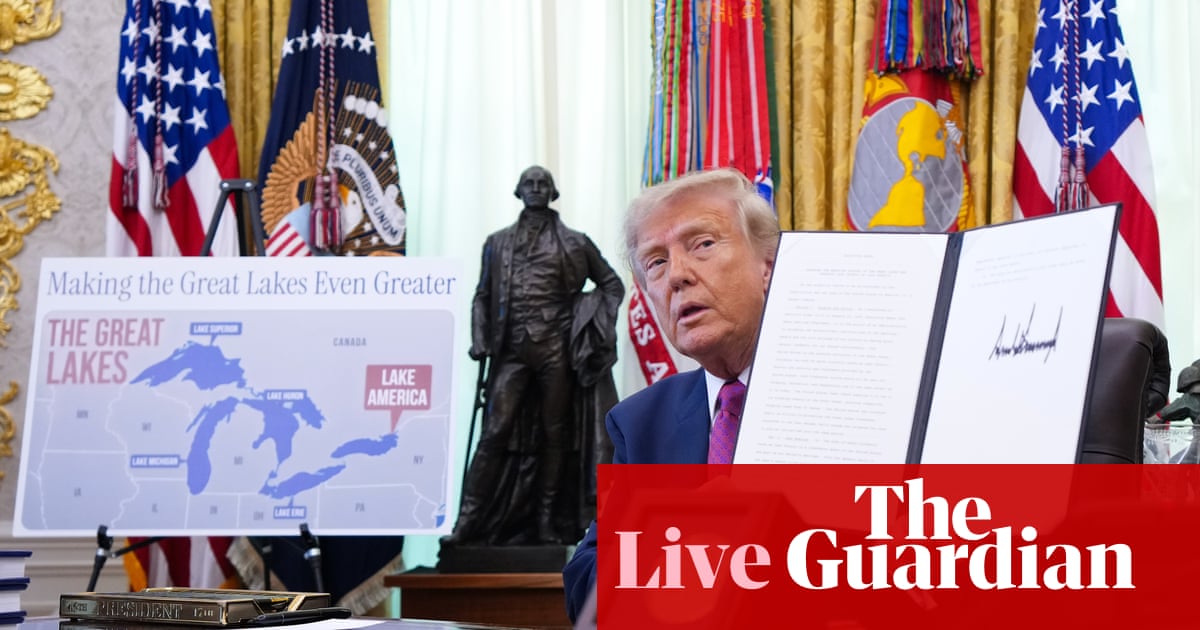
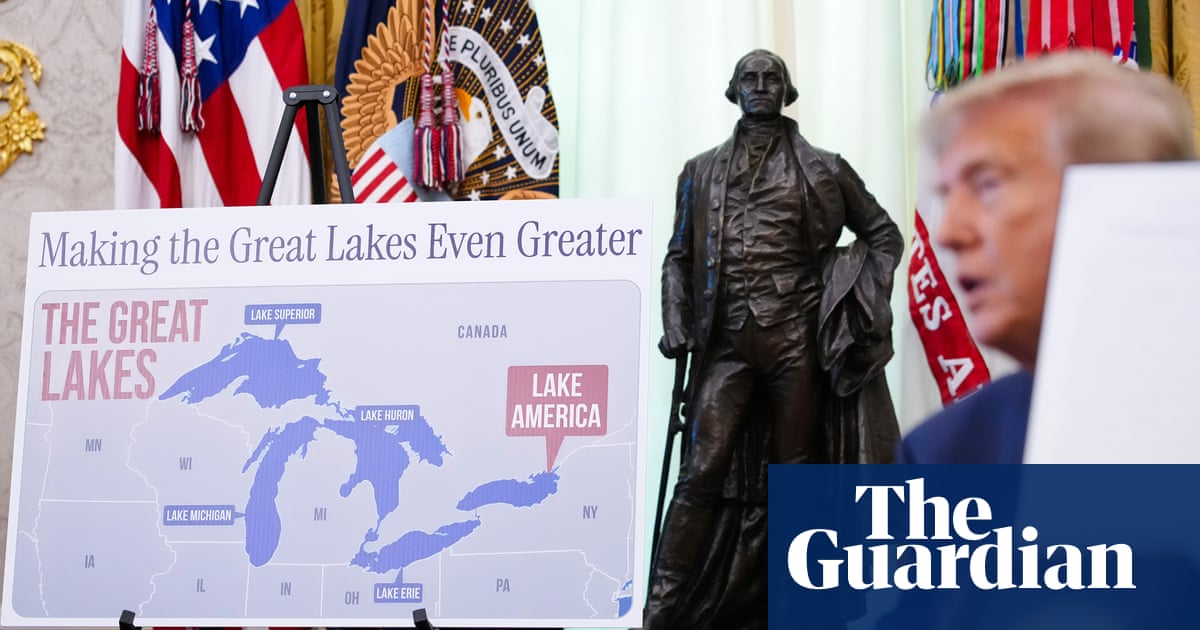
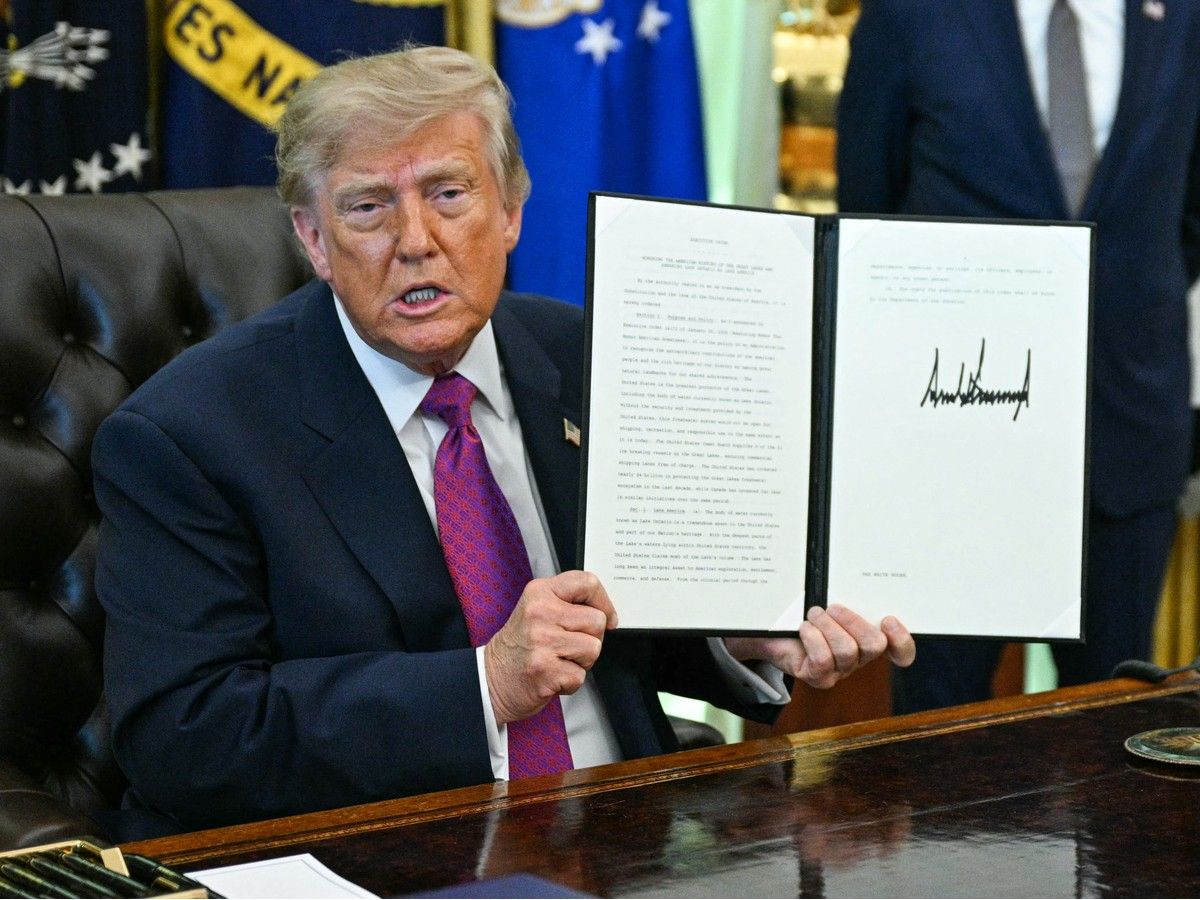
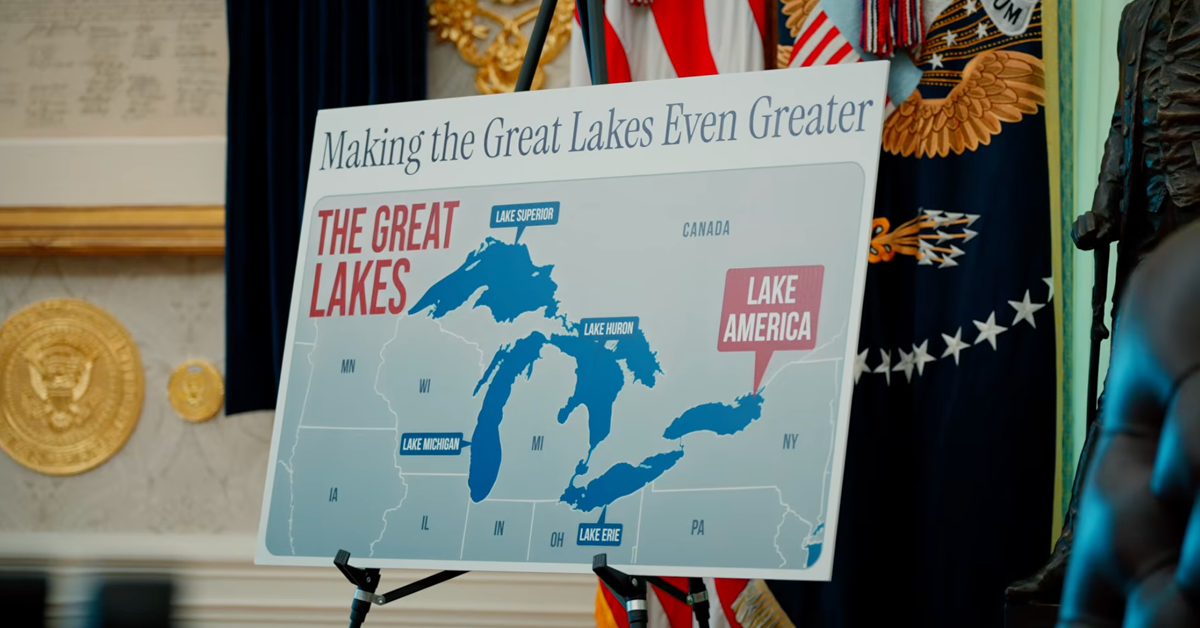
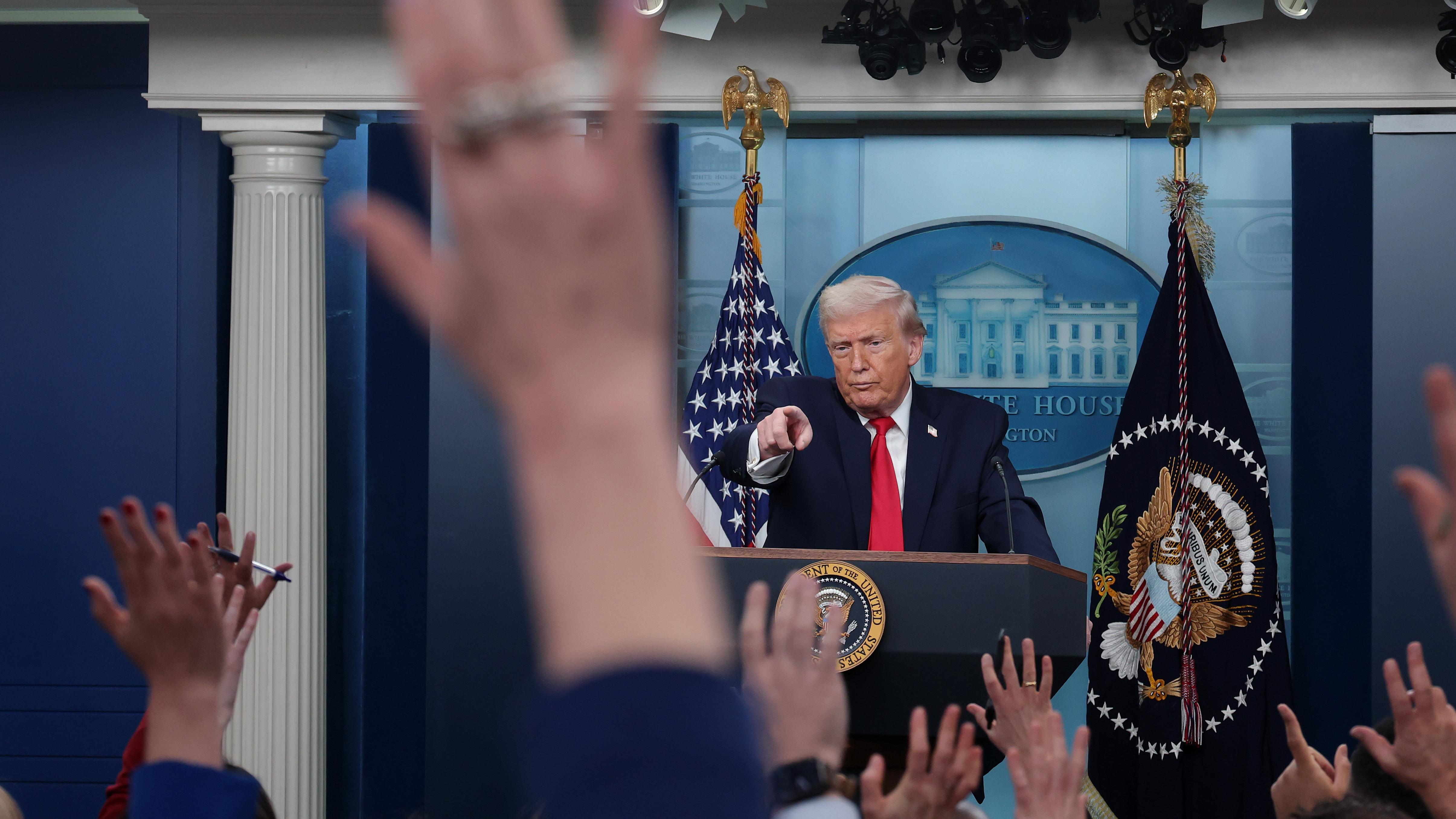
President Donald Trump on Thursday signed an Executive Order instructing Interior Secretary Doug Burgum to rename Lake Ontario as “Lake America.”
asserted
Trump → sign → America
The change is set to take effect immediately, he said.
asserted
he → set → effect
Trump earlier in the week had floated the idea of a new moniker for the lake, which borders the Canadian province of Ontario and the U.S. state of New York.
asserted
which → float → York
British Columbia’s Premier David Eby on Tuesday called for residents not to travel to America unless it's absolutely essential.
asserted
it → call → America
“I’m asking British Columbians: If you have a choice, please don’t travel to the United States.
asserted
you → ask → States
Choose another place to do your tourism,” Eby said at a press briefing.
asserted
Eby → choose → briefing
“If you can choose a Canadian product, instead of an American one, please choose it…
asserted
you → choose → it
by being our own best customer, we can help respond and support Canadians in every corner of this amazing country.”
asserted
we → help → country
While Eby is leading the charge on a travel boycott from the Canadian province, other lawmakers are further clamping down on a boycott of U.S. products.
asserted
lawmakers → lead → products
“When you’re at war, you protect your own, you protect your own backyard,” said Ontario Premier Doug Ford on Wednesday.
asserted
Ford → ’re → Wednesday
“You don’t go down to the U.S. and buy a product.
asserted
You → go → product
’s nothing that we can’t make here in Ontario, or across the country.
asserted
we → ’ → country
Finance Minister François-Philippe Champagne expressed a similar sentiment, telling reporters: “The biggest power we have, each and every one of us, is our purchasing power.
asserted
we → express → us
We can choose when we go to the grocery store or to the hardware store to buy Canadian.”
asserted
we → choose → Canadian
Has Canadian travel to the U.S. declined since Trump returned to office?
asserted
Trump → decline → office
Prior to Eby’s tourism plea, Canadian travel to the U.S. had shown a jump in visitors after a widely-reported decline.
asserted
travel → show → decline
In May, the number of Canadians visiting the U.S. was up by 9.9% compared to the same month a year prior, according to Statistics Canada.
uncertain
number → visit → Canada
In June, the number of Canadian-resident return trips from the United States increased 5.0% year over year.
asserted
number → increase → year
The number of Americans visiting Canada was also higher, with a 6.1% rise year over year.
asserted
number → visit → year
However, in the first quarter of 2026, Canadian residents took 5.5 million trips that included an outbound visit to the United States, a year over year decline of 10.6%.
asserted
that → take → %
Spending while visiting the U.S. by Canadians during this period was also down by 13.6%.
asserted
Spending → spend → %
Figures for the start of 2026 fall in line with a trend that has seen Canadian travel to the U.S. decline since Trump returned to Office last year.
asserted
Trump → fall → Office
Cell phone data analysis published by the University of Toronto in May found a 42% year-over-year median decline in Canadian travel to U.S. metropolitan areas.
uncertain
analysis → publish → areas
The research also found that “when Canadians travel to the U.S., they are visiting fewer locations and staying for less time than they used to.”
asserted
they → find → time
Some metro areas such as Myrtle Beach, South Carolina, and Panama City, Florida, saw drops in Canadian tourism of at least 60%.
asserted
areas → see → %
In Florida, the decline in visits has persisted with an average decrease of just under 14% across the state during the first six months of 2026.
asserted
decline → persist → 2026
How U.S.-Canada talks collapsed into an all-out trade war
Relations between the U.S. and Canada have deteriorated further since the collapse of high-stakes trade talks last week resulted in U.S. tariffs of 50% on various Canadian products going into effect on Aug. 22, with no CUSMA exception.
asserted
tariffs → collapse → exception
Trump has threatened to increase automobile tariffs on Canada to 50%, claiming: We don’t need Canada, they need us.”
asserted
they → threaten → us
The Trump Administration has also revived its rhetoric of referring to Canada as a “state”—a nod to Trump’s vocal ambition to annex Canada and make it the 51st state, an idea he has floated repeatedly since returning to the White House last year.
asserted
he → revive → House
Vice President J.D. Vance during a speech in Brewer, Maine, on Monday said: “We have to remember, Canada is a state—sorry, Freudian slip.”
asserted
Canada → say → Monday
Canadian Prime Minister Mark Carney, meanwhile, has drawn focus to Canada’s burgeoning trade relations with other countries.
asserted
Carney → draw → countries
“Over the last year alone, Canada has signed more than 20 trade and security deals across five continents,” he said Wednesday.
asserted
he → sign → continents
“Canada is now the best connected economy in the world,” he claimed, pointing towards trade alliances with countries in South Asia and Europe.
asserted
he → connect → Asia
Carney in January met with China’s President Xi Jinping to forge what he called a “new strategic partnership” to end Canada's economic reliance on the American market.
asserted
he → meet → market
While meeting with Canada’s second-largest export market, Carney agreed to cut his country’s 100% tariff on Chinese electric cars in return for lower tariffs on Canadian farm products, including canola seeds, a major Canadian export.
asserted
Carney → meet → seeds
 The Aporia