What’s in a name? Trump’s ‘Lake America’ threat raises questions about centuries of history

Read the original at Global News ↗
Cite

Maratta, A. S. (2026, August 26). What’s in a name? Trump’s ‘Lake America’ threat raises questions about centuries of history. Global News. https://globalnews.ca/news/12035032/trump-threat-lake-ontario-history/

Dated when The Aporia collected the article, usually within hours of publication. Check the original for its exact date and byline.

Global News · collected 2026-08-26 · by Alessia Simona Maratta

Quick Summary

US President Donald Trump has threatened to rename Lake Ontario "Lake America" as part of a trade dispute with Canada, but this proposal raises questions about the lake's long history. According to Mary Baxter, a PhD candidate in Western University's history department, the name Ontario comes from an Iroquoian language term and means "sparkling waters". The name has been used on maps since 1656, predating the creation of Canada and the United States. Trump's proposal is reminiscent of his previous executive order to rename the Gulf of Mexico to the Gulf of America.
Written locally by qwen2.5:14b on 2026-08-26, using this article's own text rather than the other coverage of the same event (that is the story summary below).

AI analysis runs on qwen2.5:14b, locally

Story summary

On August 25, U.S. President Donald Trump threatened to rename Lake Ontario, a body of water shared by the U.S. and Canada, as "Lake America." This threat came amidst an ongoing trade dispute between the two nations, with Trump posting on social media that such a change would signal reduced business ties with Ontario. While Indigenous peoples originally named Lake Ontario centuries ago, experts argue that Trump's move is purely symbolic since he lacks authority to compel Canada to adopt this new name. Canadian officials responded by announcing retaliatory tariffs starting September 8, affecting approximately $20 billion worth of U.S. products including steel and processed cheese.

Written for “Trump Renames Lake Ontario” on 2026-10-16, grounded in this article and the 31 other(s) covering the same event.

Story

📰 Trump Renames Lake Ontario
Politics · 32 article(s) covering the same event. Compare every outlet's account →

Compared with similar articles

This article reads leans left and hedges 8% of its claims. Each row says how that neighbour differs.
TIME · 0.92 cosine similarity
⚖️ leaning not scored 🔴 7% hedged 2 of 27 📰 publisher trust 60
“Both articles report on President Trump's threat to rename Lake Ontario 'Lake America' on the same day (August 26, 2026) and include similar quotes from his post.”
Mother Jones · 0.92 cosine similarity
⚖️ Leans left 🔴 0% hedged 0 of 11 📰 publisher trust 95
“Both articles describe the same incident of Trump issuing an executive order to rename Lake Ontario to 'Lake America' on August 28, 2026”
CBC News · 0.91 cosine similarity
⚖️ leaning not scored 🔴 7% hedged 2 of 29 📰 publisher trust 77
“Both articles report on President Trump signing an executive order to rename Lake Ontario as 'Lake America', which is a single occurrence with the same outcome.”
TIME · 0.90 cosine similarity
⚖️ Leans right further right than this 🔴 6% hedged 2 of 35 📰 publisher trust 60
“Both articles describe the exact same event, the signing of an Executive Order by Trump to rename Lake Ontario as 'Lake America', and provide similar dates and details”
BBC News · 0.89 cosine similarity
⚖️ Leans left 🔴 3% hedged 1 of 34 📰 publisher trust 72
“Both articles report on President Trump signing an executive order to rename Lake Ontario as 'Lake America', with the exact date of the signing mentioned in Article B.”
National Post · 0.89 cosine similarity
⚖️ Leans right further right than this 🔴 8% hedged 2 of 24 📰 publisher trust 60
“Both articles report on Trump's threat to rename Lake Ontario 'Lake America' made on August 26, 2026.”
The Guardian · 0.89 cosine similarity
⚖️ Leans right further right than this 🔴 5% hedged 7 of 146 📰 publisher trust 68
“Both articles report that US President Trump signed an executive order to rename Lake Ontario as 'Lake America', which occurred after a trade dispute with Canada.”
National Post · 0.87 cosine similarity
⚖️ Leans right further right than this 🔴 31% hedged 4 of 13 📰 publisher trust 60
“Both articles describe President Trump signing an executive order to rename Lake Ontario 'Lake America', which occurred on August 27th.”
Al Jazeera · 0.86 cosine similarity
⚖️ Leans strongly right further right than this 🔴 0% hedged 0 of 3 📰 publisher trust 60
“Both articles describe President Trump posting a graphic or map with the proposed name 'Lake America' for Lake Ontario, on consecutive days.”
CBC News · 0.85 cosine similarity
⚖️ Leans left 🔴 9% hedged 3 of 34 📰 publisher trust 60
“Both articles describe President Trump threatening to rename Lake Ontario 'Lake America' in response to a trade dispute with Canada, which occurred on the same day and has the same outcome.”
How this article was measured signals, leaning charts, publisher record, byline, topics and claims

Signals How these are calculated →

Claims extracted
53
sentences that state something as happening or true
Uncertain
8%
4 of 53 hedged ("reportedly", "may", "according to")
Leaning
Leans left
of the writing, not the subject · beta estimate
Publisher signals
64/100
Global News's corrections and hedging, across everything collected from it. Not a measure of accuracy.
Outlets on this story
32
Politics
Same framing elsewhere
1
articles that frame the event the way this one does
Analyzed 2026-08-26 · how these are computed

How this is being covered How these are calculated →

Article leaning vs. publisher reliability
Source leaning vs. consistency

Publisher

Global News · 1819 article(s) · 9 correction(s) detected
Running correction rate · 9 correction(s)

Who wrote this

Alessia Simona Maratta
45 article(s) here · 1 carrying a prediction
🔮 “We will work for Quebec and only for Quebec,” he said in his speech.
🔮 Get weekly health news Leighl said lung cancer is the most commonly diagnosed cancer in Canada, with almost 33,000 Canadians expected to be diagnosed this year.
🔮 “ISC may have concluded its process, but this matter is not concluded for the FSIN,” Chief Bobby Cameron said in the statement.
🔮 Mattel has created a collectible doll modelled after the Quebec-born superstar’s look at the 1998 Oscars, where Dion performed “My Heart Will Go On” in a navy blue gown and a blue diamond necklace from the movie Titanic.
🔮 “Our teams will exchange information on the next steps.”
🔮 Dimitrios Jim Beis, a member of Montreal’s executive committee, said more than 50 constables will be added by the end of 2027.
🔮 The former CF-18 fighter pilot is serving as a mission specialist during the six-month mission, which will include scientific experiments, research and critical maintenance work.
🔮 Get daily National news “How can we make sure that we’re not completely dependent on maybe an unreliable United States?” said Sean Mullin, a University of Toronto expert focused on innovation and technology policy.
🔮 Researchers at the University of Alberta say they have discovered what could be the first evidence of a small raptor feeding on a much larger tyrannosaur — offering a glimpse into the feeding habits of dinosaurs millions of years ago.
🔮 If the court grants the injunction sought by the non-profit organization, St-Pierre Plamondon could be required to swear allegiance to the King before assuming office.
Also by Alessia Simona Maratta
Nothing else under this byline is closely related to this article, so these are simply their most recent.
All 45 articles by Alessia Simona Maratta →

Topics

Canada French Ontario U.S. the United States

Subjects

Canada GPE · 8× Baxter PERSON · 7× Ontario GPE · 7× the United States GPE · 7× Trump PERSON · 4× French NORP · 3× CNN ORG · 2× Ford ORG · 2× Iroquoian NORP · 2× U.S. GPE · 2×

Narrative

Canada and the United States do not necessarily have to use the same name for a geographic feature they share, Baxter said, pointing to international examples in which countries use different names for the same body of water, such as the Sea of Japan, which South Korea refers to as the East Sea.
framing: assertive · carried by 1 article(s) · first seen 2026-08-26
🔮 And this is one of those things that he could move ahead on,” she said.

Claims (53 extracted, 4 hedged)

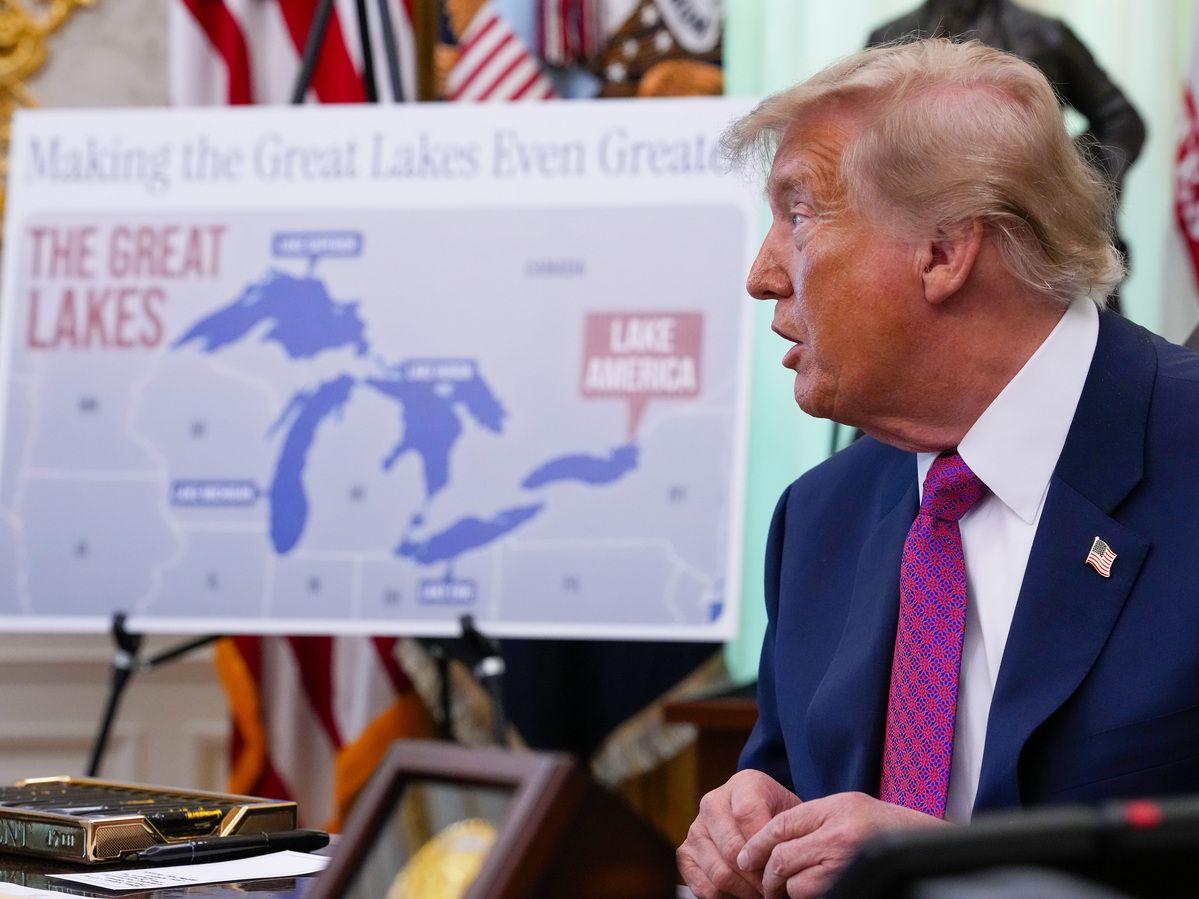
U.S. President Donald Trump is threatening to rename Lake Ontario “Lake America,” but the name has centuries of history behind it. asserted
name → threaten → it
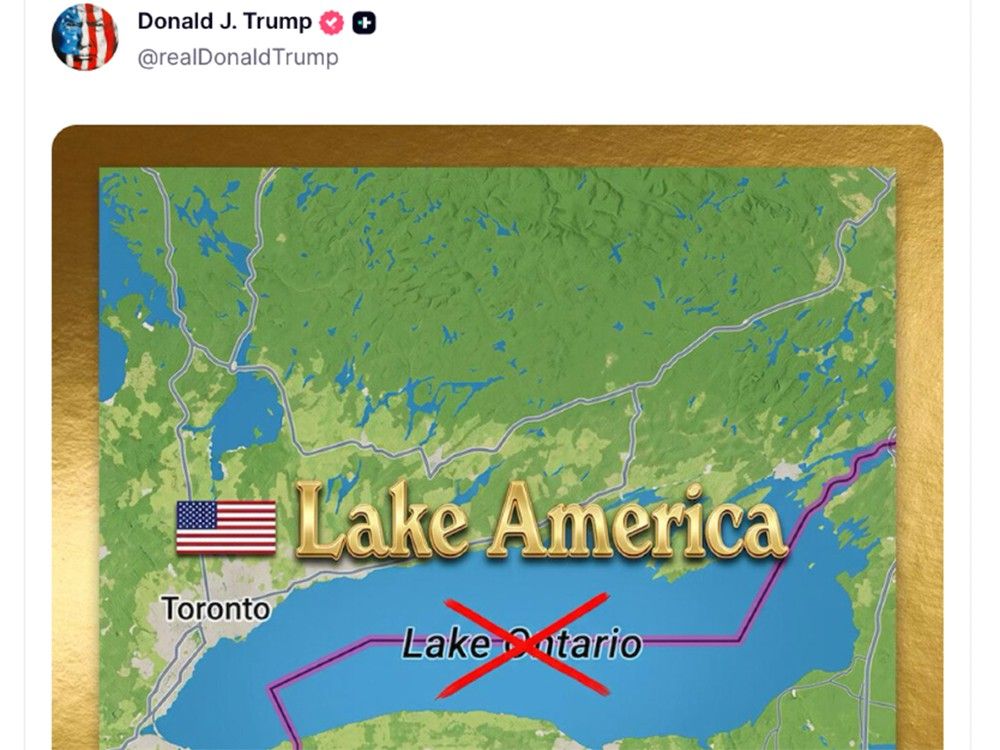
Trump said Tuesday the United States is giving “serious consideration” to changing the name of Lake Ontario as relations with Canada, and particularly Ontario, sour amid an escalating trade dispute. asserted
relations → say → dispute
He later posted a graphic depicting the Great Lake under the proposed “Lake America” name. asserted
He → post → name
The threat came a day after Trump and Ontario Premier Doug Ford publicly traded insults as tensions over the Canada-U.S. trade dispute escalated. asserted
tensions → come → dispute
Ford dismissed the proposed name change during an interview with CNN on Tuesday. asserted
Ford → dismiss → Tuesday
“I think it’s a lot of rhetoric,” Ford told CNN’s Wolf Blitzer. asserted
Ford → think → Blitzer
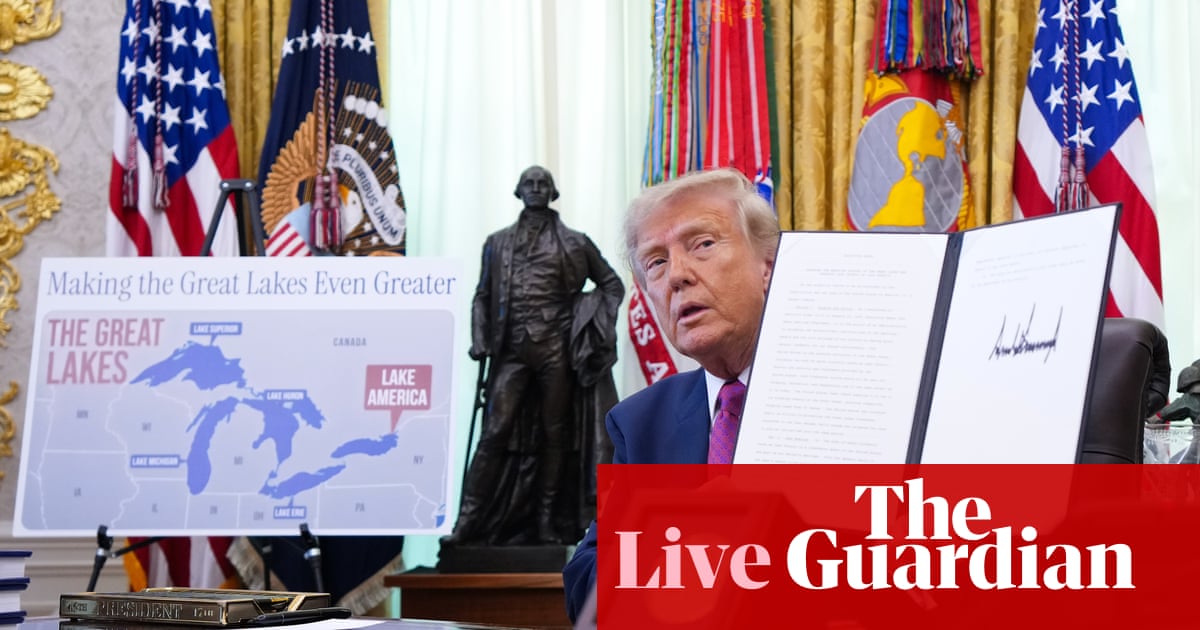
For Mary Baxter, a PhD candidate in Western University’s history department who specializes in Great Lakes environmental history, the threat immediately brought to mind the Republican president’s executive order last year to rename the Gulf of Mexico. asserted
threat → specialize → Mexico
“My first reaction was to think of the whole Gulf of Mexico to the Gulf of America incident,” Baxter told Global News. asserted
Baxter → think → News
“There are times when we’ve heard Trump back down, but there are also times where he moved ahead with things. asserted
he → be → things
And this is one of those things that he could move ahead on,” she said. uncertain
she → move → that
Trump signed an executive order last year directing the U.S. government to use the name Gulf of America. asserted
Trump → sign → America
But Lake Ontario’s name has a much longer history than either Canada or the United States. asserted
name → have → Canada
Baxter said the name Ontario comes from an Iroquoian language term and roughly translates to “sparkling waters.” asserted
name → say → waters
The lake has been known by several names over its history, including different names used by First Nations before European exploration. asserted
lake → know → exploration
Baxter said French explorers also used different names for the lake, while the French and British had competing names for it during their conflicts in North America. asserted
French → say → America
Get breaking National news The French often referred to it as Lac Frontenac, she said, while the British at times used Cataraqui Lake, another name with Iroquoian origins. asserted
British → get → origins
By the mid-1700s — before the American Revolution and the eventual creation of Canada and the United States — Lake Ontario had emerged as the name that stuck. asserted
that → emerge → name
The first known appearance of “Lake Ontario” on a map dates to 1656, Baxter said, and the name has been used intermittently ever since. asserted
name → know → 1656
Baxter said the name was appearing on maps more than a century before the United States declared independence and long before there was a province called Ontario. asserted
States → say → independence
“I think that there can sometimes be a perception out there that the Great Lakes have been named after the communities that surround them,” Baxter said. asserted
Baxter → think → them
But she said the opposite is true. asserted
opposite → say → ?
“These communities got their names from the lakes. asserted
communities → get → lakes
Ontario, the province, was named for the lake, and not the other way around. asserted
Ontario → name → lake
Lake Ontario is one of five Great Lakes and straddles the Canada-U.S. border, with Ontario to its north and New York state to its south. asserted
Ontario → straddle → south
The Great Lakes — Huron, Ontario, Michigan, Erie and Superior — are a chain of five freshwater lakes that hold roughly one-fifth of the world’s surface fresh water. asserted
that → hold → water
Daniel Macfarlane, an environmental historian at Western Michigan University and author of The Lives of Lake Ontario, told Global the lake occupies a much more central place in Canada’s history and identity than it does in the United States. asserted
it → tell → States
“It’s far more important to Canada than it is also to the United States,” Macfarlane said. asserted
Macfarlane → ’ → States
He described Lake Ontario and the St. Lawrence River as forming the heart of early Canada. asserted
He → describe → Canada
“We’ve got like a quarter of the Canadian population living near Lake Ontario, which far outnumbers the New York side,” Macfarlane said. asserted
Macfarlane → get → side
Canada and the United States do not necessarily have to use the same name for a geographic feature they share, Baxter said, pointing to international examples in which countries use different names for the same body of water, such as the Sea of Japan, which South Korea refers to as the East Sea. asserted
Korea → have → Sea
- B.C. mother says son was returned to her care but ministry not answering questions - asserted
ministry → say → questions
Saskatchewan honey producers face uncertain future amid Canada-U.S. trade war - asserted
producers → face → war
Danielle Smith wants Ottawa to resume negotiations with U.S. before counter-tariffs - asserted
Ottawa → want → tariffs
Recovery Alberta closes Edmonton addiction treatment program, drops hundreds from wait list That means a U.S. decision to adopt “Lake America” would not necessarily require Canada to follow suit. asserted
decision → close → suit
Baxter said disputes over geographic names are not unusual, but they frequently emerge within broader political conflicts. asserted
they → say → conflicts
“There is a lot of global history of that happening, but it frequently happens during conflicts, which is what we have here,” she said. asserted
she → be → what
“So it reflects significance.” asserted
it → reflect → significance
In this case, Baxter said the history embedded in the Great Lakes’ names makes the question more complicated. asserted
question → say → names
“There is an Indigenous heritage that is embedded in some of these lakes’ names. asserted
that → be → names
So when you change that name, there’s a rewriting of a very long history,” she said. asserted
she → change → history
…and 13 more, not listed.

💬Give feedback
🕘History 🎫Support