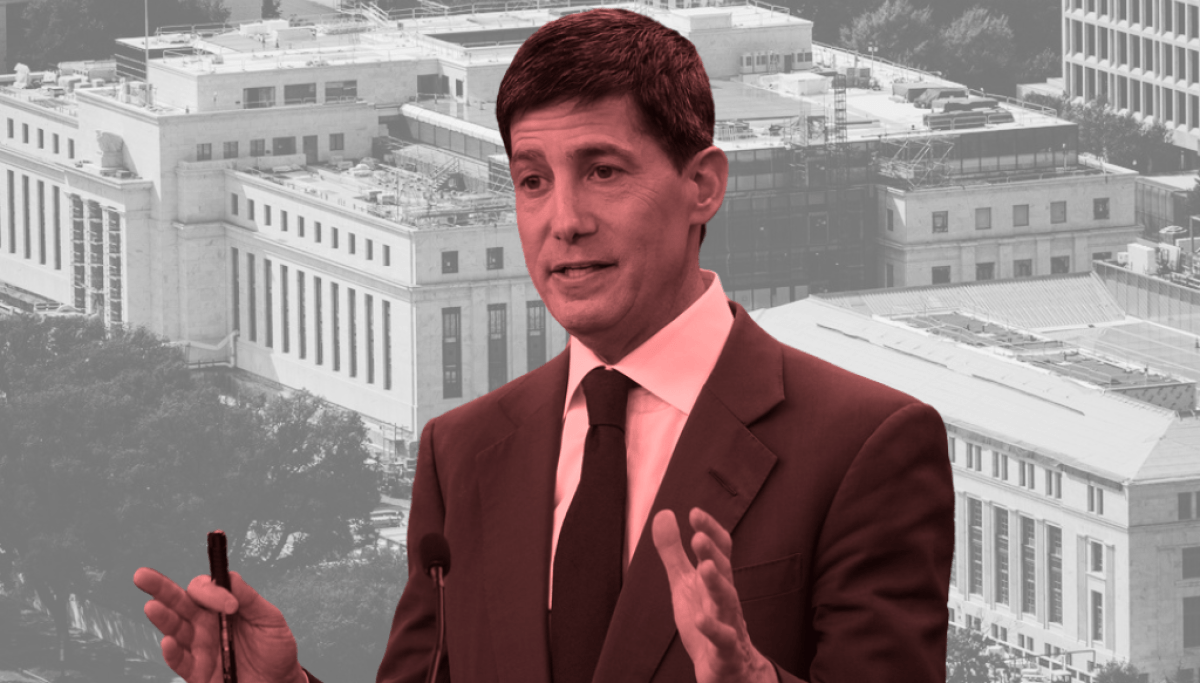
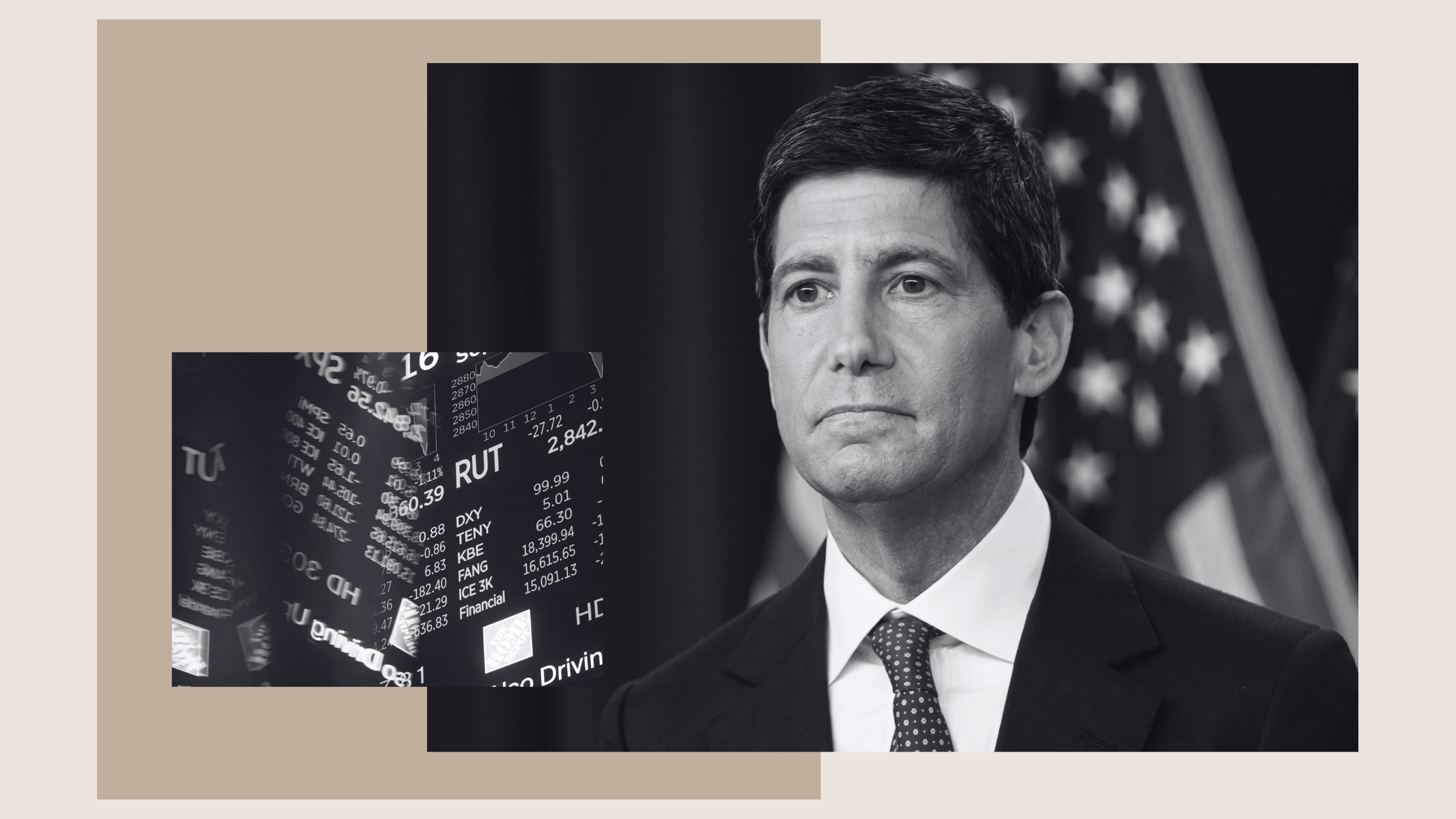
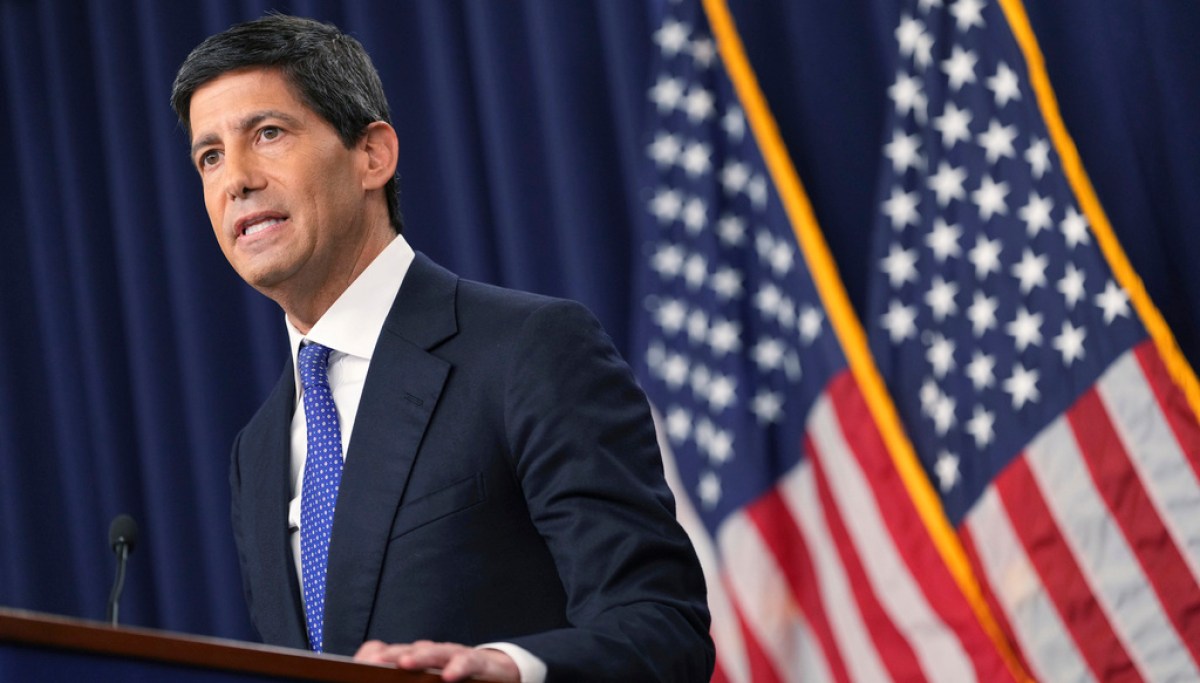
Can the Fed pass Kevin Warsh’s trend test?

Read the original at Washington Examiner ↗
Washington Examiner · collected 2026-09-20 · by Dan Varroney

Quick Summary

Federal Reserve Chairman Kevin Warsh announced a quarter-point interest rate increase on Wednesday, citing prolonged inflation above the target despite moderating core consumer price index growth. The decision hinges on trends showing sustained high inflation over five years rather than recent changes in energy prices or broader economic indicators like productivity and wage pressures that have shown improvement since July. Warsh emphasizes the need for vigilance against persistent inflation but critics argue the move risks hindering supply-side expansion, which helps control price levels by increasing production capacity and productivity growth.
Written locally by qwen2.5:14b on 2026-09-21, using this article's own text rather than the other coverage of the same event (that is the story summary below).

AI analysis runs on qwen2.5:14b, locally

Story summary

On September 16, 2023, the Federal Reserve is expected to raise its benchmark interest rate by 25 basis points to a range between 3.75% and 4.00%, according to predictions from financial analysts like CME Group's FedWatch tool. This move reflects growing concerns over inflation, which has risen above the central bank’s target of 2%, despite previous attempts at stabilization. The decision comes amid pressure from President Donald Trump for lower rates and economic turbulence due to rising oil prices following conflicts in the Middle East, pushing crude costs past $100 per barrel. Despite political tensions, financial markets overwhelmingly anticipate a rate hike to combat inflation, with some economists predicting additional increases before year-end to achieve a “timelier return” to the 2% target.

Written for “Fed Interest Rate Hike” on 2026-10-05, grounded in this article and the 55 other(s) covering the same event.

Signals How these are calculated →

Claims extracted
51
claim-shaped sentences
Uncertain
2%
1 of 51 hedged
Leaning
Leans left
of the writing, not the subject · beta estimate
Correction & hedging signals
72.3
corrections and hedging in what we collected; not a measure of accuracy
Outlets on this story
56
Economy/Business
Narrative spread
1
articles carrying this framing
Analyzed 2026-09-21 · how these are computed

Story

📰 Fed Interest Rate Hike
Economy/Business · 56 article(s) covering the same event. See how they differ ↓

How this is being covered How these are calculated →

Article leaning vs. publisher reliability
Source leaning vs. consistency

Compared with similar articles

This article reads leans left and hedges 2% of its claims. Each row says how that neighbour differs.
ABC News (US)
⚖️ leaning not scored 🔴 15% hedged 3 of 20 📰 publisher trust 59
“Both articles discuss the Federal Reserve's decision to raise interest rates on the same date, involving the same context of economic and inflation concerns.”
ABC News (AU)
⚖️ leaning not scored 🔴 3% hedged 1 of 29 📰 publisher trust 61
“Article A reports on the live reaction and immediate market impact of a rate hike decision, while Article B analyzes the factors that influenced the Fed's decision to raise interest rates.”
The Straits Times
⚖️ leaning not scored 🔴 4% hedged 1 of 28 📰 publisher trust 59
“Article A reports on Trump's criticism of the Fed after a rate hike, while Article B discusses the rationale behind the Fed's decision to increase interest rates.”
Al Jazeera
⚖️ leaning not scored 🔴 14% hedged 5 of 36 📰 publisher trust 60
“Both articles discuss the US Federal Reserve's first interest rate hike in over three years, which occurred on a Wednesday.”
TIME
⚖️ leaning not scored 🔴 3% hedged 2 of 72 📰 publisher trust 60
“Both articles discuss the same FOMC meeting on September 15-16, where Chairman Kevin Warsh presided over a decision to raise interest rates by a quarter percentage point.”
Toronto Star
⚖️ Leans left 🔴 3% hedged 1 of 32 📰 publisher trust 63
“Both articles describe the Federal Reserve's decision to hike interest rates on the same day, September 20, 2026.”
Global News
⚖️ Leans left 🔴 25% hedged 9 of 36 📰 publisher trust 64
“Article A discusses the expected decision before it happens, while Article B analyzes a quarter-point rate increase that has already occurred.”
ABC News (AU)
⚖️ Leans left 🔴 8% hedged 2 of 26 📰 publisher trust 61
“While both articles discuss the Federal Reserve's decision to raise interest rates, Article A focuses on the broader implications and reaction from President Trump, while Article B delves into the economic data trends that influenced the Fed's decision. They cover related but distinct aspects of the same general event.”
Washington Examiner
⚖️ leaning not scored 🔴 5% hedged 1 of 19 📰 publisher trust 72
“While both articles discuss Fed rate hikes under Kevin Warsh, Article A focuses on a press conference about maintaining independence after raising rates, while Article B analyzes trends influencing the decision and does not specify the same specific event.”
CBS News
⚖️ leaning not scored 🔴 0% hedged 0 of 4 📰 publisher trust 66
“While both articles discuss a Fed rate increase, Article B analyzes the decision and trends leading up to it, rather than reporting on the single occurrence described in Article A.”

Publisher

Washington Examiner · 1916 article(s) · 3 correction(s) detected
Running correction rate · 3 correction(s)
2026-10-03
Tennessee’s prison chief resigns after failed Christa Pike execution, Bill Lee says
2026-10-03
Alito says there’s no perfect time to retire while confirming he will reconsider next year
2026-10-01
Christa Pike was set to be the first woman to be executed in Tennessee in 200 years before botched attempts: What to know

Who wrote this

Dan Varroney
2 article(s) here · 1 carrying a prediction
🔮 Raising the cost of capital may slow the capacity growth that helps tame prices.
2026-09-20 · assertive framing · Can the Fed pass Kevin Warsh’s trend test?
🔮 A mentor taught us what no classroom could.
Also by Dan Varroney
Nothing else under this byline is closely related to this article, so these are simply their most recent.

Topics

BLS Fed Federal Reserve The Bureau of Labor Statistics

Subjects

Fed ORG · 4× Warsh PERSON · 2× BLS ORG · 1× Federal Reserve ORG · 1× Kevin Warsh PERSON · 1× The Bureau of Labor Statistics ORG · 1×

Narrative

Its dashboard should show three- and six-month inflation breadth, expectations, productivity-adjusted wage growth, small-business and community-bank credit conditions, capital-goods orders, and energy inventories.
framing: assertive · carried by 1 article(s) · first seen 2026-09-21
🔮 Raising the cost of capital may slow the capacity growth that helps tame prices.
2026-09-21 · Washington Examiner
Can the Fed pass Kevin Warsh’s trend test? · assertive framing

Claims (51 extracted, 1 hedged)

Federal Reserve Chairman Kevin Warsh has said that “trends matter most.” asserted
trends → say → ?
Wednesday’s quarter-point rate increase tests that standard. asserted
increase → test → standard
What trend tipped the decision now? asserted
trend → tip → decision
August consumer inflation was 3.4% overall, while inflation excluding food and energy was 2.4%. asserted
inflation → exclude → food
Energy rose 16.3% over the year, and gasoline 27.4%. asserted
gasoline → rise → year
Gasoline alone produced more than one-third of the monthly consumer price index increase. asserted
Gasoline → produce → increase
That is a real problem, but a snapshot does not explain the policy choice. asserted
snapshot → explain → choice
Monthly headline inflation accelerated to 0.4% from 0.1%, largely because of energy, while annual core CPI eased from 2.5% to 2.4%. asserted
CPI → accelerate → %
Supercore inflation is not one fixed official measure. asserted
inflation → fix → ?
The Bureau of Labor Statistics reported services excluding rent of shelter up 3.1% over the year, while all items excluding food, shelter, and energy rose 2.0%. asserted
items → report → food
Both increased 0.3% in August. asserted
Both → increase → August
This is an energy rebound layered over moderating core inflation and sticky services. asserted
This → layer → inflation
It supports vigilance but does not make a rate increase self-explanatory. asserted
increase → support → vigilance
Warsh offered a serious rationale. asserted
Warsh → offer → rationale
He said inflation has run above target for more than five years and is “too high and has been for too long.” asserted
inflation → say → long
He estimated core personal consumption expenditure inflation at 3.2% and said that too many categories were rising above 3% over six- and 12-month periods. asserted
categories → estimate → periods
But a five-year history is context, not a new forward-looking trigger. asserted
history → look → ?
What measures of inflation breadth, expectations, or productivity-adjusted wage pressures have worsened since July? asserted
measures → adjust → July
I assess growth through the progression from capital investment to productivity, hiring, and sustained expansion. asserted
I → assess → productivity
Warsh said investment is robust and productivity growth strong. asserted
growth → say → ?
BLS data show nonfarm business productivity rose 2.2% over the past year while unit labor costs increased only 1.4%. asserted
costs → show → year
Since the end of 2019, productivity has advanced at a 2.1% annual rate, compared with 1.5% in the prior cycle. asserted
productivity → advance → cycle
Manufacturing productivity rose at a 2.4% annual rate last quarter while unit labor costs declined 0.3%. asserted
costs → manufacture → rate
Productivity expands supply, lowers cost pressure per unit of output, supports real wages, and allows demand to grow with less inflation. asserted
demand → expand → inflation
The Fed should not treat economic strength only as room to tighten. asserted
Fed → treat → room
Investment and productivity can raise the economy’s noninflationary speed limit. asserted
Investment → raise → limit
Raising the cost of capital may slow the capacity growth that helps tame prices. uncertain
that → raise → prices
The question is whether demand is outrunning an expanding supply side, not whether growth is strong. asserted
growth → outrun → side
Diesel tells the other side of the story. asserted
Diesel → tell → story
Refineries operated at 96.8% of capacity last week, yet distillate inventories remained 13% below their five-year average. asserted
inventories → operate → average
Interest rates cannot manufacture diesel or expand refinery capacity. asserted
rates → manufacture → capacity
Higher gasoline and diesel costs are already squeezing household purchasing power and small-business margins. asserted
costs → squeeze → power
An additional credit squeeze is unnecessary unless the Fed can demonstrate that the energy shock is spreading into expectations, wages, and broader inflation. asserted
shock → demonstrate → expectations
Otherwise, Main Street pays twice: first for energy, then for credit. asserted
Street → pay → credit
On Main Street, monetary policy arrives through monthly bills and loan renewals. asserted
policy → arrive → bills
Working families already paying more for fuel and freight now face more expensive cards, auto loans, and mortgages. asserted
families → work → cards
A small firm renewing a credit line cannot issue bonds or easily hedge costs. asserted
firm → renew → costs
Money diverted to interest is unavailable for wages, hiring, inventory, or equipment. asserted
Money → divert → wages
Capital access is labor policy because financing determines whether an employer adds capacity and another person gets a paycheck. asserted
person → determine → paycheck
The Fed should make that test forward-looking. asserted
test → make → ?
…and 11 more, not listed.

💬Give feedback
🕘History 🎫Support