Can Kevin Warsh Change the Federal Reserve?

Read the original at TIME ↗
TIME · collected 2026-09-19 · by Roger W. Ferguson, Jr. and Maximilian Hippold

Quick Summary

Federal Reserve Chair Kevin Warsh led his third Federal Open Market Committee (FOMC) meeting on September 15 and 16, where the committee unanimously decided to raise interest rates by a quarter percentage point. This rate increase brings the target range to 3.75% to 4%, reflecting concerns over sustained high inflation. Despite broad economic consensus supporting this decision, President Donald Trump criticized Warsh via social media and at a campaign rally, claiming the Fed's board is politically motivated and hostile. Warsh has initiated several task forces aimed at reforming various aspects of the Fed’s operations since taking office earlier in 2023.
Written locally by qwen2.5:14b on 2026-09-19, using this article's own text rather than the other coverage of the same event (that is the story summary below).

AI analysis runs on qwen2.5:14b, locally

Story summary

On September 16, 2023, the Federal Reserve is expected to raise its benchmark interest rate by 25 basis points to a range between 3.75% and 4.00%, according to predictions from financial analysts like CME Group's FedWatch tool. This move reflects growing concerns over inflation, which has risen above the central bank’s target of 2%, despite previous attempts at stabilization. The decision comes amid pressure from President Donald Trump for lower rates and economic turbulence due to rising oil prices following conflicts in the Middle East, pushing crude costs past $100 per barrel. Despite political tensions, financial markets overwhelmingly anticipate a rate hike to combat inflation, with some economists predicting additional increases before year-end to achieve a “timelier return” to the 2% target.

Written for “Fed Interest Rate Hike” on 2026-10-05, grounded in this article and the 55 other(s) covering the same event.

Signals How these are calculated →

Claims extracted
72
claim-shaped sentences
Uncertain
3%
2 of 72 hedged
Leaning
withheld
no quote in the article backed the model's score
Correction & hedging signals
59.5
corrections and hedging in what we collected; not a measure of accuracy
Outlets on this story
56
Economy/Business
Narrative spread
1
articles carrying this framing
Analyzed 2026-09-19 · how these are computed

Story

📰 Fed Interest Rate Hike
Economy/Business · 56 article(s) covering the same event. See how they differ ↓

How this is being covered How these are calculated →

Article leaning vs. publisher reliability
Source leaning vs. consistency

Compared with similar articles

This article reads unscored and hedges 3% of its claims. Each row says how that neighbour differs.
Al Jazeera
⚖️ leaning not scored 🔴 14% hedged 5 of 36 📰 publisher trust 60
“Both articles describe the identical Federal Reserve's first interest rate hike in over three years, occurring on September 15-16, with a quarter percentage point increase.”
Dawn
⚖️ Leans right 🔴 9% hedged 1 of 11 📰 publisher trust 77
“Both articles describe the US Federal Reserve's decision to raise interest rates on September 17, 2026, citing the exact date and rate increase details.”
The Guardian
⚖️ Leans left 🔴 11% hedged 4 of 35 📰 publisher trust 60
“Both articles describe Kevin Warsh presiding over the Federal Open Market Committee meeting on September 15 and 16, 2026, where interest rates were raised for the first time since 2023.”
Global News
⚖️ Leans left 🔴 25% hedged 9 of 36 📰 publisher trust 64
“Both articles refer to the FOMC meeting where Kevin Warsh presided and interest rates were raised, occurring on Sept. 15-16, 2026.”
Washington Examiner
⚖️ Leans left 🔴 2% hedged 1 of 51 📰 publisher trust 72
“Both articles discuss the same FOMC meeting on September 15-16, where Chairman Kevin Warsh presided over a decision to raise interest rates by a quarter percentage point.”
TIME · 0.87 cosine similarity
⚖️ leaning not scored 🔴 15% hedged 6 of 41 📰 publisher trust 60
“Both articles describe the Federal Reserve's decision to raise interest rates on September 15 and 16, 2026, despite President Trump's opposition.”
The Guardian
⚖️ leaning not scored 🔴 4% hedged 1 of 24 📰 publisher trust 60
“Both articles describe the same FOMC meeting where interest rates were raised, though Article B provides more details about the specific date and outcome.”
Fed poised to clash with Trump same event · 90%
Semafor
⚖️ leaning not scored 🔴 29% hedged 2 of 7 📰 publisher trust 95
“Both articles describe the Federal Reserve's decision to raise interest rates at the same meeting, on September 15 and 16, 2026.”
ABC News (AU)
⚖️ Leans left 🔴 7% hedged 2 of 27 📰 publisher trust 61
“Both articles describe the US Federal Reserve raising interest rates at the same meeting, with identical details on timing and outcome.”
ABC News (AU)
⚖️ Leans left 🔴 8% hedged 2 of 26 📰 publisher trust 61
“Both articles describe the Federal Reserve's decision to raise interest rates in September 2026 during the FOMC meeting.”

Publisher

TIME · 445 article(s) · 1 correction(s) detected
Running correction rate · 1 correction(s)
2026-09-17
Kerry James Marshall

Who wrote this

Roger W. Ferguson
1 article(s) here · 1 carrying a prediction
🔮 “I told Kevin, I said, ‘You might as well vote with the board because it’s just not going to matter.’
2026-09-19 · assertive framing · Can Kevin Warsh Change the Federal Reserve?
The only article under this byline in the corpus.
Maximilian Hippold
1 article(s) here · 1 carrying a prediction
🔮 “I told Kevin, I said, ‘You might as well vote with the board because it’s just not going to matter.’
2026-09-19 · assertive framing · Can Kevin Warsh Change the Federal Reserve?
The only article under this byline in the corpus.

Topics

American FOMC Fed Federal Open Market Committee Federal Reserve

Subjects

Fed ORG · 12× Warsh PERSON · 10× FOMC ORG · 3× American NORP · 1× Donald Trump PERSON · 1× Federal Open Market Committee ORG · 1× Federal Reserve ORG · 1× Kevin Warsh PERSON · 1× THE UNITED STATES OF AMERICA GPE · 1× Trump PERSON · 1×

Narrative

Many observers felt he underperformed at the press conference, and markets responded with alarm, raising questions about his credibility at a moment when inflation remains stubbornly high and the chair, while acknowledging the problem, has appeared reluctant to deploy his most powerful tool: raising interest rates.
framing: assertive · carried by 1 article(s) · first seen 2026-09-19
🔮 “I told Kevin, I said, ‘You might as well vote with the board because it’s just not going to matter.’
2026-09-19 · TIME
Can Kevin Warsh Change the Federal Reserve? · assertive framing

Claims (72 extracted, 2 hedged)

On Sept. 15 and 16, Federal Reserve Chair Kevin Warsh presided over his third Federal Open Market Committee (FOMC) meeting, the body responsible for setting the interest rates that shape the American economy. asserted
that → preside → economy
With August jobs numbers coming in stronger than analysts expected, the Fed unanimously decided to raise interest rates by a quarter percentage point for the first time since 2023. asserted
Fed → come → 2023
Its new benchmark interest rate sits at a target range of 3.75% to 4%, and markets are expecting at least one additional interest rate hike by the end of the year. asserted
markets → sit → year
That decision unfolded against a striking backdrop: inflation has run above the Fed's 2% target for more than five and a half years. asserted
inflation → unfold → years
“The plain fact is that inflation is too high and has been for too long,” stated Warsh. asserted
Warsh → state → long
Few economists disagreed with Warsh’s determination and the Fed’s decision—but President Donald Trump did. asserted
Trump → disagree → determination
Trump quickly critiqued the committee’s undivided vote to raise rates via social media. asserted
Trump → critique → media
“LOWER THE INTEREST RATES FOR THE UNITED STATES OF AMERICA, AND FAST!” he cried. asserted
he → lower → AMERICA
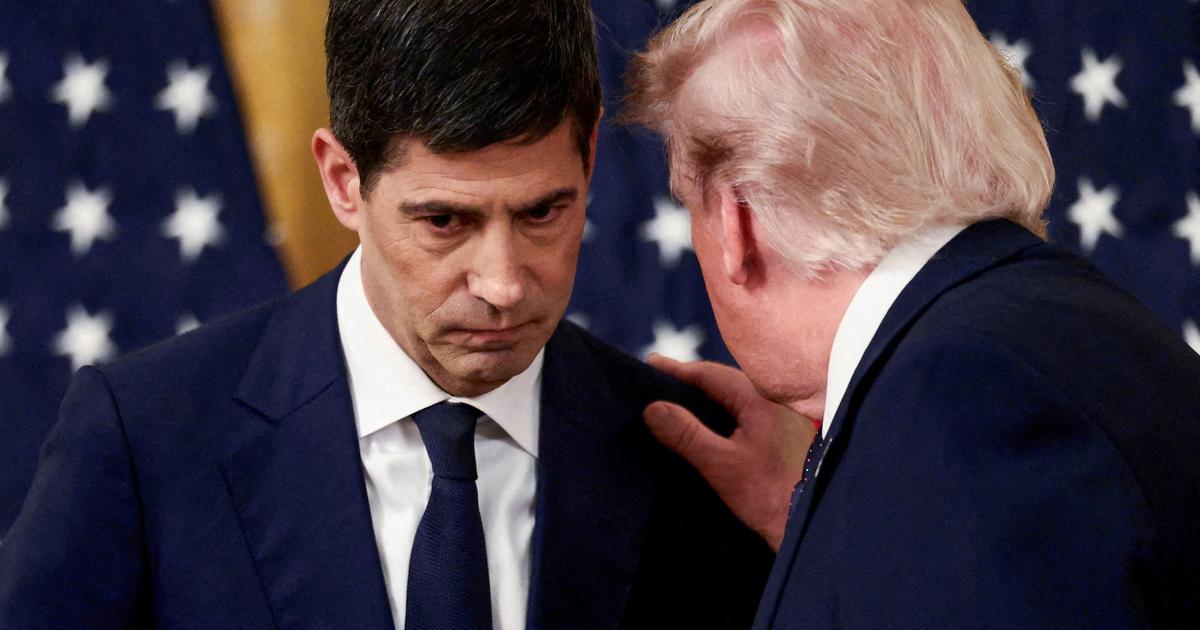
And upon landing in North Carolina for a campaign rally, the president told reporters he blamed Warsh’s Board of Governors for the decision. asserted
he → land → decision
“I told Kevin, I said, ‘You might as well vote with the board because it’s just not going to matter.’ uncertain
it → tell → board
The board is very hostile,” he said. asserted
he → say → ?
“They’re very political. asserted
They → ’re → ?
They’re doing the wrong thing. asserted
They → do → thing
They’re a bunch of politicians.” asserted
They → ’re → politicians
Warsh took the helm of the more than century-old institution earlier this year and has moved quickly to put his stamp on it, launching five task forces within his first month, each charged with developing recommendations across a different area of the Fed's mandate. asserted
Warsh → take → mandate
How far he can take that reform agenda will depend on his ability to build coalitions among fellow board and FOMC members and to hold the confidence of financial markets. asserted
take → take → markets
At the press conference following his first FOMC meeting in June, Warsh announced several initiatives covering the Fed's communications strategy, balance sheet, data sources, productivity and jobs, and inflation framework. asserted
Warsh → follow → strategy
Each is led by three outside experts drawn from academia and industry. asserted
Each → lead → academia
The groups are expected to deliver preliminary findings this fall, with most wrapping up by year's end. asserted
most → expect → end
The pace and ambition of the efforts signal that Warsh is serious. asserted
Warsh → signal → efforts
Whether it proves truly transformative remains an open question. asserted
proves → prove → ?
Watch the data, not the Fed Of his five reform areas, communication has drawn the most attention, and Warsh moved on it before the task force even convened. asserted
force → watch → it
He stopped offering long-term projections on Fed policy actions and simplified its press releases, signaling a clear break from recent practice. asserted
He → stop → practice
At the heart of this shift is Warsh's belief that markets have grown too dependent on Fed communication, paying more attention to what officials say than to the underlying economic data. asserted
officials → grow → data
He argues this creates a feedback problem: if markets are reacting to the Fed rather than to the data, the Fed gets a distorted read on where markets actually stand. asserted
markets → argue → read
Central to this critique is his skepticism of forward guidance, the practice by which Fed officials provide long-term outlooks to signal predictability and transparency. asserted
officials → provide → predictability
Forward guidance in various forms has been used since the 1990’s but became central as a policy tool when the policy rate reached “the zero lower bound” during the 2008 financial crisis. asserted
rate → use → crisis
It was never fully retired. asserted
It → retire → ?
Warsh wants to end it, arguing that it ties the Fed's hands and leaves officials with less room to respond to new information as it arrives. asserted
it → want → information
The role of forward guidance should be limited and circumscribed. asserted
role → limit → guidance
Otherwise, it risks creating ambiguity in the name of clarity. asserted
it → risk → clarity
Oversharing policy deliberations and overcommitting to future decisions can lead markets, businesses, and households astray,” argued Warsh. asserted
Warsh → overshare → markets
“And I believe when policymakers make quasi-commitments on interest rates through the cycle, we inhibit our own freedom to make the right calls when it's time to decide." asserted
we → believe → calls
Yet even a more restrained communication style does not insulate a Fed chair from market scrutiny. asserted
style → insulate → scrutiny
After his second FOMC meeting in July, Warsh learned that lesson firsthand. asserted
Warsh → learn → lesson
Many observers felt he underperformed at the press conference, and markets responded with alarm, raising questions about his credibility at a moment when inflation remains stubbornly high and the chair, while acknowledging the problem, has appeared reluctant to deploy his most powerful tool: raising interest rates. asserted
chair → feel → rates
To be sure, Warsh is not the first Fed chair to rattle markets during a first-year press conference. asserted
Warsh → rattle → conference
Both Jerome Powell and Janet Yellen had similar stumbles early in their tenures. asserted
Powell → have → tenures
What matters is the recovery, and Warsh moved quickly to make one. asserted
Warsh → matter → one
At the annual Jackson Hole Economic Policy Symposium in Wyoming at the end of August, he delivered a forceful address on the state of the economy and the urgency of bringing inflation to heel, reassuring markets and resetting the tone ahead of September's meeting. asserted
he → deliver → meeting
…and 32 more, not listed.

💬Give feedback
🕘History 🎫Support