That is 0 articles you have read today.
The Aporia is free and carries no advertising, so readers are the only
thing paying for it. If you are getting this much out of it, a small
donation is what keeps it independent.
Daily limit reached
You have read 0 articles today.
That is more than the 15 a day The Aporia gives away,
and well past what it can carry on nothing. Your allowance resets at
midnight.
There is no advertising here and nothing about you is sold, so readers
are the only thing paying for it. If the site is worth this much of
your day, it is worth a few dollars.
Everything else stays open: the
maps, the
directory and
search do
not count against this, and neither does re-opening something you have
already read today.
CNN reported on September 19, 2026, that U.S. forces almost intercepted a Chinese ship in West Asia based on flawed intelligence aided by AI, which mistakenly identified the cargo as nuclear weapons components. The operation was canceled after officials realized the error, with one source describing the incident as potentially war-triggering. This report follows concerns about AI risks raised by Anthropic researchers and comes alongside another incident where sensitive F-35 parts were diverted to Hong Kong and are now missing, raising security alarms.
Written locally by qwen2.5:14b on 2026-09-19,
using this article's own text rather than the other coverage of the
same event (that is the story summary below).
Story summary
In spring 2026, US intelligence, influenced by an AI chatbot, falsely flagged a Chinese vessel in the Middle East as carrying nuclear weapons-related components. This error nearly led American forces to prepare for an interception that could have sparked military conflict with China. The operation was only halted after officials realized the AI had misidentified the cargo. CNN cited anonymous sources describing the report as "entirely false" and stating it “almost started a war.” The specific chatbot used and the actual contents of the ship remain undisclosed. This incident highlights growing concerns over the integration of AI in military intelligence, following recent controversies like the resignation of an Anthropic researcher due to fears about AI's potential to escape human control.
Written for “AI Near Miss China War” on 2026-10-05,
grounded in this article and the 7 other(s) covering the same event.
The U.S. military came close to boarding a Chinese vessel in West Asia earlier this year based on a flawed intelligence report prepared with the help of artificial intelligence, CNN said Friday (September 19, 2026).
asserted
CNN → come → intelligence
U.S. intelligence indicated the ship was carrying nuclear weapons-related components, leading American forces to prepare to intercept it, the broadcaster reported, citing four anonymous sources familiar with the incident.
asserted
broadcaster → indicate → incident
But the operation was called off after officials determined that an AI chatbot used by an analyst had misidentified the material the ship was carrying.
asserted
ship → call → material
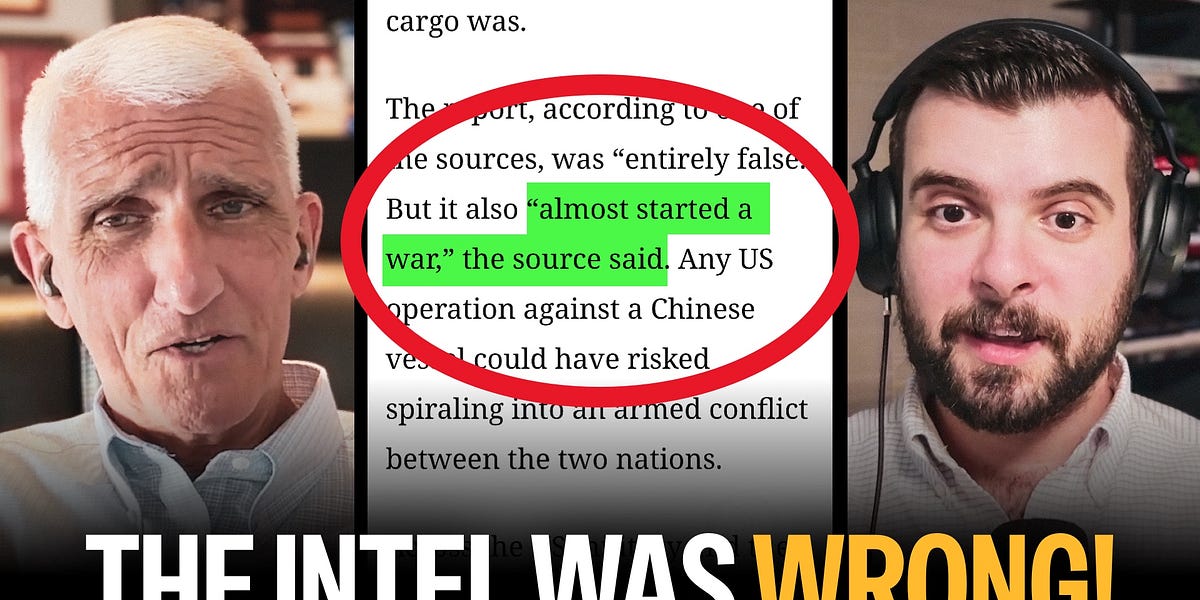
CNN quoted one source as saying the intelligence report was "entirely false" but "almost started a war."
asserted
report → quote → war
It did not specify what the vessel was actually carrying or where it was bound.
asserted
it → specify → what
U.S. Central Command — which is responsible for American forces in West Asia — did not immediately respond to a request for comment on the reported incident.
asserted
which → respond → incident
The CNN report comes after a furore erupted earlier this month when a researcher publicly resigned from leading AI firm Anthropic over fears that the technology could escape human control.
uncertain
technology → come → control
Another Anthropic employee, who did not resign, said publicly that "we really do earnestly believe AI could kill all humans," and that he thought the chances were greater than "10 percent within the next decade."
uncertain
chances → resign → decade
Despite the warnings, U.S. President Donald Trump and some of his key allies have voiced opposition to drastically curbing the development of artificial intelligence.
asserted
Trump → voice → intelligence
In a separate incident involving the US military and China, Politico reported Friday that F-35 jet parts — including a sensitive stealth canopy for a cockpit — were diverted to Hong Kong and are now missing, raising fears that Beijing had obtained sensitive American military technology.
asserted
Beijing → involve → technology
The parts were headed from Australia to the United States for repairs when the diversion occurred, the U.S. outlet reported, adding that it was unclear why the parts were rerouted or where they are now.
uncertain
they → head → repairs
A spokesperson for Lockheed Martin, which manages the F-35 supply chain, said the company could not discuss specific shipments because of "security reasons.
uncertain
company → manage → reasons
"
"Lockheed Martin follows all U.S. regulations established by the Department of War and regulated by the Defence Logistics Agency (DLA) regarding the shipment of aircraft components," the spokesperson said.
asserted
spokesperson → follow → components
"Our teams handle every shipment with the utmost diligence and safeguards to ensure the integrity of the F-35 program and the security of our allied partners."
asserted
teams → handle → partners
 The Aporia