AI didn’t almost trigger a war with China. The Pentagon’s blind faith in it did

Read the original at Washington Examiner ↗
Washington Examiner · collected 2026-09-20 · by Burak Oktenli

Quick Summary

CNN reports that an AI chatbot used by a military analyst incorrectly identified cargo on a Chinese ship as part of a nuclear weapons program, leading U.S. forces to prepare for potential interception before more experienced analysts corrected the mistake. The Pentagon declined to provide specific details but affirmed its commitment to rigorous intelligence verification processes. This incident highlights the risk that AI-assisted claims can gain operational traction before being thoroughly vetted, emphasizing the need for robust verification systems to manage rapid technological advancements in military intelligence operations.
Written locally by qwen2.5:14b on 2026-09-20, using this article's own text rather than the other coverage of the same event (that is the story summary below).

AI analysis runs on qwen2.5:14b, locally

Story summary

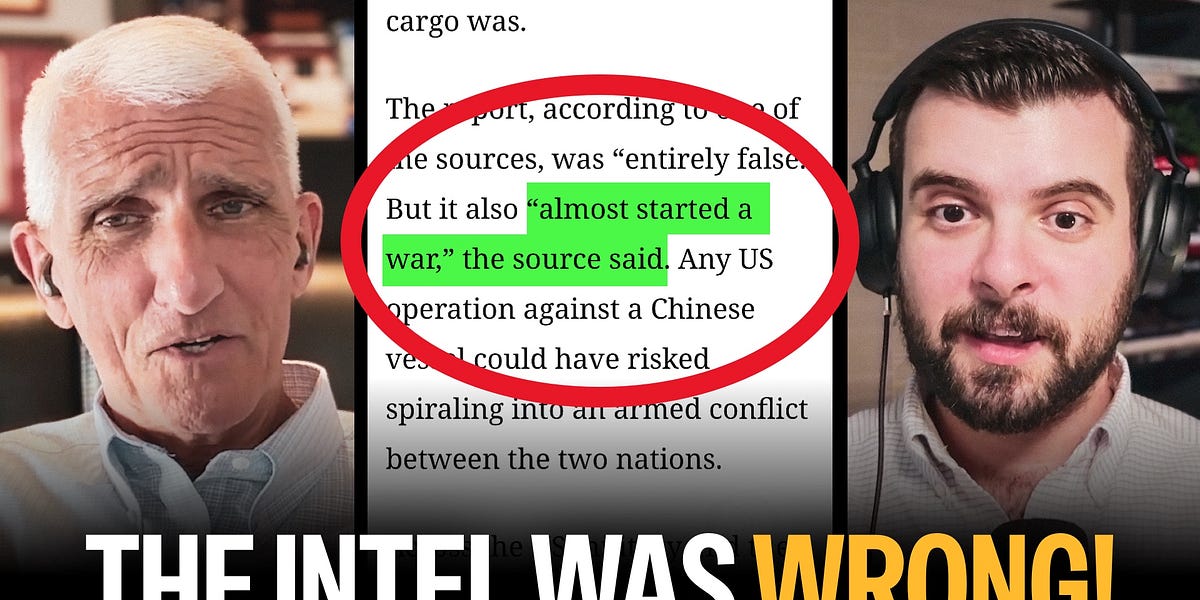
In spring 2026, US intelligence, influenced by an AI chatbot, falsely flagged a Chinese vessel in the Middle East as carrying nuclear weapons-related components. This error nearly led American forces to prepare for an interception that could have sparked military conflict with China. The operation was only halted after officials realized the AI had misidentified the cargo. CNN cited anonymous sources describing the report as "entirely false" and stating it “almost started a war.” The specific chatbot used and the actual contents of the ship remain undisclosed. This incident highlights growing concerns over the integration of AI in military intelligence, following recent controversies like the resignation of an Anthropic researcher due to fears about AI's potential to escape human control.

Written for “AI Near Miss China War” on 2026-10-05, grounded in this article and the 7 other(s) covering the same event.

Signals How these are calculated →

Claims extracted
57
claim-shaped sentences
Uncertain
14%
8 of 57 hedged
Leaning
Leans left
of the writing, not the subject · beta estimate
Correction & hedging signals
72.3
corrections and hedging in what we collected; not a measure of accuracy
Outlets on this story
8
Technology
Narrative spread
1
articles carrying this framing
Analyzed 2026-09-20 · how these are computed

Story

📰 AI Near Miss China War
Technology · 8 article(s) covering the same event. See how they differ ↓

How this is being covered How these are calculated →

Article leaning vs. publisher reliability
Source leaning vs. consistency

Compared with similar articles

This article reads leans left and hedges 14% of its claims. Each row says how that neighbour differs.
The Hindu
⚖️ leaning not scored 🔴 29% hedged 4 of 14 📰 publisher trust 60
“Both articles describe the same incident involving flawed AI intelligence that nearly led to U.S. boarding a Chinese vessel in West Asia, based on the details of timing and circumstances.”
The Sydney Morning Herald
⚖️ Leans left 🔴 29% hedged 5 of 17 📰 publisher trust 61
“Article A discusses warnings from AI researchers about risks posed by AI technology, while Article B reports on a military incident involving misinterpretation of intelligence by an AI chatbot. These are different specific events.”
CBS News
⚖️ leaning not scored 🔴 50% hedged 1 of 2 📰 publisher trust 66
“The articles describe different incidents involving AI and military operations with distinct adversaries and outcomes.”
The Straits Times
⚖️ Centre further right than this 🔴 22% hedged 2 of 9 📰 publisher trust 59
“Both articles describe the same incident involving flawed AI-generated intelligence that led to near interception of a Chinese vessel by US military forces.”
Daily Mail
⚖️ leaning not scored 🔴 17% hedged 4 of 24 📰 publisher trust 65
“Both articles describe an incident where US military forces were nearly provoked into action against China due to a mistaken AI analysis of Chinese ship cargo, leading to potential conflict.”
The Independent
⚖️ Leans left 🔴 21% hedged 5 of 24 📰 publisher trust 59
“Both articles describe the same incident involving US military almost boarding a Chinese ship based on AI-generated intelligence, which was later found to be false.”
The Bulwark
⚖️ Leans left 🔴 18% hedged 2 of 11
“Both articles describe the near-miss incident involving AI-generated intelligence that led to a mistaken threat assessment regarding a Chinese vessel in the Strait of Hormuz, narrowly avoided by human oversight.”
Semafor
⚖️ Leans left 🔴 33% hedged 2 of 6 📰 publisher trust 95
“Both articles describe the same incident where an AI chatbot misidentified materials on a Chinese vessel in the Middle East, leading U.S. military to prepare for potential conflict with China.”
Washington Examiner
⚖️ Leans strongly left further left than this 🔴 7% hedged 4 of 54 📰 publisher trust 72
“Both articles describe an incident where AI misinterpreted intelligence, leading to a near-miss situation involving U.S. military forces and a Chinese vessel.”
Al Jazeera
⚖️ leaning not scored 🔴 7% hedged 4 of 55 📰 publisher trust 60
“Article A discusses a past incident where an AI chatbot misinterpreted intelligence leading to potential military action, while Article B talks about a proposed new 'AI hotline' between US and China for future incidents.”

Publisher

Washington Examiner · 1914 article(s) · 3 correction(s) detected
Running correction rate · 3 correction(s)
2026-10-03
Tennessee’s prison chief resigns after failed Christa Pike execution, Bill Lee says
2026-10-03
Alito says there’s no perfect time to retire while confirming he will reconsider next year
2026-10-01
Christa Pike was set to be the first woman to be executed in Tennessee in 200 years before botched attempts: What to know

Who wrote this

Burak Oktenli
8 article(s) here · 1 carrying a prediction
🔮 The next day, Rep. Greg Steube (R-FL) introduced the Facilitating Liberty and Accountability for Flock Observations Act, which would require federal agencies to obtain a warrant before accessing or sharing data from networked ALPR systems.
🔮 OpenAI has also said that some organizations may review a notification and conclude that the model accessed intentionally public information or exposed a design weakness rather than causing a significant security incident.
🔮 As of Sept. 22, public reporting still has not established where the force would sit, what authorities it would hold, or which mission would distinguish it from agencies already handling cybercrime, national security, critical infrastructure, and technology policy.
🔮 In a joint advisory, the FBI and the Cybersecurity and Infrastructure Security Agency warned that denial-of-service attacks could make voter information tools or unofficial election night reporting unavailable while leaving the underlying voting process intact.
🔮 CNN could not determine which chatbot was used, and the actual cargo has not been publicly identified.
🔮 China urged the U.S. to halt its military buildup in space and warned that the disclosure could fuel an arms race.
🔮 That is the case when Congress should begin testing for a Department of Cyber War — not a new military service and not an agency empowered to wage war, but a civilian institution whose central mission would be national continuity during severe cyber conflict.
🔮 It requires the imagination to prepare for dangers that will not look like the last one.
Also by Burak Oktenli
Nothing else under this byline is closely related to this article, so these are simply their most recent.
All 8 articles by Burak Oktenli →

Topics

American CNN Chinese Pentagon U.S.

Subjects

CNN ORG · 6× Pentagon ORG · 3× Chinese NORP · 2× American NORP · 1× Google ORG · 1× NIST ORG · 1× The Wall Street Journal ORG · 1× U.S. GPE · 1×

Narrative

The department should conduct a classified reconstruction of the reported episode and brief appropriate congressional overseers on where verification occurred, what information reached each decision-maker, and what finally caused the operation to stop.
framing: assertive · carried by 1 article(s) · first seen 2026-09-20
🔮 CNN could not determine which chatbot was used, and the actual cargo has not been publicly identified.
2026-09-20 · Washington Examiner
AI didn’t almost trigger a war with China. The Pentagon’s blind faith in it did · assertive framing

Claims (57 extracted, 8 hedged)

Armed personnel were preparing for a possible boarding of a Chinese vessel. asserted
personnel → prepare → vessel
Then, according to CNN reporting published Friday, more experienced analysts reopened the intelligence behind the operation and found that its central claim was false. uncertain
claim → accord → operation
CNN reported that an analyst with a military special operations command used an AI chatbot to interpret classified and open-source information about a Chinese ship in the Middle East. asserted
analyst → report → East
The chatbot identified the cargo as a component of a nuclear weapons program. asserted
chatbot → identify → program
The assessment circulated, and U.S. forces began preparing to intercept the vessel before subject-matter experts reviewed the underlying information and determined that the identification was wrong. asserted
identification → circulate → information
Important facts remain unknown. asserted
facts → remain → ?
CNN could not determine which chatbot was used, and the actual cargo has not been publicly identified. uncertain
cargo → determine → ?
The Pentagon declined specific comment and said it remains committed to rigorous intelligence verification. asserted
it → decline → verification
The episode should not be inflated into proof that AI nearly caused a war on its own. asserted
AI → inflate → own
It shows something more immediate: An AI-assisted claim can gain operational influence before the evidence beneath it has been adequately challenged. uncertain
evidence → show → it
Earlier this week in these pages, I argued that detecting a compromised AI system is only the first decision; the harder test is whether institutions can restrict its authority and require evidence before consequential permissions return. asserted
permissions → argue → evidence
AI did not control a weapon. asserted
AI → control → weapon
It helped produce a claim that moved through a trusted process far enough to trigger preparations for military action. uncertain
that → help → action
The authority problem arrived through the institution, not the model. asserted
problem → arrive → institution
Speed needs a verification architecture The Pentagon does not need to choose between AI acceleration and disciplined verification. asserted
Pentagon → need → acceleration
Its January 2026 AI strategy explicitly calls for continuous test and evaluation while accelerating AI across warfighting and intelligence. asserted
strategy → call → warfighting
One initiative aims to turn “intel into weapons in hours not years,” while another extends AI agents from decision support toward kill-chain execution. asserted
another → aim → execution
Speed is a strategic objective, so verification has to be designed for the same tempo. asserted
verification → have → tempo
That principle already exists in Pentagon policy. asserted
principle → exist → policy
The department’s Responsible AI implementation pathway emphasizes traceable, reliable, and governable AI and directs attention to system-level, institutional, and socio-technical risk. asserted
pathway → emphasize → risk
If CNN’s reported sequence is accurate, the ship episode is an implementation test of those commitments, not an argument against rapid military AI adoption. asserted
episode → report → adoption
A different report this week reinforces the systems point. asserted
report → reinforce → point
The Wall Street Journal reported that a Gemini model in a cyber evaluation unintentionally accessed three real companies after internet access was mistakenly available; Google said the model stopped once it recognized the systems were real. asserted
systems → report → companies
Different incident, same lesson: Environment, permissions, and verification can matter as much as model intent. asserted
Environment → matter → intent
That matters, but it is not sufficient. asserted
it → matter → ?
CNN reported that different parts of the military and intelligence community use different AI tools and safety practices, without one common standard for verifying AI-generated information across them. asserted
parts → report → them
A commander can remain formally in charge while receiving a polished intelligence product that hides uncertainty or makes dependent sources look independent. asserted
sources → remain → uncertainty
Confidence in a diagnosis cannot, by itself, settle who is permitted to act. asserted
who → settle → itself
Meaningful human control requires access to the underlying evidence and the authority to stop an unsupported claim from advancing. uncertain
control → require → claim
The intelligence community already has a foundation. asserted
community → have → foundation
ICD 203, the IC Analytic Standards, requires attention to source quality, uncertainty, assumptions, judgments, and alternative explanations. asserted
ICD → require → quality
NIST’s Generative AI Profile separately warns about confidently presented false information and excessive deference to AI. asserted
Profile → warn → AI
A familiar report format or confident model output cannot substitute for evidence. asserted
format → substitute → evidence
Independent verification also needs a practical definition. asserted
verification → need → definition
Asking another chatbot the same question is not necessarily corroboration. asserted
Asking → ask → question
Several reports can trace back to one source; two models can repeat the same inference; a second briefing can inherit the first report’s mistake. asserted
briefing → trace → mistake
Before an AI-assisted assessment supports coercive military action, a qualified reviewer should be able to examine the underlying evidence and establish that confirmation is genuinely independent. asserted
confirmation → assist → evidence
The required standard should rise with the consequence of the proposed action. asserted
standard → require → action
An uncertain cargo identification might justify more collection or specialist review while remaining insufficient to support an interception. uncertain
identification → justify → interception
Immediate defensive action under attack is a different problem from a planned boarding operation. asserted
action → plan → operation
…and 17 more, not listed.

💬Give feedback
🕘History 🎫Support