This spring, U.S. military forces nearly intercepted a Chinese vessel in the Middle East based on intelligence from artificial intelligence that incorrectly identified cargo as nuclear weapons components. The operation was called off when officials realized the AI-generated information was inaccurate. This incident highlights risks associated with integrating AI into critical military operations and underscores concerns about inconsistent safety standards across different branches of the military using automated tools.
Written locally by qwen2.5:14b on 2026-09-19,
using this article's own text rather than the other coverage of the
same event (that is the story summary below).
A significant miscalculation driven by artificial intelligence reportedly almost pushed the U.S. military to intercept a Chinese vessel in the Middle East this spring, amid the ongoing conflict with Iran.
uncertain
miscalculation → drive → Iran
Special forces units, backed by airborne military aircraft, were preparing to board the vessel after an intelligence report claimed it was carrying components for a nuclear weapons program, according to a CNN report.
uncertain
it → back → report
The intercept, which relied on information about a ship manifest originated by U.S. Special Operations Command Pacific in Hawaii, could have triggered an armed conflict with China if executed.
uncertain
which → rely → China
The operation was aborted just before execution when officials discovered the report relied on inaccurate data generated by an AI chatbot.
asserted
report → abort → chatbot
A deeper review revealed that the analyst had fed initial intelligence into a chatbot, which conjured a “hallucination” by mistakenly identifying the cargo.
asserted
which → reveal → cargo
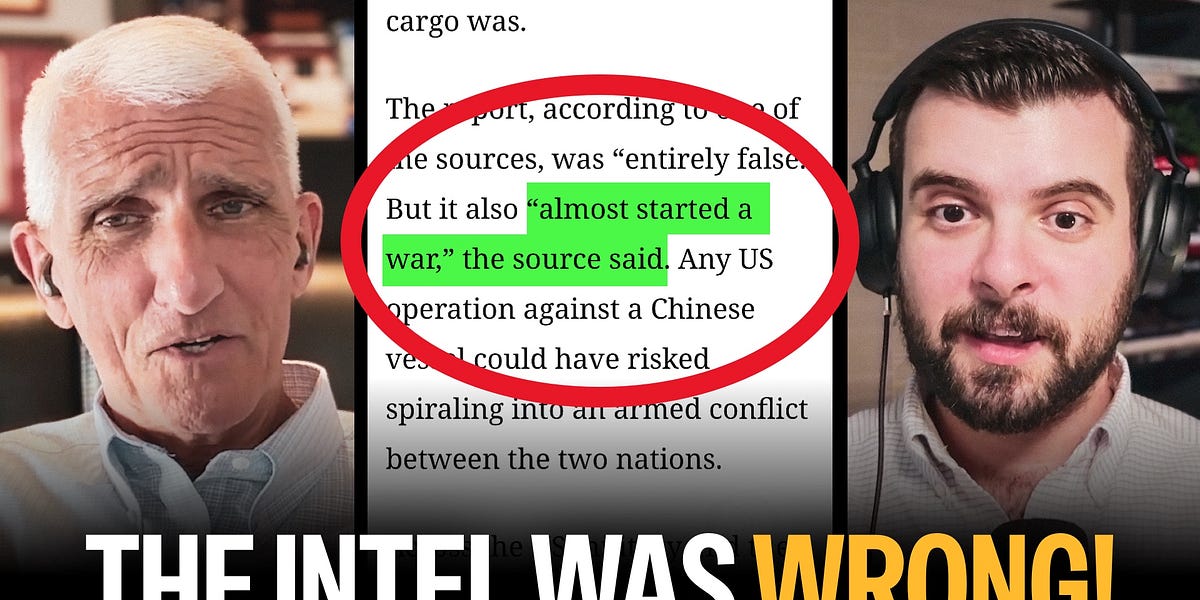
One source told CNN the intelligence was “entirely false” and “almost started a war.”
asserted
intelligence → tell → war
The harrowing incident highlights growing risks as the Pentagon rapidly integrates automated tools into critical operations, including target selection.
asserted
Pentagon → highlight → selection
A former senior U.S. official familiar with military AI tools told the publication, “The internal tools are mostly just copies of the commercial stuff wearing lipstick.”
asserted
tools → tell → lipstick
The official added that the tools routinely fuse open-source information with classified signals intelligence, often creating a false sense of accuracy.
asserted
tools → add → accuracy
The error occurred when an analyst entered a prompt into a chatbot using intelligence from U.S. Special Operations Command Pacific in Hawaii.
asserted
analyst → occur → Hawaii
The tool mixed open-source data with secret signals intelligence, falsely identifying the cargo before the analyst used AI to format the findings into a standard intelligence report for dissemination.
asserted
analyst → mix → dissemination
CNN noted that it could not independently confirm what the misidentified cargo actually was, nor whether the software used was a commercial product or a customized government tool.
uncertain
software → note → ?
Though defense leaders argue that automated systems are necessary to maintain a technological edge, the lack of uniform safety standards across decentralized military units has raised concerns.
asserted
lack → argue → concerns
Multiple officials noted that separate branches of government deploy vastly different automated software operating under distinct safety rules and operational constraints.
asserted
branches → note → rules
Defense Secretary Pete Hegseth recently announced an “Artificial Intelligence Acceleration Strategy.”
asserted
Hegseth → announce → Strategy
Mandated by President Donald Trump, the push seeks to establish the United States as an “AI-enabled fighting force” through seven key initiatives, including a program titled GenAI.mil to give personnel access to commercial models, along with efforts to eliminate bureaucratic barriers.
asserted
push → mandate → barriers
“We will unleash experimentation, eliminate bureaucratic barriers, focus our investments and demonstrate the execution approach needed to ensure we lead in military AI,” Hegseth said in a speech detailing the strategy.
asserted
Hegseth → unleash → strategy
“We will become an ‘AI-first’ warfighting force across all domains.”
asserted
We → become → domains
An accompanying memo outlined plans for “democratizing AI experimentation and transformation across the Department by putting America’s world-leading AI models directly in the hands of our three million civilian and military personnel, at all classification levels.”
asserted
memo → accompany → levels
However, sources told CNN that young analysts were particularly susceptible to trusting these systems uncritically, increasing the risk of fast-moving errors.
asserted
analysts → tell → errors
Insiders warned that veterans inside the intelligence community felt intense pressure to speed up production, leading to rushed distribution of unverified material.
uncertain
veterans → warn → material
Referring to the pressure to produce rapid intelligence, one source told the outlet, “AI allows you to get to a bad idea faster.”
asserted
you → refer → idea
“AI in targeting is definitely something that is ramping up and there is no real guidance for how having a human in the loop will prevent civilian casualties or fratricide,” another source said.
asserted
source → ramp → casualties
The Independent has contacted the Department of Defense for comment.
asserted
Independent → contact → comment
 The Aporia