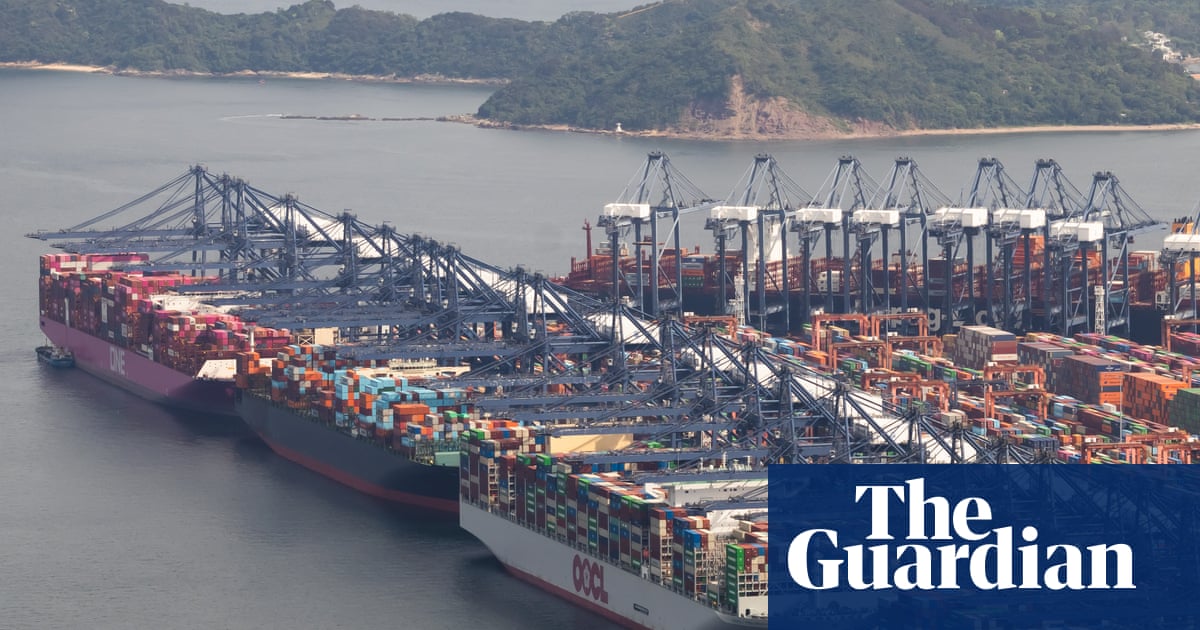
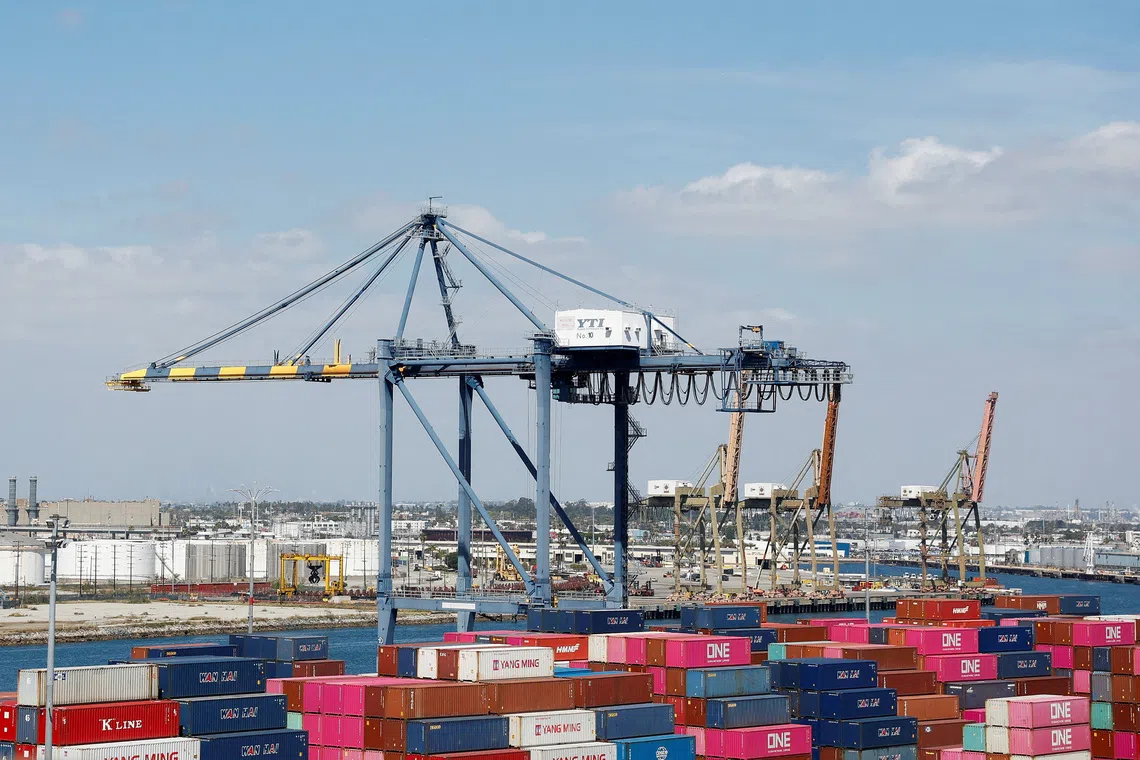
Since China offered a truce in the trade war last October following its threat to deprive the United States of rare-earth magnets, the Trump administration has been happy to stop escalating.
asserted
administration → offer → magnets
After all, imports from China have been falling, down by 40% in the year to June, compared with the same period in 2024.
asserted
imports → fall → 2024
But the US hasn’t won this battle – and there’s strong evidence to show it’s too chicken to really try.
asserted
it → win → battle
Last week the White House was forced to accept that not buying Chinese stuff from China is not equivalent to not buying Chinese stuff.
asserted
buying → force → stuff
While China’s share of US imports has fallen pretty dramatically, its share of the total value added in US imports has not.
asserted
share → fall → imports
Trade adviser Peter Navarro was in a huff on Thursday, furious about Chinese motors bolted on to recliners imported from Vietnam.
asserted
Navarro → bolt → Vietnam
He cited an analysis by the commerce department that concluded $67bn of goods from China were transhipped through Mexico, India and Vietnam in 2025.
asserted
67bn → cite → 2025
The White House released a report, The Great Transhipment Scam, which lamented that “when power supplies, control panels, aluminum sheet, valves, plastics, or furniture components are rerouted from China through Mexico, Vietnam, Malaysia, Poland, or the UAE, they destroy or reduce jobs in Milwaukee, Cleveland, Toledo, Hickory, Phoenix, Youngstown, and dozens of other American manufacturing communities”.
asserted
they → release → communities
It unveiled a new tool to engage in a globe-spanning game of Whac-A-Mole: an AI-powered border “detective” that “never sleeps, never tires, and never forgets” to scan every bill of lading and shipping manifest, ID rerouted stuff, and punish the perpetrators.
asserted
that → unveil → perpetrators
It goes without saying that the new detective will not restore factory jobs to Toledo, Hickory or Phoenix.
asserted
detective → go → Toledo
Despite strenuous efforts to boost manufacturing employment over two and a half administrations spanning 10 years, it remains roughly in the same place as when Trump first came into office.
asserted
Trump → boost → office
Cracking down on rerouted imports won’t dent the US import bill either.
asserted
Cracking → crack → bill
Despite Trump’s many tariffs, it is running higher than in 2024.
asserted
it → run → 2024
And it looks unlikely to do much harm to China, whose exports have kept growing despite US efforts to squeeze them out.
asserted
exports → look → them
But what is most perplexing about the White House’s resort to AI sleuthing, though, is that the US possesses a more straightforward tool to achieve its aims, one which directly addresses a critical driver of China’s massive exports, which are not only swamping the US but also threatening industrial development around the world: the undervalued Chinese yuan.
asserted
which → possess → world
Dealing with its undervaluation can do much to rein in China’s overwhelming exports.
asserted
Dealing → deal → exports
Some economists will complain about this take.
asserted
economists → complain → take
There are fundamental reasons for China’s huge trade surplus, mainly its depressed household consumption, which means it needs foreign consumers to support economic growth.
asserted
consumers → be → growth
There are also fundamental reasons for the US trade deficit: notably, its extraordinarily large budget deficit, which must be funded by savings from abroad (read China).
asserted
which → be → China
If Beijing were to push up the exchange rate by fiat but did nothing else, it would slow China’s growth and reduce import prices, slow inflation (perhaps even causing deflation) and thus depress the real, after-inflation exchange rate.
asserted
it → push → rate
If, by contrast, the underlying ills were addressed, the yuan would appreciate naturally.
asserted
yuan → underlie → contrast
The exchange rate depends on those broad economic dynamics, sure.
asserted
rate → depend → dynamics
But the call to wait for Beijing to support household spending, say by raising meager pension benefits or some such, has the taste of those old exhortations to wait for China’s multiparty democracy to flourish.
asserted
democracy → wait → exhortations
On the American side of the ledger, the last time the United States seriously tried to curb its budget deficit was in the 20th century.
asserted
States → try → century
Pressure is needed for these things to happen.
asserted
things → need → ?
And exchange rate intervention could provide it.
uncertain
intervention → provide → it
It’s hard to overstate how Chinese exports weigh on the economies of the rest of the world.
asserted
exports → ’ → world
China’s share of global manufacturing exports has risen from 3% to 20% since 1995.
asserted
share → rise → 1995
It accounts for over half the global exports of hundreds of manufacturing products.
asserted
It → account → products
As Gene Frieda from the London School of Economics points out: “The barrier to progress is not policy design; it is policy preference.”
asserted
it → point → progress
This preference is to ensure the world’s dependence on China’s products, which it achieves via massive intervention to depress the value of the yuan.
asserted
it → ensure → yuan
The Plaza accord that weakened the dollar in the 1980s helped reduce the US trade deficit with Japan.
asserted
that → weaken → Japan
China’s growing external surplus contracted sharply as the yuan appreciated following the global financial crisis.
asserted
yuan → grow → crisis
By contrast, the slide in China’s currency has underpinned a rising external surplus since 2023.
asserted
slide → underpin → 2023
As Brad Setser of the Council on Foreign Relations points out, history suggests currency adjustment would drive the economic realignment needed to reduce China’s overwhelming exports.
uncertain
adjustment → point → exports
Revaluing the yuan would probably induce other policy changes to plug the world’s dramatic trade imbalances.
asserted
Revaluing → revalue → imbalances
Slowing export growth would slow the Chinese economy, tempting Beijing to stimulate domestic consumption to compensate.
asserted
growth → slow → consumption
A smaller Chinese trade surplus would shrink the pool of foreign funding for the US budget deficit, perhaps even encouraging fiscal restraint in Washington.
asserted
surplus → shrink → Washington
Ideally, the US would coordinate efforts to revalue the yuan with countries in Europe and elsewhere that have also been hammered by Chinese exports.
asserted
that → coordinate → exports
Pressure on Beijing would ideally be part of a plan to revalue other depressed east Asian currencies, like the Korean won, the Taiwanese dollar and the Japanese yen, to reduce competitive pressure on China.
asserted
Pressure → revalue → China
…and 7 more, not listed.
 The Aporia