US threat of ‘economic D-Day’ for Iran tests Trump’s China detente

Read the original at Al Jazeera ↗
Cite

Power, J. (2026, August 24). US threat of ‘economic D-Day’ for Iran tests Trump’s China detente. Al Jazeera. https://www.aljazeera.com/economy/2026/8/24/us-threat-of-economic-d-day-for-iran-tests-trumps-china-detente?traffic_source=rss

Dated when The Aporia collected the article, usually within hours of publication. Check the original for its exact date and byline.

Al Jazeera · collected 2026-08-24 · by John Power

Quick Summary

US President Donald Trump's administration has threatened to impose severe economic sanctions on Iran, aiming to sever all trade lifelines supporting the country. These sanctions, set to be announced on Monday, could put US-China relations at risk due to China's significant trade with Iran, including a $9.96bn two-way trade in 2025 and $31.2bn in Iranian oil shipments. Analysts doubt that the Trump administration will follow through on its rhetoric, citing concerns about potential blowback from Beijing. The sanctions regime would be the toughest ever seen, with some experts warning it could indicate a prolonged economic war against Iran.
Written locally by qwen2.5:14b on 2026-08-24, using this article's own text rather than the other coverage of the same event (that is the story summary below).

AI analysis runs on qwen2.5:14b, locally

Story summary

Here is a summary of the news story:

August 24, 2026: The United States has announced new economic sanctions against Iran, which Tehran has vowed to resist. US Treasury Secretary Scott Bessent warned that the sanctions will be "the single greatest financial offensive ever marshaled against an adversary," and that any country's support for these measures will be seen as an "act of war." Iranian officials have responded by vowing to shut down all oil exports from the Gulf if the economic war continues. Meanwhile, a tanker was struck by a projectile off the coast of Oman in the Strait of Hormuz, which has been a focal point of tensions between Iran and the US.

Iran's economy is already under significant pressure due to existing sanctions, and the new measures are likely to exacerbate this situation. The rial has hit a record low against the dollar, and the country's oil exports have been affected by the conflict.

The US strategy appears to be an effort to tighten secondary sanctions, targeting international networks that facilitate money laundering for Iran rather than just adding restrictions on the Iranian economy itself. However, it remains to be seen how effective these measures will be in bringing pressure on Tehran to capitulate.

Key figures involved include

The conflict between the US and Iran has been ongoing for nearly six months, with both sides trading threats and sanctions. The situation remains highly tense, with significant implications for global energy markets and international relations.

Written for “US Iran Sanctions Escalation” on 2026-10-17, grounded in this article and the 41 other(s) covering the same event.

Story

📰 US Iran Sanctions Escalation
Politics · 42 article(s) covering the same event. Compare every outlet's account →

Compared with similar articles

This article reads unscored and hedges 17% of its claims. Each row says how that neighbour differs.
BBC News
⚖️ leaning not scored 🔴 8% hedged 2 of 25 📰 publisher trust 69
“Both articles describe Donald Trump's threat to launch tougher economic measures against Iran, mentioning similar details such as a ceasefire expiration and potential implications for China.”
CBC News
⚖️ Leans strongly right 🔴 11% hedged 2 of 19 📰 publisher trust 60
“Both articles report on Trump's threat to launch an economic operation against Iran, with similar language and details”
CBC News
⚖️ Leans strongly left 🔴 12% hedged 3 of 25 📰 publisher trust 60
“Both articles mention Trump's threat of economic sanctions against Iran, with similar language and context.”
CBS News
⚖️ Leans right 🔴 12% hedged 16 of 136 📰 publisher trust 66
“Both articles report on the announcement of new sanctions against Iran by the US Treasury Secretary, made on August 24, 2026.”
The Hindu
⚖️ Centre 🔴 6% hedged 2 of 33 📰 publisher trust 60
“Both articles mention US threats against Iran, including a 'economic D-Day', on the exact same date and time”
Morning news brief same event · 100%
NPR
⚖️ Centre 🔴 0% hedged 0 of 2 📰 publisher trust 60
“Both articles report on the same day, at approximately the same time, and describe similar details about US economic pressure on Iran, including threats of 'seismic' retaliation from Iran and potential retaliatory tariffs from Canada.”
The Straits Times
⚖️ Leans left 🔴 6% hedged 1 of 18 📰 publisher trust 60
“Both articles report on the US declaration of an economic pressure campaign against Iran, with identical dates and times.”
CBC News
⚖️ leaning not scored 🔴 5% hedged 1 of 20 📰 publisher trust 60
“Both articles describe the Trump administration's expansion of US sanctions on Iran, targeting countries with business ties to Tehran, and mention the 'economic D-Day' term.”
Mother Jones
⚖️ Leans strongly left 🔴 6% hedged 1 of 17 📰 publisher trust 95
“Both articles describe the same announcement by Trump's administration of all-encompassing sanctions on countries and institutions that conduct business with Iran, with the same language and metaphor used.”
Los Angeles Times
⚖️ leaning not scored 🔴 18% hedged 9 of 50 📰 publisher trust 95
“Both articles describe the US announcement of 'D-Day' sanctions on Iran, with similar language and details about the impact on China and Iran's economy.”
How this article was measured signals, leaning charts, publisher record, byline, topics and claims

Signals How these are calculated →

Claims extracted
35
sentences that state something as happening or true
Uncertain
17%
6 of 35 hedged ("reportedly", "may", "according to")
Leaning
withheld
no quote in the article backed the model's score
Publisher signals
60/100
Al Jazeera's corrections and hedging, across everything collected from it. Not a measure of accuracy.
Outlets on this story
42
Politics
Same framing elsewhere
1
articles that frame the event the way this one does
Analyzed 2026-08-24 · how these are computed

How this is being covered How these are calculated →

Article leaning vs. publisher reliability
Source leaning vs. consistency

Publisher

Al Jazeera · 3207 article(s) · 2 correction(s) detected
Running correction rate · 2 correction(s)

Who wrote this

John Power
24 article(s) here · 1 carrying a prediction
🔮 Who will be attending the meetings?
🔮 Prosecutors disclosed the alleged flight booking to a judge on October 8 in a motion seeking to seal the criminal complaint against Alfozan, arguing he had the “means – and will have an incentive – to flee” the United States.
🔮 China’s economy is expected to grow 4.5 percent in 2026, according to the International Monetary Fund’s latest growth outlook, which would be the slowest expansion since 1990, excluding the outlier years of the COVID pandemic.
2026-10-14 · assertive framing · China’s exports surge amid AI-driven demand
🔮 Despite the heady expansion, Singapore’s central bank left its monetary policy settings untouched in its latest announcement on Wednesday, citing expectations that AI demand will cool in 2027. The Monetary Authority of Singapore, which manages monetary policy through currency exchange rates rather than interest rates, said it expected core inflation to average 1.5–2.0 percent in 2026. “Global AI-driven growth is expected to ease in the latter half of next year from its current exceptional pace, while higher interest rates, amid elevated inflation in the advanced economies, would weigh on final demand growth,” the central bank said in a statement.
🔮 The economy of the Middle East and Central Asia is set to shrink in 2026 amid the fallout of the US-Israel war on Iran, with countries such as Kuwait and Qatar facing double-digit contractions, according to the International Monetary Fund (IMF).
🔮 After three years of Israel’s multi-front war in the Middle East, it would be no surprise if this month’s Knesset elections were taking place against the backdrop of an economy in dire straits.
🔮 In an open letter published in tandem with their social media posts, Balesni, Korbak and Wang expressed concerns that their dismissal would make their former colleagues “afraid to speak and operate in ways that, until last week, were an integral part of working at OpenAI”.
🔮 South Korea’s Ministry of Finance and Economy has forecast real GDP to grow 3 percent in 2026, which would be the strongest performance since 2017, excluding the outlier years of the COVID-19 pandemic. The AI boom has also propelled the country’s stock market into the ranks of the best-performing bourses this year, with the benchmark Kospi rising nearly 60 percent.
2026-10-01 · assertive framing · South Korea’s exports hit record high on AI boom
🔮 The launch comes after Meta’s release of AI assistant Muse earlier this month, and Google’s unveiling of Gemini Spark in May.
🔮 “The Middle East conflict remains unresolved, and there are scenarios where inflation is higher and activity lower than forecast,” it said.
2026-09-29 · assertive framing · Australia raises interest rates to 15-year high
Also by John Power
Nothing else under this byline is closely related to this article, so these are simply their most recent.
All 24 articles by John Power →

Topics

China Iran Tehran the Trump administration the Trump administration’s

Subjects

China GPE · 12× Iran GPE · 10× Washington GPE · 4× the Trump administration ORG · 4× Beijing GPE · 3× Iranian NORP · 3× Tehran GPE · 3× the Trump administration’s ORG · 3× the United States GPE · 3× Erickson PERSON · 2×

Narrative

- list 2 of 4Raphinha and Lopez score braces as Barcelona trounce Elche 5-0 - list 3 of 4Tokayev allies head for landslide victory in Kazakhstan elections - list 4 of 4Large forest fire burns close to residential areas in Ankara That would be a risky proposition for Washington due to the likelihood of severe blowback from Beijing – so much so that some analysts doubt that the Trump administration’s measures, set to be announced on Monday, will match its rhetoric in scope or severity. While the Trump administration has yet to provide details about what it has dubbed “economic D-Day”, US officials have made it clear that Iran’s trade partners are in their sights.
framing: assertive · carried by 1 article(s) · first seen 2026-08-24
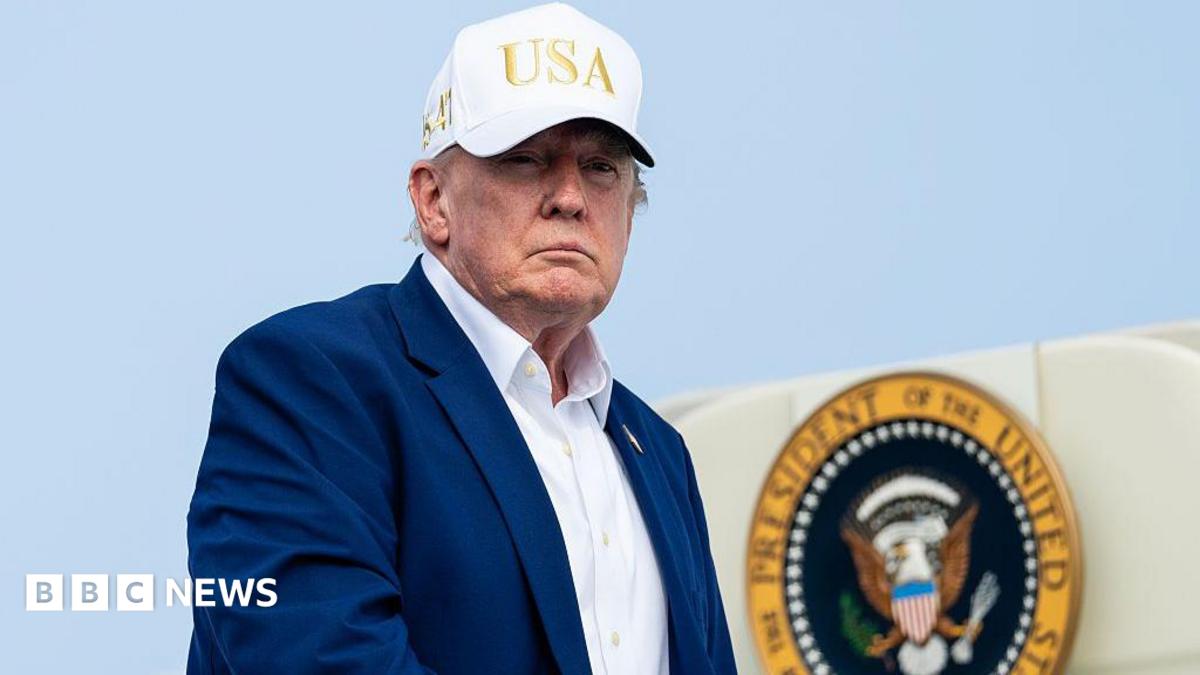
🔮 US President Donald Trump’s administration has said it aims to sever “every” economic lifeline sustaining Iran in what officials have warned will be the toughest sanctions campaign ever seen.
2026-08-24 · Al Jazeera
US threat of ‘economic D-Day’ for Iran tests Trump’s China detente · assertive framing

Claims (35 extracted, 6 hedged)

US President Donald Trump’s administration has said it aims to sever “every” economic lifeline sustaining Iran in what officials have warned will be the toughest sanctions campaign ever seen. asserted
officials → say → Iran
The threat, if followed through, would mean putting China, Iran’s biggest trade partner, squarely in the crosshairs of US sanctions. asserted
threat → follow → sanctions
Donald Trump’s new sanctions against Iran work? asserted
sanctions → work → Iran
- list 2 of 4Raphinha and Lopez score braces as Barcelona trounce Elche 5-0 - list 3 of 4Tokayev allies head for landslide victory in Kazakhstan elections - list 4 of 4Large forest fire burns close to residential areas in Ankara That would be a risky proposition for Washington due to the likelihood of severe blowback from Beijing – so much so that some analysts doubt that the Trump administration’s measures, set to be announced on Monday, will match its rhetoric in scope or severity. While the Trump administration has yet to provide details about what it has dubbed “economic D-Day”, US officials have made it clear that Iran’s trade partners are in their sights. asserted
partners → score → sights
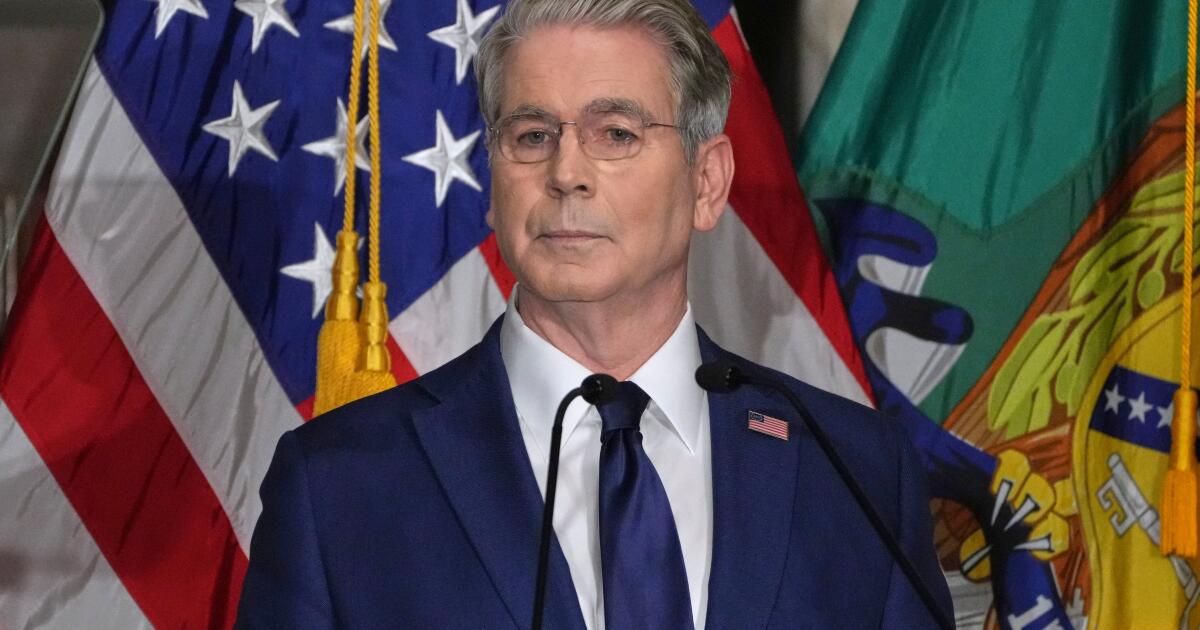
In an op-ed in the Financial Times on Sunday, US Treasury Secretary Scott Bessent warned that countries fearful of breaking ties with Iran should not “discount the cost of testing Washington”. asserted
countries → warn → Washington
“The president has created the conditions to leverage every agency, every authority and action many assumed we would never summon,” said Bessent, who is scheduled to unveil the sanctions in a news conference at 17:00 GMT. asserted
who → create → GMT
Brett Erickson, a sanctions expert and managing principal of Obsidian Risk Advisors, said the Trump administration’s willingness to target China will be an indication of its resolve to mount a sustained economic offensive against Tehran. asserted
willingness → manage → Tehran
“That is not a relationship you degrade lightly. asserted
you → degrade → ?
If the United States decides to really bring China into the ring, it will be a serious indication that the United States plans to wage this economic war for a prolonged period of time,” Erickson told Al Jazeera. asserted
Erickson → decide → Jazeera
“If they do not, it will be a tacit admission from the Trump administration that they do not believe economic hardship can seriously bring about a change in the Iranian position,” Erickson said. asserted
Erickson → do → position
Any US pressure campaign that excludes China would be necessarily limited in scope given the outsized importance of Beijing and Tehran’s economic ties. asserted
that → exclude → Beijing
China reported $9.96bn in two-way trade with Iran in 2025, a figure that does not include some $31.2bn in Iranian oil shipments, according to the US-China Economic and Security Review Commission. uncertain
that → report → Commission
China’s purchases of Iranian oil have been a particularly crucial lifeline for Tehran, accounting for about 90 percent of its oil sales, according to the US Treasury Department. uncertain
purchases → account → Department
Until now, the Trump administration’s Iran sanctions regime has targeted only a handful of relatively minor China-based entities. asserted
regime → target → entities
In April, the Trump administration sanctioned Hengli Petrochemical (Dalian) Refinery, one of China’s largest independent refineries, commonly known as “teapots”, over its alleged purchases of Iranian oil. asserted
administration → sanction → oil
The Trump administration also imposed sanctions on four firms in Hong Kong in May, followed by measures in August targeting six China and Hong Kong-based shipping lines. uncertain
administration → impose → lines
Washington has so far left Chinese financial institutions, widely viewed as a key node in Iran’s oil trade, untouched. asserted
Washington → leave → trade
“Cutting off Chinese economic ties will be key to the success of any attempt to increase pressure on Iran. asserted
Cutting → cut → Iran
However, the United States won’t do it,” Jennifer Kavanagh, a senior fellow at Defense Priorities, a Washington-based foreign policy think tank, told Al Jazeera. asserted
Kavanagh → do → Jazeera
“If it does, China will retaliate and has the leverage to impose costs on the US,” Kavanagh said. asserted
Kavanagh → do → US
China has vigorously opposed US sanctions against Iran, arguing that economic pressure will not resolve the nearly six-month-long war. asserted
pressure → oppose → war
In a statement on Sunday, China’s Ministry of Foreign Affairs said that Beijing remained “committed to promoting peace talks” and willing to “continue making efforts for the early restoration of peace and tranquility in the region”. asserted
Beijing → say → region
Iran, for its part, has threatened to retaliate against countries that support the US measures. asserted
that → threaten → measures
Mohsen Rezaei, the secretary of Iran’s Supreme National Security Council, warned on Saturday that any country that participated in sanctions would be considered an “enemy” and that “not a drop” of oil would leave the Gulf if Iran’s neighbours joined the US campaign. asserted
neighbours → warn → campaign
Wang Wen, dean of the Chongyang Institute for Financial Studies at Renmin University of China, said Beijing would inevitably take countermeasures in response to any US sanctions and their intensity would depend on the “severity of US actions”. “China maintains its desire to avoid conflict, but its bottom line cannot be crossed,” Wang told Al Jazeera. asserted
Wang → say → Jazeera
For Trump, invoking Beijing’s ire would risk not only economic retaliation, but also unravelling efforts to stabilise US-China relations only weeks before the US president is due to host Chinese leader Xi Jinping at the White House. asserted
president → invoke → House
Trump’s scheduled summit with Xi on September 24 would be their second face-to-face meeting aimed at lowering the temperature in US-China relations since Washington launched its war on Iran in late February, following Trump’s visit to Beijing in May. uncertain
Washington → schedule → May
Zichen Wang, deputy secretary-general of the Center for China and Globalization (CCG) think tank in Beijing, said neither Beijing nor Washington were likely to want Iran to define the upcoming summit. asserted
Iran → say → summit
“Unless the US measures become very broad or directly target major Chinese interests, both sides are likely to try to keep this dispute from overwhelming the wider agenda,” Wang told Al Jazeera. asserted
Wang → become → Jazeera
“That said, Chinese restraint should not be read as an absence of response,” Wang said. asserted
Wang → say → response
“Beijing has often avoided immediate rhetorical escalation, but when unilateral US actions have materially affected Chinese companies or other Chinese interests, it has shown a growing willingness to answer with practical countermeasures. asserted
it → avoid → countermeasures
While the Trump administration could potentially make it more challenging and expensive for China to continue its economic support of Iran, it is unlikely to be able to stop Beijing outright if it is determined to maintain ties, said Erickson of Obsidian Risk Advisors. uncertain
Erickson → make → Advisors
“US sanctions can absolutely force companies to de-risk in order to avoid exposure, but there will always be an entity willing to fill this role,” Erickson said, adding that Xi is unlikely to “merely stand by while Trump flexes the powers of American economic statecraft without flexing Beijing’s own in return”. asserted
Trump → force → return
Though US officials have stated their intention to “collapse” Iran’s government with ramped-up sanctions, Erickson expressed doubt that the Trump administration will be able to achieve its war goals through economic pressure alone. asserted
administration → state → pressure
“Unless the Trump administration is willing to burn serious bridges and employ all remaining levers of economic warfare simultaneously, there is no reasonable assertion that can be made that it will be able to produce the victory that kinetic warfare could not,” he said. uncertain
he → burn → victory

💬Give feedback
🕘History 🎫Support