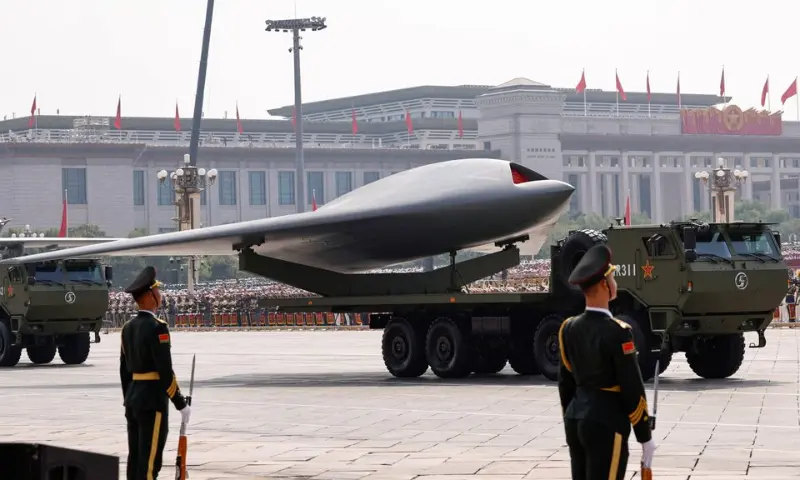
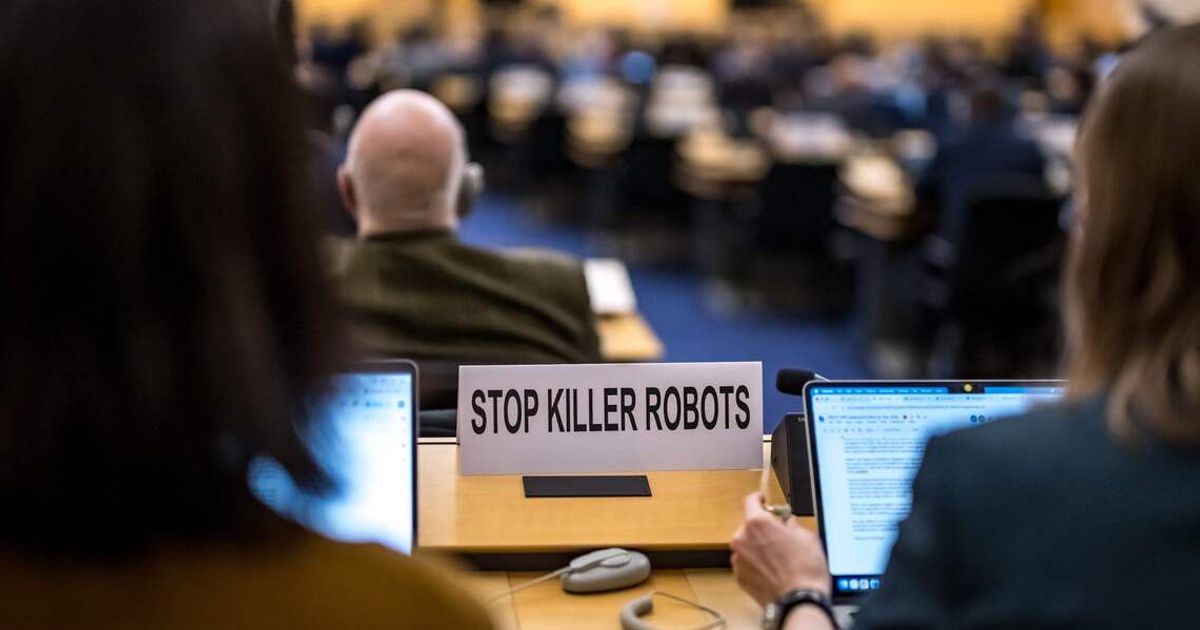
Photo via CBC News

What will it take for the world's superpowers to agree on AI regulations in war?

Read the original at CBC News ↗
Cite

Maimann, K. (2026, November 16). What will it take for the world's superpowers to agree on AI regulations in war? CBC News. https://www.cbc.ca/news/world/ai-warfare-regulations-un-ccw-geneva-9.7418597?cmp=rss

Dated from the outlet's own feed. Check the original for its byline.

CBC News · collected 2026-11-16 · by Kevin Maimann

Quick Summary

Diplomats from over 100 countries, including Canada, the U.S., Russia, and China, will discuss autonomous weapons at a UN Convention on Certain Conventional Weapons meeting in Geneva this week. However, experts like Paul Lushenko from Cornell University predict that meaningful, binding regulations are unlikely due to concerns over losing military advantages. The U.S. and China notably declined to sign a February declaration on governing military AI use, indicating a reluctance to commit to international rules on the technology.
Written by AI on 2026-11-16, from this article's own text only (the story summary below draws on all the coverage).
See how they differ ↓

AI analysis

Story summary

As of November 16, 2026, negotiations on rules for lethal autonomous weapons, or "killer robots," have hit a procedural impasse at the United Nations in Geneva. Russia objected to the agenda, bringing proceedings to a halt before noon and halting discussions on the Convention on Certain Conventional Weapons. The U.N. chief and advocacy groups like Human Rights Watch urge countries to impose strict, binding regulations on the use of such weapons, citing the risk to civilians. Despite calls for decisive action, nine countries, including Iran, Saudi Arabia, and China, abstained from immediate support for strict regulations. The talks aim to address the ethical and legal implications of autonomous weapons, with some experts expressing pessimism about achieving meaningful, binding regulations given the current international legal climate.

Written for “UN Talks on Killer Robots Impasse” on 2026-11-18, grounded in this article and the 9 other(s) covering the same event.

How they differ

6 outlets covered “UN Talks on Killer Robots Impasse”.

What each outlet says

One AI summary per outlet of its latest article on this story, written from that article alone and checked against it. Open the article for the outlet's own words.

CBCThis outlet16 Nov

Diplomats from over 100 countries, including Canada, the U.S., Russia, and China, will discuss autonomous weapons at a UN Convention on Certain Conventional Weapons meeting in Geneva this week. However, experts like Paul Lushenko from Cornell University predict that meaningful, binding regulations are unlikely due to concerns over losing military advantages. The U.S. and China notably declined to sign a February…

What will it take for the world's superpowers to agree on AI regulations in war? (this article)
The Straits Times16 Nov

At a UN conference on November 16, Russia objected to the inclusion of observers and civil society groups, causing a procedural standstill that blocked the adoption of an agenda for discussions on lethal autonomous weapons systems, or “killer robots.” UN Secretary-General Antonio Guterres had called for strict regulations on these weapons to prevent harm to civilians, but Russia’s actions stalled progress…

Russia plunges UN killer robot talks into ‘procedural impasse’ →4 articles from The Straits Times on this story
Dawn16 Nov

UN Secretary-General Antonio Guterres urged countries to establish strict rules on lethal autonomous weapons systems, or "killer robots," during a conference in Geneva. The meeting of the UN’s Convention on Conventional Weapons, which includes 128 countries, aims to decide whether to start negotiations on legally binding rules for these weapons. However, there is significant resistance, particularly from nations…

UN chief urges countries to rein in 'merciless' killer robots →2 articles from Dawn on this story
Toronto Star16 Nov

Government envoys at the U.N. offices in Geneva are discussing whether to start negotiations for rules on lethal autonomous weapons, such as killer robots and armed drones. Seven countries, including Austria and New Zealand, have proposed initiating talks on a new legally binding agreement to regulate these weapons. The meeting follows concerns raised by advocacy groups and the U.N. Secretary-General Antonio…

UN-backed talks consider possible rules on lethal autonomous weapons →
The Hindu16 Nov

Government envoys are meeting at UN offices in Geneva to discuss potential regulations for lethal autonomous weapons, such as armed drones. Seven countries, including Austria and New Zealand, have proposed starting negotiations for a legally binding agreement to control these weapons. However, major military powers like the United States and Russia are hesitant to limit their development. The Pope, UN…

UN-backed talks consider possible rules on lethal autonomous weapons →
NPR16 Nov

At the United Nations in Geneva, negotiations are ongoing to establish rules for lethal autonomous weapons, or 'killer robots.' Humanitarian groups and the International Committee of the Red Cross are advocating for legally binding regulations, citing concerns that autonomous weapons cannot uphold the Geneva Conventions, particularly the ability to distinguish between combatants and non-combatants. Countries like…

U.N. talks seek to rein in 'killer robots' as fears over AI weapons grow →

Where they agree and split

The full story: what happened, how it changed, and all 10 articles →

Compared with similar articles

This article reads leans right and hedges 27% of its claims. Each row says how that neighbour differs.
The Straits Times
Leans strongly left further left than this Hedges 1 of 16 claims Outlet record 64/100
Dawn
Leans left further left than this Hedges 0 of 27 claims Outlet record 67/100
The Straits Times
Leans right Hedges 1 of 19 claims Outlet record 64/100
The Straits Times
Leans right Hedges 1 of 19 claims Outlet record 64/100
Toronto Star
Leans right Hedges 3 of 25 claims Outlet record 64/100
The Hindu
Leans left further left than this Hedges 3 of 23 claims Outlet record 78/100
Dawn
Hedges 2 of 21 claims Outlet record 67/100
NPR
Leans strongly left further left than this Hedges 2 of 30 claims Outlet record 60/100
The Straits Times
Leans right Hedges 2 of 21 claims Outlet record 64/100
Semafor
Hedges 0 of 4 claims Outlet record 65/100
“The articles discuss different aspects of AI regulation and global competition, not the same specific event.”

Story

UN Talks on Killer Robots Impasse
Politics · 10 article(s) covering the same event. Compare every outlet's account →
How this article was measured signals, leaning charts, publisher record, byline, topics and claims

Signals How these are calculated →

Claims extracted
41
sentences that state something as happening or true
Uncertain
27%
11 of 41 hedged ("reportedly", "may", "according to")
Leaning
Leans right
of the writing, not the subject · beta estimate
Publisher signals
60/100
CBC News's corrections and hedging, across everything collected from it. Not a measure of accuracy.
Outlets on this story
10
Politics
Same framing elsewhere
1
articles that frame the event the way this one does
Analyzed 2026-11-16 · how these are computed

How this is being covered How these are calculated →

Article leaning vs. publisher reliability
Source leaning vs. consistency

Publisher

CBC News · 945 article(s) · 2 correction(s) detected
Running correction rate · 2 correction(s)

Who wrote this

Kevin Maimann
16 article(s) here · 1 carrying a prediction
What will it take for the world's superpowers to agree on AI regulations in war?
Officials warned that cyberattacks and severe weather could disrupt essential services, and encouraged residents to stockpile 72 hours of supplies including non-perishable food and bottled water.
Formal discussions about Canada's 'closer association' to start this week The European Union has a number of partnership deals with non-member countries, but Canada won't fit into any of those existing frameworks. A joint statement expected to be released at the 21st Canada-EU summit in Montreal on Friday will promise closer ties — though no one knows exactly what that means yet.
CFB Wainwright, where a blaze killed four on Saturday, had a dedicated safety procedure for fires on site CFB Wainwright had a strict fire safety protocol in place before Saturday's deadly blaze, which offers some insight into what investigators will be looking at as they probe the tragedy. CBC News obtained a copy of CFB Wainwright's Range Standing Orders on Tuesday, a 137-page document that includes a section on how to handle on-site fires and provides guidance on optimal times for training during fire season. Some Canadians were surprised to hear Maj.-Gen. Wade Rutland say on Sunday that soldiers continued training while a fire was burning at CFB Wainwright before it changed directions and spread rapidly, killing four soldiers and injuring dozens more.
The 'leap second' could disappear.
Doug Perovic, a professor in materials science and engineering at the University of Toronto, says he's ridden the same Goliath coaster at California's Six Flags Magic Mountain "many times" with his son and would still feel safe getting back on. "
"We will continue to work closely with our partners to disrupt what's left of the ShinyHunters group and their associates, no matter where they operate," Patel said on social media.
The hacking group behind a massive FBI data breach says it will not publish the information it obtained, but cannot guarantee what will happen with the data it already shared.
ShinyHunters is giving the FBI one week to remove or "correct" a report from May that makes claims about the group that it says are false.
But when the U.S. announced earlier this month that it would ban the import of molasses, it left some scratching their heads.
Also by Kevin Maimann
Nothing else under this byline is closely related to this article, so these are simply their most recent.
All 16 articles by Kevin Maimann →

Topics

Canada China Cornell University Tech Policy Institute Russia U.S.

Subjects

U.S. GPE · 5× Canada GPE · 4× China GPE · 3× Russia GPE · 3× Cornell University Tech Policy Institute ORG · 2× Israeli NORP · 2× Paul Lushenko PERSON · 2× Russian NORP · 2× Ukrainian NORP · 2× Geneva GPE · 1×

Narrative

He says he has hope for some form of agreement on AI, but it "would be a mistake to say that one is extremely optimistic," given that international law is in "a bit of a crisis right now." "My greatest fear would be that we miss this window of opportunity and we increasingly develop weapons that are governed by AI over which we have little control and often little understanding and no legal regime that's governing those weapon systems," he said.
framing: mixed · carried by 1 article(s) · first seen 2026-11-16
What will it take for the world's superpowers to agree on AI regulations in war?

Claims (41 extracted, 11 hedged)

What will it take for the world's superpowers to agree on AI regulations in war? asserted
superpowers → take → war
Diplomats to discuss autonomous weapons at a UN meeting this week, but experts say binding rules are unlikely As the UN prepares to discuss autonomous weapons this week, insiders say hopes of meaningful, binding regulations around AI in warfare are slim — and time may be running out. uncertain
time → discuss → warfare
Diplomats will discuss lethal autonomous weapons systems, including a possible framework for regulations, at a Convention on Certain Conventional Weapons meeting running Monday to Friday in Geneva, Switzerland. asserted
Diplomats → discuss → Geneva
More than 100 countries that are party to the convention will be represented, including Canada, the U.S., Russia and China. asserted
that → represent → Canada
UN Secretary-General António Guterres warned in August that the world was nearing a "moral red line" where autonomous weapons like AI-powered drones could kill without human involvement. uncertain
weapons → warn → involvement
He's said he wants a legally binding treaty on autonomous weapons by the end of 2026 as AI increasingly becomes a factor in deadly strikes. asserted
AI → say → strikes
Meanwhile, some experts say the use of AI to determine where and when to strike in the first place is an even more pressing concern than the weapons themselves. asserted
use → say → weapons
But so far, the world's biggest military superpowers — including the U.S., Russia and China — have shot down any serious attempts at binding rules. asserted
superpowers → include → rules
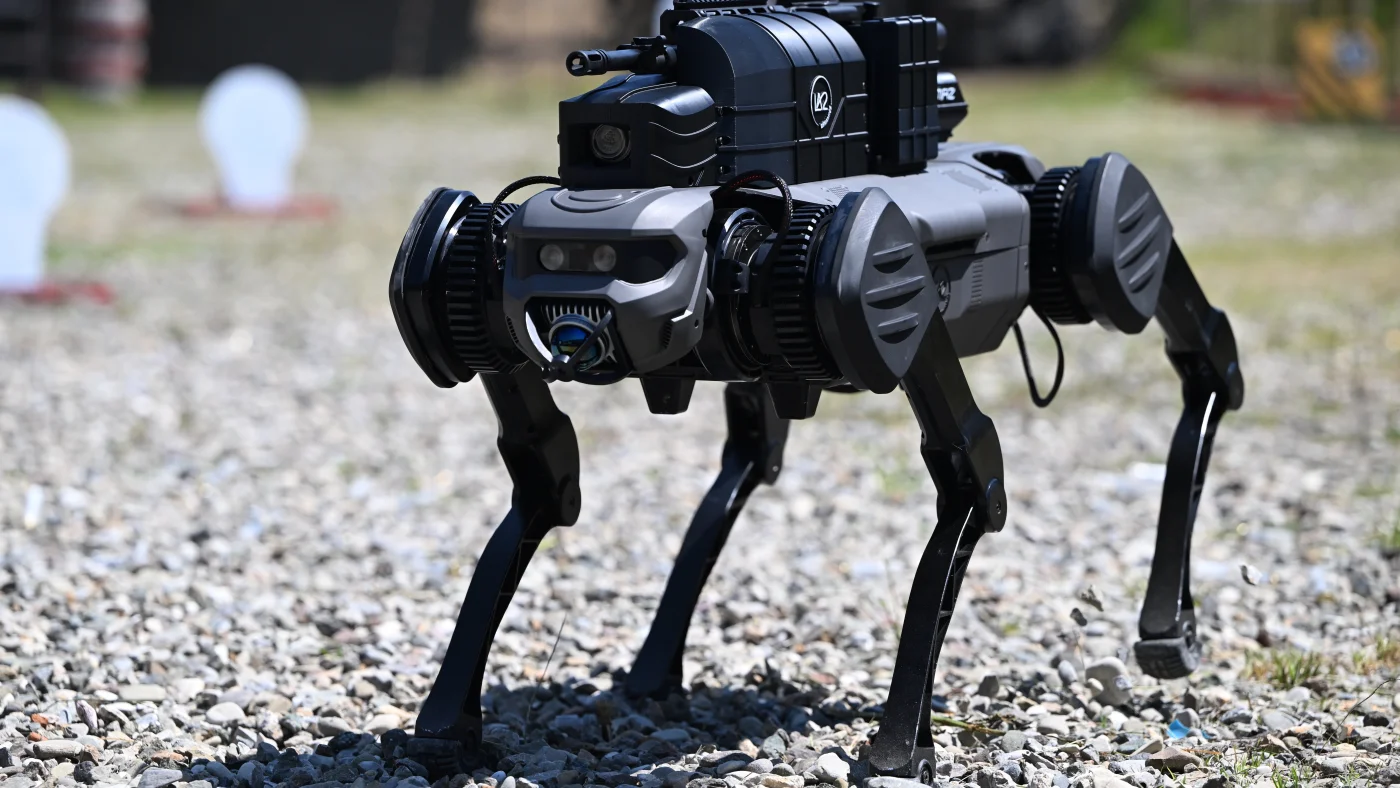
The age of AI warfare has dawned. asserted
age → dawn → warfare
Military commander vows fast action on AI and robots, sees 'untapped potential' for Canada Leaders are afraid of losing their competitive advantage because of the idea that "whoever wins the AI race will dominate the world," said Paul Lushenko, a senior fellow at Cornell University Tech Policy Institute and a retiring U.S. military officer. asserted
Lushenko → vow → Institute
He says everyone he speaks to in the military recognizes the moral implications of AI. asserted
he → say → AI
At the same time, the prevailing consensus among the most powerful militaries is that even if they follow a set of rules, they can't trust their competitors to do the same, creating a Cold War-esque stalemate. asserted
they → prevail → stalemate
"That's a really challenging position to be in," he said. asserted
he → say → ?
Paul Lushenko, senior fellow at Cornell University Tech Policy Institute, says the world's military superpowers worry that if they follow regulations around AI, their competitors won't do the same. asserted
competitors → say → same
Lushenko said he does not expect any kind of "bona fide international policy" or regulation to come out of this week's meetings. asserted
kind → say → meetings
About one-third of the countries that attended a February military AI summit in Spain, including Canada, agreed to a declaration on how to govern use of the technology in warfare, but the U.S. and China were among those that opted out. asserted
that → attend → those
UN diplomats were negotiating a treaty in September to regulate the use of lethal autonomous weapons when U.S. and Russian diplomats cut out key safety provisions on the final day. asserted
diplomats → negotiate → day
According to reporting by the Washington Post, those provisions included language that would have required systems to operate in a predictable and reliable manner, mandated ethical considerations and required that humans review military targets picked by AI before striking. AI in action Ukrainian President Volodymyr Zelenskyy, addressing the UN in September, warned there is a "real possibility" that AI will soon begin to decide what happens on the battlefield. "We need peace before we reach that point," he said. uncertain
he → accord → point
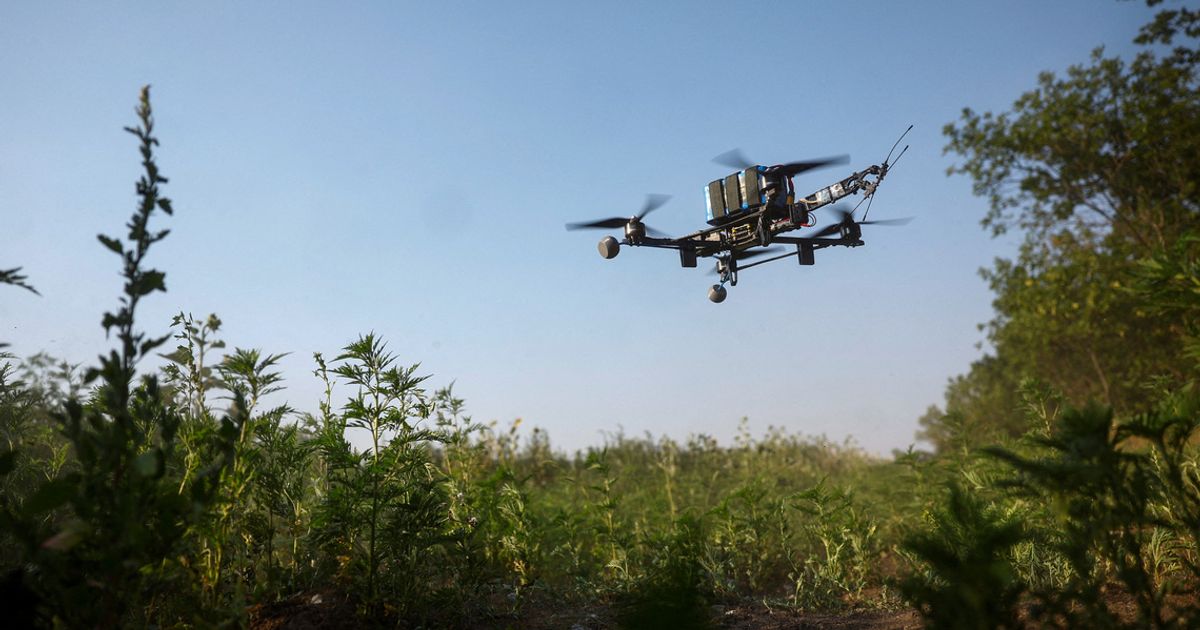
Ukraine and Russia are both increasingly using AI to gain advantages in battle as the war between the two countries approaches its fifth year. asserted
war → use → year
In August, the New York Times reported that a Russian drone operated entirely by AI killed three Ukrainian civilians. asserted
drone → report → civilians
- FRONT BURNER Israel accused of using AI to choose Gaza targets Drones and AI are rewriting the rulebook on naval warfare — with uncertain consequences In one of the most prominent examples of AI-assisted targeting, Israeli intelligence officers described to Israeli-Palestinian publication +972 Magazine and the Hebrew-language outlet Local Call how the military's Lavender AI system allegedly identified 37,000 targets in Gaza, with one saying soldiers had about 20 seconds to review each target before they carried out a strike. uncertain
they → accuse → strike
The U.S. has since made a major push to ramp up AI use, with the Pentagon declaring the country's military an "AI-first fighting force." asserted
military → make → use
The U.S. used Anthropic's Claude chatbot to help identify nearly 1,000 targets in the first 24 hours of its war with Iran in February. asserted
U.S. → use → February
After a U.S. missile strike on a girls' school in Minab, American senators raised concerns over the use of AI tools, including Palantir's Maven Smart System, in target selection. asserted
senators → raise → selection
Those concerns did not deter the military. asserted
concerns → deter → military
In June, Cameron Stanley, chief digital and artificial intelligence officer for the department of defence, said Elon Musk's Grok chatbot had been used to launch thousands of missiles at Iran. asserted
chatbot → say → Iran
The frequency of AI-assisted targeting in Gaza and Iran has raised concerns from experts who worry that even though a human technically may have the final say before strikes are made, that human could effectively serve as a rubber stamp. uncertain
human → assist → stamp
'Dystopian future' Craig Martin, a former Canadian navy officer and an expert in armed conflict laws who teaches at Washburn University in Topeka, Kan, also worries about automation bias, whereby humans tend to become overly confident in AI's accuracy and validity. "This may have been the case in the ... use of Lavender in Gaza, similarly the incident of the strike on the school in Minab by the United States," he told CBC News. uncertain
he → teach → News
Craig Martin, a former Canadian navy officer and an expert in armed conflict laws, would like to see a ban on fully autonomous weapons. asserted
Martin → like → weapons
Martin is calling for changes to international law that would ban fully autonomous weapons and restrict semi-autonomous weapons. asserted
that → call → weapons
He says he has hope for some form of agreement on AI, but it "would be a mistake to say that one is extremely optimistic," given that international law is in "a bit of a crisis right now." "My greatest fear would be that we miss this window of opportunity and we increasingly develop weapons that are governed by AI over which we have little control and often little understanding and no legal regime that's governing those weapon systems," he said. asserted
he → say → systems
"It could lead to some kind of dystopian future." uncertain
It → lead → future
- Analysis NATO's race against time: Senior commander warns alliance must adapt faster to deter Russia - Analysis Why a new round in the U.S.-Iran conflict could be the most devastating yet Lushenko says his concerns extend to nuclear weapons. uncertain
concerns → warn → weapons
While noting that AI offers the possibility of built-in deterrents and has potential to reduce human error and civilian casualties, he says war games conducted in research programs have found AI chatbots tend to rapidly escalate to suggesting the use of nukes in evolving crises between powerful countries. asserted
chatbots → note → countries
Fears of escalation The fear among major powers of being left behind is driving a "race to the bottom," said Branka Marijan, senior fellow at the Centre for International Governance Innovation and senior researcher with anti-war organization Project Ploughshares. asserted
Marijan → leave → Ploughshares
"Without those guardrails we really, I think, are in a very dangerous moment," she said. asserted
she → think → moment
Branka Marijan, senior fellow at the Centre for International Governance Innovation and senior researcher with Project Ploughshares, says the world is in a 'dangerous moment' without guardrails around AI in war. asserted
world → say → war
Marijan says what keeps her up at night is not necessarily the sheer destruction that could be caused by autonomous weapons or by AI selecting targets in the midst of an ongoing war, but mistakes that could cause an international incident to escalate into a full-blown crisis. uncertain
incident → say → crisis
CNN reported in September that the U.S. military almost boarded a Chinese vessel in the Middle East because an AI chatbot mistakenly said the ship was carrying nuclear materials. asserted
ship → report → materials
Marijan says incidents like that "are likely to keep occurring" and next time, the military might not put the brakes on soon enough. uncertain
military → say → brakes
…and 1 more, not listed.
Give feedback · no sign-in needed

No sign-in needed for now. Your note is sent without a name, so it cannot be answered.

History Support