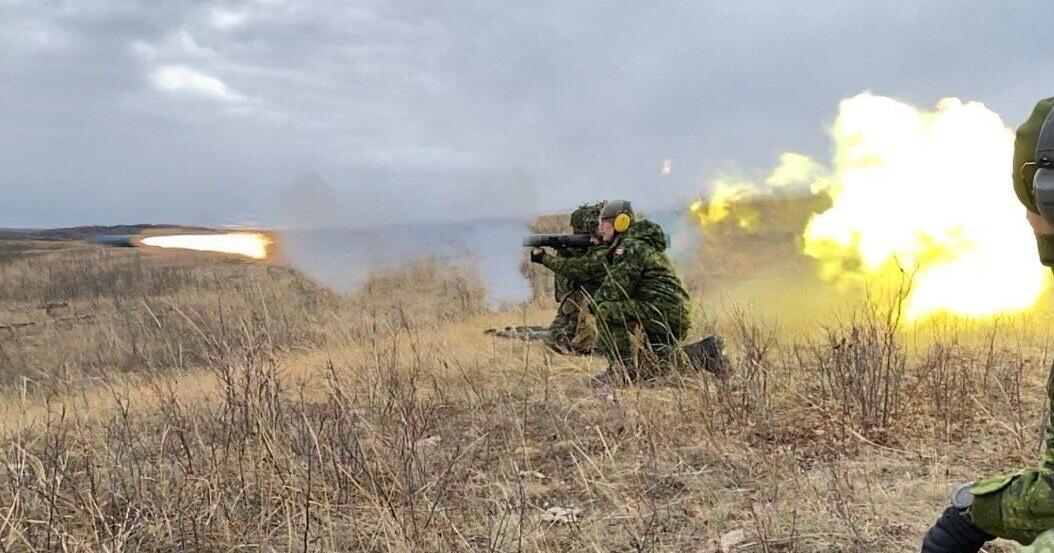
Fires often break out during military training.
asserted
Fires → break → training
CFB Wainwright, where a blaze killed four on Saturday, had a dedicated safety procedure for fires on site
CFB Wainwright had a strict fire safety protocol in place before Saturday's deadly blaze, which offers some insight into what investigators will be looking at as they probe the tragedy.
CBC News obtained a copy of CFB Wainwright's Range Standing Orders on Tuesday, a 137-page document that includes a section on how to handle on-site fires and provides guidance on optimal times for training during fire season.
Some Canadians were surprised to hear Maj.-Gen. Wade Rutland say on Sunday that soldiers continued training while a fire was burning at CFB Wainwright before it changed directions and spread rapidly, killing four soldiers and injuring dozens more.
asserted
it → kill → dozens
But current and former military generals say it is not uncommon for training exercises to continue near active fires.
asserted
exercises → say → fires
"Fires break out in all of our training areas frequently," Denis Thompson, a retired Canadian Armed Forces major general, told CBC News Network on Monday.
asserted
Thompson → break → Monday
"I mean, we're dealing with live ammunition."
asserted
we → mean → ammunition
Canada's chief of defence staff, Gen. Jennie Carignan, confirmed that fires are a "normal occurrence" that happen during training when soldiers are preparing to deploy overseas.
asserted
soldiers → confirm → training
"We want to make sure they are well prepared.
asserted
they → want → ?
So yes, there are some risks as well that we need to take sometimes when we are training," she said.
asserted
she → be → that
Document says firing should be done in morning
asserted
firing → say → morning
The Range Standing Orders section on fire safety warns that vegetation "can ignite readily and spread rapidly, endangering troops and destroying equipment."
asserted
vegetation → warn → equipment
It says units firing during months of high fire risk — August to October — "should plan to conduct early morning shoots" before 10 a.m., when the fire hazard is lower.
asserted
hazard → say → a.m.
Saturday's blaze took a deadly turn around 4 p.m. local time, though it's not clear when it started.
asserted
it → take → p.m.
Findings from fatal CFB Wainwright fire investigation will be made public, top commander says
What we know so far about fast-moving fire that killed 4, injured dozens at CFB Wainwright
Rutland said it had been burning for "several hours" before a sudden change in wind direction and intensity spread the flames into a training unit.
asserted
change → make → unit
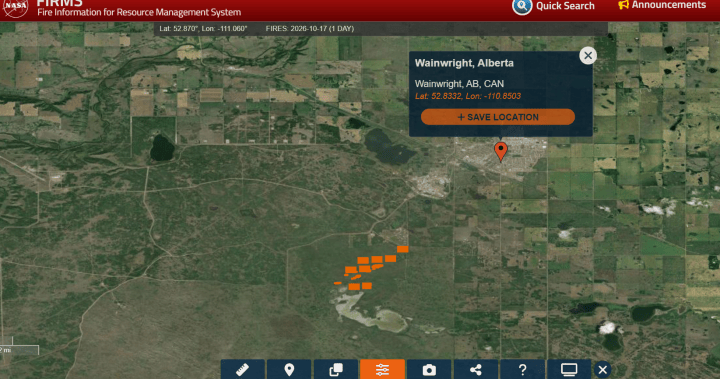
NASA satellite data indicates a fire was burning near the base by around 2 p.m., according to Mike Flannigan, a professor of wildland fires at Thompson Rivers University in Kamloops, B.C., who runs the Canada fire weather outlook.
uncertain
who → indicate → outlook
A National Defence spokesperson would not comment on whether the morning guideline was followed on Saturday, saying in an email that "commenting on specific details at this stage would be inappropriate" as the investigation is active.
asserted
investigation → comment → stage
According to the protocol document, troops are required to report any grass or brush fire "immediately" to range control, which then relays the information to the fire department and the range warden.
uncertain
which → accord → department
The highest-ranking individual present in the reporting unit is to maintain constant communication with range control and provide updates on the fire's "intensity, direction and speed of travel."
asserted
individual → rank → travel
That senior ranking individual is also tasked with immediately fighting fires that are not in "danger areas," and ensuring that their unit does not leave the fire until authorized to do so by range control in consultation with the range warden.
asserted
unit → rank → warden
When a fire is deemed "out of control," an operations officer can greenlight the deployment of additional resources, including helicopters.
asserted
officer → deem → helicopters
"This decision to carry on while that fire was in place there, it is a decision that range control and the officers conducting the exercise would have conducted," retired major-general Scott Clancy told CBC News Network on Monday.
asserted
Clancy → carry → Monday
He said he has fought fires as a helicopter pilot while training was happening on the ground.
asserted
training → say → ground
The protocol document says fire hazard conditions are posted on signs at multiple locations on the base and are updated daily "as fire hazard conditions warrant," indicating risk levels ranging from "low" to "extreme."
asserted
conditions → say → extreme
Cause under investigation
Rutland, commander of the 1st Canadian Division of the Canadian Armed Forces, said on Sunday that the fire broke out during a high-intensity combat training exercise using live munitions.
asserted
fire → say → munitions
Soldiers were throwing hand grenades on a grenade range at the time, he said, while others were in the section range doing a "section attack," where 10 soldiers attack a simulated enemy.
asserted
soldiers → throw → enemy
Rutland said he did not know what exactly caused the fire, but that range control knew about it for several hours and it was decided that training "could carry on for a certain amount of time.
uncertain
training → say → time
"
Conditions for wildfire were 'extreme' at Wainwright Saturday, experts say
Satellite images reveal Wainwright fire devastation
asserted
images → say → devastation
He said heavy wind gusts rapidly and unexpectedly spread the blaze into the section training area around 4 p.m.
Prime Minister Mark Carney said 50 investigators are now on the ground as the Canadian Forces National Investigation Service, with support from the RCMP, leads a "complete investigation" into the tragedy, including a board of inquiry.
asserted
Service → say → inquiry
Clancy, the retired major-general, said the board of inquiry will look at a number of factors around not only the sequence of events that led to the tragedy, but the organization itself.
asserted
that → say → tragedy
"They'll look at the leadership, the culture that was created around that leadership, the orders, the safety regulations, the specific decisions to carry on training," he said.
asserted
he → look → training
Flannigan, at Thompson Rivers University, said a combination of "extreme" conditions was at play at CFB Wainwright Saturday afternoon.
asserted
combination → say → Wainwright
The Canadian Forest Fire Weather Index shows fire conditions across the Canadian prairies, including southern and central Alberta, ranged from very high to extreme.
asserted
conditions → show → extreme
But those conditions were forecast and were not necessarily unusual for the area at this time of year, Flannigan told CBC News, which has raised questions about whether the training should have stopped before the fire got out of control.
asserted
fire → forecast → control
Environment Canada had issued yellow alerts for much of southern and eastern Alberta, with strong winds forecast to reach up to 100 km/h, coupled with an incoming cold front.
asserted
winds → issue → front
A cold front moved through the area around 4 p.m., Flannigan said, bringing a roughly 10 C drop in temperature and a sharp shift in wind direction that pushed the fire northwest toward the training area.
asserted
that → move → area
Any fires that started would have spread rapidly and would be intense, and that's pretty well what happened," he said.
asserted
he → start → ?
 The Aporia