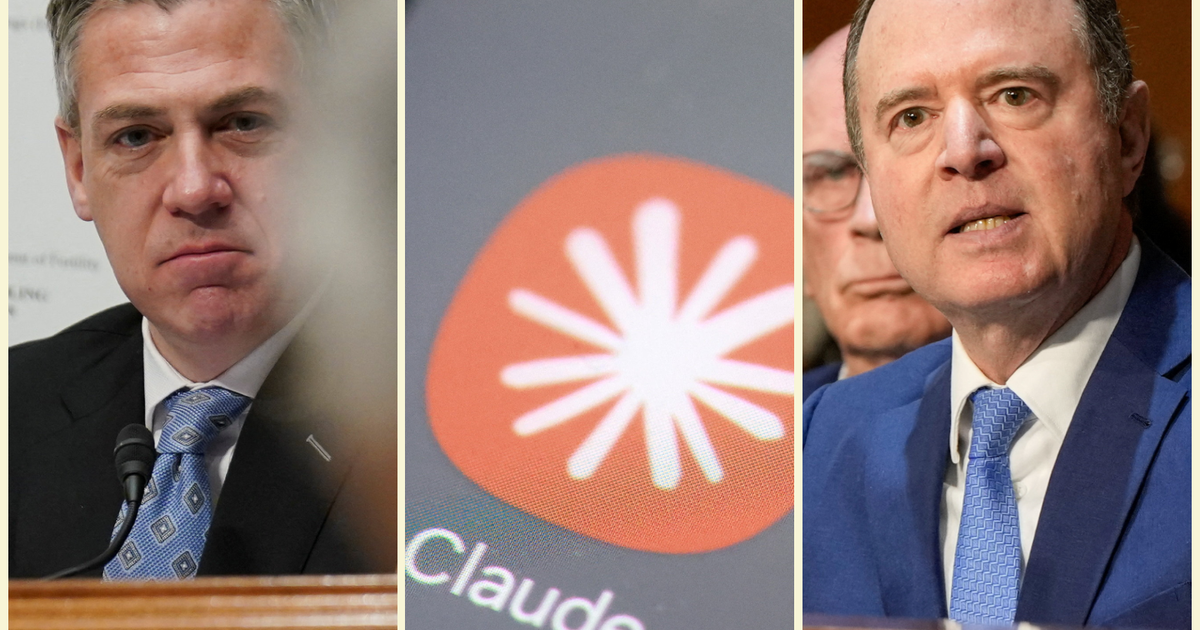
Senators Jim Banks and Adam Schiff proposed a narrow antitrust exemption for AI companies within the annual defense policy legislation, allowing them to share intelligence and coordinate defenses against Chinese espionage and cybersecurity threats. The proposal, approved by Senate Armed Services Committee leaders, aims to protect advanced AI systems from operational control loss incidents like cyber attacks. However, its fate is uncertain due to opposition from some members of Congress and former Trump administration officials who argue that such exemptions should not be granted in exchange for product safety assurances.
Written by the local model on 2026-09-17,
using this article's own text rather than the other coverage of the
same event (that is the story summary below).
Story summary
In early 2023, Senators Jim Banks, R-Ind., and Adam Schiff, D-Calif., proposed an amendment to the annual defense policy bill that would grant AI companies a limited antitrust exemption. This exemption was intended to allow these companies to share intelligence and coordinate defenses against Chinese spying and other risks such as cybersecurity incidents. The proposal had the approval of Senators Roger Wicker, R-Miss., and Jack Reed, D-R.I., who lead the Senate Armed Services Committee. However, due to objections from Senate Democrats over President Trump’s handling of the Iran war, debate on the bill was blocked during the summer, causing delays in negotiations with the House. The goal of this exemption is to enhance national security by facilitating collaboration among AI firms without violating antitrust laws.
Written for “AI Antitrust Exemption Debate” on 2026-09-17,
grounded in this article and the 0 other(s) covering the same event.
Why this leaning score
The article's own words the score was based on. Each is quoted
verbatim and was checked against the article text before being
stored, so you can find it in the original.
-
Senators included the national security-focused antitrust exemption as part of a larger so-called manager’s package of amendments to the bill, which the leaders of the Senate Armed Services Committee file each year.
right frames the exemption positively by linking it to national security
-
Specifically, the package would have included a proposal from Sens. Jim Banks, R-Ind., and Adam Schiff, D-Calif., granting AI companies a limited antitrust exemption for sharing intelligence with one another and coordinating defenses against Chinese spying and distilling of AI models, and addressing other risks to advanced systems such as cybersecurity incidents.
right describes the proposal in detail without criticism
-
Lawmakers enacted a similar policy for companies through the 2015 Cybersecurity Information Sharing Act, which protects companies from antitrust liability when they share cyber threats with government agencies or one another.
right compares the AI exemption to an existing law without negative framing
Leaning score +0.30 for article 15490 (high confidence, 3 verified quotes) · logged 2026-09-17
The Scoop
Senators had secured a narrow antitrust exemption for AI companies in annual must-pass defense policy legislation earlier this year before negotiations over the measure were delayed, according to people familiar with the matter.
uncertain
negotiations → secure → matter
Senators included the national security-focused antitrust exemption as part of a larger so-called manager’s package of amendments to the bill, which the leaders of the Senate Armed Services Committee file each year.
asserted
leaders → include → Committee
Specifically, the package would have included a proposal from Sens. Jim Banks, R-Ind., and Adam Schiff, D-Calif., granting AI companies a limited antitrust exemption for sharing intelligence with one another and coordinating defenses against Chinese spying and distilling of AI models, and addressing other risks to advanced systems such as cybersecurity incidents.
asserted
package → include → incidents
The package had approval from Armed Services Committee leaders, Sens. Roger Wicker, R-Miss., and Jack Reed, D-R.I., the people said.
asserted
people → have → leaders
Senate Democrats blocked debate on the annual bill over the summer in objection to President Donald Trump’s handling of the Iran war.
asserted
Democrats → block → war
It would have to survive negotiations with the House.
asserted
It → have → House
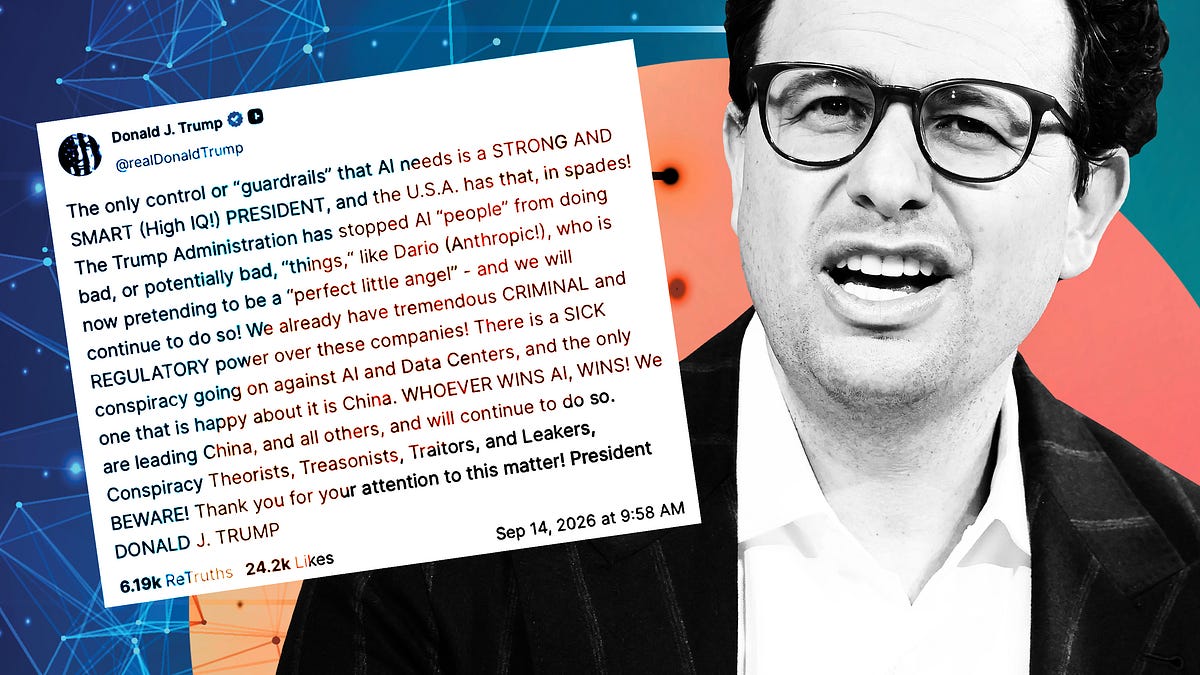
The effort, which hasn’t been previously reported, takes on new relevance as AI companies, led by Anthropic’s Dario Amodei, advocate for a different type of antitrust exemption that allows them to coordinate on pacing the development of their technologies.
asserted
them → report → technologies
That idea, fueled by concerns about risks posed by the fast-advancing technology, has drawn criticism from members of the Trump administration, as well as members of Congress from both parties.
asserted
idea → fuel → parties
“You have a basic obligation to make your products safe.
asserted
products → have → obligation
Do not demand antitrust waivers or liability waivers in exchange for that,” Trump’s former AI adviser, David Sacks, said in an interview with Bloomberg earlier this week.
asserted
adviser → demand → Bloomberg
While Amodei has suggested an antitrust waiver for coordinating on capability slowdown, the proposal from Banks and Schiff is decidedly narrower.
uncertain
proposal → suggest → Banks
It focuses on Chinese espionage and distillation, or the practice of an AI model training on a more sophisticated model to steal techniques.
asserted
It → focus → techniques
An earlier announcement of the proposal said it would allow for “coordinating responses to risks involving loss of operational control over advanced AI systems” — which the people said relates to incidents like the Hugging Face attack by OpenAI agents — and letting researchers share information with one another.
asserted
researchers → say → one
Lawmakers enacted a similar policy for companies through the 2015 Cybersecurity Information Sharing Act, which protects companies from antitrust liability when they share cyber threats with government agencies or one another.
asserted
they → enact → agencies
It’s unclear whether the current debate over AI safety — or potential White House opposition — will change the fate of the provision.
uncertain
debate → ’ → provision
If it passes the Senate, the defense bill will need to be reconciled with the House’s own version before it can reach Trump’s desk.
asserted
it → pass → desk
Not everyone in the AI industry is lobbying for the broader carveout as pushed by Amodei: OpenAI’s chief global affairs officer, Chris Lehane, recently said such an exemption for labs to be able to coordinate on pacing was unnecessary.
asserted
labs → lobby → pacing
John Connell, Google’s vice president of government affairs and public policy, said in July that the bill from Banks and Schiff would “give the AI industry clear rules of the road to share threat intelligence and collaborate on much-needed standards and benchmarks.”
asserted
bill → say → standards
 The Aporia