In short:
The 2026 edition of the global carbon budget shows fossil fuel emissions are set to drop, but the world is on track to reach 1.5 degrees Celsius of warming within four years.
asserted
world → show → years
Renewable energy uptake and the war in Iran are driving the decline, but there are doubts it will last.
asserted
it → drive → decline
Energy experts say accelerated electrification efforts could lead to a lasting shift in emissions.
uncertain
efforts → say → emissions
Increasing renewable energy capacity and the Iran war have spurred a drop in oil, gas and coal emissions, but experts say a geopolitical shock could make the reduction short-lived.
uncertain
reduction → increase → emissions
Research released by the Global Carbon Project projects emissions from the burning of fossil fuels to decrease by 0.4 per cent compared to 2025.
asserted
emissions → release → 2025
Oil emissions, down 2 per cent, are the main driver of the drop, likely due to prolonged disruptions in the Strait of Hormuz.
asserted
emissions → prolong → Hormuz
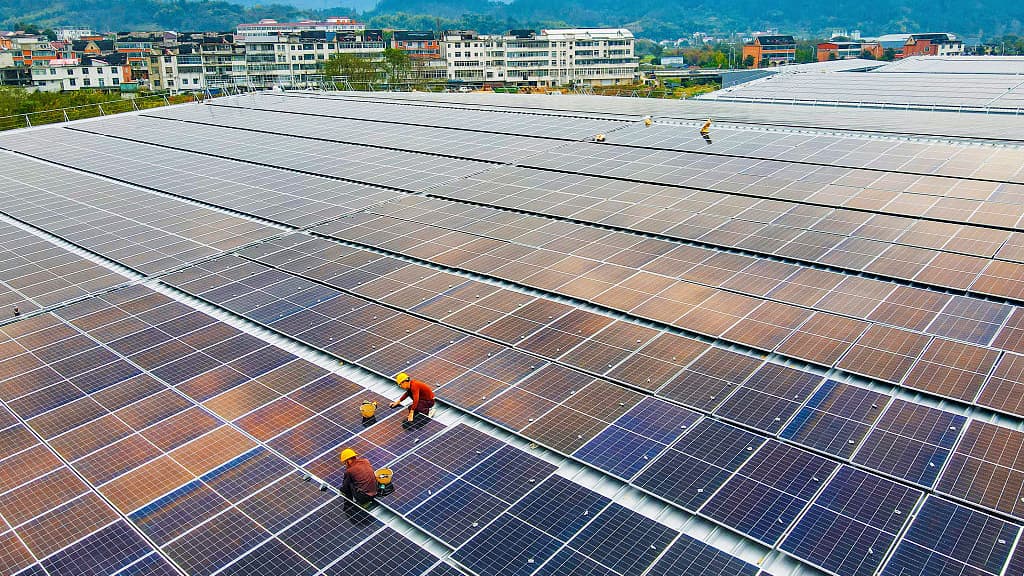
The world's need for energy is growing and clean sources, mainly solar and wind power, are increasingly meeting that additional need.
asserted
sources → grow → need
But lead researcher and director of the Global Carbon Budget Office at the University of Exeter, Pierre Friedlingstein, said clean energy was not growing fast enough to for a durable drop.
asserted
energy → say → drop
"A decline in fossil CO2 emissions is encouraging, but a reduction driven partly by geopolitical shocks is not a sustainable climate solution," he said.
asserted
he → drive → shocks
"While renewables and electric vehicles are increasingly offsetting growth in energy demand, further acceleration is needed if global emissions are to peak and enter a sustained decline."
Total carbon emissions are set to rise from 42.8 billion tonnes last year to 43.3 billion tonnes in 2026.
asserted
emissions → offset → 2026
El Niño-linked peat fires and forest degradation in South-East Asia are driving the increase.
asserted
fires → link → increase
The amount of carbon that can be emitted before warming reaches 1.5 degrees Celsius above pre-industrial levels is now 150 billion tonnes, which will be reached within four years at the current rate.
asserted
which → emit → rate
This year the United Nations found the world was on track to reach 2C warming by about 2050 and move towards 2.6C warming by the end of the century.
asserted
world → find → century
"The point the report is trying to make is that we need to change these policies and be a little more aggressive in the way we look at the transition to net zero," CSIRO chief research scientist and Global Carbon Project executive director Pep Canadell said.
asserted
Canadell → try → net
Some experts say Donald Trump's decision to start a war with Iran did more than briefly interrupt the world’s oil flow — it created a tipping point for accelerated global electrification efforts.
asserted
it → say → efforts
The 1970s oil shocks sparked by conflict in the Middle East produced vast changes in how the global energy system worked, and drove innovations in fuel efficiency.
And this time renewables and electric vehicles offer market-ready alternatives, with the cost of installed solar and batteries falling by 90 per cent since 2010.
asserted
cost → spark → 2010
Solar and wind together are now the largest sources of growth in global electricity generation, overtaking coal and gas to meet over half of new electricity demand, according to a dedicated report on electrification by the International Energy Agency (IEA).
uncertain
Solar → overtake → Agency
According to Gabrielle Kuiper, an energy researcher affiliated with CSIRO, consumer-level electrification of transport is well underway.
uncertain
electrification → accord → transport
"I think the momentum is unstoppable," she said.
"
asserted
she → think → ?
We've reached the tipping point, particularly on EVs."
asserted
We → reach → EVs
A report released by the International Energy Agency (IEA) last week found the shift to renewables is most pronounced in emerging economies, where the continued high oil price caused by the Iran conflict has accelerated uptake.
asserted
price → release → uptake
The report forecasts global renewable capacity to grow by almost 4,800 gigawatts (GW) in the 2026-2031 period, 57 per cent more than in the previous six years.
asserted
capacity → forecast → years
Growth in emerging and developing economies outside China is expected to match that in advanced economies for the first time, the report said
"
asserted
report → emerge → time
Off-grid solar PV capacity is expected to increase by 2.5 times to around 80 GW by 2031, led by Pakistan, sub-Saharan Africa and Southeast Asia.
asserted
capacity → expect → Pakistan
But as the UN's annual climate summit, COP 31, gets underway, growth in renewables still lags the pledge at COP28, where nearly 200 countries agreed to triple renewable capacity by 2030.
asserted
countries → get → 2030
"Current policies, market developments and cost trends boost cumulative renewable energy capacity to around 9, 710 GW by 2030, a 2.6-fold increase from 2022, in line with last year's forecast," the IEA said.
asserted
IEA → boost → forecast
India records a rise
asserted
India → record → rise
The annual global carbon budget update found China's emissions are set to fall by 0.9 per cent in 2026 due to a plunge in oil emissions, and growth in electricity generation from renewable energy.
asserted
emissions → find → energy
While the world's largest emitter produces 32 per cent of global emissions, it was found to be the most active in deploying clean technologies and increasing carbon sinks, which are systems that absorb more carbon from the atmosphere than they release, through reforestation.
asserted
they → produce → reforestation
Emissions across the United States are projected to decrease by 1.3 per cent, mainly due to dropping coal emissions, which spiked last year.
asserted
which → project → emissions
India's emissions are expected to increase by 4.4 per cent, higher than its annual average growth of 3.5 per cent over the past decade.
asserted
emissions → expect → decade
The European Union's emissions are expected to drop by 1.5 per cent, Japan's are expected to drop by 1 per cent, while emissions for the rest of the world are set to go down by 0.7 per cent.
asserted
emissions → expect → cent
"This year, for the first time, we saw 40 countries which, over the last 10 years, had emissions declining from fossil fuels; at the same time, they had an economy that has been growing," Dr Canadell said.
asserted
Canadell → see → economy
"That is double the amount of countries as the previous decade, so certainly things are happening."
asserted
things → happen → decade
Emissions in aviation and shipping are projected to decrease by 1 per cent, partly due to reduced flights across the Middle East, while total emissions have grown at a slower pace over the past decade.
asserted
emissions → project → decade
El Niño could make things worse
Oceans and vegetation remove about half of all carbon dioxide emissions from human activities from the atmosphere.
But as El Niño exacerbates drought and bushfire conditions in many regions, plants absorb less carbon dioxide via photosynthesis when they are stressed by low rainfall and higher temperatures.
uncertain
they → make → rainfall
Bushfires also release large amounts of CO2 back into the atmosphere.
asserted
Bushfires → release → atmosphere
Dr Canadell said the Amazon's absorption rate declined by 66 per cent during the El Niño of 2023/24, which has since returned to normal.
asserted
which → say → normal
But he warned that a drop of that scale could repeat towards the end of the year.
uncertain
drop → warn → year
"We'll see the full force of El Niño in the sinks, particularly in the tropics, in the Amazon specifically, early next year," Dr Canadell said.
"
asserted
Canadell → see → Amazon
…and 2 more, not listed.
 The Aporia