Arab parties offer Israel's political leaders a path to victory.
asserted
parties → offer → victory
Why does no one want to take it?
asserted
one → want → it
Neither Netanyahu nor Eisenkot currently has enough parliamentary seats to form a majority
Israelis voted in record numbers yesterday, and ballot-counting continued through the night.
asserted
counting → have → night
Every official update triggered fresh bravado from the two front-runners, Benjamin Netanyahu and Gadi Eisenkot.
asserted
update → trigger → runners
Prime Minister Netanyahu showed that his right-wing policies, while controversial in Israel and around the world, still appeal to a majority of Israeli Jews.
asserted
policies → show → Jews
Meanwhile, those hoping for change united around Eisenkot’s opposition coalition.
asserted
those → hop → coalition
But neither has dared declare victory just yet.
asserted
neither → dare → victory
They don’t have the parliamentary seats for a workable majority.
asserted
They → have → majority
They have only one choice to get that support, a choice considered politically distasteful among many Jewish voters — to join with Arab parties.
asserted
They → have → parties
Flush with more seats than ever before after an 80 per cent turnout in their communities, the Arab parties have become potential kingmakers.
asserted
parties → become → communities
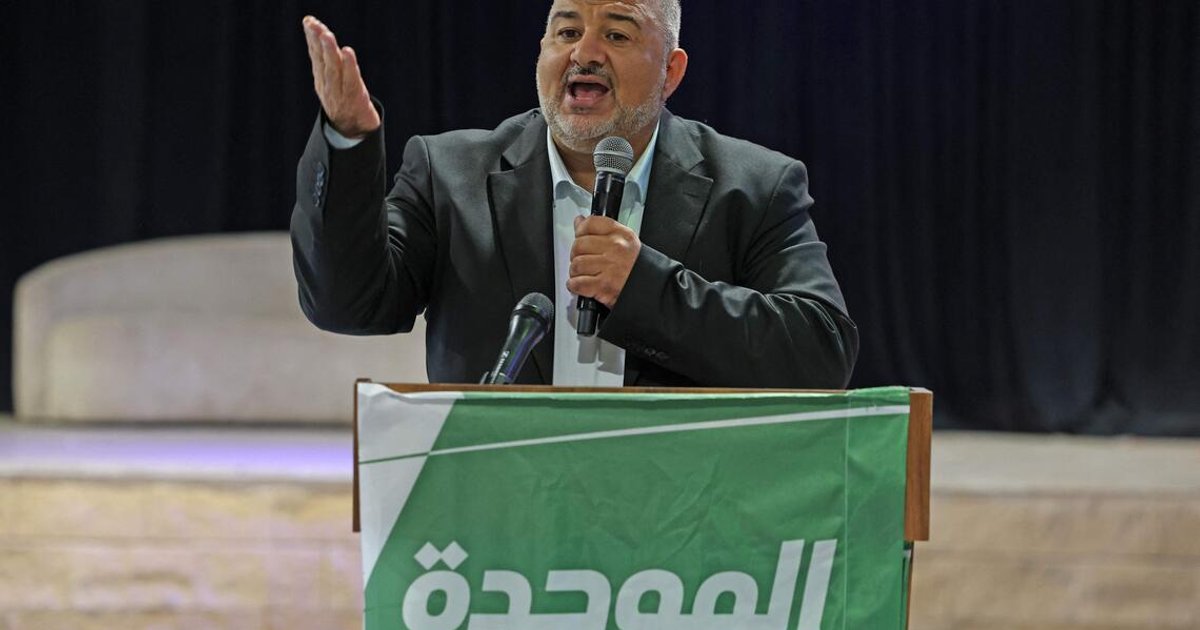
As the spotlight turned to them on Israeli’s Channel 13 last night, Jabareen opened the door to joining any party offering a "genuine alternative to Netanyahu’s government of bloodshed" to create a "Jewish-Arab partnership."
That wasn’t the tone from Netanyahu, whose current coalition includes ideological hardliners, ultra-religious Jews and settlers eager to annex Palestinian territory in the Occupied West Bank and Gaza.
asserted
coalition → turn → Bank
His government has also been criticized for turning a blind eye to a "horrific" crime wave in Arab communities.
asserted
government → criticize → communities
"We must form a strong right-wing national government," Netanyahu insisted, rejecting any co-operation with Arab parties, while claiming leadership of the country’s "Zionist public."
asserted
Netanyahu → form → public
Much of Eisenkot’s support comes from more centrist Israelis who blame Netanyahu for the devastating attack on Oct. 7, 2023 — for ignoring documented warnings that Hamas militants were about to cross from Gaza and for refusing to call an inquiry into security failures.
asserted
militants → come → failures
About 1,200 Israelis were killed and 251 were taken hostage that day.
asserted
251 → kill → ?
Eisenkot has promised a commission to investigate.
asserted
Eisenkot → promise → commission
His opposition coalition could oust Netanyahu and form a solid majority in Israel’s parliament, the Knesset, if it joined with the Arab parties.
uncertain
it → oust → parties
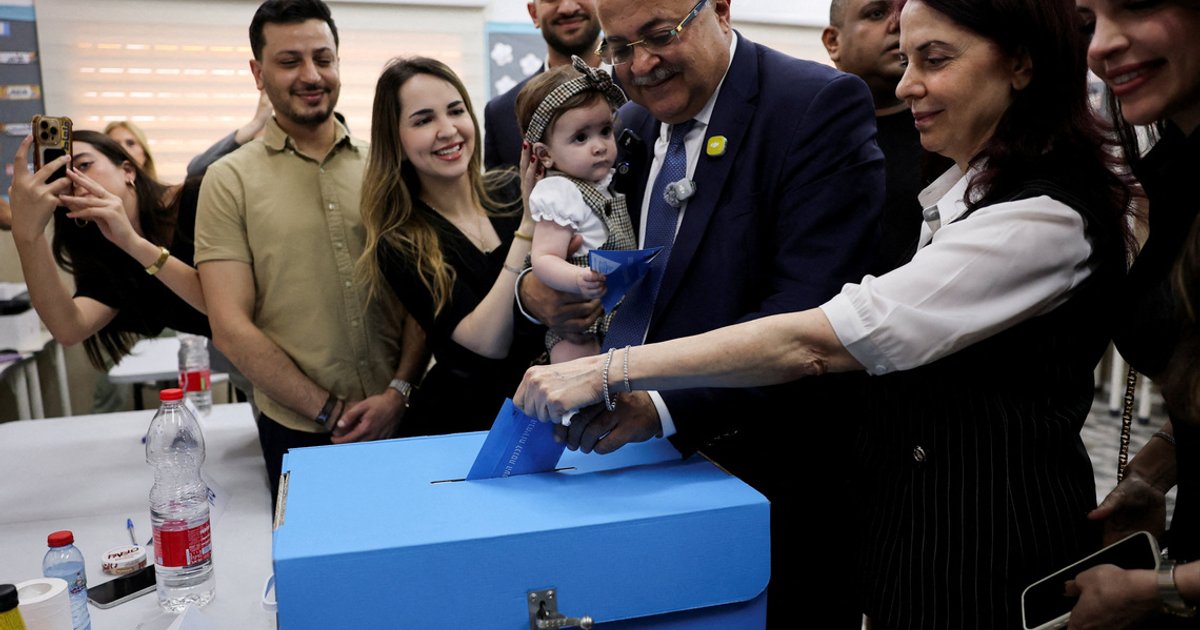
An Arab-Israeli man casts his ballot during Israel's general elections on Oct. 27, 2026, in Umm El Fahem, Israel.
asserted
man → cast → Fahem
But two of his partners – Naftali Bennett, leader of B’Yachad and a former prime minister, and Avigdor Liberman of Yisrael Beytenu – have flatly rejected it.
asserted
two → reject → it
Eisenkot has resisted any formal coalition, though he has been less clear on the possibility of an informal arrangement of voting support in the Knesset.
asserted
he → resist → Knesset
Arab lawmakers were part of Bennett’s coalition government in 2021, but the Oct. 7 attacks on Israel changed the political landscape.
asserted
attacks → change → landscape
Now, says Israeli political analyst and pollster Dhalia Scheindlin, the opposition parties’ "self-imposed" reluctance to include Arab parties is an "arbitrary, and, frankly, racist constraint."
asserted
reluctance → say → parties
A key barrier for Eisenkot seems to be the Arab parties’ reluctance to brand Hamas a terror organization, though Ra’am’s Abbas — a part of that earlier coalition — told Israeli media "we have condemned every act of terror and all the crimes that took place on October 7th" and reject the "loyalty test."
asserted
that → seem → test
High turnout for Arab voters
The election results could put pressure on the opposition to reconsider, especially since political support of the Arab parties has surged among Arab citizens of Israel.
They jammed polling stations yesterday despite threats from hard-line Jewish Israelis, some of whom showed up armed.
uncertain
some → put → whom
In last-minute appeals that the opposition called "desperate," Netanyahu even went on social media to warn that Arabs would "steal the election" if his supporters didn’t vote.
asserted
supporters → call → election
That only seems to have encouraged more Arabs to turn out, including Osayadeh Makladeh in the Druze town of Daliyat Al-Karmel.
asserted
That → encourage → Karmel
"We are now in a bad situation because of the government," she said.
asserted
she → say → government
"We are here to demand change."
asserted
We → demand → change
The Arab parties' offer to help the opposition is an attempt to remove hardline settlers in Netanyahu’s cabinet from power.
asserted
offer → help → power
That includes politicians like National Security Minister Itamar Ben-Gvir, who has been convicted in the past of incitement to racism and boasted during the campaign of promoting harsher treatment of Palestinian prisoners in Israeli jails.
asserted
who → include → jails
Arab politicians also want talks on a two-state solution or some other resolution in the Palestinian territories, an especially controversial issue in today’s Israel.
asserted
politicians → want → Israel
A stalemate
But election math doesn’t seem to be adding up for either Netanyahu or Eisenkot at the moment, with no clear formula to create a majority.
asserted
math → seem → majority
The Knesset has 120 seats, elected through a national proportional representation system that relies on party lists to fill them.
asserted
that → have → them
Since 1948, no single party has ever won the 61 seats needed for a majority.
asserted
party → win → majority
Netanyahu has found himself in similar situations in the past.
asserted
Netanyahu → find → past
As Israel’s longest-serving prime minister, he has often engaged in complex political manoeuvres to keep the top job over more than 19 years.
asserted
he → serve → years
Israel’s Prime Minister Benjamin Netanyahu speaks during a ceremony commemorating Israel’s Remembrance Day for fallen soldiers, or Yom HaZikaron, at the Military Cemetery on Mount Herzl in Jerusalem on April 21, 2026.
asserted
Minister → speak → April
Throughout the campaign, he was seen as fighting for his political life, something that may be critical for his personal life as well.
uncertain
that → see → life
He has used his position as prime minister to delay hearings and seek a presidential pardon, all while proclaiming his innocence.
asserted
He → use → innocence
As the first exit poll results were announced, analysts like Amit Segal on Channel 12 news concluded that Netanyahu "suffered a major blow."
asserted
Netanyahu → announce → blow
…and 5 more, not listed.
 The Aporia