Arab Israeli parties emerge as wild card in parliamentary elections

Read the original at Washington Examiner ↗
Cite

Knox, B. (2026, October 28). Arab Israeli parties emerge as wild card in parliamentary elections. Washington Examiner. https://www.washingtonexaminer.com/news/world/4783372/arab-israeli-parties-parliamentary-elections/

Dated from the outlet's own feed. Check the original for its byline.

Washington Examiner · collected 2026-10-28 · by Brady Knox

Quick Summary

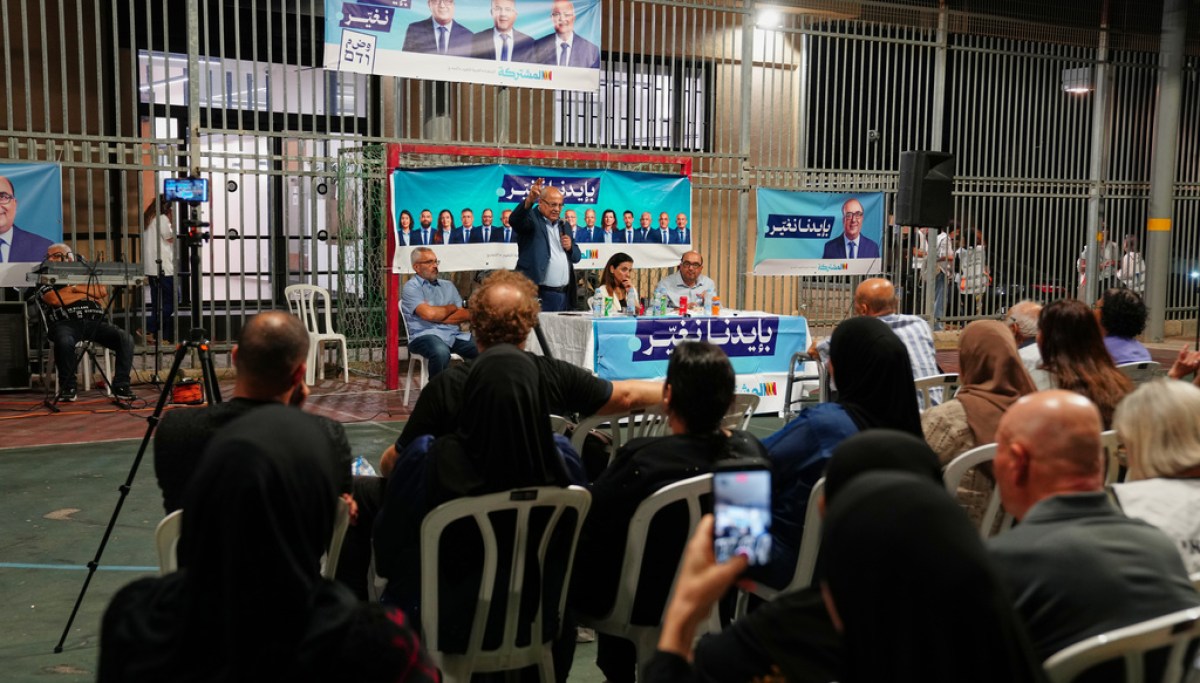
In Israel’s upcoming parliamentary elections, neither Benjamin Netanyahu nor Gadi Eisenkot secured enough votes to form a government. Instead, Arab parties Ra’am and Joint List gained significant influence with 19 seats combined, making up over 85% of the counted vote. This outcome leaves both main political blocs short of the necessary 61 seats in the 120-seat Knesset, positioning Israeli Arabs as pivotal players for the first time.
Written by AI on 2026-10-28, from this article's own text only (the story summary below draws on all the coverage).

AI analysis

Story summary

Israel held parliamentary elections on October 27, 2026, resulting in a political deadlock with neither Prime Minister Benjamin Netanyahu nor opposition leader Gadi Eisenkot securing the necessary majority of 61 seats in the 120-seat Knesset. The latest results indicate that Netanyahu's bloc has 53 seats and Eisenkot's alliance has 48 seats, while two Arab parties, Ra’am and Joint List, have won a combined total of 19 seats, putting them in a position to influence coalition formation.

Netanyahu has accused rival Arab parties of cheating after exit polls indicated his coalition failed to capture a majority. However, the results suggest that both major blocs are short of a clear mandate, with Netanyahu's Likud party and its allies outperforming expectations but falling short of an outright majority. The opposition bloc led by Gadi Eisenkot's Yashar party is also struggling to secure enough seats for a governing majority.

The involvement of Arab parties in the election outcome marks a significant shift, as they have historically been on the political margins but now hold considerable power in influencing potential coalition negotiations. This situation could prolong the formation of a stable government and increase political uncertainty in Israel.

Written for “Israeli Election Campaign And Outcomes” on 2026-10-28, grounded in this article and the 94 other(s) covering the same event.
Why this leaning score
The article's own words the score was based on. Each is quoted verbatim and was checked against the article text before being stored, so you can find it in the original.
Reading Leans left (beta estimate) Confidence high
Leaning: leans left for article 113190 (high confidence, 2 verified quotes) · logged 2026-10-28

Story

📰 Israeli Election Campaign And Outcomes
Politics · 95 article(s) covering the same event. Compare every outlet's account →

Compared with similar articles

This article reads leans left and hedges 0% of its claims. Each row says how that neighbour differs.
Washington Examiner
⚖️ Leans right further right than this Hedges 0 of 5 claims Outlet record 70/100
Al Jazeera
Hedges 3 of 21 claims Outlet record 60/100
The Straits Times
Hedges 3 of 25 claims Outlet record 68/100
“The articles discuss different aspects of Israel's election process, with Article A focusing on leading candidates and the context around the election, while Article B reports on the results that emerged after votes were counted.”
New York Post
⚖️ Leans left Hedges 2 of 15 claims Outlet record 66/100
Daily Mail
⚖️ Leans right further right than this Hedges 3 of 43 claims Outlet record 68/100
South China Morning Post
Hedges 2 of 4 claims Outlet record 64/100
ABC News (AU)
Hedges 3 of 19 claims Outlet record 68/100
BBC News
Hedges 3 of 35 claims Outlet record 69/100
Al Jazeera
⚖️ Leans left Hedges 3 of 42 claims Outlet record 60/100
South China Morning Post
Hedges 1 of 3 claims Outlet record 64/100
How this article was measured signals, leaning charts, publisher record, byline, topics and claims

Signals How these are calculated →

Claims extracted
5
sentences that state something as happening or true
Uncertain
0%
0 of 5 hedged ("reportedly", "may", "according to")
Leaning
Leans left
of the writing, not the subject · beta estimate
Publisher signals
70/100
Washington Examiner's corrections and hedging, across everything collected from it. Not a measure of accuracy.
Outlets on this story
95
Politics
Same framing elsewhere
1
articles that frame the event the way this one does
Analyzed 2026-10-28 · how these are computed

How this is being covered How these are calculated →

Article leaning vs. publisher reliability
Source leaning vs. consistency

Publisher

Washington Examiner · 3651 article(s) · 7 correction(s) detected
Running correction rate · 7 correction(s)

Who wrote this

Brady Knox
76 article(s) here · 1 carrying a prediction
🔮 Israel’s 2026 parliamentary elections are set to amount to political deadlock, with neither Prime Minister Benjamin Netanyahu nor Gadi Eisenkot getting enough votes to form a government.
🔮 A judge ruled in favor of his deportation, but said he couldn’t be deported to Mali over fears of persecution.
🔮 President Donald Trump said that work on the East Potomac Golf Links course in Washington, D.C., would begin “immediately,” despite a legal challenge.
🔮 The graph showed the climb in price over time, with annotations showing major events in Iran and Ukraine that could have had an effect.
🔮 Zelensky then said Ukraine would no longer obey Trump’s ceasefire in an interview with the Financial Times, in which the Ukrainian president also spoke openly about his anger over the United States allegedly throttling Ukraine’s access to Starlink and intelligence.
🔮 Secretary of War Pete Hegseth claimed the Department of War would field “hundreds of thousands” of one-way attack systems in 2026, and that the second Trump administration inherited no such programs from the Biden administration.
🔮 That threat moves again because they will.
🔮 He raised his candidacy for the award by claiming he had “saved more lives than anyone in history” since he prevented Iran from obtaining a nuclear weapon, which the country would use to blow up “the entire Middle East, and ultimately far beyond the Middle East.”
🔮 “Unfortunately, the winner is an absolute disgrace,” she said, in statements carried by UN Watch, adding that Pillay was “quite literally complicit in the Uyghur genocide.” “If she didn’t have diplomatic immunity, three victims would have sued her.
🔮 No local media reports claiming a second infection or death were readily available, though the Western and Ukrainian reports may have stemmed from confusion over initial Russian media reports.
Also by Brady Knox
Nothing else under this byline is closely related to this article, so these are simply their most recent.
All 76 articles by Brady Knox →

Topics

Arab Israel Israeli Knesset Ra’am

Subjects

Arab NORP · 2× Eisenkot PERSON · 2× Israeli NORP · 2× Knesset ORG · 2× Benjamin Netanyahu PERSON · 1× Gadi Eisenkot PERSON · 1× Israel GPE · 1× Joint List ORG · 1× Netanyahu PERSON · 1× Ra’am ORG · 1×

Narrative

The 19 seats for the Arab parties, stripping both Eisenkot and Netanyahu of their needed majorities, put the outcasts of Israeli politics in the most powerful position they have ever been in.
framing: assertive · carried by 1 article(s) · first seen 2026-10-28
🔮 Israel’s 2026 parliamentary elections are set to amount to political deadlock, with neither Prime Minister Benjamin Netanyahu nor Gadi Eisenkot getting enough votes to form a government.
2026-10-28 · Washington Examiner
Arab Israeli parties emerge as wild card in parliamentary elections · assertive framing

Claims (5 extracted, 0 hedged)

Israel’s 2026 parliamentary elections are set to amount to political deadlock, with neither Prime Minister Benjamin Netanyahu nor Gadi Eisenkot getting enough votes to form a government. asserted
Netanyahu → set → government
One clear winner did emerge, however, with enough votes to decisively influence the outcome: Israeli Arabs. asserted
winner → emerge → outcome
The latest results, as of 8:30 p.m. local time, give Ra’am and Joint List, the two Arab parties, 19 seats in the Knesset altogether, with over 85% of the vote counted. asserted
% → give → vote
With the pro-Netanyahu bloc at 53 seats and Eisenkot at 48, neither is in range of the 61-seat majority needed in the 120-seat Knesset. asserted
neither → need → Knesset
The 19 seats for the Arab parties, stripping both Eisenkot and Netanyahu of their needed majorities, put the outcasts of Israeli politics in the most powerful position they have ever been in. asserted
they → strip → position
💬Give feedback
🕘History 🎫Support