Photo via Al Jazeera

Are GCC countries looking for a regional security pact with Iran?

Read the original at Al Jazeera ↗
Cite

Marsi, F. (2026, October 28). Are GCC countries looking for a regional security pact with Iran? Al Jazeera. https://www.aljazeera.com/news/2026/10/28/are-gcc-countries-looking-for-a-regional-security-pact-with-iran?traffic_source=rss

Dated from the outlet's own feed. Check the original for its byline.

Al Jazeera · collected 2026-10-28 · by Federica Marsi

Quick Summary

Gulf Cooperation Council countries, including Saudi Arabia, Pakistan, and Turkey, held high-level talks with Iranian officials in Tehran to ease tensions amid fears of renewed US strikes on Iran. The meeting aimed to discuss a potential regional security pact, but negotiations have stalled over disagreements, particularly regarding Iran's nuclear program. Diplomatic efforts intensified following recent attacks by Houthi rebels on Saudi facilities, highlighting the complex dynamics between regional powers and the United States in maintaining Middle East stability.
Written by AI on 2026-10-30, from this article's own text only (the story summary below draws on all the coverage).

AI analysis

Story summary

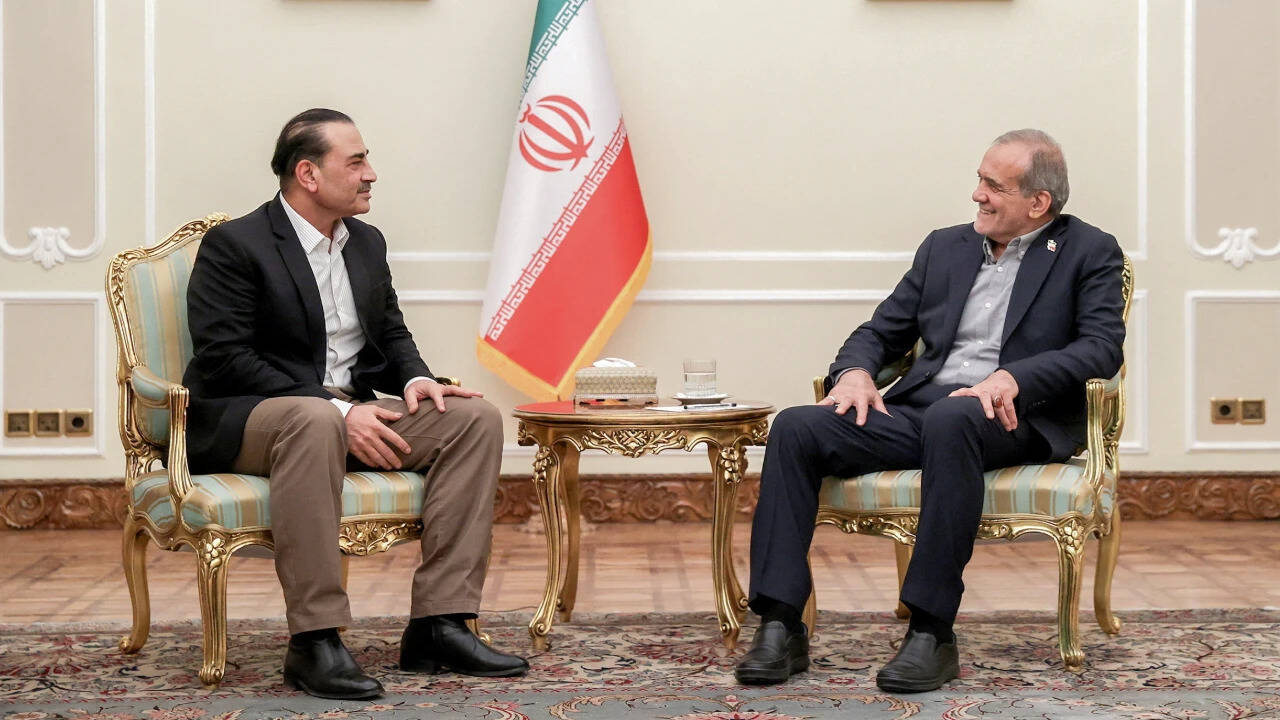
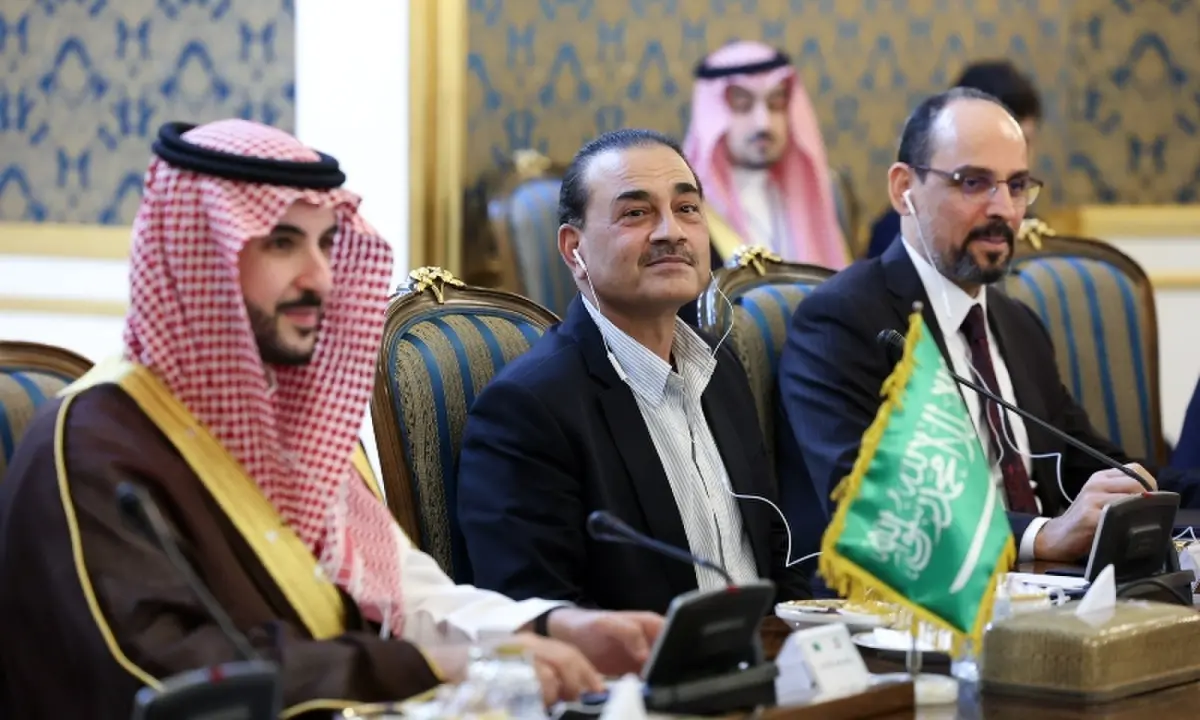
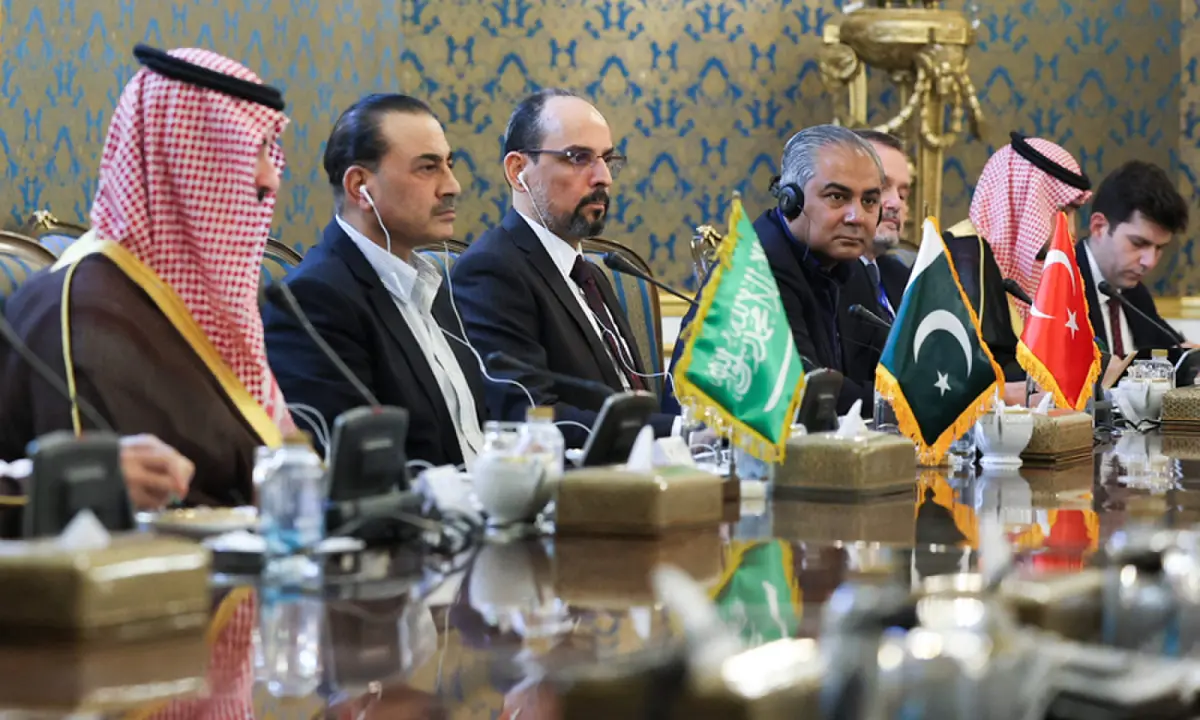
On October 26, top officials from the Mecca Pact countries—Saudi Arabia, Turkey, and Pakistan—met with Iranian officials in Tehran to discuss regional security. The meeting involved Prince Khalid bin Salman (Saudi defense minister), Field Marshal Asim Munir (Pakistan’s army chief and Chief of Defence Forces), and Ibrahim Kalin (Turkish intelligence chief). They discussed strategies to ease tensions amid the re-escalation of conflicts in the region, particularly regarding the Houthi conflict in Yemen. The meeting aimed to prevent a flare-up between Iran and other regional or global powers like the US and Israel. Defence Minister Khawaja Asif later clarified that his non-participation in these discussions was due to it not being under his ministry's mandate, responding to criticism from Jamiat Ulema-i-Islam-Fazl (JUI-F) chief Maulana Fazlur Rehman.

Written for “Tehran Huddle Talks” on 2026-10-30, grounded in this article and the 23 other(s) covering the same event.
Why this leaning score
The article's own words the score was based on. Each is quoted verbatim and was checked against the article text before being stored, so you can find it in the original.
Reading Leans left (beta estimate) Confidence high
Leaning: leans left for article 112211 (high confidence, 2 verified quotes) · logged 2026-10-30

Story

📰 Tehran Huddle Talks
Politics · 24 article(s) covering the same event. Compare every outlet's account →

Compared with similar articles

This article reads leans left and hedges 12% of its claims. Each row says how that neighbour differs.
A huddle in Tehran Same event
Dawn
⚖️ Leans strongly left further left than this Hedges 2 of 47 claims Outlet record 72/100
Times of India
Hedges 1 of 11 claims Outlet record 59/100
The Guardian
⚖️ Leans left Hedges 3 of 26 claims Outlet record 66/100
Dawn
Hedges 5 of 28 claims Outlet record 72/100
Times of India
⚖️ Leans left Hedges 2 of 22 claims Outlet record 59/100
Dawn
Hedges 5 of 29 claims Outlet record 72/100
The Tehran opening Same event
Dawn
⚖️ Leans strongly left further left than this Hedges 14 of 46 claims Outlet record 72/100
Regional security Same event
Dawn
⚖️ Leans strongly left further left than this Hedges 3 of 20 claims Outlet record 72/100
The Guardian
⚖️ Leans left Hedges 2 of 19 claims Outlet record 66/100
Deutsche Welle
Hedges 7 of 41 claims Outlet record 95/100
How this article was measured signals, leaning charts, publisher record, byline, topics and claims

Signals How these are calculated →

Claims extracted
24
sentences that state something as happening or true
Uncertain
12%
3 of 24 hedged ("reportedly", "may", "according to")
Leaning
Leans left
of the writing, not the subject · beta estimate
Publisher signals
60/100
Al Jazeera's corrections and hedging, across everything collected from it. Not a measure of accuracy.
Outlets on this story
24
Politics
Same framing elsewhere
1
articles that frame the event the way this one does
Analyzed 2026-10-30 · how these are computed

How this is being covered How these are calculated →

Article leaning vs. publisher reliability
Source leaning vs. consistency

Publisher

Al Jazeera · 4411 article(s) · 2 correction(s) detected
Running correction rate · 2 correction(s)

Who wrote this

Federica Marsi
5 article(s) here · 1 carrying a prediction
🔮 Meanwhile, during a diplomatic visit to the United Kingdom’s University of Cambridge on Monday, Omani Foreign Minister Badr Albusaidi called for a regional security framework, including a “non-aggression pact”, between the Gulf countries and Iran under which the United States would no longer be the primary provider of security.
🔮 Cybersecurity analyst and author Eddy Willems said the advertisements used automatically infect devices the moment they pop up on the screen, but there is an important technical nuance.
🔮 One of her lecturers, Tetiana Melikhova of Zaporizhzhia National University, said Bubynets was an only child and that her mother “lost the meaning of life” after she died. “She couldn’t speak.
🔮 Recommended Stories list of 3 items- list 1 of 3US increases pressure on Iran with sanctions targeting aviation sector - list 2 of 3Why US-Iran war over Hormuz is threatening the Gulf’s waters - list 3 of 3The war in the Gulf will have to end in compromise Iranian Foreign Minister Abbas Araghchi responded to Cao’s acknowledgement of the damage inflicted on the US facility.
🔮 Former Bangladesh Prime Minister Sheikh Hasina, who was dramatically ousted following a brutal crackdown on protesters in 2024 and fled to India, is expected to make a rare public appearance after two years in exile in New Delhi on Wednesday.
Also by Federica Marsi
Nothing else under this byline is closely related to this article, so these are simply their most recent.

Topics

Houthi Iran Saudi Saudi Arabia Tehran

Subjects

Iran GPE · 13× Tehran GPE · 7× Saudi Arabia GPE · 4× Saudi NORP · 3× Houthi NORP · 2× Iranian NORP · 2× Israel GPE · 2× Pakistan GPE · 2× Qatar GPE · 2× Turkiye GPE · 2×

Narrative

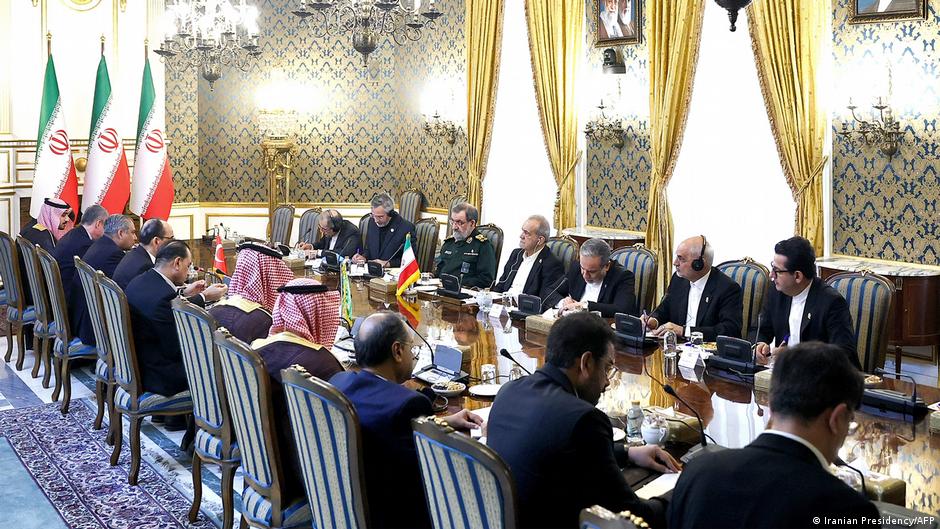
Recommended Stories list of 3 items- list 1 of 3Iran’s calculations as US escalation looms: Trust, midterms, Hormuz - list 2 of 3Qatar’s Emir and Putin call for diplomacy amid US-Iran conflict - list 3 of 3Partial results show no clear winner in Israel election Underscoring the high stakes, the meeting in Tehran was attended by Saudi Minister of Defence Prince Khalid bin Salman Al Saud, just days after Iran-aligned Houthi fighters struck Saudi airports, ports and oil facilities.
framing: assertive · carried by 1 article(s) · first seen 2026-10-30
🔮 Meanwhile, during a diplomatic visit to the United Kingdom’s University of Cambridge on Monday, Omani Foreign Minister Badr Albusaidi called for a regional security framework, including a “non-aggression pact”, between the Gulf countries and Iran under which the United States would no longer be the primary provider of security.
2026-10-30 · Al Jazeera
Are GCC countries looking for a regional security pact with Iran? · assertive framing

Claims (24 extracted, 3 hedged)

Gulf countries have stepped up diplomacy with Iran in a bid to de-escalate tensions across the Middle East, amid fears of renewed US strikes on Tehran and intensifying hostilities between Iran-backed Houthi rebels in Yemen and Saudi Arabia. asserted
countries → step → Yemen
The three nations that signed the Mecca Joint Defence Agreement in August – Pakistan, Saudi Arabia and Turkiye – and diplomats from Qatar met with high-ranking Iranian officials on Monday in an effort to prevent the resumption of all-out war. asserted
that → sign → war
Recommended Stories list of 3 items- list 1 of 3Iran’s calculations as US escalation looms: Trust, midterms, Hormuz - list 2 of 3Qatar’s Emir and Putin call for diplomacy amid US-Iran conflict - list 3 of 3Partial results show no clear winner in Israel election Underscoring the high stakes, the meeting in Tehran was attended by Saudi Minister of Defence Prince Khalid bin Salman Al Saud, just days after Iran-aligned Houthi fighters struck Saudi airports, ports and oil facilities. asserted
fighters → loom → airports
Meanwhile, during a diplomatic visit to the United Kingdom’s University of Cambridge on Monday, Omani Foreign Minister Badr Albusaidi called for a regional security framework, including a “non-aggression pact”, between the Gulf countries and Iran under which the United States would no longer be the primary provider of security. asserted
States → call → security
While Gulf countries appear determined to avoid another round of conflict – which has already restricted passage through the Strait of Hormuz, disrupted global oil and gas supplies and wreaked havoc on energy facilities and infrastructure in Gulf states – questions remain over whether a regional agreement is possible and where it would leave relations between the US and Gulf Cooperation Council (GCC). asserted
it → appear → US
On Friday, US President Donald Trump repeated warnings that Washington may carry out another military operation against Iran as rising fuel prices weigh on the US midterm elections scheduled for November 3. uncertain
prices → repeat → November
Iran’s Islamic Revolutionary Guard Corps (IRGC) said Iran would respond more forcefully to any renewed US military action, stoking fears of an even wider escalation. asserted
Iran → say → escalation
While this week’s talks in Tehran mark the first high-level contact between Iran and the Mecca mutual defence pact nations since the US-Israel war on Iran began on February 28, reports suggest they have stopped short of landing an agreement. asserted
they → mark → agreement
Reuters reported that Qatari mediators presented Iran with a draft deal on Sunday, which Tehran was expected to respond to by the end of the week. asserted
Tehran → report → week
On Wednesday, the news agency quoted Iranian officials as saying Qatar had put forward ideas that were unacceptable and that Tehran would show no flexibility regarding the nuclear issue. asserted
Tehran → quote → issue
Khaled Batarfi, a Saudi political analyst and academic, said the visit to Tehran indicated that Saudi Arabia was willing to give Iran a “last warning” and “submit to the region’s concerns”, but that Iran has so far refused. asserted
Iran → say → concerns
“The gap is [wide] and what makes it worse is that there is no trust,” Batarfi told Al Jazeera. asserted
Batarfi → make → Jazeera
Observers say diverging views are unlikely to turn the current diplomatic efforts into a lasting infrastructure. asserted
views → say → infrastructure
“It’s really hard to see a regional security framework coming out in the coming months or even years,” Aniseh Bassiri Tabrizi, an associate fellow at Chatham House in London, told Al Jazeera. asserted
Tabrizi → ’ → Jazeera
“What we are seeing is more small groups, flexible groups of countries that are taking the lead in trying to reach either bilateral or multilateral solutions,” the analyst said. asserted
analyst → see → solutions
“A regional security framework would need the same vision for the region, which is not necessarily shared… among the GCC countries themselves.” asserted
which → need → countries
Challenges ahead Hamidreza Azizi, a senior analyst at the International Crisis Group, said Pakistan, Saudi Arabia and Turkiye share concerns that a prolonged confrontation between Iran and the US could further destabilise the region. uncertain
confrontation → say → region
“The main obstacle remains the fundamental disagreement between Tehran and Washington over the sequence of commitments,” Azizi told Al Jazeera. asserted
Azizi → remain → Jazeera
“The US wants Iranian concessions, particularly on the nuclear issue, while Tehran insists that its conditions for ending the war must be met first.” asserted
conditions → want → war
“Regional mediation could help bridge this gap, possibly through an interim arrangement, but the willingness of regional actors to facilitate an agreement does not necessarily mean that the two principal parties are prepared to make the necessary compromises,” he added. uncertain
he → help → compromises
As for a new security order, Azizi said regional countries do not share a common understanding of what it should look like and what role the US – which has so far been the GCC’s main security partner – would have left to play. asserted
which → say → role
Iran has long advocated for a regional security architecture that would reduce or eliminate the US military presence. asserted
that → advocate → presence
“Saudi Arabia and other Gulf states, however, remain deeply integrated into the US security system, and there is little indication that they intend to abandon it,” Azizi said. asserted
Azizi → remain → it
“The recent war has certainly raised questions about the reliability of American security guarantees, but this has encouraged these countries to diversify their security partnerships rather than fundamentally redefine their strategic alignments.” asserted
this → raise → alignments

💬Give feedback
🕘History 🎫Support