Gulf states working on multipart peace deal to avert renewal of US-Iran war

Read the original at The Guardian ↗
Cite

editor, P. W. D. (2026, October 28). Gulf states working on multipart peace deal to avert renewal of US-Iran war. The Guardian. https://www.theguardian.com/world/2026/oct/28/gulf-states-multipart-peace-deal-avert-renewal-us-iran-war

Dated from the outlet's own feed. Check the original for its byline.

The Guardian · collected 2026-10-28 · by Patrick Wintour Diplomatic editor

Quick Summary

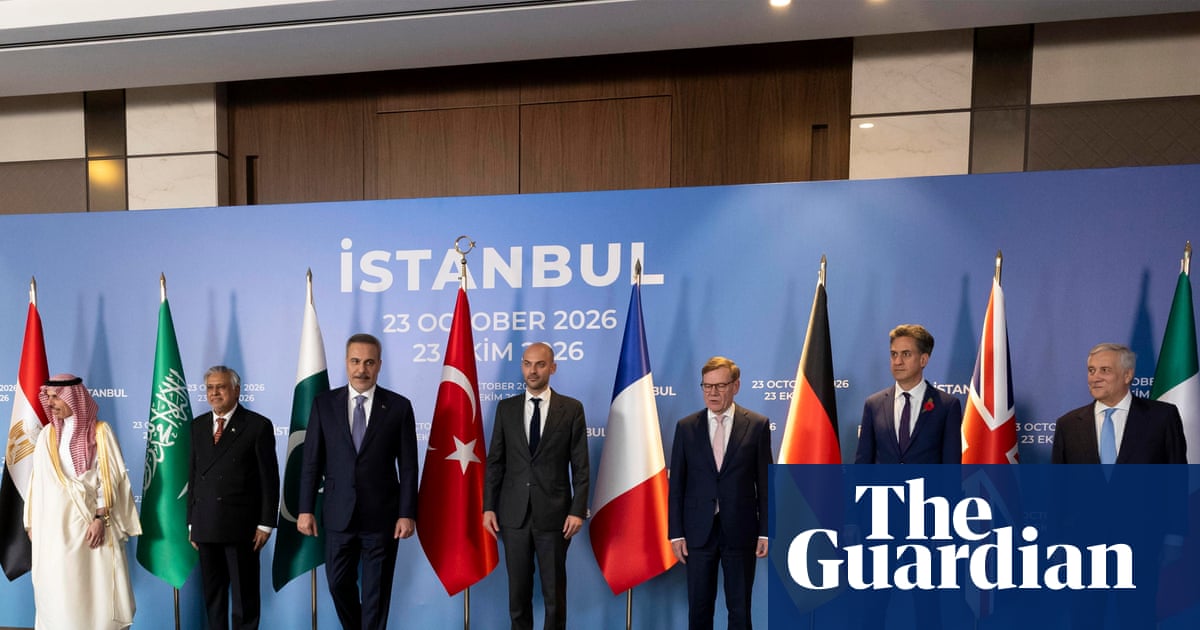
Gulf states are working on a peace deal to reopen the Strait of Hormuz and for the Houthis in Yemen to withdraw forces as part of efforts to prevent renewed conflict between Iran and the US. The US wants Iran to allow UN weapons inspectors back into the country, while Iran insists on economic sanctions relief before making concessions. Talks involve multiple countries including Saudi Arabia, Turkey, Pakistan, and European diplomats, with a focus on reducing the US presence in the Middle East and establishing a non-aggression pact that includes Iran.
Written locally by qwen2.5:14b on 2026-10-28, using this article's own text rather than the other coverage of the same event (that is the story summary below).

AI analysis runs on qwen2.5:14b, locally

Story summary

As of October 28, 2026, Gulf states are working on a multipart peace deal aimed at averting a renewal of conflict between the US and Iran. Key components of this deal include reopening the Strait of Hormuz within four days after sanctions are lifted and having the Houthis withdraw forces from inside Yemen. Talks involve Turkey, Saudi Arabia, Pakistan, and European powers, with the US aware but seeking additional concessions like Iran allowing UN weapons inspectors back into the country. British Foreign Secretary Ed Miliband urged Iranian Foreign Minister Abbas Araghchi to agree to readmit UN inspectors during a meeting in New York, but Iran has so far refused, insisting on guarantees of sanctions relief before discussing its nuclear program further.

Written for “Gulf States Peace Deal Talks” on 2026-10-28, grounded in this article and the 0 other(s) covering the same event.
Why this leaning score
The article's own words the score was based on. Each is quoted verbatim and was checked against the article text before being stored, so you can find it in the original.
Reading Leans left (beta estimate) Confidence medium
Leaning: leans left for article 111245 (medium confidence, 2 verified quotes) · logged 2026-10-28

Story

📰 Gulf States Peace Deal Talks
Politics · 1 article(s) covering the same event.

Compared with similar articles

This article reads leans left and hedges 11% of its claims. Each row says how that neighbour differs.
The Hindu
⚖️ leaning not scored 🔴 22% hedged 4 of 18 📰 publisher trust 78
“The articles describe different developments related to potential military conflict and peace negotiations between the US and Iran, rather than a single specific incident.”
Times of India
⚖️ leaning not scored 🔴 9% hedged 1 of 11 📰 publisher trust 59
“The articles describe different aspects of regional diplomacy but do not report on the same specific meeting or incident.”
Al Jazeera
⚖️ leaning not scored 🔴 0% hedged 0 of 2 📰 publisher trust 60
“The articles describe different discussions and initiatives related to US-Iran tensions but do not refer to the same specific meeting or incident.”
Dawn
⚖️ leaning not scored 🔴 no claims extracted 📰 publisher trust 71
“The articles discuss related topics but describe different events: Article A is an editorial opinion against aggression towards Iran, while Article B reports on ongoing peace talks involving Gulf states and other nations to prevent a US-Iran war.”
Prudent warning different event · 85%
Dawn
⚖️ Leans strongly left further left than this 🔴 18% hedged 4 of 22 📰 publisher trust 71
“Article A discusses a meeting in Istanbul where foreign ministers expressed opposition to military intervention in Iran, while Article B focuses on ongoing peace talks involving Gulf states and a multipronged peace deal to prevent renewed conflict between the US and Iran.”
The Guardian
⚖️ Leans left 🔴 12% hedged 3 of 26 📰 publisher trust 66
“The articles describe related diplomatic efforts but different stages or aspects of negotiations, not the exact same specific meeting or outcome.”
Dawn
⚖️ leaning not scored 🔴 17% hedged 5 of 29 📰 publisher trust 71
“While both articles discuss diplomatic efforts in the region, they describe different meetings and agreements on distinct dates.”
Al Jazeera
⚖️ leaning not scored 🔴 0% hedged 0 of 2 📰 publisher trust 60
“The articles discuss related geopolitical tensions and diplomatic efforts but describe different specific events - one a warning about potential consequences of escalation, the other details on peace negotiations.”
The Tehran opening different event · 75%
Dawn
⚖️ Leans strongly left further left than this 🔴 30% hedged 14 of 46 📰 publisher trust 71
“While both articles discuss diplomatic efforts and meetings related to tensions between Iran and Gulf states, they describe different aspects of the ongoing situation without clearly referencing the exact same meeting or incident.”
Times of India
⚖️ Leans left 🔴 9% hedged 2 of 22 📰 publisher trust 59
“Article A describes a high-level meeting in Tehran between Iran and Saudi Arabia, Turkiye, and Pakistan aimed at de-escalating conflict. Article B talks about Gulf states' plans for a multipronged peace deal to avert war, which seems like a different event or phase of negotiation.”
How this article was measured signals, leaning charts, publisher record, byline, topics and claims

Signals How these are calculated →

Claims extracted
19
sentences that state something as happening or true
Uncertain
11%
2 of 19 hedged ("reportedly", "may", "according to")
Leaning
Leans left
of the writing, not the subject · beta estimate
Publisher signals
66/100
The Guardian's corrections and hedging, across everything collected from it. Not a measure of accuracy.
Outlets on this story
1
Politics
Same framing elsewhere
1
articles that frame the event the way this one does
Analyzed 2026-10-28 · how these are computed

How this is being covered How these are calculated →

Article leaning vs. publisher reliability
Source leaning vs. consistency

Publisher

The Guardian · 2560 article(s) · 6 correction(s) detected
Running correction rate · 6 correction(s)

Who wrote this

Patrick Wintour Diplomatic editor
18 article(s) here · 1 carrying a prediction
🔮 The US is aware of the talks’ progress but is holding out for a concession that European powers suggest could involve Iran allowing UN weapons inspectors back into the country.
🔮 Security officials and diplomats at Monday’s meeting were expected to discuss how Iran could persuade the Houthis in Yemen to end their crippling missile and drone attacks on infrastructure in Saudi Arabia.
🔮 She has justified her late – but widely predicted – entry into the race on the grounds that the UN security council appears to be close to deadlock on the six remaining candidates in the race, with no one as yet able to establish a clear lead after six rounds of voting, the latest on 16 October.
🔮 Foreign ministers at a summit of eight European and Middle Eastern countries have urged the US and Israel not to renews their attacks on Iran, warning a fresh outbreak of fighting would spread conflict and push oil prices even higher.
🔮 They are trying to burn it, but we can only anticipate there will be diseases such as cholera in the near future.
🔮 Col Javad Mokhtar Rezaei, the deputy head of cultural and social affairs for Iran’s cyber police (Fata), told the Tasnim news agency: “In some cases, the phones offered may actually exist, but exposing electronic components to saltwater and extreme humidity can cause corrosion of internal components, damage to the boards, battery and display, and cause hidden malfunctions in the device’s performance.” Meysam Doost-Mohammadi, a spokesperson for the Iranian mobile association, said it would be unusual for valuable phones to be transported by ship. The bulk of the recent spate of attacks have occurred close to the coast with Oman, a route that Iran regards as unauthorised.
🔮 Unlawful settlement activity will be captured through a breach of international humanitarian law, including the Geneva convention on occupation.
🔮 The report came as the United Nations’ special envoy to Yemen, Hans Grundberg, admitted to the UN security council in New York that Yemen – the poorest country in the world – had lapsed back into full-scale war and said the first victims would be women and children.
🔮 This could means as many as 27 Israeli diplomats being expelled from the UK, a step that would arguably mark the lowest point in British-Israeli diplomatic relations since the formation of the state of Israel.
🔮 Despite concerns that continued sanctions may lead to protests, Iranian diplomats are not planning any new concessions after a proposal to speed the process of nuclear negotiations was rejected by Donald Trump a week ago.
Also by Patrick Wintour Diplomatic editor
Nothing else under this byline is closely related to this article, so these are simply their most recent.
All 18 articles by Patrick Wintour Diplomatic editor →

Topics

European Houthis Iran Saudi Arabia Yemen

Subjects

Iran GPE · 20× Houthis NORP · 3× Saudi Arabia GPE · 3× Yemen GPE · 3× European NORP · 2× Houthi ORG · 2× Pakistan GPE · 2× Turkey GPE · 2× British NORP · 1× Hormuz GPE · 1×

Narrative

Iran successfully prevented discussion of its nuclear programme at the meeting with Turkey, Saudi Arabia and Pakistan, and instead ensured the focus was a broader discussion about a long-term regional security vision that would include the Gulf states and Iran and see the US presence in the Middle East reduced or ended.
framing: assertive · carried by 1 article(s) · first seen 2026-10-28
🔮 The US is aware of the talks’ progress but is holding out for a concession that European powers suggest could involve Iran allowing UN weapons inspectors back into the country.
2026-10-28 · The Guardian
Gulf states working on multipart peace deal to avert renewal of US-Iran war · assertive framing

Claims (19 extracted, 2 hedged)

A multipronged peace deal to reopen the strait of Hormuz within four days of sanctions being lifted and for the Houthis to withdraw substantial forces inside Yemen are at the heart of Gulf states’ plans to avert what they regard as a disastrous renewal of war between Iran and the US. asserted
they → reopen → Iran
The US is aware of the talks’ progress but is holding out for a concession that European powers suggest could involve Iran allowing UN weapons inspectors back into the country. uncertain
Iran → hold → country
The British foreign secretary, Ed Miliband, urged the Iranians to agree to readmit the UN weapons inspectors when he met the Iranian foreign minister, Abbas Araghchi, in New York but so far Iran has refused, saying it will only hold talks in principle on its nuclear programme. asserted
it → urge → programme
European diplomats believe allowing weapons inspectors to reenter Iran and visit its bombed nuclear sites is a minimum requirement for a breakthrough with the US president, Donald Trump. asserted
inspectors → believe → president
But Iran remains focused solely on the guarantees of sanctions relief it would receive in return for reopening the strait of Hormuz. asserted
it → remain → Hormuz
Dr Ali Bagheri, the deputy secretary of Iran’s national security council, said Iran was willing to reduce its proposal that the strait reopen seven days after economic sanctions are lifted to four days. asserted
sanctions → say → days
In a further sign of flexibility, Iran is starting to acknowledge it has a mediating role in the parallel conflict in Yemen. asserted
it → start → Yemen
Iran’s secretary of the supreme national security council, Mohsen Rezaei, met the Houthi’s ambassador to Iran, Ibrahim al-Dulaimi, on Tuesday. asserted
secretary → meet → Tuesday
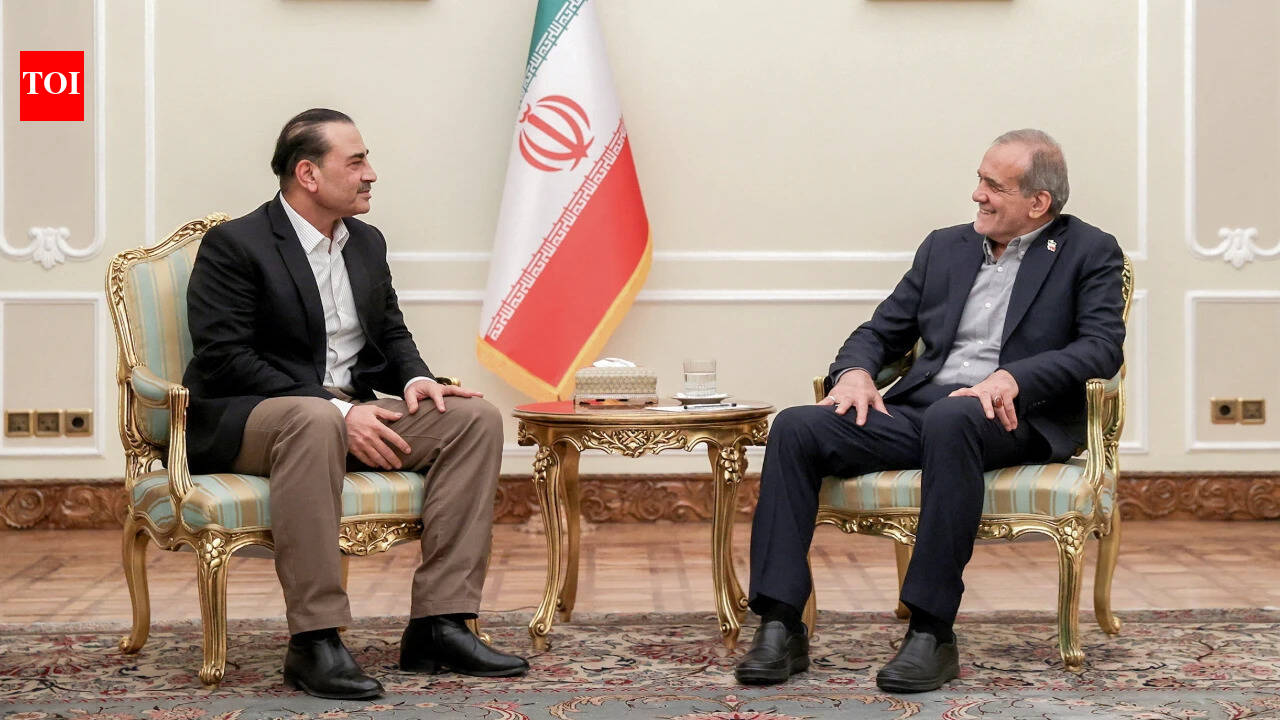
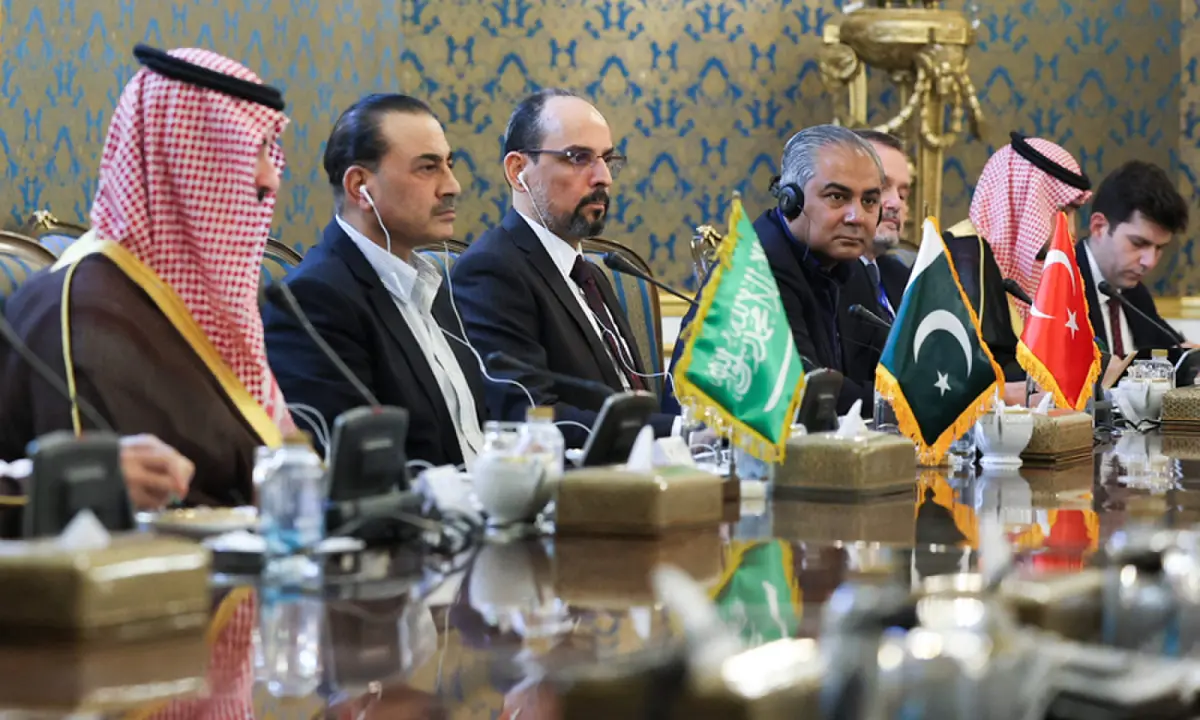
The meeting took place 24 hours after a high-level delegation from Saudi Arabia, Turkey and Pakistan travelled to Tehran to discuss Saudi terms for ending the Yemen conflict as well as a longer-term security architecture for the region. asserted
delegation → take → region
Iran backs the Houthis, and has the power to influence them, including devising proposals that stop short of a Houthi military victory that many say is unobtainable. asserted
many → back → victory
In return the Houthis are demanding that Saudi Arabia lift what it regards as a naval and air blockade on Houthi-held territory. asserted
it → demand → territory
Iran successfully prevented discussion of its nuclear programme at the meeting with Turkey, Saudi Arabia and Pakistan, and instead ensured the focus was a broader discussion about a long-term regional security vision that would include the Gulf states and Iran and see the US presence in the Middle East reduced or ended. asserted
presence → prevent → East
A new non-aggression pact in which Iran is no longer ostracised by the rest of the Gulf, as it has been since the 1979 Islamic Revolution, would meet Iran’s highest strategic goal. asserted
it → ostracise → goal
An agreed commitment to this goal by six Gulf states might also make it easier for Iran to swallow potentially difficult tactical concessions that it would be required to make concerning its nuclear programme. uncertain
it → agree → programme
One of the key advocates of the inclusive security plan, Oman’s foreign minister, Badr Albusaidi, said he believed the US administration understood this was the direction the region is heading. asserted
region → say → plan
He said: “I think if Iran is fully re-engaged in this idea of having all of us, eight countries at peace with the rest of the world, the economic potential is going to be enormous for all of us in the region and those outside the region who choose to take part in this development. asserted
who → say → development
We have really discussed this in at length during the talks between Iran and the United States, and I think there is general acceptance that this will be the direction of travel once we have a deal in place at the end of the day.” asserted
we → discuss → day
At a televised event in Iran this week Araghchi underlined the importance of a new postwar security pact to Iran, saying: “Recently, there has been talk of a new war but I am already thinking about the postwar period. asserted
I → televise → period
Whether there is war or not, our policies remain the same.” asserted
policies → be → ?

💬Give feedback
🕘History 🎫Support