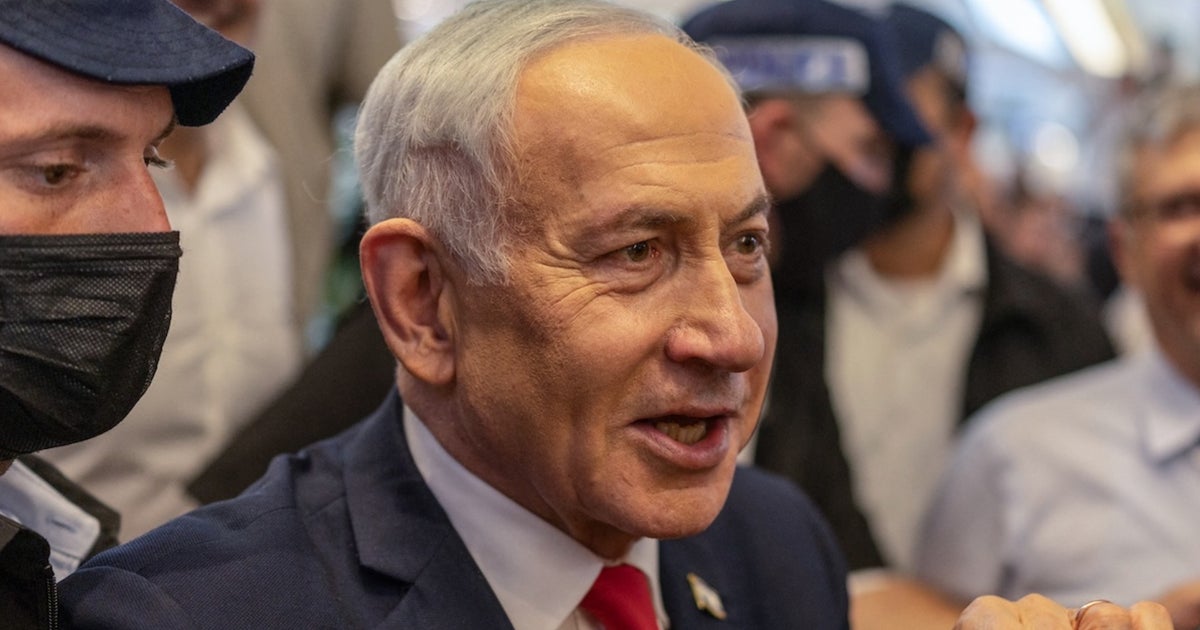
Israeli Prime Minister Benjamin Netanyahu and rival Gadi Eisenkot each vowed on Wednesday (October 28, 2026) to form a government after both came up short in the first election since the October 7, 2023 attack traumatised the country.
asserted
attack → vow → country
Voters turned out on Tuesday (October 27, 2026) in the highest numbers in decades to give their verdict on the divisive rule of Mr. Netanyahu, Israel's longest-serving Prime Minister who has pushed the country sharply to the right and unleashed a wave of wars in response to the Hamas attack.
asserted
who → turn → attack
Exit polls showed Mr. Eisenkot, a former military chief and political novice, and his opposition bloc neck and neck with Mr. Netanyahu's hard-right camp and both well away from the threshold for a majority in Parliament.
asserted
both → show → Parliament
The strongest gains came from Arab Israeli parties whose voters turned out in soaring numbers against Mr. Netanyahu, who has relentlessly warned that the minority would dilute the Jewish nationalist direction in which he has taken Israel.
asserted
he → come → Israel
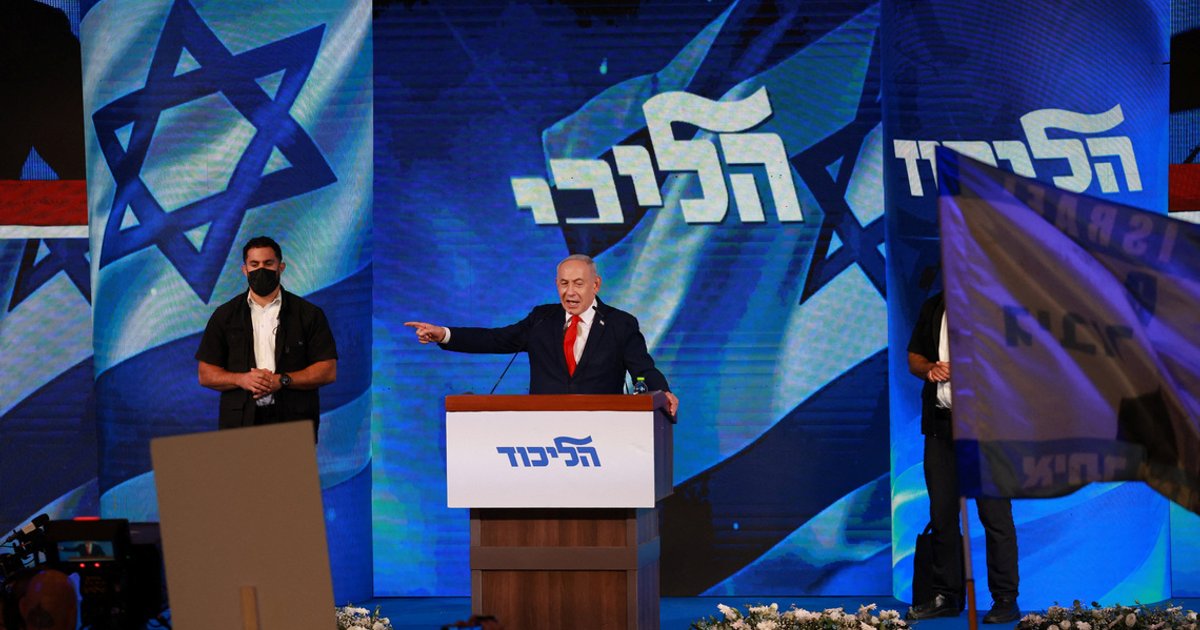
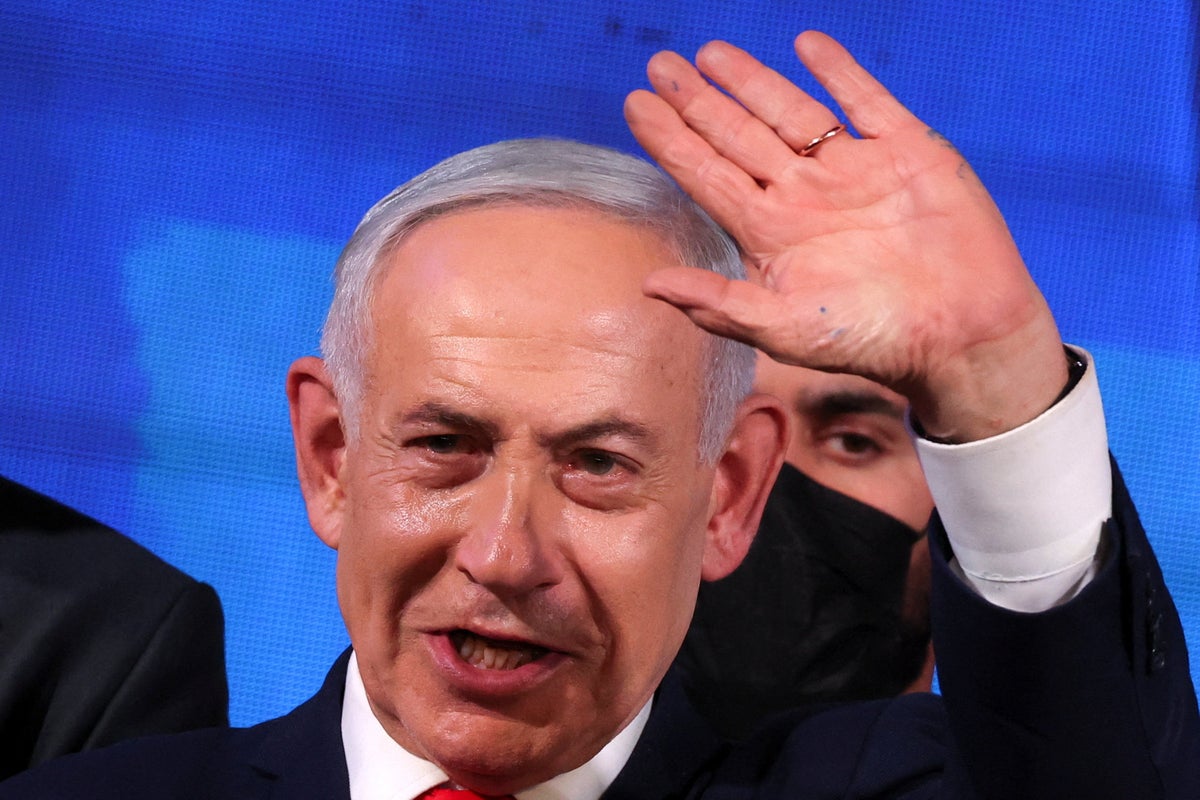
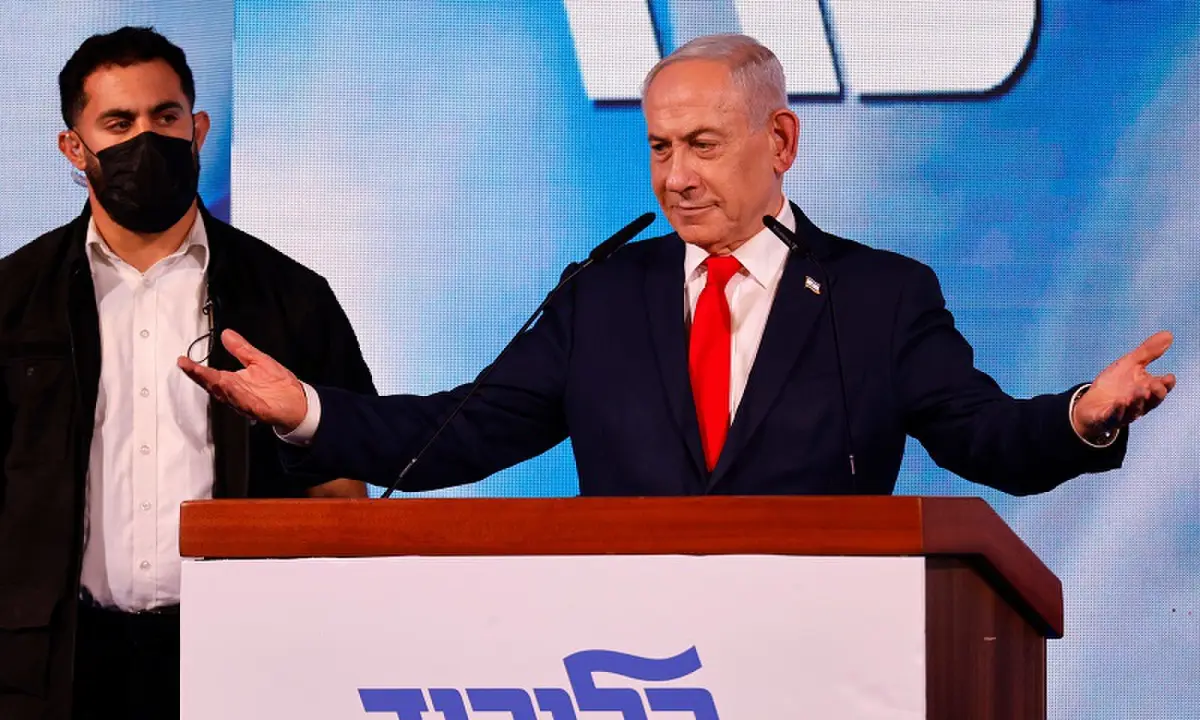
Mr. Netanyahu, greeting cheering supporters at a Jerusalem convention centre after 3 a.m. (0100 GMT), called for a "strong government of the right" and said that the "Jewish and Zionist majority must unite".
asserted
majority → greet → right
The 77-year-old Prime Minister was unusually brief and did not directly claim victory.
uncertain
Minister → claim → victory
Instead, he listed leaders Israel has killed under his orders and again hinted that he was ready for a third bombing campaign against Iran alongside U.S. President Donald Trump, his close ally.
asserted
he → list → Trump
"Israel has a unique opportunity with our partner President Trump to forever eliminate the existential threat of Iran," Mr. Netanyahu said.
asserted
Netanyahu → have → Iran
Mr. Eisenkot, speaking to his own supporters in Tel Aviv, issued a veiled warning to Mr. Netanyahu, who observers say could use a war to push for a unity government.
uncertain
observers → speak → government
"Netanyahu, don't you dare use Israel's security for your political needs," Mr. Eisenkot said.
asserted
Eisenkot → use → needs
Addressing Israel's security establishment, Mr. Eisenkot said that they served the state and not Mr. Netanyahu, calling him "a caretaker Prime Minister, without a mandate or the people's trust".
asserted
they → address → mandate
'Public has voted for change'
asserted
Public → vote → change
Mr. Eisenkot shares many of Mr. Netanyahu's views on security and has backed the Gaza offensive following October 7 that has reduced the territory to rubble.
asserted
that → share → rubble
But Mr. Eisenkot has vowed to create a more inclusive atmosphere inside Israel and to rein in extremist settlers in the West Bank who have attacked Palestinians with virtual impunity.
asserted
who → vow → impunity
After turnout of nearly 78%, the highest since 1999, Mr. Eisenkot said it would be a mistake to hold a second election and vowed to work "swiftly" to form a government.
"The public has voted for change," Mr. Eisenkot said.
asserted
Eisenkot → say → change
"A worthy leader would accept the people's vote of no confidence and announce his retirement from political life today."
The three mainstream Israeli television networks in exit polls gave the two blocs each around 51 seats — well below the 61 needed to govern — after initially giving an edge to the opposition.
asserted
networks → accept → opposition
Israeli Arab lists were projected to win 17 to 18 seats, a sharp gain, with some Israeli Arab communities reporting near-universal turnout driven by outrage to often derogatory rhetoric against them by Mr. Netanyahu's far-right allies.
asserted
communities → project → allies
Key Israeli Arab leader Mansour Abbas said he believed the right had "suffered a major loss" and was open to working with Mr. Eisenkot.
asserted
right → say → Eisenkot
But Mr. Eisenkot said during the campaign he would not govern with Israeli Arab lawmakers — and Mr. Netanyahu again suggested that a government relying on Arab votes would lack legitimacy.
uncertain
government → say → legitimacy
Arab lawmakers could give Mr. Eisenkot support in parliamentary votes to maintain a minority government without joining a coalition.
uncertain
lawmakers → give → coalition
If not, Israel could head to new elections.
uncertain
Israel → head → elections
Itamar Ben Gvir, a far-right firebrand who according to exit polls did not gain as much as many expected, warned Mr. Netanyahu against another option — a unity government with Mr. Eisenkot.
uncertain
many → accord → Eisenkot
"It would be a terrible mistake," said Mr. Ben Gvir, who champions the expulsion of Palestinians and would likely be excluded from any unity government.
asserted
who → say → government
Hebrew University of Jerusalem political scientist Gideon Rahat said Mr. Ben Gvir had succeeded in mobilising votes — of Israeli Arabs.
asserted
Gvir → say → Arabs
But he said: "Even if Netanyahu lost, that doesn't mean Eisenkot won."
asserted
Eisenkot → say → ?
The election came as Israel looks increasingly isolated on the world stage, driven by the war in Iran and the military campaign in Gaza, soaring settlement construction and violence in the occupied West Bank.
asserted
Israel → come → Bank
Mr. Netanyahu himself faces an arrest warrant from the International Criminal Court over Gaza as well as domestic corruption charges that could land him in prison if he loses power.
uncertain
he → face → power
Mr. Eisenkot is a political novice whose mild manner is the antithesis of the smooth-talking incumbent.
asserted
manner → talk → incumbent
Before voting, the 66-year-old Mr. Eisenkot paid his respects privately at the grave of his son Gal, whose death fighting in Gaza has drawn empathy from many Israelis.
asserted
son → vote → Israelis
Tens of thousands of Israelis are estimated to have flown in from abroad for an election seen as crucial for their country.
asserted
thousands → estimate → country
Eilana Zisblit, 55, told AFP she had travelled back from Canada, where she has lived for almost 30 years, to vote for a centre-right party in Mr. Eisenkot's bloc.
"The country is going in a really, really bad direction.
asserted
country → tell → direction
," she said.
asserted
she → say → ?
The time to act is "now, or the country really won't survive anymore".
asserted
country → act → ?
 The Aporia