Israel's next prime minister is yet to be decided as exit polls from the country's most contentious election in decades indicate a near neck-and-neck race between the leading blocs.
asserted
polls → decide → blocs
Benjamin Netanyahu's Likud party is projected to remain the largest party in the next Knesset but has lost support, with polls suggesting it will keep at most 27 of its original 32 seats.
asserted
it → project → seats
The main opposition party Yashar, led by former military chief Gadi Eisenkot, is projected to secure up to 22 seats.
asserted
party → lead → seats
However when accounting for projected seats of likely coalition partners, the race is much closer with the pro and anti-Netanyahu blocs holding an equal 51 seats, according to exit polls from two media outlets.
uncertain
blocs → account → outlets
Neither bloc has enough seats to secure a majority of 61 out of 120, with the other 18 seats projected to be held by the two Arab parties, meaning their support could be needed to form a government.
uncertain
support → have → government
Despite there being no clear winner, Mr Eisenkot hailed the results as a vote for change.
asserted
Eisenkot → hail → change
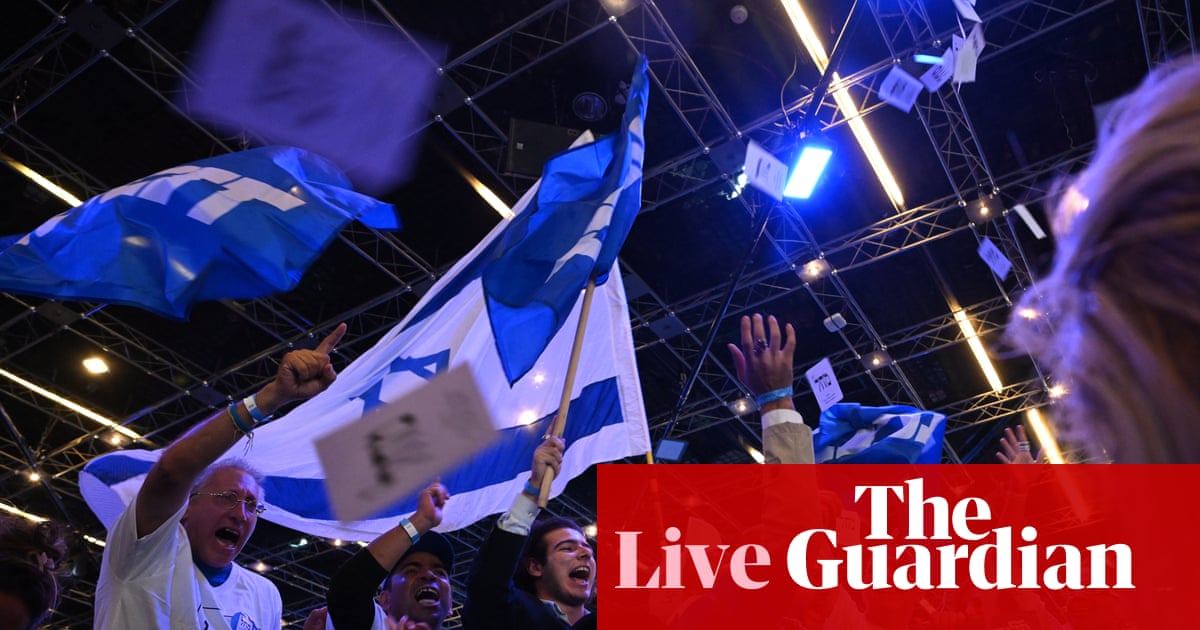
"The Israeli public has voted against Netanyahu continuing to serve as prime minister of Israel," he told his supporters in Tel Aviv.
asserted
he → vote → Aviv
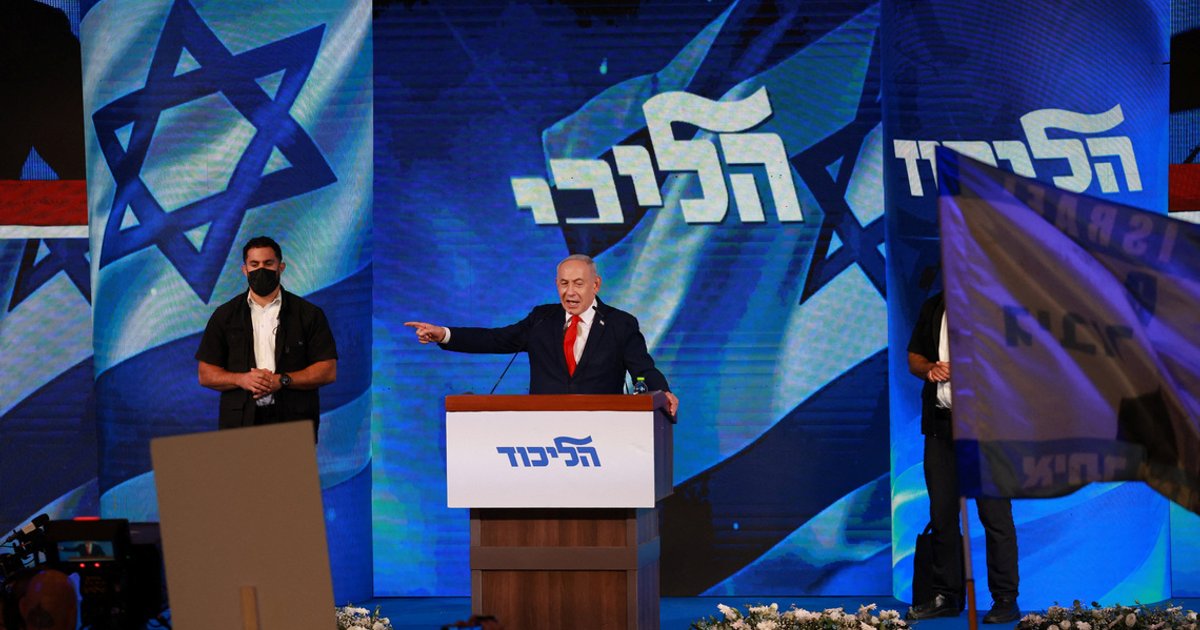
Mr Netanyahu hit back in his speech in Jerusalem, saying Likud was the "largest party in Israel" and that the right-wing bloc had a "decisive majority … among the Jewish public".
asserted
bloc → hit → public
The election was marked by high voter turnout, including a surge in voters from Arab communities, as well as dips in support for the conservative parties.
asserted
election → mark → parties
The outcome, however, is proving to be very close and raises the prospect of a prolonged coalition-bargaining process, with the official results also possibly needing days to finalise with less than 20 per cent counted so far.
uncertain
cent → prove → days
Huge voter turnout
This election has seen the biggest voter turnout since 1988, with almost 78 per cent of the nation voting and large numbers heading to polls into the eleventh hour, according to the Central Elections Committee.
uncertain
numbers → see → Committee
It has led to some significant shifts in voting trends and has squeezed minor parties.
asserted
It → lead → parties
The far-right parties which had propped up the Netanyahu government in the last term of government, led by Itamar Ben-Gvir and Bezalel Smotrich, are projected to secure only six seats each.
asserted
which → prop → seats
Arab parties the United Arab List and the Joint List, which have traditionally had low turnout despite one-fifth of Israel's population being Arab, are projected to pick up a combined 18 seats, possibly making them essential to form coalitions.
uncertain
them → have → coalitions
Many who describe themselves as Palestinian citizens of Israel have experienced heightened discrimination in the past three years, and have mobilised against Mr Netanyahu in response.
asserted
who → describe → response
Those added votes along with low voting numbers from the Ultra-Orthodox Jewish community, who are caught up in a military draft exemptions saga, has meant the share of votes for the Netanyahu right-wing bloc have dwindled.
asserted
share → add → bloc
However, votes from soldiers and reservists, which are counted last, may belatedly boost those numbers.
uncertain
which → count → numbers
Israel's political landscape has always featured coalitions, with no single party ever achieving the 61 seats needed to form majority government in a 120-seat parliament.
asserted
party → feature → parliament
With no clear winner, it will be up to President Issac Herzog to decide which party leader has the best chance to form government.
asserted
leader → decide → government
All but one party have previously ruled out forming a coalition with the Arab parties, including Yashar.
asserted
party → rule → Yashar
Mr Netanyahu proclaimed in his speech that it was "forbidden to form a government that relies on Arab parties", saying they were "in favour of the destruction of the state of Israel".
asserted
they → proclaim → Israel
If no government is formed after 42 days, Mr Netanyahu's current cabinet will stay on as caretaker government and a new election will be called.
asserted
election → form → government
Mr Eisenkot rejected that prospect and called for the prime minister to accept defeat.
asserted
minister → reject → defeat
"A worthy leader would accept the people's vote of no confidence and announce his retirement from political life today," he said.
"
asserted
he → accept → life
After an election with such high voter turnout, it would be a mistake to hold another election.
asserted
it → hold → election
"It is our duty, and my personal duty, to do everything possible to respect the will of the people."
asserted
It → do → people
He said his party intended to form a "stable Zionist government that serves all Israeli citizens".
asserted
that → say → citizens
"Millions of Israelis have had enough of the culture of lies, of failure, of division and incitement," he added, referring to Mr Netanyahu's time in power.
asserted
he → have → power
Referendum on Netanyahu
This election has been widely viewed as a referendum on Mr Netanyahu's tenure as the longest-serving prime minister in Israel's history, where he has been in power for 19 of the past 30 years.
asserted
he → view → years
Domestically he has been heavily criticised for security failings which allowed for Hamas's October 7, 2023 attacks, and has been facing trial in three corruption cases.
asserted
which → criticise → cases
Mr Netanyahu campaigned on his reputation as "Mr Security" and his strength against foreign adversaries, with this being the first election after three years of wars in Gaza, Lebanon and Iran.
asserted
this → campaign → Gaza
In his speech he repeated that Israel had "a historic, once-in-a-lifetime opportunity … to remove the existential threat from Iran once and for all", calling it a sacred mission.
"
asserted
Israel → repeat → it
We removed an immediate existential threat that hung over us, the danger of immediate destruction.
asserted
that → remove → destruction
We struck the Iranian regime and brought it to the edge of the abyss.
asserted
We → strike → abyss
Iran is weaker than ever, Israel is stronger than ever," he said.
asserted
he → say → ?
"We prevailed over our enemies, and together we will prevail over them in the future too."
asserted
we → prevail → future
Mr Eisenkot addressed Mr Netanyahu directly saying: "Do not dare use Israel's security for your political needs.
asserted
Eisenkot → address → needs
 The Aporia