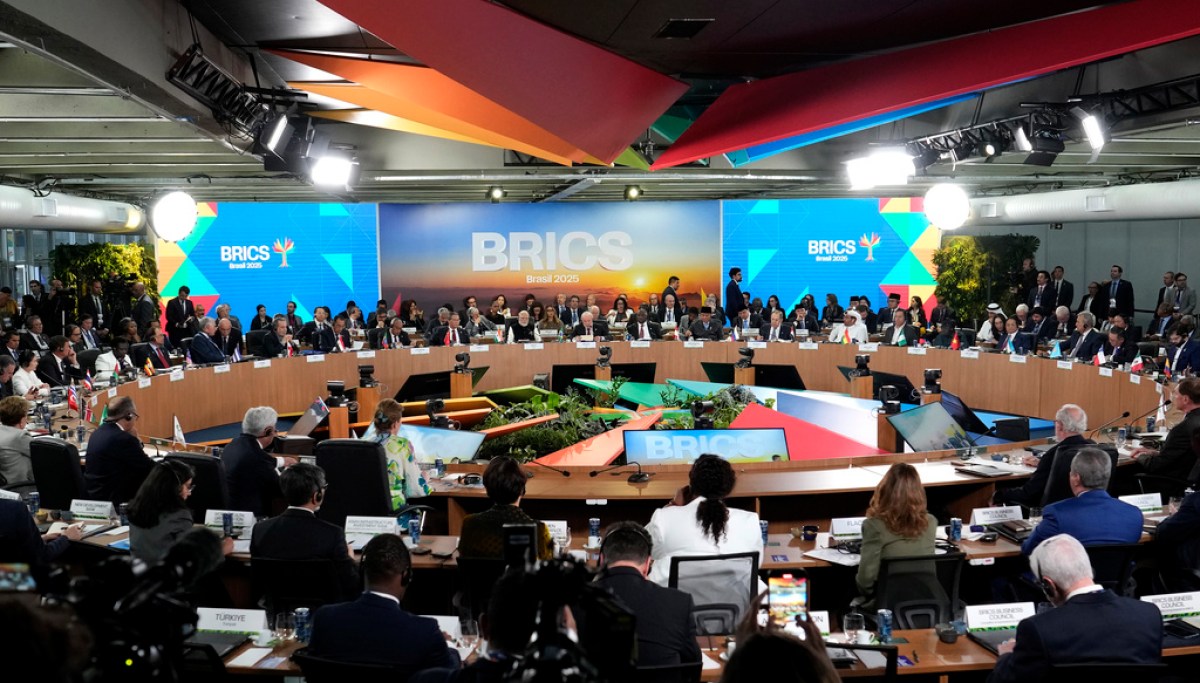
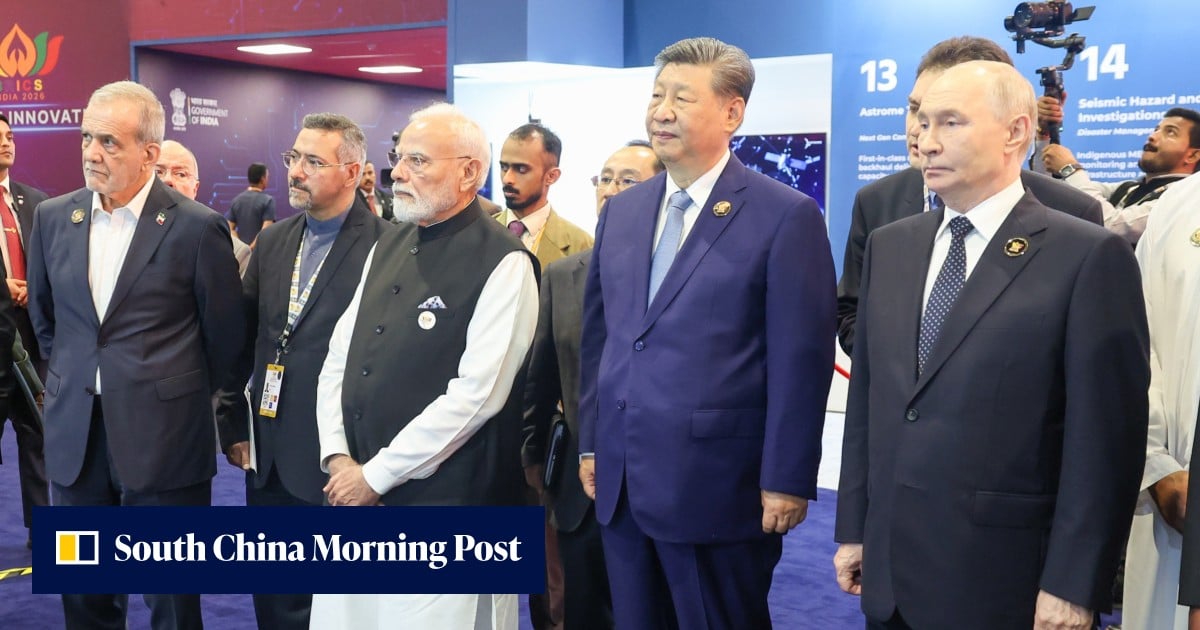
Eleven nations, zero trust: The great BRICS delusion

Washington Examiner · collected 2026-09-15 · by David W. Wang
Read the original at Washington Examiner ↗

Summary

The article discusses the 18th BRICS Summit held in New Delhi, focusing on the organization's shortcomings compared to the G7. It highlights three main issues: inadequate institutions within member countries, a lack of mutual trust and unity among members, and an inability to create a stable customer base independent of Western markets. The author argues that despite economic potential, BRICS lacks the foundational elements necessary for a cohesive and credible alliance, suggesting its current form may be more akin to a bubble than a fortress.
Written by the local model on 2026-09-15, using this article's own text rather than the other coverage of the same event (that is the story summary below).

Signals How these are calculated →

Claims extracted
38
claim-shaped sentences
Uncertain
3%
1 of 38 hedged
Leaning
withheld
no quote in the article backed the model's score
Correction & hedging signals
96.2
corrections and hedging in what we collected; not a measure of accuracy
Outlets on this story
25
Politics
Narrative spread
1
articles carrying this framing
Analyzed 2026-09-15 · how these are computed

AI analysis (generated at analysis time, not now)

Story summary

On September 8, 2026, Russia expressed support for India's efforts to resolve the Ukraine conflict peacefully, according to Russian presidential spokesperson Dmitry Peskov. The next day, September 10, China confirmed that President Xi Jinping would visit India for the BRICS Summit in New Delhi on September 12 — his first trip there since 2019. Meanwhile, Russian President Vladimir Putin arrived in New Delhi before the summit to meet with Indian Prime Minister Narendra Modi on September 8 and discuss trade and defense ties between Russia and India. The BRICS summit from September 11 to 13 focused on global conflicts including Ukraine and the Middle East, highlighting shifting alliances among major world powers as smaller nations seek stability amid unpredictable global dynamics.

Written for “BRICS Summit India 2023” on 2026-09-15, grounded in this article and the 24 other(s) covering the same event.
Why this leaning score
The model judged this article politically coded and scored it -0.65, but every quote it verified points right, so the score is not published.
Written under an earlier scoring contract, which gave a paragraph rather than checkable quotes. Re-analysing this article replaces it.
Leaning score withheld for article 10903: score contradicts its own evidence · logged 2026-09-15

Story

📰 BRICS Summit India 2023
Politics · 25 article(s) covering the same event. This is the one the site leads with.

How this is being covered How these are calculated →

Article leaning vs. publisher reliability
Source leaning vs. consistency

Compared with similar articles

This article reads unscored and hedges 3% of its claims. Each row says how that neighbour differs.
Semafor
⚖️ leaning not scored 🔴 33% hedged 1 of 3 📰 publisher trust 95
“Both articles describe the BRICS Summit held in New Delhi in September 2026.”
TIME
⚖️ Leans right 🔴 6% hedged 2 of 33 📰 publisher trust 95
“Both articles describe the 18th BRICS Summit held in New Delhi on the same weekend, discussing the group's efforts to counterbalance the G7 and their collective stance.”
South China Morning Post
⚖️ leaning not scored 🔴 100% hedged 1 of 1 📰 publisher trust 94
“Both articles describe the 18th BRICS Summit that took place in New Delhi on the same dates, with similar context about the leaders' actions and declarations.”
Al Jazeera
⚖️ Leans left 🔴 11% hedged 7 of 62 📰 publisher trust 96
“Both articles discuss the BRICS summit occurring in September 2026 in New Delhi.”
Al Jazeera
⚖️ Leans left 🔴 0% hedged 0 of 3 📰 publisher trust 96
“Both articles refer to the BRICS Summit held in New Delhi on the same date, discussing similar themes and contexts.”
Deutsche Welle
⚖️ leaning not scored 🔴 10% hedged 4 of 39 📰 publisher trust 95
“Both articles discuss the 18th BRICS summit held in New Delhi during the weekend mentioned, indicating they are reporting on the same specific event.”
Dawn
⚖️ Leans left 🔴 9% hedged 3 of 34 📰 publisher trust 95
“While both articles discuss the BRICS summit, Article A focuses on China's initiatives to deepen cooperation within BRICS, while Article B provides a broader critique of the BRICS concept and its effectiveness.”
Euronews
⚖️ Leans left 🔴 7% hedged 1 of 14 📰 publisher trust 95
“While both articles discuss the BRICS summit in New Delhi, Article A covers the arrival and initial events leading up to the summit on September 11th, while Article B provides analysis of the summit as a whole after it has concluded, suggesting different specific happenings.”
Al Jazeera
⚖️ Leans left 🔴 8% hedged 4 of 50 📰 publisher trust 96
“While both articles refer to the BRICS summit held in New Delhi on September 13-14, 2026, Article A focuses specifically on the key takeaways and joint declaration adopted during the first day of the summit, whereas Article B provides a broader critique and analysis of the BRICS organization as a whole.”
The Hindu
⚖️ Leans left 🔴 6% hedged 1 of 17 📰 publisher trust 95
“Article A describes President Xi's address at the BRICS Summit on September 13, while Article B is a broader analysis of the summit outcomes and future prospects of the BRICS group.”

Publisher

Washington Examiner · 312 article(s) · 0 correction(s) detected
No corrections detected for this publisher. That may mean careful reporting, or simply that nothing has been checked.

Who wrote this

David W. Wang
2 article(s) here · 1 carrying a prediction
🔮 While the G7 holds its annual summit in May, BRICS holds its own each September.
2026-09-15 · assertive framing · Eleven nations, zero trust: The great BRICS delusion
🔮 Prior intelligence assessments explicitly warned that targeted assassinations could produce the exact opposite of the desired result, potentially driving power straight into the hands of harder-line factions within the Islamic Revolutionary Guard Corps.
Also by David W. Wang
Nothing else under this byline is closely related to this article, so these are simply their most recent.

Topics

BRICS China India New Delhi Russia

Subjects

BRICS ORG · 7× China GPE · 6× ASEAN ORG · 2× Beijing GPE · 2× India GPE · 2× Russia GPE · 2× British NORP · 1× Iran GPE · 1× New Delhi GPE · 1× South Africa GPE · 1×

Narrative

Meanwhile, the state-owned enterprises that soak up subsidized capital remain the least productive part of the economy, forcing Beijing into an uneasy dependence on the private firms it needs but doesn’t fully trust — a double-edged sword, as Jack Ma and Ant Group discovered when the state moved against them.
framing: assertive · carried by 1 article(s) · first seen 2026-09-15
🔮 While the G7 holds its annual summit in May, BRICS holds its own each September.
2026-09-15 · Washington Examiner
Eleven nations, zero trust: The great BRICS delusion · assertive framing

Claims (38 extracted, 1 hedged)

BRICS was formed to counterbalance the G7. asserted
BRICS → form → G7
While the G7 holds its annual summit in May, BRICS holds its own each September. uncertain
BRICS → hold → own
This past weekend, leaders of an 11-nation bloc gathered in New Delhi for the 18th BRICS Summit, and the joint declaration, as expected, keeps advocating a “multipolar world.” asserted
declaration → gather → world
It’s worth asking, plainly: is this a fortress under construction, or a bubble still waiting to pop? asserted
this → ’ → construction
The honest answer is that BRICS has real mass, but mass is not the same as real teeth. asserted
mass → have → teeth
Set against the G7, three cracks run through the foundation, and none of them will be repairable any time soon. asserted
none → Set → them
Crack one: Institutions that haven’t caught up to modernization A fortress needs load-bearing walls — courts that enforce contracts, regulators that don’t bend to political whim, bureaucracies that move at the speed of commerce rather than the speed of patronage. asserted
that → catch → patronage
This is where the gap with the G7 is starkest and least discussed. asserted
gap → discuss → G7
China and Russia run one-party or heavily centralized systems with no meaningfully independent judiciary. asserted
China → run → judiciary
India has democratic institutions, but ones installed top-down by the British rather than built bottom-up by its own people — a foundation for how the state should relate to its citizens today. asserted
state → have → citizens
South Africa is still repairing state capacity after years of corruption. asserted
Africa → repair → corruption
The stark fact is that while BRICS carries real economic potential, its members have yet to catch up with the G7 on the civilizational floor. asserted
members → carry → floor
Until it builds an open, democratic, and predictable rule of law, its economic weight will keep outrunning its credibility, and the bloc will keep lacking the fundamental common values that hold a fortress together from within. asserted
that → build → within
Unfortunately, the institutional change that would fix this often means regime change — a prospect that remains unthinkable to some of BRICS’s more entrenched governments. asserted
that → fix → governments
Just weeks before this summit, BRICS foreign ministers couldn’t even agree on a joint statement, because Iran wanted the war on it named explicitly and the United Arab Emirates refused. asserted
Emirates → agree → it
That is not a footnote — it is the club’s defining contradiction. asserted
it → define → ?
Add India and China’s unresolved border standoff, the long shadow of Russia-China mutual suspicion beneath their current tactical marriage of convenience, and now Ethiopia and Egypt glaring at each other over the Nile dam, and you have a bloc where expansion has diluted coherence rather than building it. asserted
expansion → add → it
A fortress needs a garrison that trusts one another to the core. asserted
that → need → core
BRICS has a garrison that mostly agrees on what it’s trying to counterbalance, and argues bitterly about everything else. asserted
it → have → everything
Crack three: An export engine with no real customer base of its own Here is where the bubble talk gets concrete. asserted
talk → be → own
Beijing loves to point out that trade with Belt and Road partners now exceeds trade with the G7, that the Association of Southeast Asian Nations is now China’s largest trading partner, and that the “Global South” is absorbing the exports the West won’t. asserted
West → love → exports
Run the numbers, though, and the story falls apart fast. asserted
story → run → numbers
A single year of China-ASEAN trade already equals a quarter of ASEAN’s total economic output. asserted
year → equal → output
No population at that income level organically consumes at that scale. asserted
population → consume → scale
What’s actually happening is that Chinese components flow into Vietnamese, Thai, and Malaysian factories, get assembled, and ship onward — very often straight to the same American and European shelves they were supposedly “decoupling” from. asserted
they → happen → shelves
The customer hasn’t changed. asserted
customer → change → ?
Only the customs paperwork has. asserted
paperwork → have → ?
And China’s own household market — the one force genuinely big enough to replace that demand — remains deliberately underbuilt. asserted
market → replace → demand
“Dual circulation” has been Beijing’s slogan since 2020, and the household consumption share of GDP has barely moved. asserted
share → move → GDP
Raising it would mean transferring income and autonomy from local governments and state-favored firms to ordinary households — households who, once financially secure, tend to start asking uncomfortable questions about how they’re governed, and to want more of a say in how things are run. asserted
things → raise → say
It would also mean pulling investment away from the cheap-labor export machine that still anchors the Chinese Communist Party’s legitimacy bargain. asserted
that → mean → bargain
Meanwhile, the state-owned enterprises that soak up subsidized capital remain the least productive part of the economy, forcing Beijing into an uneasy dependence on the private firms it needs but doesn’t fully trust — a double-edged sword, as Jack Ma and Ant Group discovered when the state moved against them. asserted
state → own → them
Keeping consumption capped isn’t a policy failure in China so much as a coherent, if brittle, political choice. asserted
Keeping → keep → choice
BRICS has genuine gravitational pull — it has shifted the conversation about representation in the United Nations, the International Monetary Fund, and the World Bank, and it offers real alternatives to countries tired of choosing sides. asserted
it → have → sides
But a fortress needs institutions that outlast any one leader, allies who trust one another over historical grievances, and a domestic market strong enough to stand on its own two feet. asserted
who → need → feet
On all three, BRICS is still pouring concrete, not standing on it. asserted
BRICS → pour → it
Until the walls harden, the “multipolar world” on display in New Delhi last week is less a fortress than a large, loud tent — impressive from a distance, still flapping in the wind up close. asserted
world → harden → wind
David W. Wang (@DavidWWang203) is a senior international business executive, geopolitical affairs consultant, analyst, and writer based in the Washington, D.C., metro area. asserted
Wang → base → area

💬 Give feedback
🕘 History 🎫 Support