A BRICS member has been under attack for months – and has subsequently wielded attacks of its own against fellow members.
asserted
member → wield → members
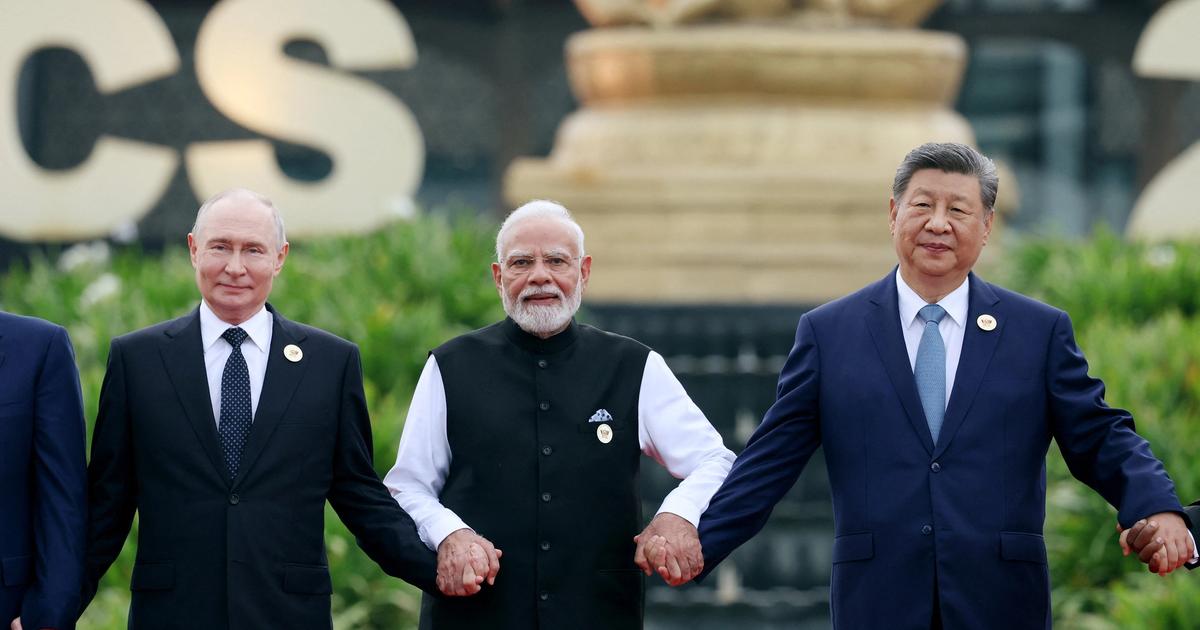
This coming weekend, those countries will all be in the same room, making a third attempt to find consensus on a war that has dominated global attention – and battered economies – this year.
asserted
that → come → economies
Recommended Stories
list of 4 items- list 1 of 4Xi, Modi and Putin attend SCO summit: What’s on the agenda?
- list 2 of 4Multipolarity gives middle powers more choices, but fewer guarantees
- list 3 of 4Next BRICS summit can get an Iran ceasefire
- list 4 of 4How
asserted
summit → attend → ceasefire
China-India border tensions are rising again over encroachment claims
uncertain
tensions → rise → claims
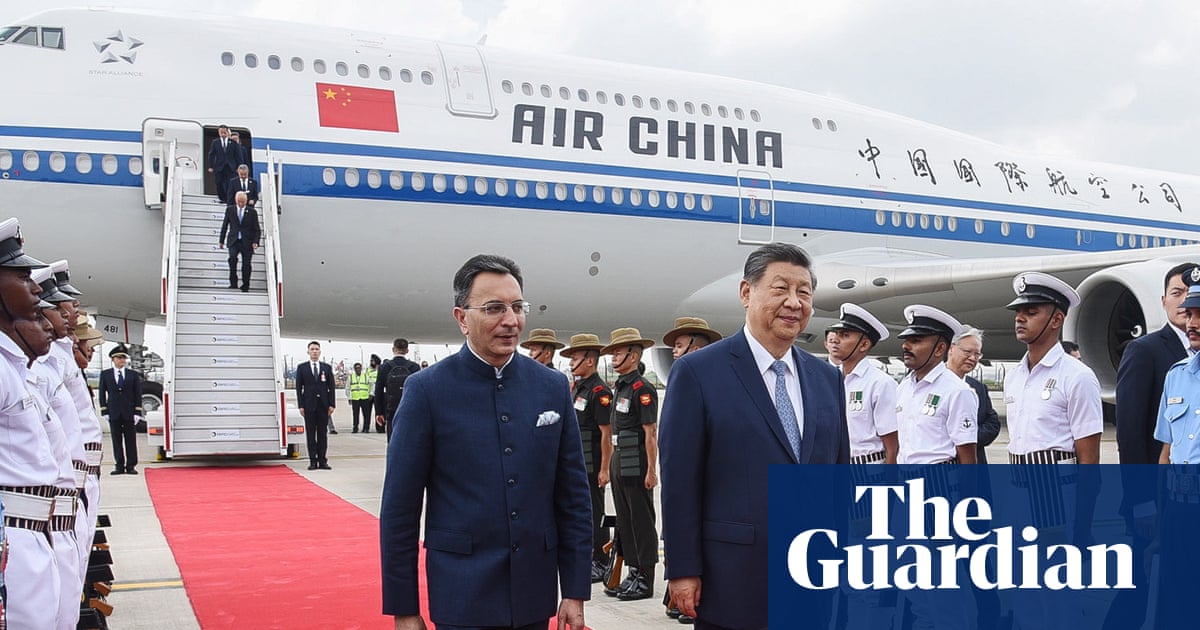
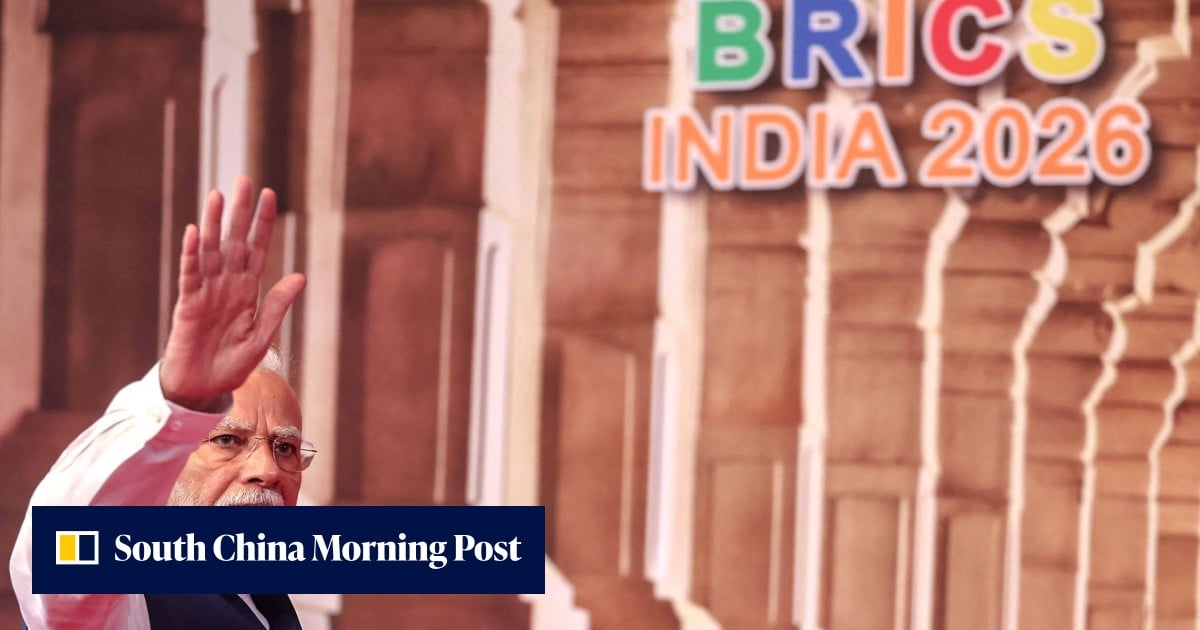
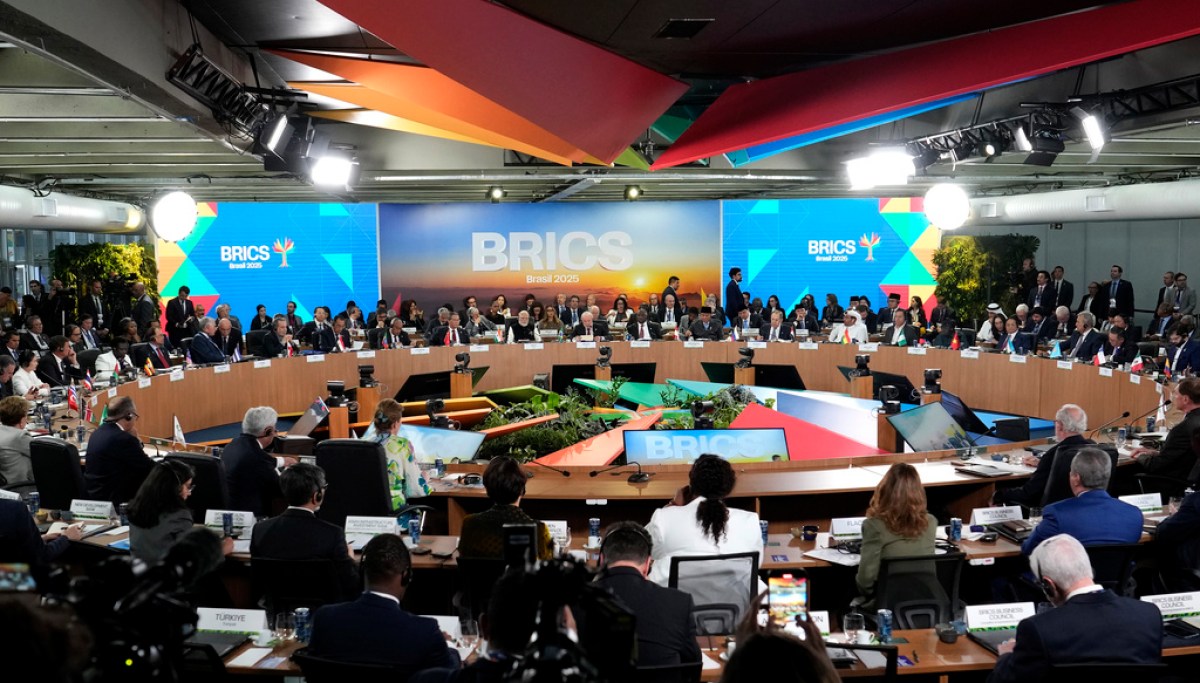
India hosts the BRICS Leaders’ Summit from Saturday, seeking to raise the bloc’s profile even as the United States-led war on Iran exposes divisions among its members, with Tehran and Abu Dhabi on opposing sides.
asserted
war → host → sides
Russian President Vladimir Putin landed in New Delhi on Friday morning.
asserted
Putin → land → morning
The September 12-13 summit in New Delhi comes more than six months after the US and Israel launched attacks on Iran, which has been a BRICS member since 2024.
asserted
which → come → 2024
The United Arab Emirates also joined that year.
asserted
Emirates → join → ?
The grouping of emerging countries – Brazil, Russia, India, China, South Africa, and in more recent years Iran, the UAE, Saudi Arabia, Egypt, Ethiopia and Indonesia – was created to challenge the Western-led order.
asserted
grouping → emerge → order
Yet as the alliance nears its 20-year anniversary, analysts say that while BRICS has helped make the world more multipolar, it has struggled to build a coherent alternative to the West.
asserted
it → near → West
The bloc has created a platform outside Western-led institutions, giving Global South countries greater bargaining power and economic alternatives.
asserted
bloc → create → power
But the dollar remains dominant, and divisions limit collective action on foreign policy and security, say analysts.
asserted
analysts → remain → policy
However, some experts argue that the success of BRICS should not be measured by whether it can pose an alternative to West-led institutions, but by whether it makes Western dominance harder to exercise.
asserted
dominance → argue → institutions
“We tend to undermine any BRICS-led initiative as it is not the revolution we have expected,” said Brazilian researchers Octavio Oliveira and Enzo Godinho at the BRICS Studies Group at the University of Sao Paulo, in an emailed statement to Al Jazeera.
asserted
researchers → tend → Jazeera
“Yes, it does not have the institutionality or the capacity of the UN to tackle specific geopolitical issues, but its mere existence is a much more important platform for Global South countries to express their voices and bypass the West in cooperation.
asserted
countries → have → cooperation
”
Born to challenge the West
While BRICS was built to challenge the US-led Western order – it was never meant to replace it, the analysts said.
asserted
analysts → bear → it
The bloc emerged after the 2008 financial collapse and the failures of the World Trade Organization’s (WTO) Doha Round – trade negotiations that aimed to reform the international trading system in favour of Global South countries.
asserted
that → emerge → countries
“Countries that were spearheaded to become the next ‘developed’ nations understood that their voice would be best heard if they organised themselves as a group,” said Oliveira and Godinho.
asserted
Oliveira → spearhead → group
BRICS emerged from these countries’ efforts to pursue a common development agenda outside traditional international organisations and the United Nations – and, in that sense, its very origins challenged the Western-led order, the Brazilian scholars said.
Emerging powers wanted greater influence over institutions they felt were dominated by the West.
asserted
they → emerge → West
And that’s a major priority still uniting the group today, says Sean Burges, an associate professor of international studies at Canada’s Carleton University.
asserted
Burges → ’ → University
“The two priorities uniting the BRICS countries are largely a desire to make lots of money through international trade and to see an end to the preachiness of the ‘West’ about where they are failing in terms of rights and democracy,” Burges told Al Jazeera.
asserted
Burges → unite → Jazeera
The analysts agreed that reform and greater autonomy have been far greater concerns for the BRICS bloc rather than overthrowing the unravelling liberal international order.
asserted
reform → agree → order
“Why would the BRICS want to take on the global governance responsibilities of the G7 members?” asked Burges.
asserted
Burges → want → members
BRICS has offered its member countries alternative pathways for channelling trade and investment that serve the interests of the member countries – largely national development and poverty alleviation, he explained.
asserted
he → offer → countries
“Chinese concentration on development assistance without conditionality and Brazilian discussions of direct central bank currency swaps are two of the most obvious examples,” said Burges.
asserted
Burges → say → examples
This has resulted in a surge of economic exchange not only within the BRICS, but within the Global South in general, he added.
asserted
he → result → South
Meanwhile, pressures on rights and democracy are disappearing as aid conditions – evidence of how institutions like the World Bank and the International Monetary Fund (IMF) are already changing – Burges argued.
asserted
Burges → disappear → Bank
Concurrently, the very idea of the so-called West has changed dramatically since the early 2000s, when BRICS was conceived and formalised, operating in an entirely different global environment, points out Guy Burton, a geopolitical and policy analyst.
asserted
Burton → call → environment
The notion of the West is “breaking down now, with the transatlantic relationship between the US and Europe fracturing – so it’s unclear what BRICS would even be challenging, or whom, America or Europe,” Burton told Al Jazeera.
uncertain
Burton → break → Jazeera
While BRICS’s economic weight is enormous – its ability to wield it collectively is not, the analysts agreed.
asserted
analysts → wield → it
The bloc accounts for nearly half the world’s population, 40 percent of global output in purchasing power terms, 44 percent of oil production, and about a quarter of world trade, points out Imran Khalid, a geostrategic analyst and senior fellow at Foreign Policy in Focus.
asserted
Khalid → account → Focus
The 11-member grouping is growing at about 3.7 percent this year compared with 1 percent for the G7, according to IMF figures, he added.
uncertain
he → grow → figures
Still, its “leverage is weaker than the [BRICS group] size suggests,” Khalid told Al Jazeera.
uncertain
Khalid → suggest → Jazeera
“The New Development Bank (NDB) had approved about $39bn in total by the end of 2024, which is a few months of World Bank commitments, and it still raises most of its money in dollars,” he said, referring to the global financial institution created by the bloc.
asserted
he → approve → bloc
Brazilian scholars Oliveira and Godinho also said the NDB has introduced no significant innovations to challenge the West, with many of its features mirroring those of existing multilateral development banks.
asserted
many → say → banks
And its contribution to global GDP still lags behind the G7, with China and India primarily driving the group’s economic expansion, said Oliveira and Godinho.
asserted
Oliveira → lag → expansion
Perhaps the most significant limitation on BRICS’s ability to challenge Western economic power is its continued structural reliance on the US dollar, the analysts agreed.
asserted
analysts → challenge → dollar
“Despite extensive rhetoric about de-dollarisation initiatives, the vast majority of BRICS trade is still denominated in US dollars, while most BRICS nations maintain significant dollar reserves, reflecting the dollar’s continued status as the world’s primary reserve currency and creating a structural dependency that limits the bloc’s policy independence,” said the Brazilian academics.
asserted
academics → denominate → independence
While China has pushed use of the renminbi and Saudi Arabia has floated trade in other currencies, the dollar faces no serious challenge – and it is unlikely to for the next decade, said Burton.
asserted
Burton → push → decade
“The bloc as a whole is not moving off the dollar; individual members are reducing their own exposure, one relationship at a time,” said Khalid.
asserted
Khalid → move → time
…and 22 more, not listed.
 The Aporia