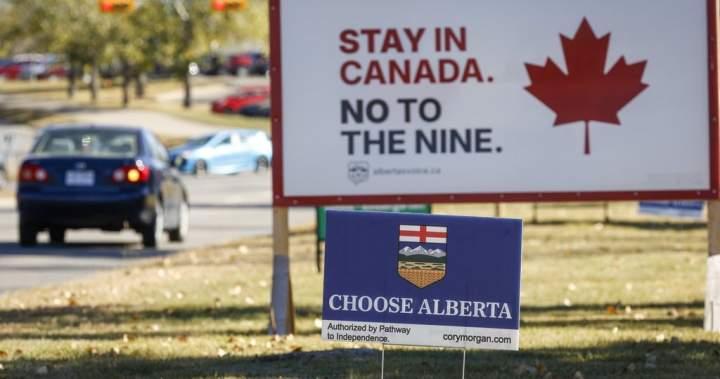
Will the Alberta referendum feed a more polarized immigration debate?
asserted
referendum → feed → debate
Now attention turns to the Carney government
Referendums tend to raise as many questions as they answer.
asserted
they → turn → questions
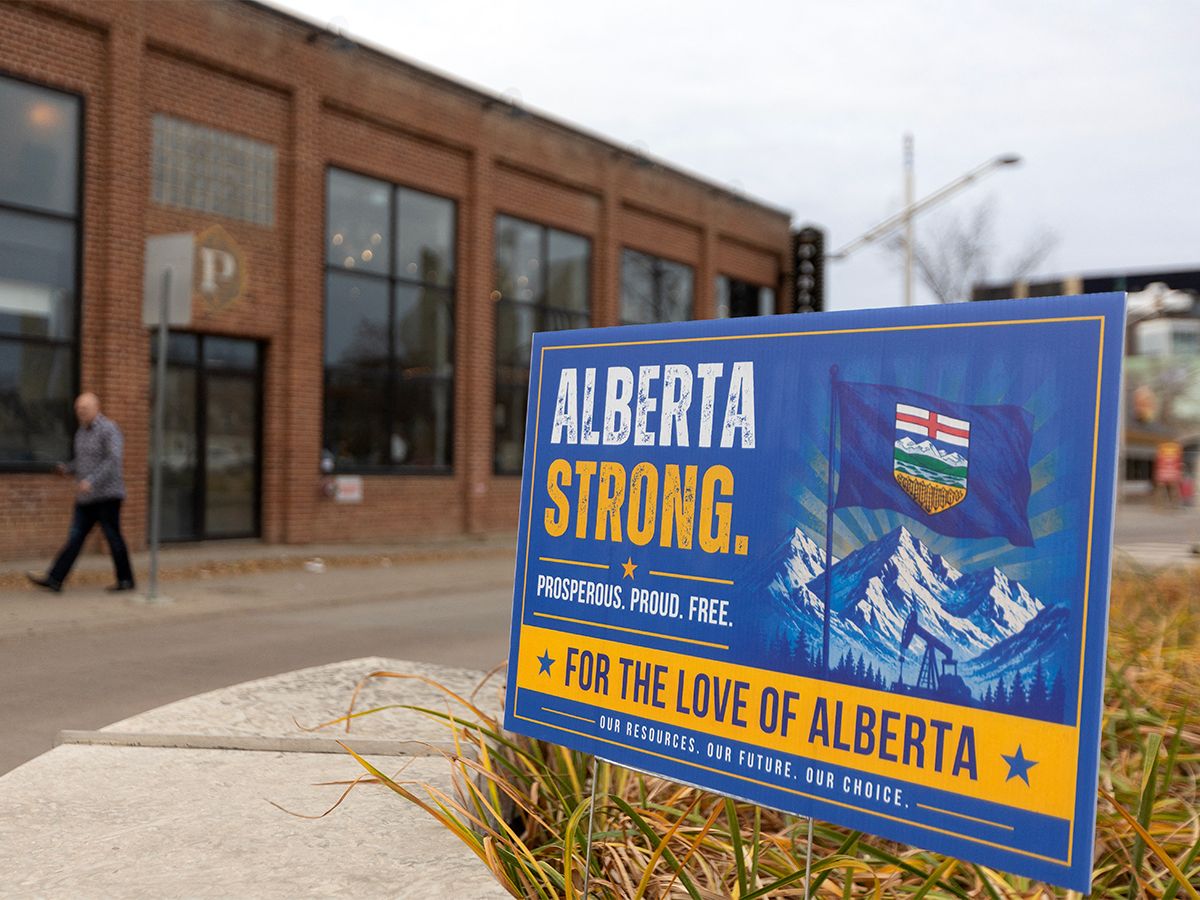
And so it may be for the 10-part questionnaire that Alberta Premier Danielle Smith put to her province — although with a series of no's Albertans have seemingly foreclosed on a number of possibilities.
uncertain
Albertans → put → possibilities
"I am well aware that not every grievance Alberta has with Ottawa has been resolved," Smith told Albertans on Tuesday night.
asserted
Smith → have → night
On the question of whether Alberta should remain in Canada the answer was not close.
asserted
answer → remain → Canada
The 75 per cent of voters who chose the first option is decidedly more decisive than the 1980 referendum in Quebec.
asserted
who → choose → Quebec
Of the 25 per cent who voted for another referendum, it is also fair to ask how many genuinely want secession.
asserted
many → vote → secession
According to Abacus Data, making Alberta an independent country was the primary motivation for just 32 per cent of Albertans who favoured Option 2.
uncertain
who → accord → Option
Whatever Smith's appetite for future constitutional battles, Albertan voters also proved to be unenthusiastic: all four questions about whether Alberta should pursue constitutional amendments were answered with a "no."
asserted
Alberta → prove → no
Not even a question about abolishing the Senate — possibly the most-maligned public institution in Canada history — was able to muster even a simple majority of Albertans.
"
uncertain
question → abolish → Albertans
There's a reason to be skeptical that some constitutional amendments would be worth the effort and ...
asserted
amendments → be → ?
what I'm seeing is that Albertans would just rather that we spend our time focusing on things where we can make some meaningful change," Smith said at a news conference on Wednesday (at the time, two of the four constitutional questions were being answered in the negative as results were still being tallied).
asserted
results → see → negative
"That's why I think the numbers were so different on the immigration questions versus … perhaps the constitutional ones."
asserted
numbers → think → ones
Beside Smith's own political future, the most unresolved questions raised by her referendum concern immigration — and one of the questions now is whether they will feed into a more polarized national debate on Canada's immigration policy.
asserted
they → raise → policy
Immigration on the ballot in Alberta
Of Smith's 10 questions, four concerned either immigration or potential new rules for newcomers.
asserted
four → concern → newcomers
On its official referendum website, Smith's government claimed that "unsustainable immigration levels over the past 10 years" had "a profound impact" on Alberta's ability "to fund and effectively deliver social services like health care and education — directly impacting Albertans' access to these services and costing taxpayers billions of dollars."
asserted
levels → claim → dollars
Alberta NDP Leader Naheed Nenshi argued Smith was "scapegoating" immigrants.
asserted
Smith → argue → immigrants
"The reality of the matter is even if you took all the young, healthy temporary foreign workers out of the health-care system, even if you denied public education to refugee children, it's not going to make the emergency room lineups any less," Nenshi told CBC's Power & Politics this week.
asserted
Nenshi → take → Power
"It's not going to make your classrooms any smaller.
asserted
classrooms → go → ?
It's not going to make anyone's life better."
asserted
life → go → ?
Just under 55 per cent of voters supported the proposition that the Alberta government should take "increased control over immigration for the purposes of decreasing immigration to more sustainable levels."
asserted
government → support → levels
Three questions that floated possible limitations on how or when newcomers or temporary residents can access health care, education and other social services in Alberta were supported by narrower majorities of 52.4, 53.1 and 52 per cent.
asserted
newcomers → float → 52.4
Smith's government has a majority in the Alberta legislature and it didn't need a referendum to pursue any of these initiatives.
asserted
it → have → initiatives
But the results — notably, none of the immigration questions won a majority in Calgary — may give Smith reason to hesitate.
uncertain
none → win → reason
At her news conference on Wednesday, the premier suggested she was prepared to act quickly on the first question, but she would "proceed with caution" in response to questions two, three and four.
uncertain
she → suggest → questions
She said she did not want to impact anyone who was already residing in Alberta.
asserted
who → say → Alberta
While Prime Minister Mark Carney raised some eyebrows when he repeated the "no to the nine" slogan before Alberta's vote, he had also suggested he was inclined to give all provinces more input on immigration.
uncertain
he → raise → immigration
"To be candid, I don't need a referendum to tell us to co-operate more with the provinces on immigration," Carney told Global News a few days before Alberta's vote.
asserted
Carney → need → vote
"I think that's where we're headed."
But Alberta's immigration questions also caught the attention of Conservative Leader Pierre Poilievre.
asserted
questions → think → Poilievre
"I thought it was inappropriate for the prime minister to tell Canadians and tell Albertans that they should vote to continue to give deluxe taxpayer benefits to people who are illegally here," Poilievre said.
asserted
Poilievre → think → people
"And for the prime minister to suggest that Albertans vote in favor of continued mass, unvetted, out of control immigration was a mistake."
The Conservative Party also sent a fundraising appeal to supporters on Tuesday that promised a Conservative government would "dramatically reduce immigration."
The Carney government argues that it has immigration "under control" after steps were taken to curb the intake of international students and temporary workers.
asserted
steps → suggest → students
The Conservatives obviously disagree.
asserted
Conservatives → disagree → ?
But the Alberta referendum also landed between two triggers for renewed debate about immigration to Canada.
asserted
referendum → land → Canada
First, in discussing immigration policy during an interview with the New York Times last month, Carney said, "now the question starts to become: When do we resume some controlled increase in the population, which is the nature of Canada?
asserted
which → discuss → Canada
So that will happen, and we just want to make sure that we've got it under control."
asserted
we → happen → control
Now the federal government is due to table its latest immigration levels plan, which sets out targets for the next few years for both permanent and temporary arrivals (technically, a new plan is due by Nov. 1, but last year's plan was included in the fall budget).
asserted
plan → table → budget
Speaking to reporters on Wednesday, Carney said his government "will not budge from overall levels that are sustainable."
asserted
that → speak → levels
But what constitutes "sustainable" is likely a matter of debate.
asserted
constitutes → constitute → debate
At a news conference on Thursday, Conservative immigration critic Michelle Rempel Garner argued "mass immigration" was suppressing wages and driving up rents, to the benefit of corporate profiteers.
asserted
immigration → argue → profiteers
Conservatives, she said, will "vigorously oppose any attempt by Mark Carney to continue to raise and sustain high immigration levels" and "will push him to lower them."
asserted
she → say → them
…and 6 more, not listed.
 The Aporia