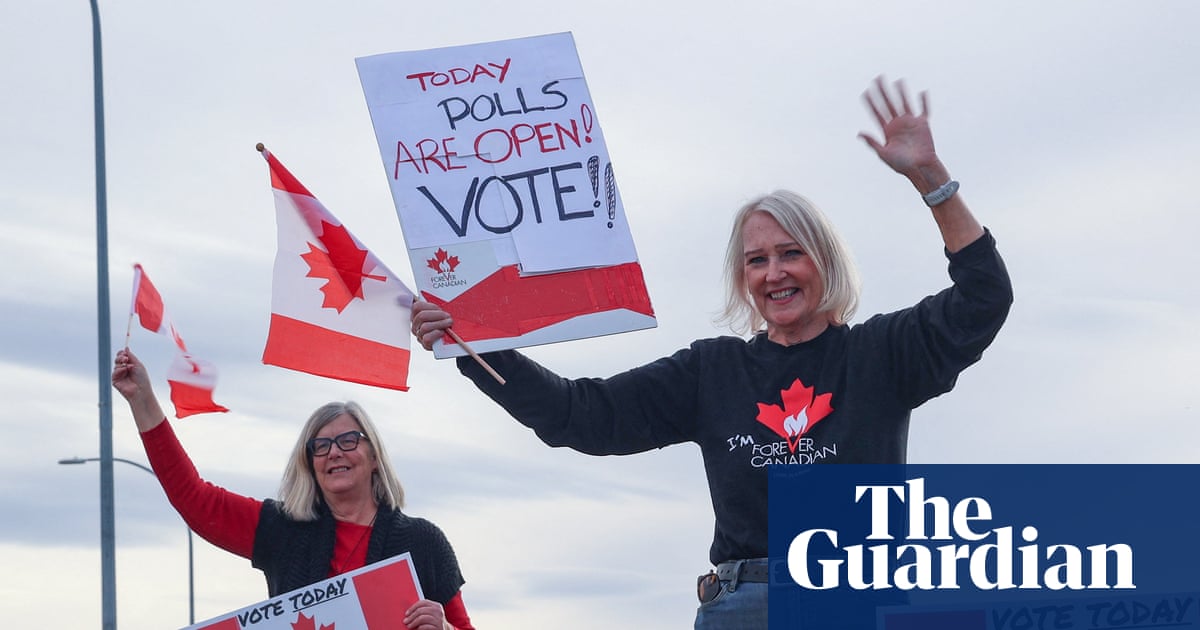
Tasha Kheiriddin: Alberta’s political drama is far from over

Read the original at National Post ↗
Cite

Kheiriddin, T. (2026, October 20). Tasha Kheiriddin: Alberta’s political drama is far from over. National Post. https://nationalpost.com/opinion/albertas-political-drama-is-far-from-over

Dated from the outlet's own feed. Check the original for its byline.

National Post · collected 2026-10-20 · by Tasha Kheiriddin analysis

Quick Summary

Alberta's voters rejected the idea of separating from Canada by about three to one on referendum questions, but internal divisions within Premier Danielle Smith’s United Conservative Party and tensions with Prime Minister Mark Carney over issues like immigration and health care are likely to persist. While separatists lost this time, they remain active and could challenge Smith’s leadership at an upcoming party convention, potentially leading to a split in the UCP or even a new political party. Meanwhile, the New Democratic Party leader Naheed Nenshi is calling for early elections, positioning his party as an alternative amid ongoing political turmoil.
Written locally by qwen2.5:14b on 2026-10-20, using this article's own text rather than the other coverage of the same event (that is the story summary below).

AI analysis runs on qwen2.5:14b, locally

Story summary

Advance polling for Alberta's historic referendum opened on July 19, 2026, allowing voters to cast ballots over five days before the main vote on October 19. The referendum asked Albertans to weigh in on 10 questions, including constitutional issues and immigration policy, with the final question asking if the province should initiate a legal process for a future binding referendum on separation from Canada. On October 20, initial results showed that nearly 76% of voters chose to remain within Confederation, while only 24% supported beginning the process towards secession. Prime Minister Mark Carney praised the outcome as a "great result" for Canada's unity.

Written for “Alberta Separation Referendum Voting” on 2026-10-20, grounded in this article and the 73 other(s) covering the same event.
Why this leaning score
The model judged this article politically coded and scored it -0.35, but every quote it verified points right, so the score is not published.
Written under an earlier scoring contract, which gave a paragraph rather than checkable quotes. Re-analysing this article replaces it.
Leaning score withheld for article 94216: score contradicts its own evidence · logged 2026-10-20

Story

📰 Alberta Separation Referendum Voting
Politics · 74 article(s) covering the same event. Compare every outlet's account →

Compared with similar articles

This article reads unscored and hedges 7% of its claims. Each row says how that neighbour differs.
National Post
⚖️ leaning not scored 🔴 0% hedged 0 of 28 📰 publisher trust 60
“Both articles describe the immediate aftermath of a single Alberta referendum on separation from Canada, with similar results and reactions.”
Al Jazeera · 0.87 cosine similarity
⚖️ leaning not scored 🔴 6% hedged 2 of 34 📰 publisher trust 60
“Both articles describe the results of the same independence referendum in Alberta on October 20, 2026.”
South China Morning Post
⚖️ Centre 🔴 17% hedged 1 of 6 📰 publisher trust 64
“Both articles describe the Alberta referendum vote on independence that took place on October 16, 2026.”
CBS News
⚖️ Leans left 🔴 11% hedged 2 of 18 📰 publisher trust 66
“Both articles describe the results of the same referendum held in Alberta on October 20, 2026, where voters rejected separation from Canada.”
The Guardian
⚖️ Leans left 🔴 23% hedged 5 of 22 📰 publisher trust 66
“Both articles describe the same referendum vote in Alberta on October 20, 2026, focusing on the rejection of a proposal for independence from Canada.”
Toronto Star
⚖️ leaning not scored 🔴 2% hedged 1 of 47 📰 publisher trust 63
“Both articles discuss the outcome of Alberta's referendum on independence from Canada occurring on the same date.”
Toronto Star
⚖️ leaning not scored 🔴 0% hedged 0 of 2 📰 publisher trust 63
“Article A focuses on Poilievre's reaction to the Alberta referendum result, while Article B discusses the broader implications and ongoing political drama following the referendum vote.”
BBC News
⚖️ Leans left 🔴 22% hedged 9 of 40 📰 publisher trust 69
“Both articles discuss the same referendum results in Alberta where voters rejected separatism and dealt with other political issues, occurring on the same date.”
CBC News
⚖️ leaning not scored 🔴 7% hedged 6 of 84 📰 publisher trust 74
“Article A discusses the general relationship between Alberta and Ottawa, while Article B focuses on a recent referendum in Alberta.”
Global News
⚖️ leaning not scored 🔴 7% hedged 3 of 41 📰 publisher trust 63
“Article A discusses the upcoming referendum on October 19, while Article B reports on the results and aftermath of the referendum that occurred after its date.”
How this article was measured signals, leaning charts, publisher record, byline, topics and claims

Signals How these are calculated →

Claims extracted
29
sentences that state something as happening or true
Uncertain
7%
2 of 29 hedged ("reportedly", "may", "according to")
Leaning
withheld
no quote in the article backed the model's score
Publisher signals
60/100
National Post's corrections and hedging, across everything collected from it. Not a measure of accuracy.
Outlets on this story
74
Politics
Same framing elsewhere
1
articles that frame the event the way this one does
Analyzed 2026-10-20 · how these are computed

How this is being covered How these are calculated →

Article leaning vs. publisher reliability
Source leaning vs. consistency

Publisher

National Post · 1018 article(s) · 2 correction(s) detected
Running correction rate · 2 correction(s)

Who wrote this

Tasha Kheiriddin
2 article(s) here · 1 carrying a prediction
🔮 Alberta will remain part of Canada — for now.
🔮 Quebec and Alberta may have more in common than anyone suspected — at least when it comes to seceding from Canada.
Also by Tasha Kheiriddin
Nothing else under this byline is closely related to this article, so these are simply their most recent.

Topics

Alberta Albertans Canada NDP UCP

Subjects

Carney PERSON · 7× Alberta GPE · 5× UCP ORG · 4× Smith PERSON · 3× Albertans NORP · 2× Canada GPE · 2× NDP ORG · 2× Quebec GPE · 2× Danielle Smith PERSON · 1× Ottawa GPE · 1×

Narrative

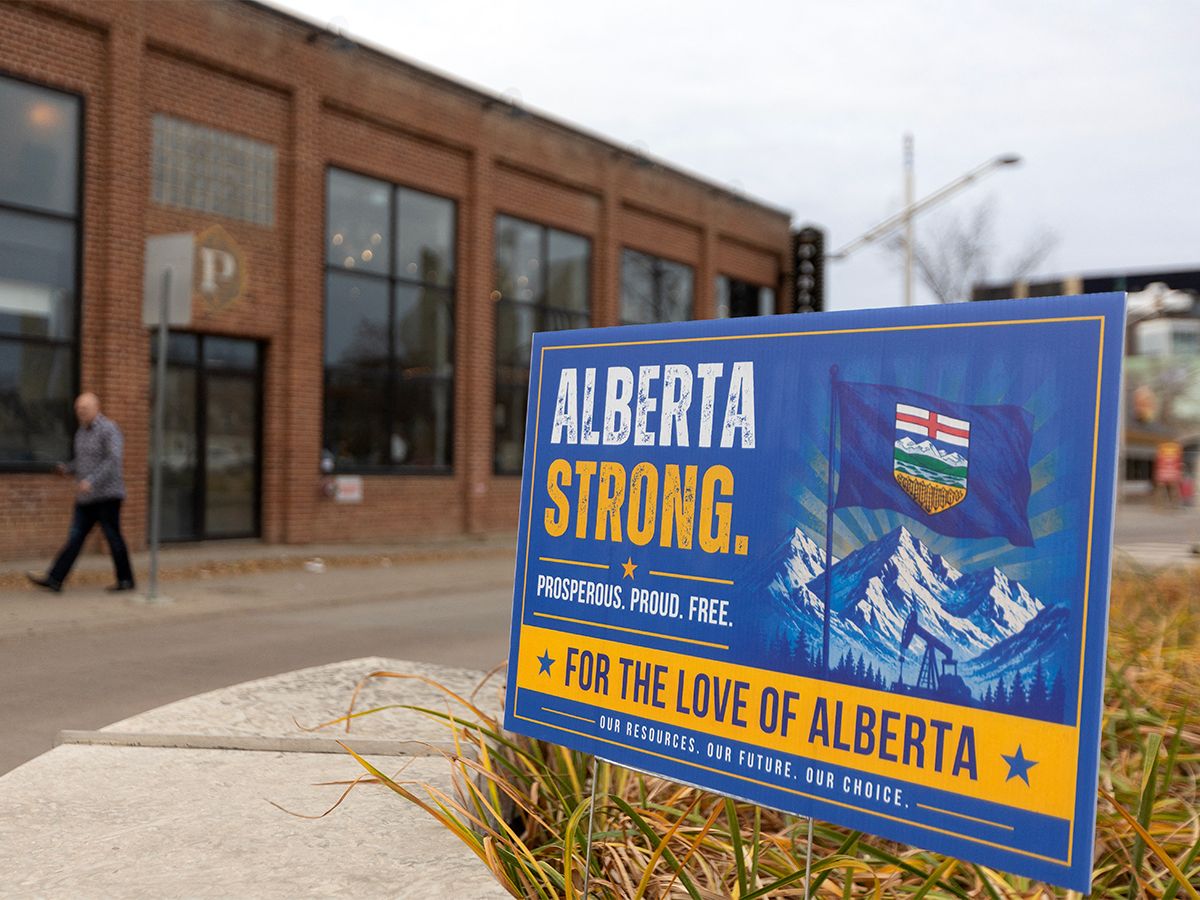
On the other nine questions, they appear to have given Premier Danielle Smith a slim-to-moderate victory, setting the scene for future showdowns with Ottawa over immigration and health care, while she contends with internal divisions that are sure to fester in the United Conservative Party.
framing: assertive · carried by 1 article(s) · first seen 2026-10-20
🔮 Alberta will remain part of Canada — for now.
2026-10-20 · National Post
Tasha Kheiriddin: Alberta’s political drama is far from over · assertive framing

Claims (29 extracted, 2 hedged)

Alberta will remain part of Canada — for now. asserted
Alberta → remain → Canada
Ballots are still being counted on the province’s 10 referendum questions, but as it stands, voters rejected the separatist option by roughly three to one. asserted
voters → count → one
On the other nine questions, they appear to have given Premier Danielle Smith a slim-to-moderate victory, setting the scene for future showdowns with Ottawa over immigration and health care, while she contends with internal divisions that are sure to fester in the United Conservative Party. asserted
that → appear → Party
In fact, for both Smith and Prime Minister Mark Carney, the fireworks are just beginning. asserted
fireworks → begin → Smith
I spent the night at the Radio-Canada election desk in Edmonton, helping fill air for three hours until the results came in, and watching interviews with supporters of both leave and remain. asserted
results → spend → supporters
Most in the separation camp predicted results of at least 30 per cent, with one even suggesting 55 per cent, insisting that a hidden separatist vote would materialize once Albertans entered the privacy of the voting booth. asserted
Albertans → predict → booth
That didn’t happen, but while the separatists lost the referendum, they have not abandoned their cause. asserted
they → happen → cause
The question is how they choose to pursue it: inside or outside the UCP. asserted
they → choose → UCP
Rancher Tim Hoven, a separatist supporter, questioned whether the movement needed its own political party, saying only that, “The right leader will show up at the right time to show us over the finish line.” asserted
leader → question → line
Such thoughts don’t bode well for Smith, who faces a UCP convention in November, where separation supporters, who form a slim majority in her party, will have an opportunity to vent their frustrations. asserted
who → bode → frustrations
If Smith can’t satisfy separatists without alienating mainstream conservatives, she could face a leadership challenge or a party split, possibly spawning an even thornier version of her former Wildrose Party. uncertain
she → satisfy → Party
Either scenario would threaten the coalition that brought the UCP to power and boost the fortunes of NDP Leader Naheed Nenshi. asserted
that → threaten → Nenshi
Smelling blood in the water, last night Nenshi reiterated his call to Smith to hold an election as soon as possible, ahead of next year’s fixed October date. asserted
Nenshi → smell → date
The NDP is currently polling at 43 per cent to the UCP’s 48, a result considered within the margin of error. asserted
NDP → poll → error
Carney will also have his set of challenges. asserted
Carney → have → challenges
Albertans voted on nine other questions involving immigration, access to social services, voting requirements and provincial powers. asserted
Albertans → vote → services
A clear majority supports greater provincial control over immigration and restrictions on certain benefits for newcomers — including Canadians from outside Alberta. asserted
majority → support → Alberta
That flies in the face of Carney’s ambitious One Economy plans, which would see the end to interprovincial barriers to labour mobility. asserted
which → fly → mobility
It also complicates his agenda of “building Canada strong” through major projects including a new pipeline to take oil to tidewater from Alberta. asserted
Canada → complicate → Alberta
Without enough skilled workers, Carney’s goal risks becoming a pipe dream. asserted
goal → risk → workers
Not surprisingly, perhaps, Carney is now contemplating a possible uptick in immigration levels. asserted
Carney → contemplate → levels
But with Canadian public sentiment swinging against newcomers, as in much of the western world, he could face serious political pushback. uncertain
he → swing → pushback
And resistance won’t just come from Alberta. asserted
resistance → come → Alberta
Quebec’s recent election revolved largely around the question of immigration. asserted
election → revolve → immigration
New premier Paul St-Pierre Plamondon also wants to cut newcomer numbers, as well as pave the way for another Quebec referendum, creating a squeeze play for Carney from east and west. asserted
Plamondon → want → east
The risk then becomes that not only are there too few workers to get shovels in the ground, but investors sit on the sidelines, passing the popcorn while these political dramas play out. asserted
dramas → become → popcorn
The other people watching this are the Americans. asserted
people → watch → this
U.S. media have highlighted Carney’s anti-American rhetoric and calls to stay unified against countries that are “trying to break us so they can own us.” asserted
they → highlight → us
It’s quite clear who Carney means, and while Alberta’s vote to remain should cheer him, the underlying sentiment still threatens the united front he needs to preserve. asserted
he → ’ → front

💬Give feedback
🕘History 🎫Support