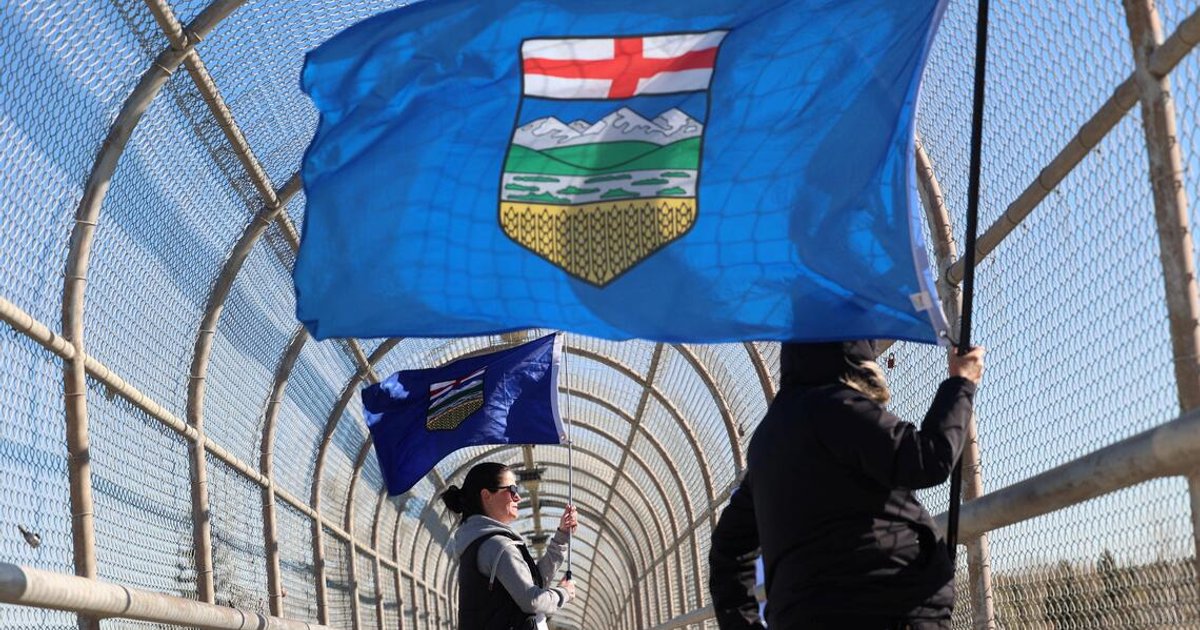
Alberta voters weigh future in Canada

Read the original at NPR ↗
Cite

Rossiter, S. (2026, October 19). Alberta voters weigh future in Canada. NPR. https://www.npr.org/2026/10/18/nx-s1-6004877/alberta-referendum-canada-vote

Dated from the outlet's own feed. Check the original for its byline.

NPR · collected 2026-10-19 · by Sheena Rossiter

Quick Summary

Alberta voters are deciding whether to hold a referendum on separation from Canada in a nonbinding vote described as the largest electoral event in the province's history. The ballot includes ten questions, with the final one asking if Alberta should begin legal steps toward a referendum on independence or remain part of Canada. Polls suggest that most Albertans will reject the idea of starting the process for an independence referendum, but the debate has brought Western alienation and grievances against Ottawa to the forefront.
Written locally by qwen2.5:14b on 2026-10-19, using this article's own text rather than the other coverage of the same event (that is the story summary below).

AI analysis runs on qwen2.5:14b, locally

Story summary

On October 19, 2026, Alberta held a non-binding referendum where voters decided whether the provincial government should begin the process of holding a future binding referendum on separation from Canada. The key question asked if Alberta should remain a province or start legal steps toward separation. Over 1.3 million people had already voted before election day, out of about 3 million eligible voters.

This vote stems from years of tension between Alberta and the federal government over environmental policies affecting oil production. In 2019, anti-Ottawa sentiment grew as the United Conservative Party under Jason Kenney came to power in Alberta, capitalizing on discontent with Ottawa's rules that impede economic growth. Monday’s referendum includes ten questions, though Question 10 on separation has garnered significant attention.

Polls suggest a majority of Albertans would vote to remain in Canada, but the debate has been divisive. Should voters approve initiating the process for a binding referendum, it could occur as soon as 2027. The outcome will have broader implications for Canada's unity and its relationship with the U.S., particularly given Alberta’s oil-rich economy.

Written for “Alberta Independence Referendum Voting” on 2026-10-19, grounded in this article and the 19 other(s) covering the same event.
Why this leaning score
The model judged this article politically coded and scored it -0.25, but all 2 of its quote(s) are attributed speech - words the article quotes from someone, not the article's own narration, so the score is not published.
Written under an earlier scoring contract, which gave a paragraph rather than checkable quotes. Re-analysing this article replaces it.
Leaning score withheld for article 90695: attributed speech only · logged 2026-10-19

Story

📰 Alberta Independence Referendum Voting
Politics · 20 article(s) covering the same event. Compare every outlet's account →

Compared with similar articles

This article reads unscored and hedges 9% of its claims. Each row says how that neighbour differs.
BBC News · 0.91 cosine similarity
⚖️ leaning not scored 🔴 10% hedged 3 of 30 📰 publisher trust 69
“Both articles describe Alberta voters going to polls on October 19, 2026, to decide whether to hold a future referendum on separation from Canada.”
Toronto Star · 0.90 cosine similarity
⚖️ leaning not scored 🔴 5% hedged 21 of 452 📰 publisher trust 63
“Both articles describe Albertans voting on whether to remain in Canada or begin the formal process of separation on the same day, October 19, 2026.”
The Globe and Mail · 0.89 cosine similarity
⚖️ leaning not scored 🔴 4% hedged 1 of 26 📰 publisher trust 52
“Both articles describe the exact same referendum vote happening on October 19, 2026 in Alberta.”
The Guardian · 0.89 cosine similarity
⚖️ leaning not scored 🔴 14% hedged 9 of 66 📰 publisher trust 66
“Both articles describe Albertans voting in a non-binding referendum on October 19, 2026, about whether Alberta should remain in Canada or hold a second binding independence referendum.”
Dawn · 0.88 cosine similarity
⚖️ Leans right 🔴 4% hedged 1 of 26 📰 publisher trust 72
“Both articles describe the same vote in Alberta on October 19, 2026, regarding independence from Canada.”
Euronews · 0.87 cosine similarity
⚖️ Leans right 🔴 3% hedged 1 of 30 📰 publisher trust 60
“Both articles describe the same nonbinding referendum vote in Alberta on October 19, 2026, regarding potential independence from Canada.”
The Straits Times · 0.87 cosine similarity
⚖️ Leans right 🔴 4% hedged 1 of 28 📰 publisher trust 60
“Both articles describe the same referendum vote occurring in Alberta on October 19, 2026.”
CBS News
⚖️ leaning not scored 🔴 no claims extracted 📰 publisher trust 66
“Both articles describe the same nonbinding referendum on independence in Alberta, Canada.”
CBC News
⚖️ Leans right 🔴 14% hedged 5 of 36 📰 publisher trust 73
“Both articles describe the same nonbinding referendum vote in Alberta on whether to start the process of leaving Canada, happening on the same day and with similar context.”
Al Jazeera
⚖️ Leans right 🔴 11% hedged 9 of 81 📰 publisher trust 60
“Both articles describe the first referendum on Alberta's independence from Canada held on October 18, 2026.”
How this article was measured signals, leaning charts, publisher record, byline, topics and claims

Signals How these are calculated →

Claims extracted
54
sentences that state something as happening or true
Uncertain
9%
5 of 54 hedged ("reportedly", "may", "according to")
Leaning
withheld
no quote in the article backed the model's score
Publisher signals
60/100
NPR's corrections and hedging, across everything collected from it. Not a measure of accuracy.
Outlets on this story
20
Politics
Same framing elsewhere
1
articles that frame the event the way this one does
Analyzed 2026-10-19 · how these are computed

How this is being covered How these are calculated →

Article leaning vs. publisher reliability
Source leaning vs. consistency

Publisher

NPR · 769 article(s) · 3 correction(s) detected
Running correction rate · 3 correction(s)

Who wrote this

Sheena Rossiter
1 article(s) here · 1 carrying a prediction
🔮 Polls indicate that Alberta voters will overwhelmingly reject the option of beginning the legal process toward a referendum on separation.
2026-10-19 · assertive framing · Alberta voters weigh future in Canada
The only article under this byline in the corpus.

Topics

Alberta Albertans Canada Canadian EDMONTON

Subjects

Alberta GPE · 9× Canada GPE · 8× Albertans NORP · 6× Canadian NORP · 4× EDMONTON GPE · 2× Morgan PERSON · 2× Ottawa GPE · 2× Elections ORG · 1× Pierre Trudeau PERSON · 1× Western NORP · 1×

Narrative

Morgan founded the Alberta Independence Party in 2000 and is also the founder of Pathway to Independence, a third-party advertising group that advocates for an independent Alberta. "Even if we don't get over the line on Monday, I would hope that some people understand that something large is brewing here and if we don't get some change, it's going to continue to grow," Morgan told NPR.
framing: assertive · carried by 1 article(s) · first seen 2026-10-19
🔮 Polls indicate that Alberta voters will overwhelmingly reject the option of beginning the legal process toward a referendum on separation.
2026-10-19 · NPR
Alberta voters weigh future in Canada · assertive framing

Claims (54 extracted, 5 hedged)

Alberta voters weigh future in Canada EDMONTON, Alberta — asserted
voters → weigh → Canada
For decades, Alberta separatism remained on the political margins. asserted
separatism → remain → margins
Now, voters in the oil-rich Canadian province are deciding whether to take the first step toward a future referendum on independence. asserted
voters → decide → independence
The nonbinding referendum vote on Monday is the first time the province has put the question of separation to a public vote, in what Elections Alberta has described as the largest electoral event in the province's history. asserted
Alberta → put → history
Polls indicate that Alberta voters will overwhelmingly reject the option of beginning the legal process toward a referendum on separation. asserted
voters → indicate → separation
Pollsters generally estimate that about one in five Albertans support separation from Canada. asserted
Albertans → estimate → Canada
But the vote has brought the question of Alberta's place in the Canadian federation to the forefront of public debate. asserted
vote → bring → debate
The questions on the ballot Essentially, this is a referendum about whether to hold another referendum on separation. asserted
this → hold → separation
The first nine address immigration, access to provincial services such as health care, education and other social services, and potential changes to the Canadian Constitution. asserted
nine → address → Constitution
Voters can answer yes or no to each of these questions. asserted
Voters → answer → questions
Question 10 offers voters two options. asserted
Question → offer → options
Option 1 asks whether Alberta should remain part of Canada, while option 2 asks whether the province should begin the legal process toward holding a referendum on separation. asserted
province → ask → separation
Western alienation and grievances against Ottawa date back decades, including to the administrations of Prime Minister Pierre Trudeau, Justin Trudeau's father, during the 1970s and 1980s. asserted
alienation → date → 1970s
"I feel the Canadian system is broken. asserted
system → feel → ?
I know we aren't living in hell on earth. asserted
we → know → earth
But it's the trajectory we're worried about and where things are going," says Cory Morgan. asserted
Morgan → worry → ?
Morgan founded the Alberta Independence Party in 2000 and is also the founder of Pathway to Independence, a third-party advertising group that advocates for an independent Alberta. "Even if we don't get over the line on Monday, I would hope that some people understand that something large is brewing here and if we don't get some change, it's going to continue to grow," Morgan told NPR. asserted
Morgan → found → NPR
Support for separation intensified among some Albertans following COVID-19 lockdowns and vaccine mandates. asserted
Support → intensify → lockdowns
Premier Danielle Smith said in May that it was "time to have a vote, understand the will of Albertans on this subject, and move on. uncertain
it → say → subject
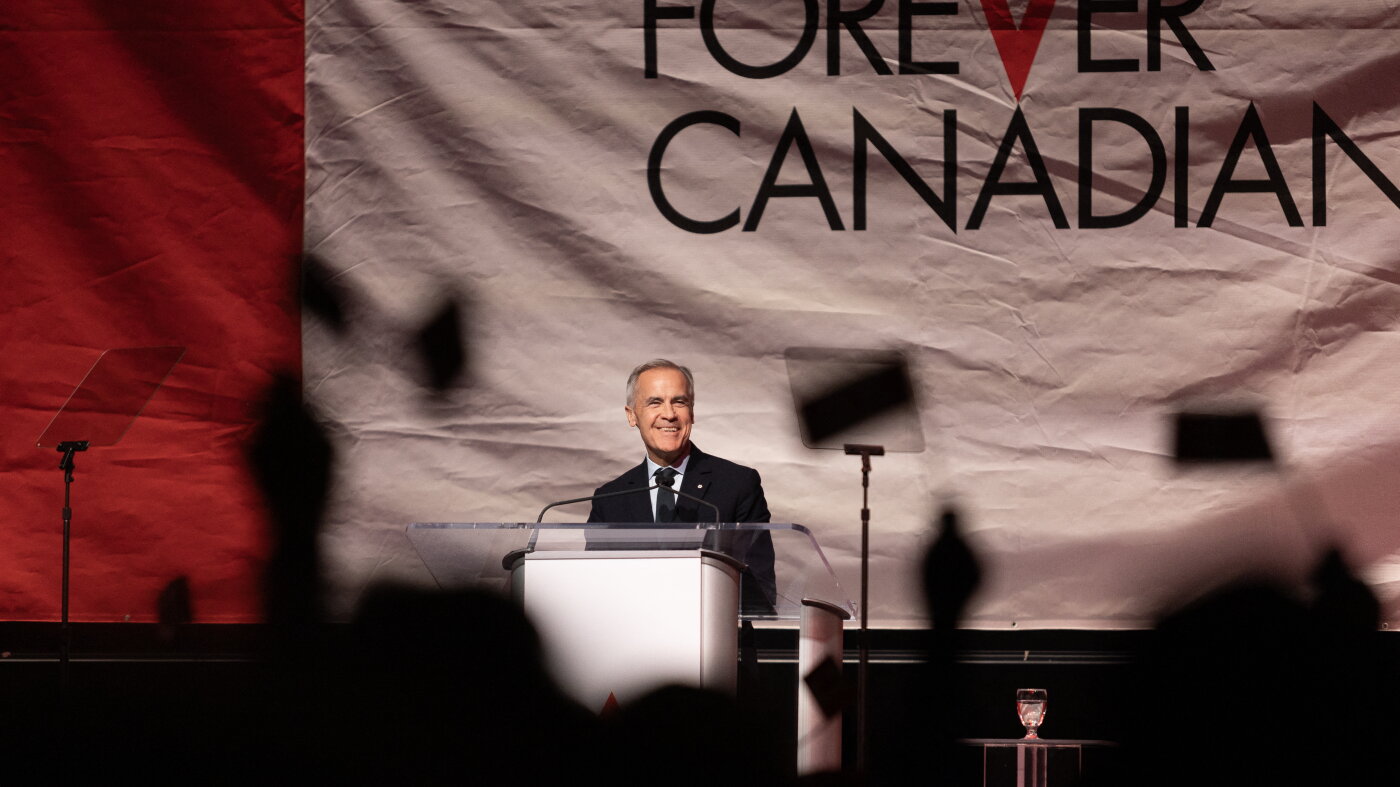
The referendum campaign brought Prime Minister Mark Carney back to his hometown of Edmonton on Friday, where he urged Albertans to keep their province in Canada ahead of the vote. asserted
he → bring → vote
"A vote against Canada is a dangerous bluff that will lead to years of deep uncertainty and lost opportunities for Albertans and Canadians," Carney told the rally. asserted
Carney → lead → rally
Alberta is one of Canada's wealthiest provinces and is home to the world's fourth-largest known oil reserves. asserted
Alberta → know → reserves
The province contributes to Canada's equalization system, which provides federal funding to provinces with lower fiscal capacity. asserted
which → contribute → capacity
Some Albertans argue that the province should retain more of its revenue rather than see funds redistributed elsewhere in the country. asserted
funds → argue → country
"We want to make a new country where we can stop sending our money 1,000 kilometers away in Ottawa," says Jeremy Clive, a 23-year-old pilot and university student from rural Alberta. asserted
Clive → want → Alberta
Leaving the Canadian federation would not be as simple as holding a referendum. asserted
Leaving → leave → referendum
"It requires negotiating your way out," says Jared Wesley, a political scientist at the University of Alberta. asserted
Wesley → require → Alberta
"The Supreme Court has stated clearly that in order to leave, a province must negotiate with nine other provinces and the federal government to secure an amendment to the Constitution to remove themselves." In 1995, Quebec held a referendum on sovereignty that narrowly rejected independence. asserted
that → state → independence
The vote helped set the stage for Canada's Clarity Act, which Parliament passed in 2000. asserted
Parliament → set → 2000
The act states that secession negotiations can begin only after a referendum question and its result meet standards of clarity. asserted
question → state → clarity
It does not specify a fixed percentage that constitutes a clear majority. asserted
that → specify → majority
Any separation would also require constitutional negotiations involving provincial and federal governments. asserted
separation → require → governments
"It's a bit ironic that separatists are a bit frustrated with the inability to change the constitution and they are using that as a pretext to leave, but, in order to leave, they need to change the same constitution with a much higher threshold for agreement," says Wesley. asserted
Wesley → frustrate → agreement
What happens if Albertans vote for a separation Referendum? asserted
Albertans → happen → Referendum
Alberta Premier Danielle Smith has said she will respect the result and begin the process of holding a legally binding referendum, subject to the applicable legal requirements. asserted
she → say → requirements
That would not happen immediately. asserted
That → happen → ?
The province would also need to consult with First Nations. asserted
province → need → Nations
Treaties between First Nations and the Crown predate Canadian Confederation, and First Nations groups have objected to the idea of an independent Alberta. asserted
groups → predate → Alberta
In May, an Alberta court ruled that a separatist petition seeking to trigger the referendum violated Indigenous rights because the province had failed to consult First Nations. uncertain
province → rule → Nations
The province has appealed the decision. asserted
province → appeal → decision
…and 14 more, not listed.

💬Give feedback
🕘History 🎫Support