How Meta struck a deal to keep Mark Zuckerberg in California despite looming billionaire tax

Read the original at Los Angeles Times ↗
Cite

Wong, Q. (2026, October 22). How Meta struck a deal to keep Mark Zuckerberg in California despite looming billionaire tax. Los Angeles Times. https://www.latimes.com/business/story/2026-10-22/how-meta-struck-deal-to-keep-mark-zuckerberg-in-california-despite-looming-billionaire-tax

Dated from the outlet's own feed. Check the original for its byline.

Los Angeles Times · collected 2026-10-22 · by Queenie Wong

Quick Summary

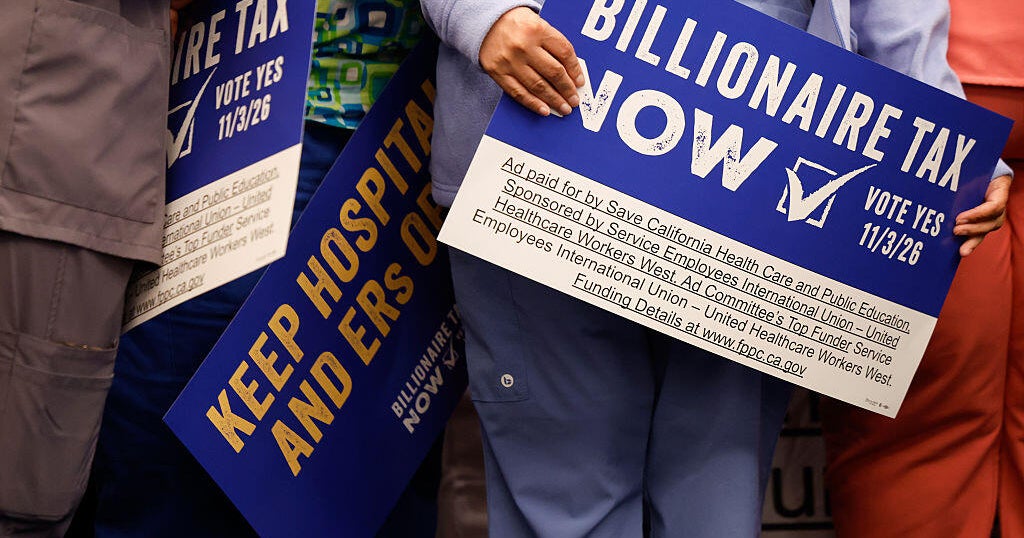
Meta created a new nonvoting stock class after Mark Zuckerberg threatened to leave California over Proposition 40, which would impose a one-time 5% tax on billionaires’ assets. The proposed tax could raise $100 billion for healthcare and cost Zuckerberg around $12 billion in taxes. To prevent losing his voting control at Meta if the measure passes, the company’s board agreed to allow him to sell or transfer up to 20% of nonvoting stock without affecting his majority control.
Written locally by qwen2.5:14b on 2026-10-22, using this article's own text rather than the other coverage of the same event (that is the story summary below).

AI analysis runs on qwen2.5:14b, locally

Story summary

Meta CEO Mark Zuckerberg threatened to leave California if voters approve Proposition 40, which would impose a one-time 5% wealth tax on billionaires with assets over $1 billion. To placate Zuckerberg's concerns about losing control of his company due to potential asset sales needed to pay the tax, Meta’s board agreed to give him non-voting shares that he can sell without diluting his voting power. This deal requires Zuckerberg to remain a resident in California or wherever Meta maintains its headquarters for eight years. The proposal could impose a $12 billion tax on Zuckerberg's wealth of approximately $250 billion. Proposition 40 is part of the November 3 midterm elections and has sparked significant debate and campaign spending, with polls suggesting a tight race.

Written for “Mark Zuckerberg And California Billionaire Tax Deal” on 2026-10-22, grounded in this article and the 3 other(s) covering the same event.
Why this leaning score
The article's own words the score was based on. Each is quoted verbatim and was checked against the article text before being stored, so you can find it in the original.
Reading Leans right (beta estimate) Confidence high
Leaning: leans right for article 100246 (high confidence, 2 verified quotes) · logged 2026-10-22

Story

📰 Mark Zuckerberg And California Billionaire Tax Deal
Politics · 4 article(s) covering the same event. Compare every outlet's account →

Compared with similar articles

This article reads leans right and hedges 23% of its claims. Each row says how that neighbour differs.
CBC News · 0.89 cosine similarity
⚖️ leaning not scored 🔴 6% hedged 2 of 35 📰 publisher trust 74
“Both articles describe Meta striking a deal to keep Mark Zuckerberg in California if voters approve Proposition 40, involving non-voting shares.”
New York Post
⚖️ Leans left further left than this 🔴 26% hedged 10 of 38 📰 publisher trust 66
“The articles discuss different individuals (Emil Barr vs Mark Zuckerberg) and their respective responses to Proposition 40, not a single specific incident involving both.”
CBS News
⚖️ leaning not scored 🔴 30% hedged 6 of 20 📰 publisher trust 66
“The articles discuss different aspects of the proposed California billionaire tax; Article A focuses on Stanford economists' warnings and billionaires moving out, while Article B discusses Meta's deal to keep Mark Zuckerberg in California.”
Al Jazeera
⚖️ leaning not scored 🔴 14% hedged 3 of 21 📰 publisher trust 60
“The articles discuss different events: one is about a fine imposed on Meta by New Mexico for privacy violations, and the other is about Meta's internal changes to keep Mark Zuckerberg in California due to proposed billionaire taxes.”
Toronto Star
⚖️ Leans left further left than this 🔴 40% hedged 2 of 5 📰 publisher trust 64
“Both articles describe Mark Zuckerberg making a deal with Meta to help him pay a proposed California billionaire tax without losing his ownership stake, at the same time and place.”
New York Post
⚖️ leaning not scored 🔴 28% hedged 5 of 18 📰 publisher trust 66
“Article A describes Zuckerberg's threat to move out of California if Prop. 40 passes, while Article B discusses a deal Meta created in response to Zuckerberg's threat to preserve his control over the company.”
How this article was measured signals, leaning charts, publisher record, byline, topics and claims

Signals How these are calculated →

Claims extracted
30
sentences that state something as happening or true
Uncertain
23%
7 of 30 hedged ("reportedly", "may", "according to")
Leaning
Leans right
of the writing, not the subject · beta estimate
Publisher signals
95/100
Los Angeles Times's corrections and hedging, across everything collected from it. Not a measure of accuracy.
Outlets on this story
4
Politics
Same framing elsewhere
1
articles that frame the event the way this one does
Analyzed 2026-10-22 · how these are computed

How this is being covered How these are calculated →

Article leaning vs. publisher reliability
Source leaning vs. consistency

Publisher

Los Angeles Times · 227 article(s) · 0 correction(s) detected
No corrections detected for this publisher. That may mean careful reporting, or simply that nothing has been checked.

Who wrote this

Queenie Wong
6 article(s) here · 1 carrying a prediction
🔮 - The deal lets Zuckerberg sell or transfer shares without losing his voting majority, preserving his control of Meta even if the measure passes. - Proposition 40 could raise $100 billion for healthcare, supporters say, and Zuckerberg’s potential tax bill could reach roughly $12 billion. Meta’s Chief Executive Mark Zuckerberg has wielded enormous power over the social media empire he built more than two decades ago, leading the California juggernaut through major scandals, scrutiny and technological shifts. But the 42-year-old tech mogul considered leaving the state because he feared that a ballot measure to impose a one-time 5% tax on the assets of California billionaires could reduce the amount of control he has over Meta, a recent regulatory filing shows.
🔮 The drop in tech talent in the Bay Area comes as workers grow more worried that AI could lead to fewer jobs.
🔮 The settlement would resolve a multistate lawsuit that alleged Meta designed and deployed addictive features that harmed young people and misled the public about the potential dangers.
🔮 Measures would bar ‘addictive’ features for users under 16, expose platforms to million‑dollar penalties for harming kids, and require human oversight when AI tools discipline or fire workers.
🔮 The proposed settlement, which still needs approval and would be the largest legal action against the tech titan, cuts short a high-profile trial that started a little more than a week ago in a federal court in California.
🔮 The 440-acre property could be worth more than $25 million , according to the Irish Times, which first reported on the purchase.
2026-08-24 · assertive framing · Mark Zuckerberg buys an Irish castle
Also by Queenie Wong
Nothing else under this byline is closely related to this article, so these are simply their most recent.
All 6 articles by Queenie Wong →

Topics

California Facebook Instagram Meta Proposition 40

Subjects

Meta ORG · 15× California GPE · 8× Zuckerberg PERSON · 8× Company ORG · 3× Mark Zuckerberg PERSON · 3× Democratic NORP · 1× Facebook ORG · 1× Instagram ORG · 1× Palo Alto GPE · 1× WhatsApp ORG · 1×

Narrative

Although supporters say the fear that billionaires will flee the state are overblown, the ultrawealthy have made moves to potentially avoid paying the tax or are funding campaigns to defeat it. Prop 40, which would tax the assets of California billionaires to mostly fund healthcare, has divided Democratic politicians, labor unions and other groups. Zuckerberg’s influence over Meta is partly tied to how the company structures its stock.
framing: mixed · carried by 1 article(s) · first seen 2026-10-22
🔮 - The deal lets Zuckerberg sell or transfer shares without losing his voting majority, preserving his control of Meta even if the measure passes. - Proposition 40 could raise $100 billion for healthcare, supporters say, and Zuckerberg’s potential tax bill could reach roughly $12 billion. Meta’s Chief Executive Mark Zuckerberg has wielded enormous power over the social media empire he built more than two decades ago, leading the California juggernaut through major scandals, scrutiny and technological shifts. But the 42-year-old tech mogul considered leaving the state because he feared that a ballot measure to impose a one-time 5% tax on the assets of California billionaires could reduce the amount of control he has over Meta, a recent regulatory filing shows.

Claims (30 extracted, 7 hedged)

How Meta struck a deal to keep Mark Zuckerberg in California despite looming billionaire tax - Click here to listen to this article - - Meta created a new class of nonvoting stock after Mark Zuckerberg threatened to leave California over a proposed one-time 5% tax on billionaires’ assets. asserted
Zuckerberg → strike → assets
- The deal lets Zuckerberg sell or transfer shares without losing his voting majority, preserving his control of Meta even if the measure passes. - Proposition 40 could raise $100 billion for healthcare, supporters say, and Zuckerberg’s potential tax bill could reach roughly $12 billion. Meta’s Chief Executive Mark Zuckerberg has wielded enormous power over the social media empire he built more than two decades ago, leading the California juggernaut through major scandals, scrutiny and technological shifts. But the 42-year-old tech mogul considered leaving the state because he feared that a ballot measure to impose a one-time 5% tax on the assets of California billionaires could reduce the amount of control he has over Meta, a recent regulatory filing shows. uncertain
filing → let → Meta
Meta’s board struck a deal so he would stay in California. asserted
he → strike → California
The filing highlights how one of the world’s wealthiest people, whose net worth totals more than $200 billion, is bracing for the possibility that California voters pass Proposition 40, a wealth tax proposal that would primarily be used to fund healthcare. asserted
that → highlight → healthcare
Although supporters say the fear that billionaires will flee the state are overblown, the ultrawealthy have made moves to potentially avoid paying the tax or are funding campaigns to defeat it. Prop 40, which would tax the assets of California billionaires to mostly fund healthcare, has divided Democratic politicians, labor unions and other groups. Zuckerberg’s influence over Meta is partly tied to how the company structures its stock. asserted
company → say → stock
Zuckerberg holds roughly 60% of voting power over Meta even though he only owns about 13% of the company’s total shares. asserted
he → hold → shares
Meta has a dual-class share structure, dividing the stock into Class A shares with one vote each and Class B shares with 10 votes each. asserted
Meta → have → votes
Zuckerberg holds a large amount of Class B stock, which gives him majority control over company decisions. asserted
which → hold → decisions
If the wealth tax proposal passes, Zuckerberg is worried that it could reduce his voting power, according to the filing. uncertain
it → pass → filing
The tech executive makes an annual salary of $1, so most of his wealth is linked to his stake in Meta. asserted
most → make → Meta
If he had to sell his Class B shares to pay the tax, that would reduce his voting majority in the company, according to the filing. uncertain
that → have → filing
In September, he told Meta’s board that he planned to list his Palo Alto home for sale, pressuring board members to find a solution. asserted
he → tell → solution
On Wednesday, Meta announced a new class of stock with no voting rights called Class C that would take effect in January. asserted
that → announce → January
As part of the deal, Zuckerberg could sell or transfer up to 20% of Class C stock so his voting majority doesn’t decrease even if he has to pay the tax. uncertain
he → sell → tax
“Mr. Zuckerberg’s continued leadership role in our Company, and his continuing presence at the Company’s headquarters in California, is critical at this current inflection point for the Company and the tech industry in order to continue to provide value-maximization for all shareholders,” the filing said. asserted
filing → continue → shareholders
Since the company’s public debut, its share price has risen more than 1,700%, outperforming the S&P 500. asserted
price → rise → S&P
In Meta’s third-quarter earnings call Wednesday, Chief Financial Officer Susan Li said creating a new class of nonvoting stock benefits the company in various ways, including “capital raising, employee compensation, acquisitions, other general corporate purposes.” asserted
creating → say → raising
“We believe this share class will maintain our founder-led structure. asserted
class → believe → structure
It will expand our funding tools and give us flexibility to invest behind the unprecedented momentum we’re seeing across every part of our business driven by AI,” she said. asserted
she → expand → AI
Meta has roughly 66,700 workers globally. asserted
Meta → have → workers
Its sprawling headquarters is in Menlo Park. asserted
headquarters → sprawl → Park
Some billionaires such as Anduril co-founder Palmer Luckey, Ripple co-founder Chris Larsen and Google co-founder Sergey Brin have opposed the wealth tax proposal. asserted
billionaires → oppose → proposal
Nvidia CEO Jensen Huang, on the other hand, has said he doesn’t mind paying more taxes. asserted
he → say → taxes
The Service Employees International Union-United Healthcare Workers West is backing the wealth tax proposal and says it applies to roughly 200 billionaires who have resided in California as of January 1, 2026, and could raise $100 billion. uncertain
who → back → billion
More than $300 million has been contributed to fight the billionaire tax, including two propositions that could block it if they gather more votes. uncertain
they → contribute → votes
Although stock prices fluctuate, Zuckerberg could face a tax liability of roughly $12 billion based on his net worth. uncertain
Zuckerberg → fluctuate → worth
In 2015, Zuckerberg and his wife, Dr. Priscilla Chan, pledged to give away 99% of his Facebook shares over their lifetimes when they celebrated the birth of their first daughter. asserted
they → pledge → daughter
The couple created the Chan Zuckerberg Initiative, a philanthropic organization whose efforts include curing, managing and preventing all diseases. asserted
efforts → create → diseases
Although Zuckerberg lives in Palo Alto, he also owns real estate elsewhere, including in Hawaii, Washington, D.C. and Ireland. asserted
he → live → Hawaii
Times data journalist Gabrielle LaMarr LeMee contributed to this report. asserted
LeMee → contribute → report

💬Give feedback
🕘History 🎫Support